
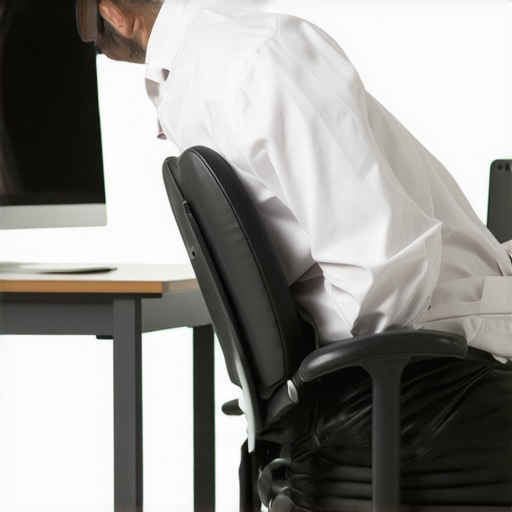
It happened during a late afternoon meeting. I shifted in my chair, expecting relief, but felt that familiar ache creeping up my back. That sinking realization hit me—my beloved office chair might be doing more harm than good. I had to face it: not all chairs are created equal, and some are secretly sabotaging our spinal health.
When Comfort Turns into a Trap: Spotting the Signs That Your Chair Is Harming Your Spine
Beyond just discomfort, poorly designed or unadjusted office chairs can lead to serious back issues over time. I used to dismiss those twinges as normal wear and tear. But after experiencing persistent pain, I dug deeper. What I found was startling: certain signs reveal your chair might be secretly a “spine trap,” silently worsening your posture and causing chronic pain.
Is Your Office Chair Worth the Hype? The Skeptic’s Dilemma
At first, I believed that ergonomic chairs were the magic fix. I invested in the trendiest model, yet pain persisted. I now realize I made a common mistake—assuming that the chair alone could do all the work. The truth is, even the best chair isn’t a cure-all without proper adjustments and habits. According to a study published in the Journal of Occupational and Environmental Medicine, improper workplace ergonomics accounts for more than 50% of work-related back injuries. That was a wake-up call.
So, how do you tell if your office setup is sabotaging your spine? Let’s explore the top five signs that your chair could be secretly a spine trap, and how to fix them before lasting damage occurs. Ready to reclaim your comfort and health? Let’s dive in and see if your chair is silently my fighting partner, or an unrecognized enemy.
Adjust Your Seat Height to Eliminate Strain
Begin by setting your chair height so that your feet are flat on the floor, and your knees are at a 90-degree angle. This prevents undue pressure on your lower back and hips. I once struggled with persistent lower-back pain until I realized my chair was too high, causing me to hunch. Once I lowered it, my discomfort decreased significantly. For detailed guidance, visit this article.
Set Lumbar Support to Match Your Natural Curve
Ensure your chair’s lumbar support aligns with the inward curve of your lower back. If adjustable, position it to fill the gap between your lumbar spine and the chair. I experimented with different support positions, feeling an immediate relief when I found the right fit. This adjustment is crucial; without it, your spine remains unsupported, leading to fatigue. You’ll find useful tips at this resource.
Recline Slightly to Maintain Mobility
Set your backrest to recline at around 100-110 degrees. A slight tilt encourages movement and reduces pressure on your discs. I personally prefer a gentle recline, which keeps my muscles engaged yet relaxed. Avoid a fully upright position, which can promote stiffness, or a steep recline, making you lean back excessively. Find your optimal angle by testing different reclines—more details can be found here.
Adjust Armrests to Support Your Shoulders
Position your armrests so your shoulders are relaxed, with elbows close to your body and wrists straight. Proper arm support prevents hunching and shoulder tension. I made a common mistake of setting armrests too high, which raised my shoulders and caused neck aches. After adjusting them lower, my upper back felt more comfortable. For comprehensive arm and shoulder tips, check this article.
Position Your Monitor for Optimal Neck Alignment
Place your monitor directly at eye level to avoid craning your neck forward or tilting downward. Use a monitor stand if necessary. During my first attempt, I had my screen too low, resulting in discomfort after hours. Once I elevated it, I maintained a neutral neck position, which greatly reduced mid-back tension. Learn more about proper monitor setup here.
Practice Regular Micro-Adjustments Throughout the Day
Don’t set your chair once and forget it. Small, frequent tweaks can prevent stiffness and promote blood flow. I set a reminder to adjust my seat slightly every 30 minutes—this kept my muscles active and my posture dynamic. Over time, these micro-movements contributed to noticeable reductions in back fatigue. To master these habits, explore this guide. Your goal is to create an environment where your spine is supported yet allowed the mobility to move naturally, reminiscent of mastering mobility daily. Proper adjustments are the foundation of a pain-free workday, reducing the risk of chronic issues and enhancing overall comfort.Many believe that simply adopting an ergonomic chair or performing isolated stretches guarantees back health, but the truth runs deeper. A common myth is that perfect posture comes from static positioning—sitting upright, holding your shoulders back, and staying still—that’s a trap. In reality, the body’s natural state isn’t rigidity but fluid movement. When we fix ourselves into momentary perfect alignments, we ignore the importance of dynamic adjustments that keep the spine resilient over time. Experts like Dr. Stuart McGill emphasize that variability in movement, rather than static correctness, enhances spinal health. An advanced mistake many make is underestimating the influence of micro-adjustments—tiny, frequent shifts that prevent muscle fatigue and joint stiffness. Overlooking this leads to complacency, causing cumulative strain. For example, holding a fixed sitting position for hours increases intradiscal pressure, which can accelerate degeneration, yet many don’t realize that subtle, continual micro-movements mitigate this risk. This is where the *oops* factor becomes critical: relying solely on traditional static ergonomic setups without incorporating micro-movements can backfire. To avoid this trap, integrate small adjustments every 20-30 minutes—like shifting your pelvis, flexing your ankles, or changing your sitting angle. These practices foster ongoing mobility and prevent the stiffening that often leads to pain. Curious about how subtle shifts transform your back health? Discover expert mobility strategies that go beyond basic ergonomics at this link. Hence, understanding the fine line between static correctness and dynamic adaptation is essential for true resilience. Remember, mobility isn’t just stretching; it’s a continuous dialogue between your muscles and joints to sustain optimal function. So, how do you incorporate micro-adjustments into your daily routine? Share your experience below! As you explore these nuances, keep asking: am I truly supporting my spine or just settling for surface-level fixes? For deeper insights, consider visiting our contact page to consult with a specialist. Your spine will thank you for it.Maintaining good posture and mobility over the long term requires more than just awareness; it demands the right tools and systems to support your efforts. One of my go-to devices is the ergonomic sit-stand desk converter, which allows me to alternate between sitting and standing throughout the day. This simple shift drastically reduces the static load on my spine, preventing stiffness and fatigue. I personally prefer models with smooth height adjustment and a large, stable surface so I can comfortably switch positions without disruption. Incorporating a quality footrest, such as those with adjustable tilt, helps my lower back stay aligned and reduces pressure on my lumbar region, especially during extended sitting periods. Additionally, I rely heavily on a lumbar support cushion that I attach directly to my office chair; it assists in maintaining the natural inward curve of my lower back, which is vital for preventing chronic pain. On the software side, I use reminders through specialized apps to prompt micro-adjustments and movement breaks, which align with expert advice on fostering mobility—more details are available at this resource. As we look to the future of posture and mobility support, biofeedback devices are gaining popularity—they monitor muscle tension and provide real-time cues to correct posture automatically. Even smart wearables can alert you when your position deviates from optimal alignment, making it easier to sustain healthy habits effortlessly. How do I maintain these tools over time? Regular inspection and maintenance are key: cleaning, calibration, and replacing parts when worn ensure consistent performance. For instance, I set a biannual check-in to assess my sit-stand desk’s mechanisms and replace its gas lift if needed. Plus, updating my software reminders helps me stay accountable and engaged. Investing in reliable equipment combined with disciplined routines can profoundly improve your long-term spinal health and mobility. Don’t underestimate the importance of micro-adjustments—set timers, use ergonomic tools, and stay proactive in optimizing your workspace. Ready to upgrade your setup? Try incorporating a lumbar cushion into your chair today, and experience immediate relief. For more expert insights, don’t hesitate to contact us through our contact page. Your spine will thank you.
The Hidden Pitfalls I Ignored in My Journey to Better Mobility
One of the most surprising lessons I learned was that static posture isn’t the goal—constant micro-movements actually keep the spine healthy and resilient. I used to think holding perfect alignment was enough, but I realized dynamic adjustments over time matter far more.
Another insight was that the right tools amplify progress. Investing in an ergonomic sit-stand desk and lumbar cushions made me realize that support devices are not just accessories—they are essential partners in maintaining spinal health.
The most profound lesson was understanding that habits trump equipment. Even the best ergonomic setup won’t help if daily routines don’t include regular micro-adjustments and movement breaks. Consistency in small habits creates lasting benefits.
My Top Picks for Elevating Your Posture Game
First, I trust this guide for simple yet effective adjustments that anyone can implement immediately. It’s packed with insights that demystify ergonomic tweaks and promote lasting relief.
Second, I rely on these daily routines to keep my spine moving and prevent stiffness. They remind me that mobility isn’t a one-time fix but an ongoing process.
For a deeper dive into maintaining vibrant mobility, I recommend these expert strategies which teach you how to move with ease and confidence, even after years of sedentary work.
Your Next Step Could Change Your Back Forever
Remember, the journey to spinal health isn’t about perfection—it’s about progress. Incorporate micro-movements, prioritize support tools, and stay curious about what your body needs. Long-term benefits await those willing to refine their habits and embrace ongoing adjustments.
Have you experienced a moment where a small change had a big impact on your posture or back pain? Share your story below—I’d love to hear how tiny tweaks made a difference in your mobility journey!
,