
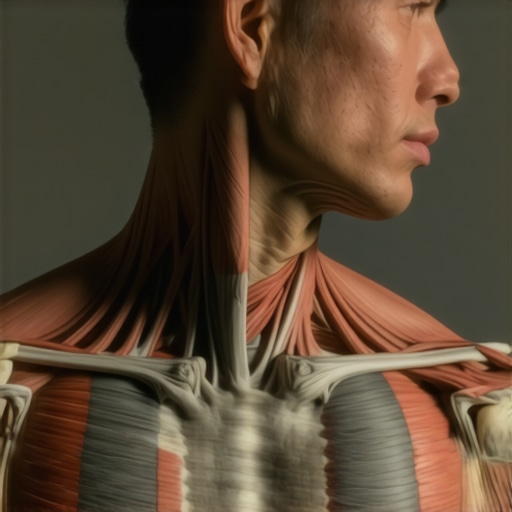
I remember the moment vividly—standing in my living room, gasping after a simple climb up the stairs. Breathing felt labored, my chest tight, and I wondered, “Is this just age, or am I doing something wrong?” That lightbulb moment led me to explore ways to unlock my thoracic spine, and what I found was a game-changer.
Have you ever experienced a lingering stiffness in your upper back, or struggled to breathe deeply without discomfort? If so, you’re not alone. Many of us overlook how crucial our thoracic region is—not just for posture, but for overall mobility and breathing efficiency. The good news? There’s a simple, effective drill that can make a noticeable difference.
The Power of Your Thoracic Spine for Better Breathing
Our thoracic spine—the middle segment of your back—is often neglected, yet it plays a vital role in how well you move and breathe. A stiff thoracic region can lead to restricted airflow, poor posture, and even back pain that feels like it comes out of nowhere.
Early in my journey, I made the mistake of focusing solely on my lower back and neck, ignoring this critical area. That oversight slowed my progress and sometimes even worsened my discomfort. I learned that improving thoracic mobility isn’t just about stretching; it’s about functional movement—something that the Thoracic Rotation Drill excels at.
By integrating this simple move into my daily routine, I noticed increased lung capacity and a more upright posture. It’s a small adjustment with big results, especially if you find yourself feeling tight or breathless during daily activities.
If you’ve been battling similar issues or just want to breathe easier and move more freely, this drill might be the missing piece you’re looking for. Ready to see how it works? Keep reading to learn the steps—and beware, early mistakes can hold you back!
Want a deeper dive into maintaining those mobility gains? Check out my comprehensive guide on [mastering your mobility for pain-free movement](https://chiromasteryz.com/master-your-mobility-top-strategies-for-moving-without-pain), packed with tips and routines to keep you thriving. And if you’re curious about posture adjustments that can eliminate back pain, I’ve got you covered with [simple tweaks for better posture](https://chiromasteryz.com/unlocking-better-posture-simple-adjustments-to-relieve-back-pain).
Getting into Position Effectively
Start by kneeling on all fours, placing your hands directly under your shoulders and your knees beneath your hips. This neutral position sets the foundation for effective rotation and minimizes compensatory movements. In my early attempts, I struggled to keep my hips stable, leading to ineffective rotations. Adjust your hands slightly wider if needed to increase comfort and control, much like widening a stance in a squat for better balance.
Enhancing Rotation with Controlled Movement
Place one hand behind your head, elbow pointing outward. As you inhale, rotate your upper torso, aiming to bring your elbow toward the ceiling. Imagine your spine as a hinge that pivots smoothly—avoid jerking or twisting harshly. My initial mess-ups involved over-rotation, causing strain rather than relief. Focus on slow, deliberate movements, feeling the mobility opening in your thoracic segment and avoiding overextending your neck or lower back. It’s like turning a steering wheel gently to navigate a tight corner.
Breathing Deeply for Better Outcomes
Sync your breath with the movement—inhale as you prepare, then exhale slowly as you rotate. This breathing pattern maximizes spinal elongation and helps relax surrounding muscles. Once, I forgot to exhale during the twist, which limited my range and caused tension. Deep, controlled breaths act as a lubricant, making each rotation smoother and more effective. Think of it as adding oil to a squeaky hinge—quiet and effortless movement follows.
Maintaining Proper Alignment
Keep your hips square to the ground, avoiding twisting your pelvis or leaning forward. Use your core muscles to stabilize, much like bracing a door before opening it. During my first attempts, I compensated by moving the hips or arching my back, which reduced benefits. Engage your abdominal muscles gently to ensure your rotation comes from the thoracic spine, not the lumbar. This focus keeps the movement targeted and prevents unnecessary strain.
Repeating and Progressing Safely
Perform 8-10 controlled reps on each side, pausing briefly after each to assess comfort and mobility. As you improve, increase the rotation slightly, but never at the expense of form. I learned to listen to my body, stopping if I felt sharp pain or discomfort, which could indicate overstretching or misalignment. Think of the drill as tuning a musical instrument—small, precise adjustments yield the best harmony.
Integrating Into Daily Routine
Incorporate this drill into your morning or post-work routine. Consistency is key—just as regular stretching benefits your hamstrings, daily thoracic mobility work enhances breathing and posture. Remember, slow and steady wins the race. Over time, these movements become second nature, unlocking breath capacity and easing back tension without ever needing complex equipment or costly sessions.
When it comes to back pain and posture, many people believe that quick fixes and isolated adjustments are the magic bullets. However, as an expert, I can tell you that these misconceptions often lead us astray. For example, there’s a widespread myth that spinal adjustments are entirely about cracking the bones to realign them. But actually, research shows that effective adjustments should focus on restoring mobility to the joint tissues and surrounding muscles, not just producing a popping sound. Relying solely on the audible crack can create a false sense of success, which might neglect underlying issues like muscle weakness or movement pattern faults.
Another common misunderstanding is that posture correction consists of holding a perfect seated or standing position at all times. This is a dangerous oversimplification. Posture is dynamic, and rigidly trying to maintain an ideal position can cause tension and fatigue. Instead, the goal should be to develop awareness and improve your overall movement variability. Incorporating mobility exercises—like the [master your mobility routines](https://chiromasteryz.com/master-your-mobility-top-strategies-for-easing-movement)—can promote healthier, more sustainable postural habits.
A trap many fall into is believing that stretching alone will fix chronic back pain. While flexibility is beneficial, ignoring strength and motor control can be counterproductive. For instance, over-stretching a tight hamstring without strengthening the supporting muscles can actually pull your pelvis out of alignment, worsening discomfort. It’s crucial to address both mobility and stability—something I emphasize in my comprehensive approach.
For advanced readers pondering real-world application, a key question is:
Why do some adjustments seem to work temporarily, only to recur later?
This relates to the concept of movement patterns versus joint fixations. Adjustments may provide short-term relief, but without retraining proper movement mechanics and addressing core deficits, the problem often returns. According to a study in The Journal of Orthopaedic & Sports Physical Therapy, combining manual therapy with active exercise results in more durable improvements than adjustments alone.
Be wary of the trap of overconfidence in quick fixes and always dig deeper into the root causes. Establishing a balanced mobility and strength routine, along with mindful training of movement patterns, will give you lasting relief. Remember to approach adjustments as part of a broader strategy, not the whole solution.
Want practical strategies that integrate this nuanced understanding? Check out my [comprehensive mobility guides](https://chiromasteryz.com/master-your-mobility-top-strategies-for-easing-movement) or get in touch [here](https://chiromasteryz.com/contact-us). Have you ever fallen into this trap? Let me know in the comments and share your experiences!Maintaining your mobility and posture over the long term requires the right tools and consistent care. Personally, I rely heavily on foam rollers and massage balls to keep my muscles soft and responsive. These simple devices are invaluable for self-myofascial release, helping me prevent knots and stiffness that can lead to pain. Additionally, I use a resistance band for targeted strengthening exercises, especially for stabilizing my core and shoulder girdle, which are crucial for good posture. Incorporating daily rituals like using a cervical roll during work breaks can significantly reduce neck strain and improve spinal alignment over time.
For tracking progress and ensuring proper technique, I recommend apps like PhysioLog or MoveCoach. These provide guided routines tailored to your specific needs and can help you stay consistent. In my own practice, I often refer to protocols outlined in authoritative guides, such as those from the World Confederation for Physical Therapy, which emphasize the importance of regular mobilization and strengthening exercises to sustain improvements.
Looking ahead, I predict that wearable technology will play a bigger role in posture monitoring. Devices integrated with AI can give real-time feedback, alerting you when your position deteriorates during daily activities. This evolution will make maintaining mobility more proactive and personalized.
A key question to ask is: How do I maintain my mobility and posture adjustments over time? Regularly scheduled check-ins with a professional, combined with self-administered maintenance tools like foam rollers and resistance bands, are essential. Creating a routine that includes these elements ensures your improvements stick and adapt as your body changes.
To make the most of your efforts, try integrating a dedicated mobility session into your daily routine using a foam roller or resistance band. These tools are affordable, effective, and empower you to take control of your spinal health. For detailed routines, visit my guide on [mastering your mobility for pain-free movement](https://chiromasteryz.com/master-your-mobility-top-strategies-for-moving-without-pain) and adopt one of the exercises today. Consistency is the key—small daily actions compound into long-term benefits, keeping your back healthy and your posture upright.Throughout my journey with back pain and mobility, I’ve discovered that some of the most profound changes come from understanding what lies beneath the surface. One lesson that truly shifted my approach was realizing that focusing solely on fixing symptoms without addressing the root causes often leads to temporary relief. Embracing the idea that small, consistent adjustments in your thoracic mobility can create ripples of positive change has been transformative. Moreover, I learned to listen to my body’s signals and respect the importance of patience; progress may be slow, but it’s steady and sustainable. Lastly, I’ve come to understand that empowering yourself with proper tools and knowledge turns passive routines into active pathways for health—making every movement count.