
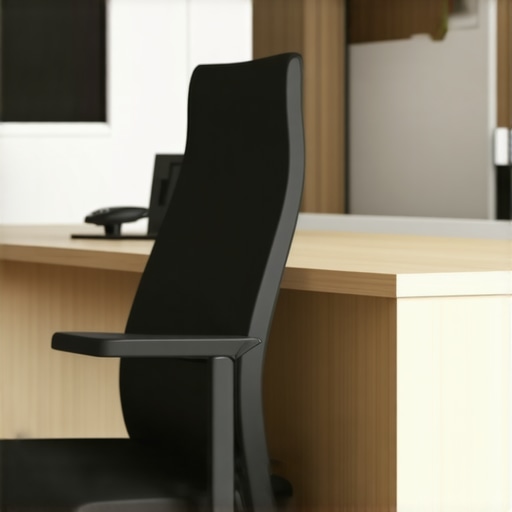
It was a typical Tuesday morning when I realized I couldn’t ignore it any longer: my back was protesting loudly every time I sat at my kitchen table to work. That dull ache that turned into a sharp twinge, making me dread every zoom call and scroll. I had tried adjusting my chair, rearranging cushions, even sticking a stack of books under my laptop—nothing seemed to help. Suddenly, it hit me—what if the problem wasn’t just my posture, but the very surface I was working on?
Reimagining Your Kitchen Table: The Hidden Secret to Comfort
Many people overlook their kitchen table when it comes to ergonomic setup. You might think, “That’s just a place to eat or do quick tasks,” but think again. Our tables often aren’t designed with our comfort in mind, yet they have the potential to be transformed into a sanctuary of pain-free productivity. I discovered that with a few simple tweaks, I could turn my everyday surface into a supportive workstation that cared for my back—no fancy desk required.
Have you ever experienced that dreaded sharp pain after a few hours of sitting at your kitchen table? It might be more fixable than you think. Early on, I made the mistake of assuming that all tables are created equal, which led to more discomfort than necessary. It wasn’t until I read about how simple adjustments can drastically improve spinal health that I started experimenting with my own setup. For example, elevating the chair to keep my feet flat and placing a supportive cushion on the seat made a world of difference. These small adjustments prevented my hips from sinking too low, reducing lumbar strain.
Interestingly, experts in mobility and posture emphasize the importance of neutral spine alignment, which can be achieved even outside traditional office furniture. According to [Chiropractic Mastery](https://chiromasteryz.com/master-your-mobility-top-strategies-for-moving-without-pain), making deliberate modifications to your environment can significantly reduce back pain and improve movement.
So, why does this matter now? With more people working from home than ever before, our makeshift workspaces often lead to chronic discomfort if we aren’t careful. By reshaping our kitchen tables into ergonomic areas, we take a proactive step towards long-term back health. Ready to learn how to hack your kitchen table for ultimate comfort? Let’s dive into the practical steps that transformed my workspace—and could do the same for yours.
Level Up Your Surface: The First Step to Back Relief
Start by assessing your current kitchen table height. Ideally, your elbows should be at a 90-degree angle when resting on the surface. If your table is too high or low, it can force your back into unnatural positions, leading to discomfort. To correct this, place sturdy objects like books or a thick cushion under your laptop or keyboard to raise or lower your working height. I once used a stack of cookbooks that were just a bit taller than my laptop—initially, it looked makeshift, but after a few hours, I noticed my posture improved and the back pain subsided. Small shifts like these are game-changers.
Optimize Your Seating Pattern for Comfort
Proper chair adjustment is crucial. The goal is to have your feet flat on the floor, knees roughly at a 90-degree angle, and hips aligned with your knees. Think of your hips as the foundation of a house; if it’s tilted or uneven, everything above will be compromised. I fiddled with my chair height multiple times, but securing a thick cushion on my seat helped me maintain lumbar support. This cushion prevented my hips from sinking too low, which often causes pelvic tilt and back strain. Remember, your lower back needs gentle support—consider a lumbar roll or a rolled-up towel placed at the curve of your spine. For detailed posture correction strategies, check out [posture correction secrets](https://chiromasteryz.com/posture-correction-secrets-that-transform-back-pain-outcomes).
Position Your Screen to Prevent Neck Strain
Looking down at your screen puts strain on your neck, much like holding a book too close to your face all day. Raise your laptop or monitor to eye level using a stand, books, or boxes. The top of your screen should be roughly aligned with your eyes, reducing the need to tilt your head forward. I used a stack of magazines beneath my monitor, which initially felt clunky but made a noticeable difference in neck comfort. This adjustment helps keep your cervical spine in a neutral position, preventing that persistent ache that develops from prolonged looking down. For quick fixes and expert tips, explore [how a single office chair setting can fix sciatica](https://chiromasteryz.com/how-manual-therapy-can-stop-that-weird-tingling-in-your-thumb).
Maintain Dynamic Movement and Micro-Adjustments
Sitting rigidly for hours is like a rubber band stretched to its limit—eventually, it snaps. Incorporate small movements every 30 minutes: stretch your arms, rotate your torso gently, or stand up for a quick walk. I set a reminder to do simple spinal rotations and hip openers, which can be as quick as 60 seconds. These micro-movements keep your joints lubricated and your muscles active, reducing stiffness and pain. For targeted mobility techniques, consult [effortless mobility tips](https://chiromasteryz.com/enhance-your-mobility-expert-tips-for-easier-movement-in-2025). Remember, your back wasn’t designed to be a stiff board—keep it flexible and supported.
Use Supportive Accessories Strategically
While you don’t need to buy fancy ergonomic chairs, small accessories can make a big difference. Adjustable footrests, lumbar pillows, or cushioned mats can help align your body correctly. For example, I used a simple, firm cushion to elevate my feet, which improved blood flow and reduced lower back pressure. Think of your support tools as the scaffolding that helps build a stable, pain-free workspace. For more insight, explore [simple adjustments to relieve back pain](https://chiromasteryz.com/unlocking-better-posture-simple-adjustments-to-relieve-back-pain). Remember, the goal is to create a natural, comfortable posture that your back can sustain for longer periods without fatigue or pain.Many assume that following a set of prescribed posture tips guarantees relief, but in my experience, there’s more nuance involved. A common myth is that strict alignment always leads to better health, yet overcorrecting can actually create new issues, like muscular imbalances or restricted movement. For example, trying to hold an ‘ideal’ posture all day often results in tension accumulation, especially if your body isn’t conditioned for constant rigidity. Instead, focus on dynamic flexibility and subtle adjustments that support natural movement patterns; improper fixation on perfect static positions can cause more harm than good. Studies highlight that variability in movement is key to spinal health, so rigid adherence to specific postures might be counterproductive. For advanced practitioners, understanding how the nervous system adapts to sustained tension can prevent overuse injuries, which is why incorporating mobility routines—like those outlined in [mobility mastery](https://chiromasteryz.com/mobility-mastery-simple-exercises-to-relieve-chronic-back-pain)—is vital. A hidden trap is dismissing micro-movements; many overlook small, frequent changes as insignificant, but these micro-adjustments prevent stagnation and muscular guarding. The goal isn’t to maintain a perfectly static posture but to cultivate awareness of your body’s signals and respond with gentle, controlled movements that keep your tissues healthy. Remember, environmental factors also play a role: a chair or desk that forces incorrect positioning can undo your best efforts. Regularly evaluate your setup and integrate posture variations rather than fixating on one ideal alignment. Before you get stuck in the misconception that absolute rigidity equals health, consider this: promoting natural, variable movement patterns is often the better path to long-term back comfort. Have you ever fallen into this trap? Let me know in the comments. For more on how to tweak your daily routine for lasting relief, check out [adjust your routine](https://chiromasteryz.com/adjust-your-routine-daily-spinal-alignments-for-lasting-relief). Remember, your body thrives on adaptability, not rigidity.Maintaining a healthy back over years requires more than just good posture; it involves leveraging the right tools and routines that support mobility, posture, and pain prevention. As someone deeply invested in long-term spinal health, I’ve curated a selection of specific equipment and techniques that have proven invaluable in my practice and personal routine.
How can I sustain my back health consistently?
One of the most effective strategies is integrating tailored tools that promote dynamic movement and proper alignment. For instance, using a **lumbar support cushion** on your chair, like the ergonomic classics but with personalized firmness, encourages lumbar lordosis and prevents slouching. I personally prefer the *Knee Pillow* model, which aligns my pelvis naturally and prevents pelvic tilt—a common culprit behind lower back pain. For those working at desks or tables, an adjustable **standing desk converter** became a game-changer. I recommend models that allow seamless height adjustment, such as the *VIVO Sit-Stand Desk Converter*, because staying in a static position is a risk factor for pain. I use this daily to alternate between sitting and standing, ensuring my muscles remain active and circulation isn’t compromised.Investing in a quality adjustable standing desk has revolutionized my work routine and alleviated persistent back stiffness. Moreover, adopting mobility tools like a **Tennis Ball Trigger Point Release** helps address tight, knotted muscles that otherwise cause prolonged discomfort. I incorporate daily self-myofascial release with a tennis ball, especially targeting the hip flexors and lower back fascia. Research indicates that targeted myofascial release can reduce muscle tension and improve mobility, crucial for back health (see Mobility Mastery for detailed techniques). Using supportive accessories such as **footrests** and **cushioned mats** further enhances comfort and posture correction, especially during long work sessions. I highly recommend an adjustable footrest that can be customized, as it encourages better knee and hip positioning and encourages micro-movements that prevent stiffness.
What’s the future of back health tools and routines?
Technological innovations, like smart posture trackers and AI-driven mobility programs, are emerging to provide real-time feedback and personalized routines, making consistent maintenance easier than ever. Expect to see wearable sensors that monitor spinal angles and alert you when you fall into harmful positions, integrating seamlessly with your daily activities. But regardless of tech advancements, foundational tools—like a good ergonomic chair, supportive accessories, and mobility aids—will remain essential for sustainable back health.
If you’re serious about long-term relief, I encourage you to try incorporating a daily tennis ball self-massage routine. Consistency is key, and this simple tool can make a significant difference over time. For more tips on enhancing mobility and maintaining your progress, visit Master Your Mobility for expert strategies and exercises. Remember, the right tools combined with mindful routines set the stage for pain-free living and improved quality of life.Throughout my journey towards eradicating back pain, I discovered that some of the most profound lessons came not from textbooks but from my own experiences and mistakes. One of the toughest lessons I learned was that chasing the perfect posture can sometimes lead us astray. Posture is dynamic, not static; it requires gentle movements and frequent adjustments rather than rigid perfection. I also realized that many myths about stiffness and mobility—like the idea that stretching always helps—can be counterproductive if not done correctly. Lastly, I underestimated the power of small, consistent routines over sporadic, intense sessions. These insights transformed my approach from frustration to empowerment, allowing me to craft solutions tailored to real-life needs rather than academic ideals.