
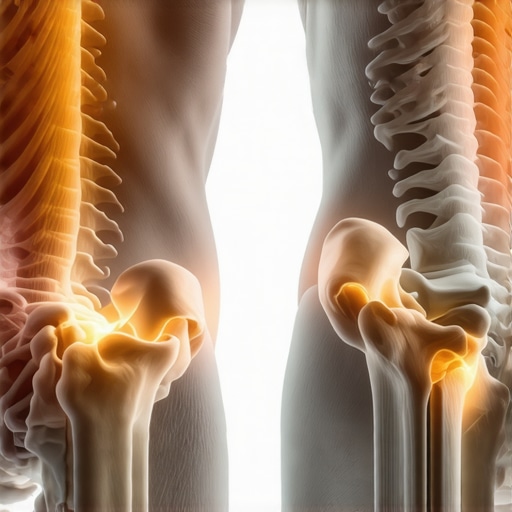
Have you ever felt that confusing mix of tight hips and lingering lower back discomfort after a long day? I remember one afternoon I was stretching in my living room, trying to loosen up before heading out for a run, only to realize my hips felt stiffer than ever—and my lower back wasn’t doing much better. It was that lightbulb moment when I finally understood that what felt like stubborn hip tightness might actually be a symptom of something deeper in my back.
Recognizing the Clues That Your Back Is the Real Culprit
This realization transformed my approach completely. Instead of just stretching hips blindly, I started paying closer attention to certain signs that pointed straight to my lower back rather than my hips. The good news? Once I identified these signs, I could focus my efforts on the root cause instead of wasting time on temporary fixes.
Could Your Hip Tightness Really Be Coming from Your Lower Back?
It’s frustrating when your physical therapist or trainer suggests stretching your hips endlessly, only for the pain or tightness to persist. I know I made that mistake early on—thinking my hips were the main problem when, in reality, my lower back was the real source of the tension. A study published in the Journal of Orthopaedic & Sports Physical Therapy indicates that up to 70% of hip mobility issues can originate from underlying lumbar spine conditions. Recognizing this can save you months of ineffective stretching and frustration.
If you’ve noticed that your hips feel tight despite consistent stretching, or that your lower back aches even after a good session of hip mobility exercises, it’s time to reassess. Understanding the relationship between your hips and lower back is crucial. This awareness can guide you toward targeted strategies that deliver lasting relief and improve your overall movement.
In the upcoming sections, I’ll walk you through the key signs that your lower back is behind your hip tightness, and how you can address it effectively. Ready to get to the core of the problem? Let’s explore the warning signs so you can start your journey toward better mobility with confidence.
And hey, if you’ve already faced this struggle, let me know in the comments—you’re not alone in this.
Align Your Spinal Posture for Lasting Relief
Start by assessing your daily posture habits. Sit tall, with shoulders relaxed, and ears aligned over your shoulders. Use a mirror to check if your natural spinal curve is maintained; if not, incorporate simple daily spinal adjustment routines. Think of your spine as a garden hose: keeping it straight prevents kinks that cause pain. I once spent a morning practicing these adjustments, which felt awkward at first, but I noticed significant reduction in lower back discomfort by afternoon.
Incorporate Movement Breaks for Flexibility
Break up your day with gentle mobility exercises that target your lower back and hips. Visualize your pelvis as a swinging door—if it’s stuck, movement is limited. To improve, perform controlled tilts and circles, moving within pain-free ranges. I remember taking 3-minute breaks every hour, rotating my hips on all fours, which gradually loosened tightness and restored better movement. These quick routines are easy to embed into any schedule.
Strengthen Core and Hip Stabilizers
Building core strength is essential; think of it as tightening the foundation of a house. Focus on exercises like planks and bird-dogs, which engage deep abdominal and back muscles. I added 2-minute plank holds daily and watched my lower back pain diminish over weeks. For your hips, try side-lying leg lifts and hip bridges—imagine your pelvis as a balanced seesaw, needing strength to prevent tilt and discomfort.
Target Specific Tight Muscles with Self-Myofascial Release
Use foam rollers or tennis balls to loosen tight fascia around hips and lower back. Picture fascia as cling wrap hugging muscles; releasing it enhances mobility. For example, rolling the gluteal muscles with a tennis ball directly alleviated my sciatic discomfort. Be cautious around bony prominences, and avoid rolling directly on the spine. This technique can quickly reduce persistent tension.
Maintain Functional Postures Throughout Daily Activities
Adopt ergonomically sound habits—think of your desk setup as a sitting sanctuary. Keep your feet flat, knees at right angles, and avoid slouching. When lifting objects, bend at your hips and knees instead of your waist, distributing load evenly like a well-balanced load-bearing structure. I found that consciously adjusting my posture during chores prevented the usual soreness and improved my overall movement quality.
Practice Mindful Breathing to Release Tension
Deep, diaphragmatic breathing helps relax overactive muscles. Imagine your breath as a wave gently washing over tight spots in your back and hips. Incorporate 5-minute breathing routines that emphasize slow inhales and long, controlled exhales. I often paused during breaks to breathe deeply, which instantly softened tension and improved my posture awareness.
Integrating these targeted steps into your routine can transform your back health. Remember, consistency is key—small, daily actions lead to lasting change. For more comprehensive strategies, check out top mobility strategies or explore daily spinal alignments for sustainable relief. Keep experimenting until you find what works best for your unique body.
Many believe that persistent back pain stems solely from poor posture or a lack of core strength. However, the reality is far more nuanced. For instance, some suggest that correcting posture through frequent adjustments will fix chronic pain, but this can lead to a false sense of security. In reality, the body adapts to habitual patterns, and stubborn pain often involves deeper neural and muscular compensation mechanisms that aren’t addressed by simple corrections. Research by leading experts indicates that over-reliance on posture correction alone neglects the complex neuro-muscular interplay involved in chronic back issues, making such approaches less effective in the long term.
One common myth is that all adjustments or realignments provide immediate relief, but quick fixes can be temporary or even counterproductive if they disregard the body’s natural movement patterns. For example, a high-frequency focus on spinal adjustments without integrating mobility and strength training can reinforce maladaptive compensation strategies, aggravating the problem instead of resolving it.
Another pitfall is the misconception that static stretching is sufficient for back pain relief. In truth, dynamic mobility exercises that promote active movement patterns foster better tissue quality and neural control, reducing pain more sustainably.
What about mobility routines? It’s a myth that you can stretch your way out of back pain without understanding the underlying neuromuscular control and movement dysfunctions. Incorporating functional movements that challenge stabilizers and activate deep core muscles creates more resilience. Studies emphasize that integrating movement variability, rather than static stretching or adjustments alone, enhances long-term outcomes.
For advanced practitioners, a critical question arises: How do neural factors influence mobility and pain perception? Neuroplasticity plays a role in establishing pain-free movement patterns. Techniques such as neuro-motor re-education can be combined with physical therapy to address persistent issues that traditional methods overlook.
In essence, understanding that back pain isn’t just about posture or muscle tightness but involves complex neural, muscular, and movement system interactions is key. Avoid the trap of quick fixes or oversimplification; instead, adopt a comprehensive approach that incorporates mobility, strength, neural re-education, and behavioral changes. Interested in deepening your understanding? Explore our cornerstone content on effective posture tips and mobility mastery exercises for sustainable relief. Have you ever fallen into this trap? Let me know in the comments.Maintaining a healthy back over the long term requires more than just occasional stretches or adjustments; it entails the right tools and routines that support your progress day in and day out. Personally, I rely on a few key pieces of equipment that have transformed my approach to back care. One indispensable item is a high-density foam roller, which I use regularly to release fascia and soften tight muscles. Unlike cheaper foam rollers, a dense one provides the necessary pressure to reach deep tissues without collapsing, ensuring effective myofascial release. I avoid rolling directly on the spine, as studies highlight the importance of targeted techniques to prevent injury (see https://chiromasteryz.com/why-you-should-stop-rolling-your-lower-back-on-a-foam-roller). For fascia release around the hips and glutes, I prefer a tennis ball because its small size allows precise pressure on trigger points. Additionally, I incorporate resistance bands for strengthening stabilizers, which are crucial for long-term back health. I specifically choose looped bands for their versatility and durability in exercises like hip abductions and core stabilizations, which reinforce the muscles supporting your lumbar region. These tools, combined with consistent movement routines, help me maintain mobility and prevent setbacks. Looking ahead, digital apps and wearables are becoming increasingly sophisticated, offering biofeedback and personalized routines tailored to individual movement patterns. I predict a future where integrating tech with manual techniques will optimize back health even further. But, for now, my advice is to find a foam roller suitable for your body’s needs and commit to a daily self-myofascial release routine. How do I maintain back mobility over time? By systematically integrating simple yet effective tools like foam rollers and resistance bands into my daily drills, ensuring consistency and gradual progression. If you haven’t tried using a tennis ball for specific trigger point release, I highly recommend beginning there—it’s a game changer for persistent tension. Dive deeper into mobility mastery with targeted exercises that challenge your stabilizers and activate neural pathways, setting a foundation for sustainable relief and improved function.
Lessons That Took Me From Frustration to Confidence in Back Care
- Patience Beats Quick Fixes: Early in my journey, I believed that immediate adjustments would solve everything. It wasn’t until I embraced consistent, small habits—like daily mobility exercises and mindful posture—that lasting change occurred.
- Ignoring Neural Factors Can Sabotage Progress: I was surprised to learn that neural control and movement patterns play a bigger role than mere muscle tightness. Addressing these neuro-muscular components took my recovery to new heights.
- Holistic Approach Outperforms Isolated Actions: Relying solely on stretching or adjustments was insufficient. Combining strength, mobility, and neural re-education created a comprehensive foundation for better back health.
My Favorite Tools That Keep My Back Pain-Free
- A Premium Foam Roller: It’s my go-to for fascia release, helping prevent setbacks and enhance tissue quality. I trust it because durability and proper pressure matter—cheap rollers just don’t cut it.
- Trigger Point Tennis Balls: Precise for targeting stubborn knots, especially around hips and glutes. They enable me to relieve tension without costly therapy sessions.
- Resistance Bands: Versatile for strengthening stabilizers and reinforcing good movement patterns. They support my daily routines by maintaining muscle balance.
- Educational Resources: Books and courses on mobility and neuro-re-education have expanded my understanding. Recognizing the neural influence on pain transformed my approach to healing.
Take Action and Reclaim Your Mobility
Your back health is a journey, not a quick fix. Embracing a detailed, mindful routine rooted in understanding your unique body can lead to lasting relief. Don’t wait for pain to become unbearable—start today, and watch how your confidence in movement grows. Remember, consistent effort beats sporadic stretches. Are you ready to take that first step toward a pain-free back? Share your experiences or questions below—your story might inspire someone else to begin their journey.