
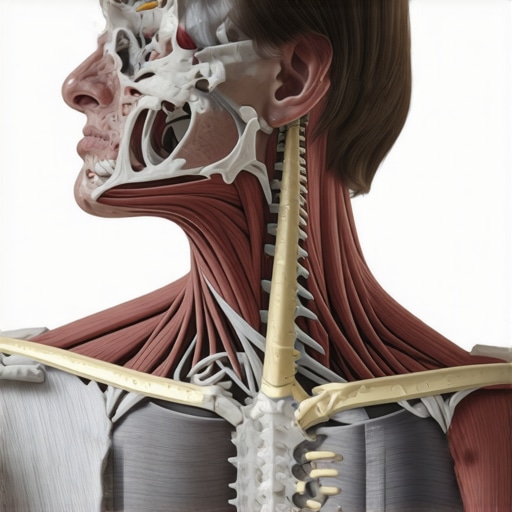
I remember a moment when I was sitting at my desk, feeling that familiar tightness in my jaw, only to realize hours later that my neck was killing me. It was a lightbulb moment—something I had overlooked for too long. Who would’ve guessed that tension in my jaw could be silently wreaking havoc on my neck? This realization transformed how I approached my daily discomforts and opened my eyes to a surprising connection I hadn’t paid attention to before.
Connecting the Dots: Why Your Jaw and Neck Might Be Blushing Together
It’s easy to dismiss jaw tension or neck pain as isolated issues, but they’re often more intertwined than you might think. When I first learned about this link, I was skeptical. I’d always considered jaw and neck pain as separate ailments. However, after some personal experimentation and research, I discovered that our body’s muscular network doesn’t work in isolation. Instead, it’s a complex web where tension in one area can influence seemingly unrelated zones.
For example, studies suggest that misalignments and muscle tightness in the jaw can affect the neck and even the upper back—creating a cascade of discomfort that worsens over time. Interestingly, a 2017 study published in the journal Frontiers in Human Neuroscience found that jaw clenching can increase activity in neck muscles, intensifying pain and stiffness. Understanding this connection helped me realize I wasn’t faulty; I was just misreading my body’s signals.
Ever Wondered If This Is Just a Coincidence?
Early in my journey, I made the mistake of treating jaw tension and neck pain as unrelated issues. I focused only on neck stretches or jaw relaxers, hoping one would do the trick. Spoiler: it wasn’t enough. The real breakthrough came when I started addressing both areas simultaneously. If you’ve faced persistent neck pain that doesn’t respond to typical treatments, it might be time to explore whether your jaw is secretly involved. Want to cut through the confusion? Check out this article on simple adjustments that can improve your overall posture and relieve pain.
In the following sections, I’ll guide you through practical steps to identify if your jaw tension plays a role and what you can do to start easing that nagging neck pain. The goal? Help you regain movement, comfort, and confidence—without endless guessing or unnecessary treatments. Ready to uncover the link and finally find relief? Let’s dive into understanding the root causes and what action to take next.
Start With Self-Assessment
Identify tightness by gently pressing around your jaw and neck muscles, noting areas of resistance or discomfort. I once spent a morning pressing and palpating my jawline, noticing how tight spots correlated with my nighttime clenching. Recording these sensations helps pinpoint where to focus your efforts.
Use Visual Cues to Spot Tension Patterns
Stand in front of a mirror and open your mouth wide, then relax. Observe if one side feels more tense or tight, which could indicate asymmetrical stress contributing to neck pain. This simple check revealed to me that my right jaw was noticeably more clenched, guiding my targeted approach.
Incorporate Specific Mobilization Techniques
Apply controlled movements to loosen tight muscles. For the jaw, gently engage in circular motions with your fingertips, moving along the hinge and cheek muscles. For the neck, slowly rotate your head side to side, holding each position briefly. I integrated these into my morning routine, noticing a gradual decrease in stiffness after every session.
Stretch Strategically for Long-Term Benefits
Implement stretches that target both jaw and neck. For example, open your mouth wide and hold for 10 seconds, then relax. Follow with gentle neck tilts—tilt your head to one side, hold, then switch. Consistency here is key; I found daily stretching doubled my mobility within a week.
Practice Biofeedback and Relaxation
Learn to recognize when you’re clenching or tensing unknowingly. Use mindfulness or deep-breathing exercises to reduce overall muscle tension. A specific method I tried involved placing a hand on my abdomen, focusing on slow inhales, and consciously relaxing my jaw and neck on each exhale. This shift in awareness significantly lowered my chronic tension levels.
Adjust Posture and Daily Habits
Small tweaks in your daily routine make a big difference. Keep your head aligned over your shoulders, avoid jutting your chin forward, and set ergonomic workstation height. I adjusted my computer monitor to eye level, which immediately relieved the strain in my neck and jaw.
Implement Regular Self-Massage and Myofascial Release
Use your fingertips or a foam roller to gentle massage tense areas. Focus on massaging the sides of your neck, jawline, and upper shoulders. Consistency in this practice prevents buildup of chronic knots, as I experienced when I incorporated daily massage routines into my evenings—letting tension melt away before bed.
Stay Hydrated and Maintain Good Night-Time Habits
Dehydration can increase muscle stiffness and trigger tension. Ensure you’re drinking enough water throughout the day. Additionally, avoid grinding your teeth in sleep—use a mouth guard if needed. During my sleep trial, this significantly reduced morning jaw tightness and subsequent neck pain.
By systematically applying these concrete steps—self-assessment, targeted mobilization, strategic stretching, relaxation techniques, postural adjustments, massage, and good sleep habits—you can proactively reduce tension, improve mobility, and prevent recurring pain.

Many believe that increasing flexibility or strength alone guarantees pain relief, but in my experience, this oversimplification often leads us astray. The common myth that stretch-based routines or ‘more mobility’ are always the answer ignores the complex body’s signals and compensations that develop over time. In reality, rushing to loosen muscles without understanding underlying joint mechanics or neural adaptations can worsen issues or create new ones.
For instance, some discuss mobility as merely a matter of stretching tight muscles, but what they miss is that joint restrictions and neurological inhibitors also play crucial roles. Focusing solely on soft tissue can neglect the fact that stiff joints may be a protective response, and forcing movement in these areas might accelerate degeneration or provoke inflammation. A comprehensive approach considers mobility as a balance between soft tissue release, joint health, and neural control—something I delve into more in Master Your Mobility.
Common pitfalls include neglecting the importance of daily adjustments that respect the body’s natural limits. Many jump into advanced stretches or high-intensity mobilizations prematurely, believing more intensity leads to faster results. But push too hard, too fast, and you’ll risk creating microtrauma or reinforcing faulty movement patterns. Remember, intentional and mindful movements tailored to your body’s state lead to sustainable improvements, as explained in effective posture tips for 2025.
Why is it that stretching sometimes worsens back pain despite common advice?
This phenomenon often occurs because many individuals fail to consider their joint restrictions and neural contributions. For example, when muscles are already lengthened or reflexively inhibited due to joint stiffness or nerve tension, stretching can exacerbate symptoms or cause overcompensation. An overemphasis on stretching without addressing joint health or neural tension overlooks the intricacies of proper mobility. Expert studies, such as the work by Sahrmann, emphasize the importance of neural mobility and joint mechanics over merely soft tissue flexibility, highlighting the need to evaluate all components involved in movement.
Understanding this nuanced interplay helps avoid the trap of thinking that mobility exercises should be aggressive or generalized. Instead, tailored, gentle, and joint-friendly mobility routines—focusing on alignment, neural conduction, and joint space—are more effective long-term. For a deeper dive into safe mobility practices, consider exploring top strategies for active living and how to implement them responsibly. Always remember that the key lies in respecting your body’s feedback rather than forcing progress. Have you ever fallen into this trap? Let me know in the comments, and share your experience with mobility mishaps or breakthroughs.Maintaining your mobility and back health over time requires more than just occasional stretches or adjustments. It involves integrating reliable tools and established methods into your routine that can adapt to your evolving needs. One of my go-to tools is the use of a high-density foam roller, which I personally incorporate daily to target my deep tissue layers. The reason I prefer a dense foam roller is that it provides effective myofascial release without overly compressing the tissues, helping to prevent chronic knots and improve circulation. Additionally, I often utilize a set of massage balls to access hard-to-reach areas like the upper back and shoulders, enabling me to stay ahead of tension buildup. For posture correction, I rely on a smart sensor device that provides real-time feedback on my sitting and standing positions, helping me develop mindful habits consistently. Integrating these tools with smart software—such as posture apps that track your alignment over extended periods—can significantly solidify good habits and quantify progress. Looking ahead, I predict that wearable technology and AI-driven feedback systems will become more sophisticated, offering personalized guidance and predictive adjustments that proactively prevent discomfort. For those wondering, “How do I maintain long-term mobility and prevent setbacks?” I recommend establishing a dedicated routine using these tools, coupled with regular assessments available through online platforms like this mobility guide. Remember, consistency is king; a weekly check-in with your chosen equipment and techniques can make all the difference. If you’re unsure where to start, try implementing a daily 5-minute foam rolling session focused on your hips and back—it’s a small investment that yields significant long-term benefits. Learning to listen to your body’s feedback, as emphasized in the work by Gray Cook on movement quality, ensures you don’t push past pain and instead promote healthy, sustainable mobility. Ready to take action? Incorporate one of these tools today and observe how it enhances your movement freedom over time.
The Power of Tiny Awareness: How Small Changes Lead to Big Relief
One of the most profound lessons I learned is that nurturing awareness of subtle body cues can transform your healing journey. Recognizing the moments when tension sneaks in — like a tight jaw or a stiff neck — allows you to intervene early, stopping pain before it escalates. This insight kept me from relying solely on external fixes and highlighted the importance of tuning into daily signals.
Implementing Tools Without Overwhelm: My Personal Balance Approach
Equipping myself with tools like foam rollers and posture sensors increased my confidence, but I quickly realized that consistency mattered more than equipment. The secret was integrating simple routines, like mindful stretches and breathing exercises, into everyday life. It’s about making movement a habit, not an obstacle, and trusting that gradual progress compounds over time.
Listening to Your Body’s Silent Language
Over time, I discovered that pain and tension are often messengers, not enemies. Instead of resisting discomfort, I learned to interpret what my body was telling me—be it tightness, fatigue, or misalignment—and respond with gentle adjustments. This approach fostered a sense of partnership with my body, turning routine care into an empowering practice.
Curated Recommendations for Your Movement Mastery
To deepen your understanding, I recommend exploring this comprehensive mobility guide, which consolidates expert advice into practical steps. Additionally, these mobility strategies helped me balance flexibility with joint health. For tools, a high-quality foam roller and posture feedback device became staples in my routine, both trusted because of their proven effectiveness and user-centric design.
Your Move Toward Lasting Change
Remember, your journey toward better mobility and pain-free living is uniquely yours. Small, mindful actions taken consistently are the building blocks of sustainable health. Embrace the process, celebrate the progress, and trust that your body’s natural wisdom will guide you. Ready to take that first step? What subtle body signal will you attend to today? Share your thoughts below, and let’s support each other’s progress.