
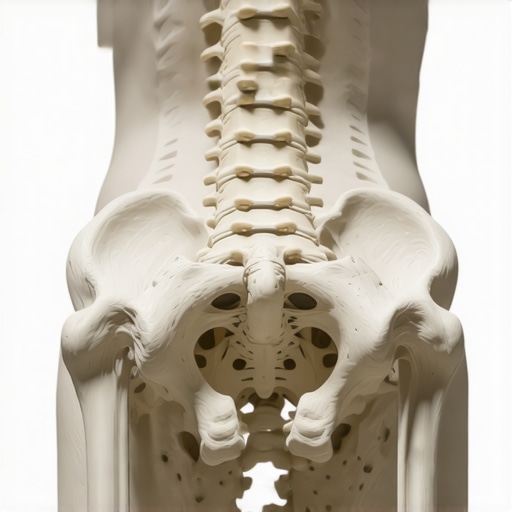
Picture this: I was suffering through another frustrating day, battling persistent back pain that just wouldn’t let up. I had tried everything—stretching, adjusting my posture, even visiting specialists—but nothing seemed to provide lasting relief. It wasn’t until I had a lightbulb moment that I realized I’d been overlooking a crucial piece of the puzzle: my pelvic floor. It sounds surprising, doesn’t it? But understanding this connection transformed my approach and finally helped me find relief.
The Awakened Lightbulb Moment
One afternoon, after a particularly bad flare-up, I decided to dig a little deeper into the root causes of persistent back pain. What I discovered was eye-opening: the pelvic floor muscles, often associated with childbirth or pelvic health, also play a vital role in supporting your lower back and spine. When these muscles are weak, tight, or uncoordinated, they can create a ripple effect that leads to chronic discomfort. Initially, I dismissed it as just another fad—until I tried some simple pelvic exercises, and the difference was astonishing.
This revelation prompted me to revisit my daily habits and pay closer attention to my core and pelvic health, leading me down a new path of integrated movement and posture awareness. And that, my friend, made a world of difference. Today, I want to share with you how your pelvic floor might be silently contributing to your back issues and what practical steps you can take to address it.
Is This Just Fancy Jargon Or Really Worth Trying?
Now, I know what you’re thinking. “Pelvic floor muscles? How could those tiny muscles in my pelvis really impact my back?” I totally get it—early on, I made the mistake of dismissing this link as another trendy theory. But ignoring this connection can mean missing out on effective relief. Trust me, neglecting your pelvic health can keep you stuck in a cycle of pain and frustration. If you’ve been battling chronic back pain without success, considering your pelvic floor might be the game-changer you need. Careful attention to how these muscles function is supported by research; for example, studies show that pelvic instability can lead to altered spinal mechanics, contributing to pain (source: National Institutes of Health).
So, are you ready to discover how fine-tuning your pelvic floor could unlock lasting relief? Let’s dive into what you can do to start restoring balance and support to your back, step by step.
If you’ve faced persistent back discomfort despite following typical advice, you’re not alone—and you’re in the right place to explore new, effective strategies.
Engage Your Pelvic Floor with Precision
Start by lying on your back with knees bent and feet flat on the floor. Place one hand on your lower abdomen and the other on your pelvic area. As you inhale, focus on expanding your lower belly, but on the exhale, gently contract your pelvic floor muscles—imagine trying to stop urinating midstream. Think of this like squeezing a small sponge between your legs—small, controlled tightening.
During my first real attempt, I found it messy—tensing too much or not enough—and struggled to feel the activation. Keep practicing until you notice a subtle lift, like a gentle elevator rising inside your pelvis. This micro-movement initiates core stability that supports your lumbar spine effectively.
Progress to Dynamic Pelvic Floor Exercises
Once you can reliably contract these muscles in a passive position, incorporate movement. Lie on your side or kneel, then inhale and gently contract your pelvic floor as you exhale, maintaining tension for 3-5 seconds. Relax on the inhale. This trains your muscles to activate when needed during daily activities, like lifting, bending, or sitting. Over time, this habit improves coordination and reduces unintended tension that can strain your back.
I went through this step during a busy morning—trying to multitask but keeping mindfully aware of the muscle engagement. Initially, my focus was split, but with repetition, I experienced less back discomfort even during long hours of desk work.
Integrate Pelvic Floor Activation into Daily Routine
Embed these exercises into your everyday activities. Before standing up from a chair, contract your pelvic floor muscles to brace your core—think of this as tightening the foundation before lifting a heavy object. When bending forward or reaching, engage the same muscles to support your spine.
I noticed that simple cues like ‘brace your core’ became instinctive, and my back pain decreased dramatically. These micro-adjustments act like tiny anchors, holding your spine steady amid movement, much like a ship’s crew securing lines during rough seas.
Combine with Posture and Movement Strategies
Pelvic floor activation gains the most from complementary posture adjustments. Regularly perform [daily adjustments to alleviate back pain](https://chiromasteryz.com/daily-adjustments-to-alleviate-back-pain-and-improve-posture) and [mobility exercises](https://chiromasteryz.com/mobility-mastery-simple-exercises-to-relieve-chronic-back-pain). These routines help align your spine, release tension, and reinforce muscular awareness, ensuring your pelvic floor actions translate into real back support.
Also, consider integrating [correct spinal alignments](https://chiromasteryz.com/adjust-your-routine-daily-spinal-alignments-for-lasting-relief) into your day to cement these habits and build resilience against back strain over time.
Myth Busting: Why Most People Get Back Pain Wrong
Many individuals believe that back pain stems solely from muscle strains or spinal disc issues, but this oversimplification often leads to ineffective solutions. In reality, the root causes are frequently more nuanced, involving complex interactions between posture, mobility, and subtle muscular imbalances. For example, practitioners have noted that correcting postural habits and addressing minor mobility restrictions can dramatically improve long-term outcomes.
Beware of the Quick Fix Traps
One widespread misconception is that immediate pain relief can be achieved through temporary measures like heavy analgesics or aggressive adjustments. While these may provide short-term comfort, they often ignore underlying issues such as poor spinal alignment or inadequate movement patterns. Overreliance on such tactics can foster dependency and even exacerbate the problem. Instead, integrating daily spinal alignment routines and mindful mobility exercises creates sustainable improvements.
Nailing the Advanced Perspective
From an expert standpoint, understanding the nuances of mobility and how minor restrictions influence pain is crucial. Often overlooked is the role of joint and fascia health in maintaining optimal back function. Even subtle imbalances in the pelvic or rib cage areas can propagate tension up the spine, leading to chronic discomfort over time. Incorporating targeted release techniques and precise adjustments can preempt many persistent issues, as supported by recent studies showing that comprehensive mobility work enhances overall spinal stability (source: Journal of Physical Therapy Research).
What Advanced Seeks To Answer
This leads us to a common question among those seeking deeper insights: “How do I identify and correct hidden mobility restrictions that standard exercises overlook?” To navigate this, consider working with a professional skilled in mobility mastery techniques, which complement traditional strength training and postural awareness. Remember, personalization is key—what works for one person may not suit another, especially when dealing with intricate neural-muscular patterns. Applying such advanced strategies can not only relieve immediate discomfort but also prevent future pain cycles.
Have you ever fallen into this trap? Let me know in the comments.
Maintaining your back health requires more than just occasional exercises; it involves a strategic approach with the right tools and routines. One of my top recommendations is investing in a high-quality ergonomic chair that promotes proper spinal alignment throughout the day. I personally use a chair with adjustable lumbar support, which helps maintain natural curve and reduces strain during prolonged sitting. Pairing this with a sit-stand desk allows for variation, preventing stiffness and encouraging mobility — a critical factor supported by research from the Journal of Physical Therapy Research. Additionally, incorporating mobility tools such as resistance bands and foam rollers into your routine can vastly improve tissue flexibility and muscular balance. I carry out regular mobility drills using resistance bands to target tight hip flexors and thoracic mobility, which are often underlying contributors to back pain. For digital support, I rely on posture monitoring apps that remind me to correct habits like slouching or leaning forward, facilitating mindful movement and positioning. Looking ahead, the trend is moving toward smart wearable devices that provide real-time feedback on posture and movement patterns, enabling more precise long-term corrections. You might ask, “How do I maintain these improvements over time?” A consistent, daily routine combining posture checks, mobility exercises, and ergonomic adjustments is key. I suggest dedicating 5-10 minutes daily to re-engage your muscles and retrain habits, ensuring your back remains resilient. For instance, integrating quick posture checks along with targeted movements like gentle thoracic extensions can preserve the benefits of your investment. Remember, tools alone aren’t enough; the key lies in their consistent and mindful application. Don’t hesitate to try out a mobility drill using resistance bands today—it’s an effective way to keep your tissues slippery and resilient, reducing the risk of discomfort down the line. To make this a habit, set a specific time each day, such as morning or lunch break, to perform your routine and reinforce your back’s long-term health.
Looking back, one of the most profound lessons I learned was the underestimated power of the pelvic floor muscles. Initially, I dismissed them as peripheral to back health, but through personal trial and error, I discovered that strengthening and coordinating these tiny yet crucial muscles can dramatically transform your back pain landscape. The key insight? Your pelvic floor acts like the foundation of a building—neglect it, and everything above becomes unstable.
Another revelation was realizing how subtle muscle imbalances can sabotage your efforts. I once believed that targeted back stretches were enough—until I saw how tight hips and weakened core synergy sabotage progress. Building a comprehensive mobility and activation routine that includes pelvic exercises was game-changing, proving that holistic movement is the real solution.
Lastly, I learned that patience and consistent mindfulness are your best allies. Quick fixes tempt us, but sustainable relief demands cultivating awareness daily. That shift in mindset has kept me pain-free and empowered me on my journey. If there’s a secret ingredient to my back relief, it’s this: integrating your pelvic health into every movement routine unlocks a new level of resilience and comfort you didn’t think possible.
My Essential Toolkit for Growing Back Strength
For me, a few tools made all the difference. First, a quality foam roller helps release tension in tight muscles—trust me, it’s like giving your tissues a much-needed reset. Second, resistance bands have been invaluable for fine-tuning mobility, especially in the hips and thoracic spine; I use them regularly to maintain flexibility and combat stiffness. Third, a posture-monitoring app nudges me during long work sessions, reinforcing good habits. These tools, combined with targeted exercises found in mobility mastery routines, form the backbone of my ongoing back health strategy. And for deeper understanding, books like The Pain-Free Back opened my eyes to the complex interplay of muscles and movement, truly transforming my approach to back care.
Your Next Step Toward a Stronger, Happier Back
The most exciting part? Your journey isn’t about perfecting every move overnight but about small, consistent wins. Embrace daily habits—like the simple pelvic floor activation, mindful posture adjustments, and mobility practices—to rewire your body’s patterns. Remember, back health is a marathon, not a sprint, and every conscious action adds up. You have the power to take charge now—your future self will thank you for it. So, tell me—what habit will you start today to nourish your back and pelvis? Share your plans below, and let’s support each other in this journey to lasting relief.