
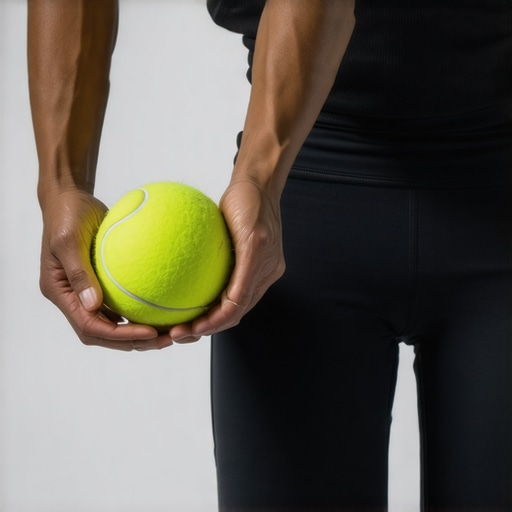
I remember the moment clearly—after a long day of sitting at my desk, I stood up and felt that familiar, stubborn ache deep in my glutes. It wasn’t just discomfort; it was like my muscles were refusing to let go, holding onto tension as if my body was fussing, “Not today!”. That lightbulb moment hit me: I needed a simple, effective way to target those deep muscles without expensive equipment or hours at the chiropractor. And surprisingly, the answer turned out to be as straightforward as a tennis ball.
Uncovering the Hidden Tension in Your Glutes
Deep in your backside lies a set of muscles crucial for mobility, stability, and pain-free movement—the glutes. When these muscles get tight or dysfunctional, they can contribute to low back pain, sciatic issues, and even hip discomfort. The tricky part? Most of us neglect them entirely until pain or stiffness forces us to notice. A common mistake I made early on was dismissing minor aches, thinking they would resolve on their own. But those tiny signs often mean your muscles are crying out for attention, and the longer you ignore them, the worse it gets. According to recent research, muscles that stay unresolved can lead to chronic pain conditions, making proactive approaches essential for lasting relief.
Enter the humble tennis ball—a small but mighty tool I began using to dig into those deep glute muscles. It’s inexpensive, portable, and surprisingly effective. In the coming sections, I’ll guide you step-by-step through the method that transformed my mobility and banished lingering aches. Trust me, this isn’t just about relief; it’s about reclaiming your movement freedom and saying goodbye to that persistent stiff feeling.
Is Relying on a Tennis Ball Really Worth It?
It’s natural to skeptical—trust me, I was too. I used to think I needed fancy gadgets or professional help for real results. I also fell into the trap of making common beginner mistakes, like applying too much pressure or not targeting the right spots. But once I learned the proper technique—mindful pressure, precise placement—the results spoke for themselves. This method is backed by physical therapy principles emphasizing self-myofascial release, which can significantly improve mobility. If you’ve ever felt that deep, dull tension that just won’t loosen, the tennis ball could be your new best friend—without the hefty price tag of regular massages or expensive equipment. Ready to discover how simple it can be? Let’s get started.
Locating the Tight Spots in Your Glutes
Start by sitting on a firm surface, like a chair or the edge of a desk, and lean slightly to one side. Use your fingers to find tender, knotty areas in your glutes—these are often near the top of the muscle, close to the lower back. During my first attempt, I spent a few minutes palpating different spots in my right glute, noticing some tight, tense pockets that felt resistant to stretching. It was uncomfortable at first, but I knew this was the key to releasing deep tension. Focus on areas that feel particularly sore or locked up.
Preparing the Tennis Ball and Body Position
Choose a standard tennis ball—nothing too hard or soft. Lie down on your back and bend your knees, placing your feet flat on the ground. Position the tennis ball under your glute, directly on the tender spot you identified. Use your hands for support, gently shifting your weight onto the ball. Imagine the ball as a release point—like a key unlocking a stiff lock—targeting those deep muscles that hold tension.
Applying Controlled Pressure for Effective Release
Slowly adjust your weight to increase pressure on the ball, but stay within a comfortable range. Think of it as gently pressing into a bruise—you want enough pressure to feel the knot, but not so much that it causes sharp pain. During my session, I kept it light at first, then gradually pressed down more as I felt the muscles relax. Hold the pressure for about 30 seconds to 1 minute, breathing steadily. If you find a spot that’s particularly tight, linger longer, navigating around until you feel the muscles soften. Remember, the goal isn’t pain but release.
Finding the Sweet Spot and Moving Through Tension
Continue gently rocking or shifting your body to find areas of maximum relief. Think of your muscles like a stiff door hinge—sometimes, a gentle wiggle helps loosen the joint. During one session, I discovered that slight movements in various directions—like tilting my pelvis—helped deepen the release. If a spot is especially stubborn, hold the pressure longer or gently lift and lower your hips to increase blood flow and soften the tissue. Be patient; releasing deep muscles takes time. After a few minutes, you should notice a significant reduction in tightness and discomfort.
Reinforcing Results with Proper Posture
After releasing tension, check your posture. Sometimes, muscles tighten again if your daily habits reinforce poor alignment. I found that sitting at my desk with better lumbar support and avoiding crossing my legs helped maintain the benefits. For ongoing relief, incorporate daily adjustments like those described in daily spinal tweaks. Using this targeted self-massage regularly empowered me to prevent flare-ups and stay mobile longer. Consistency is key; repetition helps train your muscles to stay relaxed and balanced, reducing overall pain and stiffness.Many people believe that simply standing up straight or doing the right stretches will solve their back pain and mobility issues. However, experts in spinal health reveal that common assumptions can sometimes be misleading. One prevalent myth is that all poor posture originates from a weak core—that strengthening abdominal muscles alone will fix years of misalignment. While core strength is important, recent studies highlight that posture also heavily depends on complex neuromuscular feedback loops and habitual movement patterns. Overemphasizing isolated muscle training without addressing ingrained habits can lead to inadequate results.
Why do some posture corrections backfire despite consistent effort?
This often happens because individuals focus solely on static alignment—like trying to stand perfectly upright—without considering dynamic movements and functional patterns. For instance, people may correct their sitting posture at work but neglect how they move during daily activities, which swiftly reverts their alignment. Also, there’s a common mistake of ignoring the brain’s role in motor control—posture correction isn’t just about muscle strength but involves neuroplasticity. Integrating movement-based retraining, as suggested in effective posture tips, can lead to more sustainable results. Moreover, many get caught in the trap of over-relying on external devices like lumbar supports or ergonomic chairs, thinking these alone will ‘fix’ the problem. But actual improvement stems from a combination of mindful adjustments, movement mastery, and understanding your body’s nuanced signals. To truly master your posture, you need to go beyond the surface—consulting with a specialist may uncover hidden imbalances or outdated movement habits. The complexity of back pain and mobility issues means that superficial fixes rarely last. For a comprehensive approach, explore the secrets behind effective posture correction and consider professional guidance. Have you ever fallen into this trap? Let me know in the comments.Maintaining the gains from your posture and mobility routines requires more than just a one-time effort; it demands consistent use of effective tools and adopting long-term habits. Personally, I rely heavily on specific equipment that has proven to be both effective and practical for ongoing maintenance. One such tool is the soft massage ball, which I use daily to target stubborn glute and hip tightness, preventing the recurrence of pain and stiffness. Unlike foam rollers, I prefer the massage ball because it allows for more localized pressure, helping me pinpoint and release deep muscle knots with precision. To complement physical tools, I also utilize mobility software like Enhance Flexibility, which guides me through tailored stretches designed to sustain my improvements and prevent regressions. These digital resources are invaluable for tracking progress and adjusting routines as needed. Prediction indicates that the future of mobility and posture maintenance will increasingly involve smart technology—wearables that monitor muscle tension and posture in real time, offering immediate feedback to correct poor habits before they become ingrained problems. How do I keep my posture in check over time? I integrate daily adjustments, like the ones outlined in daily spinal alignment routines, into my morning habits. Additionally, consistent use of self-myofascial release tools, such as my preferred massage ball, forms the backbone of my preventative approach. When muscle tension starts creeping back—from prolonged sitting or stressful days—I use targeted pressure to prevent it from escalating. As Dr. Vladimir Janda, a renowned physical therapist, emphasizes in his work on muscle imbalances, proactive maintenance with the right tools according to your body’s signals can significantly reduce the likelihood of regression or injury. To truly optimize your long-term health, I recommend trying out a deep glute release using a soft massage ball, practicing daily spinal alignments, and staying mindful of your movement habits. Incorporate these strategies consistently, and you’ll find your mobility and posture not only improve but become more resilient against daily stresses.
Over the years, I’ve learned that consistent, mindful adjustments are the real game-changers in maintaining mobility and preventing back pain. My personal experience with self-myofascial release using a tennis ball revealed that small, deliberate efforts compound into lasting improvements. It’s easy to underestimate how much daily habits and simple tools like a massage ball can influence our long-term health. Remember, the key isn’t just the tools but also cultivating an awareness of your body’s signals and responding proactively. The moment I shifted from reactive to preventive care—integrating targeted releases and posture tweaks—the improvements became undeniable. This journey taught me that enduring mobility isn’t about quick fixes; it’s about committing to regular, intentional practices that reinforce resilience and comfort.