

I remember the exact moment I realized my pelvis was doing its own thing every time I walked—like an uninvited dancer taking the spotlight. It was during a simple stroll, and suddenly, I felt that familiar instability, the kind that makes your back groan and your confidence waver. That sensation of one hip creeping higher than the other wasn’t just annoying; it was a warning sign that my body was out of sync, and I had no idea how to fix it.
For months, I tried to ignore it, thinking it was just a temporary discomfort or maybe my shoes—or maybe I just needed to walk more carefully. But as time went on, that unbalanced gait started to impact my posture, cause persistent aches, and even make walking feel like a game of shaky tension every single day.
Then, one illuminating day, I stumbled upon the root cause—my pelvis was tilting with every step, a pattern I wasn’t aware I was repeating. This lightbulb moment led me down a path of discovery, trying different strategies and exercises until I finally found what worked. Today, I want to share my journey and, more importantly, help you find relief from this common yet often overlooked issue.
The good news? You don’t need to be a body expert to correct it. By understanding why your pelvis hikes and learning simple, effective adjustments, you can restore your natural walking rhythm and bid farewell to that nagging imbalance.
So, if you’ve experienced uneven hips or a feeling of your pelvis acting up, keep reading. We’re about to delve into practical steps that can make a real difference. And trust me—you’re not alone in this struggle. Many people face the same challenge, often without realizing the impact it can have on overall health and mobility.
**Why Pelvic Imbalance Matters More Than You Think**
Strong, Balanced Movement Starts Here
Did you know that misaligned hips can contribute to chronic back pain and even hip replacements later in life? According to a study published by the National Institutes of Health, pelvic misalignment correlates strongly with lower back discomfort and gait issues. Addressing pelvic stability isn’t just about walking straighter—it’s about protecting your entire musculoskeletal system.
Early in my own journey, I made a crucial mistake: I focused solely on stretching my hips without considering the underlying cause of the imbalance. It sounds simple, but to truly correct it, I had to get to the root of my habitual movements and postural habits. To do that, I learned to identify the subtle ways I was compensating and made intentional adjustments. For a step-by-step guide tailored to these issues, I recommend exploring resources like [daily spinal alignments for lasting relief](https://chiromasteryz.com/adjust-your-routine-daily-spinal-alignments-for-lasting-relief).
As I shifted my approach, I discovered that improving pelvic alignment isn’t a quick fix but a gradual process that involves awareness, targeted exercises, and mindful habits. And trust me—once I saw the improvement, I knew I had to share this with others facing the same unsettling problem.
In the next sections, we’ll explore practical steps to stop your pelvis from hiking during walks—so stick around. Are you tired of uneven hips dictating your gait? Let’s get to the root and start moving with confidence again.
Find Your Alignment Clues
In my early days trying to fix my uneven hips, I started by noticing specific habits and movements that caused my pelvis to hike. I stood in front of a mirror and checked if one side of my pelvis was visibly higher or lower. This simple visual check acts like a map; it points you toward where your imbalance originates.
For example, one morning I observed that my right hip was slightly elevated when I crossed my legs often, unknowingly favoring one side. Recognizing this pattern made me realize I was reinforcing the imbalance daily. To get clear on your own, perform a quick mirror test or record yourself walking—this helps identify asymmetries that disrupt your gait.
Engage Your Core with Precision
Think of your core as the central stabilizer—like the spine’s own scaffolding. Weak or overactive core muscles often allow the pelvis to tilt or hike unexpectedly. A specific exercise I found beneficial involved lying on my back and gently contracting my lower abdominal muscles without flattening my back against the floor, similar to drawing your belly button toward your spine while maintaining natural curvature. This nuance is critical—over-tightening can exacerbate the imbalance.
Practicing this regularly builds awareness and creates a muscular ‘bracing’ effect that supports pelvic stability during walking. To deepen your understanding, explore simple exercises to relieve back pain that strengthen core stability.
Mobilize Tight Hip Muscles
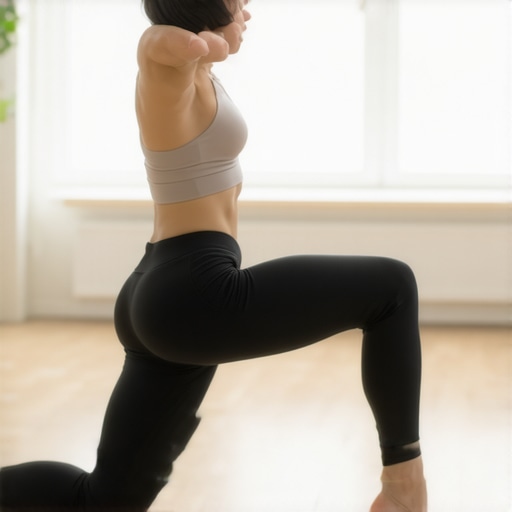
Imagine your hips as hinge joints—when tight, they resist smooth movement, causing your pelvis to hike during gait. One effective technique involved kneeling on one knee, then gently pushing your hips forward while keeping your shoulders square. This stretch targets the hip flexors, muscles often shortened from prolonged sitting.
During my own practice, I held each stretch for 30 seconds and repeated twice daily. The key is to avoid overstretching, which can trigger discomfort or trigger compensatory tightness elsewhere. Integrate this routine alongside daily spinal alignments to sustain improvements.
Strengthen the Postural Chain
Weak glutes and back muscles can cause your pelvis to tilt or hike as compensatory responses. I added targeted bridges—lying on my back with knees bent and lifting my hips—focusing on squeezing my glutes at the top. Over time, these movements activated dormant muscles, helping maintain pelvic balance during walking.
In my messy first attempts, I felt wobbly, but persistence paid off. Remember: balanced strength across your posterior chain stabilizes your pelvis naturally. For more targeted strengthening, check out expert mobility tips.
Refine Walking Technique
Once I had improved my foundation, I paid attention to my gait. I deliberately practiced walking slowly, consciously engaging my core and maintaining a neutral pelvis. I imagined my hips rotating evenly, keeping my pelvis level, like a well-balanced wheel. If I felt my hips hiking, I paused, reset, and restarted, making micro-adjustments—this mindful approach retrained my brain to move correctly.
Using a mirror or recording your walk can reveal if your hips are still misaligned. Remember, consistency outweighs intensity; small, gradual adjustments become habits that restore symmetry over time.
Integrate Daily Habits for Lasting Results
As I incorporated these steps into my routine, I noticed my pelvis hiking less during walks. Consistently performing gentle stretches, core exercises, and mindful walking habits created a feedback loop—each reinforcing the other. This pattern of integration is similar to a synergistic playlist—multiple tracks working together to produce harmony.
Stay mindful of your habitual positions—sitting for long periods, crossing legs, or slouching—since these reinforce imbalances. Regularly revisit your posture, and consider periodic adjustments like daily spinal alignments to maintain progress.
 Many people believe adjusting their posture or increasing mobility is simply about stretching more or maintaining perfect alignment, but this oversimplifies complex neuromuscular factors. A widespread misconception is that static stretches alone can correct all mobility issues; however, research indicates that dynamic, functional movements targeted to specific patterns are more effective for lasting improvements. Relying solely on passive stretching can lead to over-stretching tissues or creating new imbalances if not paired with active strengthening—advice supported by biomechanics experts who emphasize the importance of integrated mobility strategies.
Another common myth is that posture becomes fixed once you’ve corrected it. In reality, posture is dynamic and influenced by habitual movement patterns, muscle memory, and neural feedback loops. For example, if you have a tendency to slouch after a long day at your desk, it’s not enough to tweak your chair or adopt a new sitting position; you need to retrain your nervous system to adopt healthier movement habits consistently. This is where mindful adjustments integrated into daily routines, such as the simple spinal alignments outlined here, make a significant difference.
Be cautious of the trap of believing that quick fixes like foam rolling or passive recovery will resolve deeper issues. While these techniques can provide temporary relief, they often fail to address the root causes—such as motor control deficiencies or compensatory movement patterns—that perpetuate poor mobility and pain. Incorporating targeted exercises that promote neuromuscular re-education, as explained in mobility mastery exercises, is essential for true progress.
Regarding back pain, many think it’s solely caused by the spine or disc issues, but often it’s about how your muscles coordinate to support your spine. Weak or overly tight muscles can contribute to misalignments that patients and even some practitioners overlook, leading to repetitive injuries or chronic discomfort. Recognizing these nuances allows for more targeted interventions, as discussed in several expert resources.
What’s more, advanced practitioners warn against a one-size-fits-all approach. The nuances of individual movement patterns mean that what works for one person may worsen another’s condition. To truly unlock better posture and mobility, an in-depth assessment—focusing on neuromuscular patterns—is crucial. For instance, addressing your specific hip flexor tightness or core weakness provides more sustainable results than generic stretching routines.
Don’t fall into the trap of superficial fixes. Instead, focus on integrated, evidence-based strategies that consider your unique neuromuscular landscape. If you’re serious about overcoming persistent back pain or stiff joints, exploring resources like mobility strategies can guide you through effective, personalized approaches.
Have you ever fallen into this trap? Let me know in the comments.Once you’ve committed to improving your posture and mobility, it’s crucial to have reliable tools and consistent routines that support long-term progress. In my experience, integrating specific equipment and methods into daily habits ensures that the gains you make don’t fade over time. A key component is investing in quality mobility tools like foam rollers and resistance bands. I personally prefer a high-density foam roller because it offers just the right amount of firmness to release tight muscles without causing discomfort. Using it regularly to target areas like the hips and lower back helps maintain flexibility and prevents muscles from tightening up again. Additionally, resistance bands are invaluable for strengthening stabilizing muscles, especially around the pelvis and core, which are vital for postural support.
What I Learned About Moving Differently That Changed Everything
One of the most profound lessons was realizing that real progress comes from tiny, consistent shifts rather than sweeping, immediate fixes. I discovered that retraining my neuromuscular patterns required patience—every mindful step, every gentle stretch, and every conscious walk built toward lasting change. This taught me to listen more closely to my body’s subtle cues and avoid the trap of rushing for quick results.
Why Trusting Simplicity Over Complex Fixes Made a Difference
Initially, I was tempted by elaborate routines or expensive gadgets. But I found that simple techniques—like daily mindful alignment checks and targeted core exercises—had a more meaningful impact. This approach helped me focus on what truly matters: consistent habits and understanding my body’s unique signals. Embracing simplicity allowed me to stay committed without feeling overwhelmed or discouraged.
How Overcoming My Skepticism Opened New Doors
At first, I doubted whether small adjustments could make a real difference. But pushing through that skepticism, I noticed gradual improvements in my walking symmetry and pain levels. This experience reinforced that belief—trusting even modest efforts leads to transformation. If you’re hesitant, remember that progress is often slow but always worth the patience.
Curated Resources That Became My Foundation for Change
- Mobility Mastery Exercises: This resource provided step-by-step routines that targeted my specific imbalances. The clear guidance made exercising approachable and effective.
- Daily Spinal Alignments: Incorporating these quick, mindful corrections into my routine ensured I maintained progress and avoided slipping back into old habits.
- Expert Tips for Movement Without Pain: Trusted insights that helped me understand the science behind effective mobility, making my efforts both informed and intentional.
Your Next Step Toward Better Balance
Remember, addressing pelvic imbalance is a journey—not a sprint. Small, intentional actions can lead to significant improvements over time. Believe in your capacity to change, embrace the process, and celebrate each improvement along the way. Your body deserves this commitment, and I promise the rewards are worth it.
What specific movement habit have you noticed that might be contributing to pelvic imbalance? Share your experiences below and start your journey toward a more aligned, confident you.