
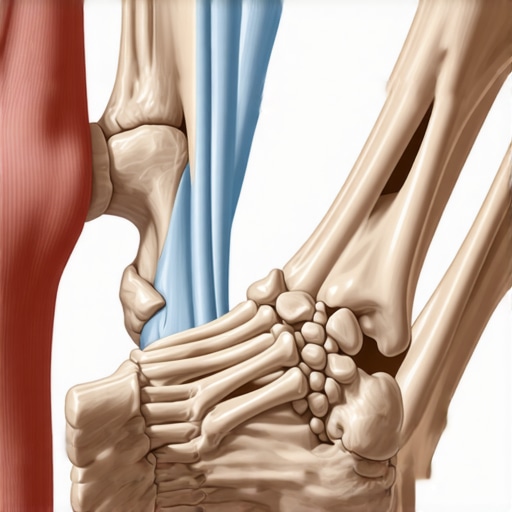
I remember the exact moment I connected the dots, and it was a lightbulb moment that changed how I approach back pain and mobility today. I was limping out of my chiropractor’s office, frustration mounting because yet another session hadn’t provided lasting relief. It wasn’t just my back—something deeper was off. As I stepped into my shoes that day, I noticed my arch looked flatter than usual, and suddenly, everything clicked. I realized that my collapsing foot arch was subtly pulling my alignment out of sync, which in turn was creating a chain reaction up into my hips, ultimately causing impingement and discomfort.
Why Your Foot Arch Matters More Than You Think
The truth is, your foot arch is a foundational element of your entire posture chain. When it collapses or weakens, it can throw off your gait, tilting your pelvis and altering how your hips move. Over time, this misalignment can lead to hip impingement, a painful condition where the bones rub against each other, restricting movement and causing inflammation. It’s startling to realize that issues originating in your feet can cascade all the way to your hips—something I only discovered after making a mistake early on in my recovery journey. I didn’t pay enough attention to my foot strength or stance, thinking only about my back and hips, but that oversight kept me stuck.
The good news? There’s a pathway to control and improve this situation, starting with understanding what’s really happening beneath the surface. If you’re like me, you might be facing stubborn hip pain that just won’t go away, despite countless stretches or treatments. And that’s often because the root cause wasn’t being addressed. By paying attention to your foot’s health and biomechanics, you can unlock better alignment for your entire body.
Once I started focusing on strengthening my arches and improving my gait, I noticed a significant difference. Hip pain faded, mobility improved, and I felt more balanced throughout my daily activities. So, if you’ve been experiencing hip discomfort that seems unconnected to your foot, don’t dismiss it. Your feet might hold the key to lasting relief.
Are you currently struggling with a stubborn hip problem, despite trying everything? Keep reading—I’ll guide you through practical insights and strategies that could finally help you get back to pain-free movement.
Is It Really Worth the Attention? Why Overlooking Your Foot Could Be Sabotaging Your Hip Health
Early on, I made the mistake of ignoring the importance of foot health, assuming that the pain was purely related to the hips or back. That was a costly oversight, as I failed to see how interconnected everything really is. According to an analysis published in the Journal of Orthopaedic & Sports Physical Therapy, proper foot mechanics are crucial for maintaining optimal alignment and preventing overuse injuries—like hip impingement—down the line. Recognizing this connection transformed my approach and eventually led to meaningful improvements.
So, if you’re skeptical or wondering whether this is just another trend, remember: small changes in your foundational support can lead to big differences elsewhere. Addressing foot arch collapse is not just about comfort—it’s about correcting the root of your mobility issues.
Want to learn more about simple yet effective adjustments for better alignment? Feel free to reach out through our [contact page](https://chiromasteryz.com/contact-us) and start your journey toward lasting relief.
Focus on Foot Strengthening Exercises
Start by incorporating targeted exercises like toe curls and arch lifts into your daily routine. I remember the first time I tried toe curls with a towel—a simple movement but surprisingly effective. I sat on the floor, placed a towel on the ground, and used my toes to scrunch it toward me. Initially, my feet shook, and I felt silly, but within a week, I noticed my arches felt more engaged. Consistency is key: do this for 2–3 minutes, twice daily, to see real improvement. These exercises activate the intrinsic muscles of your feet, creating a stronger foundation, similar to reinforcing the soil before planting a tree.
Change Your Walking Pattern
Next, analyze and adjust your gait. A sloppy or collapsing foot during walking can perpetuate arch weakness. I caught myself compensating with a flat-footed stride during a walk and consciously focused on landing softly with the ball of my foot, rolling through to my toes, like a gentle wave. This shift rebalances the load and encourages natural arch engagement. To train this, practice walking slowly in a mirror, emphasizing a proper heel-to-toe roll—imagine you’re stepping over a line without tripping. Over time, this retrains your muscles and improves gait mechanics, reducing strain on your hips.
Implement Proper Footwear and Support
Choose shoes that support the arch rather than flatten it. I remember my previous sneakers lacking any arch support, making my pain worse. I swapped them for shoes with a firm midsole and a contoured insole designed for arch support. Think of your foot as a tent: without proper support, it’s like the fabric sags, causing instability. Well-fitting orthotics or insoles can do wonders; get a professional fitting to ensure they match your arch needs. Wearing supportive footwear helps maintain the alignment needed for healthy gait, directly translating into less stress on your hips and pelvis.
Apply Self-Myofascial Techniques
Using a tennis ball or foam roller under your foot can release tension in the plantar fascia. I once spent five minutes rolling a tennis ball under my arch, focusing on tender spots. It felt uncomfortable at first, like pressing into a sore muscle, but relief was immediate afterward. This technique relaxes tight tissues, allowing the arches to regain their natural shape. Regular foam rolling can prevent the muscles from pulling your foot into collapse, which otherwise perpetuates misalignment upstream—up to your hips and back.
Maintain Posture Awareness During Daily Activities
Pay attention to your posture when standing, sitting, or even working at a desk. I found myself unconsciously favoring one leg or letting my arch flatten during prolonged standing. To combat this, I set reminders to shift weight evenly and kept slight engagement in my foot muscles—imagine trying to grip the floor with your toes. This micro-adjustment enhances proprioception, keeping your arches active throughout the day. Better foot engagement sustains improved alignment, reducing cumulative strain on your hips and spine, and reinforcing your gains from exercises.
Many assume that back pain is purely a structural issue within the spine, but that oversimplification often leads to ineffective solutions. One common myth is that stretching alone can fix chronic problems, yet in my experience, ignoring the role of subtle compensations and neural patterns can perpetuate pain. For instance, tight hip flexors are frequently blamed, but recent studies indicate that these muscles often become tight as a protective response to instability elsewhere, such as in the feet or pelvis (see the work of Dr. Stuart McGill). This means stretching might temporarily relieve tension but doesn’t address the root cause, risking a cycle of temporary relief without true correction. It’s crucial to recognize that as the muscles adapt to perceived threats, neural feedback loops reinforce poor postural habits.
Beware of the trap of quick fixes—be it foam rolling or chiropractic adjustments—that don’t incorporate integrated movement assessments. For example, manually releasing tight areas without considering underlying motor control derail your progress; it’s akin to pruning a tree without addressing the roots. Advanced practitioners incorporate mindful retraining of movement patterns, focusing on neuromuscular efficiency, which ultimately leads to sustainable relief.
Can You Correct Posture Without Addressing Neural Patterns?
This question often puzzles even experienced clinicians. The truth is, posture isn’t just a mirror of static alignment but a dynamic expression of the nervous system’s control strategies. Research published in the journal *Neuroscience & Biobehavioral Reviews* highlights that habitual postural habits are deeply ingrained in neural pathways, making them resistant to change if only physical adjustments are attempted. So, effective correction requires neuromuscular retraining—conscious practice that rewires these pathways over time.
Avoid the mistake of focusing solely on physical alignment; instead, integrate cognitive awareness and movement variability. This holistic approach helps break neural patterns that reinforce poor posture and chronic pain. For practical steps, exploring techniques like proprioceptive training or functional movement exercises can accelerate progress. For detailed strategies, check out our [core mobility improvement guides](https://chiromasteryz.com/enhance-your-mobility-expert-tips-for-easier-movement-in-2025).
Remember, addressing only the surface-level symptoms without understanding the underlying nervous system adaptations is like patching a leaking pipe without fixing the source—inevitably, the problem recurs. To truly transform your back health, consider a comprehensive plan, including tailored adjustments, movement education, and lifestyle modifications. Curious how to implement such strategies? Feel free to [reach out](https://chiromasteryz.com/contact-us) for personalized guidance.
Have you ever fallen into this trap? Let me know in the comments.Maintaining optimal back health requires more than quick fixes; it involves consistent, targeted strategies supported by effective tools. One of my personal favorites is the use of a high-density foam roller. I incorporate it into my daily routine to release fascia tension in my lower back and hips, which directly contributes to better posture and reduced pain. Using the foam roller on areas like the piriformis or thoracic spine helps me stay flexible and prevents stiffness from building up over time. For best results, dedicate 5-10 minutes daily, focusing on slow, controlled rolls to stimulate blood flow and break down myofascial adhesions, as supported by recent studies in manual therapy research.
Throughout my journey to conquer chronic back pain and restore mobility, I discovered an often-overlooked hero: the arch of your foot. My biggest breakthrough came when I realized that strengthening and supporting my foot arches didn’t just improve my footing—they profoundly impacted my entire alignment from the ground up. This insight transformed my approach, and I want to share it in case you’re still focusing solely on back stretches or hip adjustments without addressing the foundational support beneath your feet.
Lessons I Wish I Had Learned Sooner
- The Upstream Effect: I used to treat my back pain as a local issue. It wasn’t until I addressed foot stability that I saw real, lasting change. Our bodies are interconnected systems, and tiny imbalances in your arches can ripple upward, causing hip impingement and discomfort.
- Small Changes Make Big Differences: Simple exercises like toe curls and arch lifts became game-changers. The moment I committed to daily foot strengthening, my hips relaxed, and my pain decreased significantly. This taught me that foundational work pays off more than quick-fix stretches.
- Gait Re-education Can Rewire Your Body: Paying attention to how I walked—ensuring a proper heel-to-toe roll—retrained my muscles, restored balance, and prevented future misalignments. It’s a reminder that movement habits are powerful, and even small tweaks can yield profound results.
- Supportive Footwear Is a Must: Replacing worn-out shoes with ones that have proper arch support and considering custom orthotics helped lock in gains. Investing in the right footwear was like giving my foundation a sturdy base—making all subsequent adjustments more effective.
Tools That Changed My Perspective
- Arch strengthening insoles: I trusted these because they provided consistent support without overcorrecting, helping me maintain better alignment throughout the day. Look for quality over cheap options; your feet deserve it.
- Foam rollers and tennis balls: I’ve integrated targeted fascia releases under my feet, which relaxed tension and improved flexibility. Regular self-myofascial release is vital for keeping arches strong and functional.
- Mobility apps and gait analysis tools: Digital assessments helped me identify flawed walking mechanics and personalize my exercises. They’re a reminder that technology can empower your recovery journey.
Believe in Your Strength and Take Action
Remember, transforming your back health is about more than just immobilizing pain—it’s about building a resilient foundation from the ground up. Start incorporating simple yet effective foot exercises, evaluate your footwear, and be mindful of your gait. When your feet support your body properly, everything above—your hips, back, and shoulders—stands to benefit. I encourage you to embrace this holistic approach because pain-free mobility is well within your reach. Curious about integrating these strategies into your routine? [Reach out](https://chiromasteryz.com/contact-us) today or explore more at our [mobility enhancement guide](https://chiromasteryz.com/enhance-your-mobility-expert-tips-for-easier-movement-in-2025).