
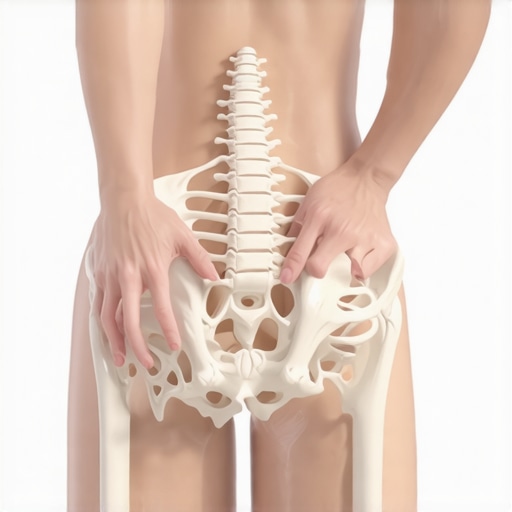
Ever had that instant jolt of pain after just bending down to tie your shoelace? Or felt your pelvis out of whack, making simple movements feel like a chore? I’ve been there, painfully so. One day, I was flexing my hips during a workout, and suddenly, a sharp twinge shot through my lower back — not unlike a betrayed friend turning on you unexpectedly. That moment was my lightbulb—that I needed to find a way to reset my pelvis, fast.
Discovering the Power of a Simple Pelvic Reset
What if I told you that resolving your persistent back discomfort might be as quick as a tap and a tiny tweak? I found that a specific move targeting the psoas muscle—those deep hip flexors—can reset your pelvis and banish tension in seconds. It was a game-changer for me. And believe me, this isn’t just another theory; it’s a practical, real-world fix that has become my go-to whenever my pelvis feels off-kilter or I wake up with stiff hips. Imagine a simple trick that can undo hours of misalignment, reduce pain, and restore your mobility right at home.
Is the Psoas Tweak Really Worth the Hype?
I get it. Anything promising instant relief sounds too good to be true. I made that mistake early on—trusting quick fixes like overly soft mattresses or ignoring my posture—only to find myself worse off. But after experimenting with this psoas adjustment, I saw tangible results. It’s like hitting a reset button. According to recent studies, tight hip flexors, including the psoas, can contribute to chronic lower back pain and postural issues (source: American Chiropractic Association). So, yes, it’s worth considering this simple, effective move as part of your daily routine.
In the next sections, I’ll walk you through how this tweak works, how to do it safely, and how it can become your secret weapon against back pain.
Start with Breath and Preparation
Find a quiet space and lie flat on your back on a comfortable surface. Place one hand on your chest and the other on your lower abdomen. Take deep breaths, focusing on expanding your belly rather than your chest. This calm breathing helps relax your core muscles and prepares your body for movement.
Identify the Tension
Lie still and gently scan your pelvis and hips. Notice any tightness or discomfort. Think of your pelvis as a bowl—if it’s tilted forward or backward, it can cause misalignment. Recognizing these sensations guides your correction efforts.
Step Into the Correct Position
Gently draw your knees toward your chest, wrapping your arms around your shins. Keep your lower back pressed into the ground. This position loosens tight hip flexors like the psoas and resets pelvic tilt.
Micro-Story: My First Attempt
One morning, I woke up feeling a sharp lower back ache. I followed this step-by-step, gently pulling my knees in while breathing deeply. At first, it felt awkward—like trying to untangle a knot with shaky hands. But after a minute, the tension started to ease. I paused, felt my pelvis slightly shift, and noticed less pain. It’s simple but powerful—like hitting reset on a sluggish computer.
Hold and Breathe Deeply
Maintain this position for 30 seconds to a minute, focusing on slow, deep breaths. Visualize your pelvis settling into a neutral position—imagine it as a balanced scale. This calming breath facilitates muscle relaxation and encourages proper alignment.
Gradually Return to Resting State
Slowly extend your legs back onto the ground, one at a time. Avoid jerky movements. As you do, keep your awareness on your pelvis, checking if the tension has lessened or if your posture feels more balanced.
Repeat and Integrate into Routine
Perform this reset twice daily—morning and evening—to reinforce good posture habits. Consistent practice can diminish chronic tightness and improve overall mobility, reducing strains that lead to back pain. For additional strategies, explore mobility exercises that complement this technique.
Use Visual Cues for Better Results
If you struggle with feeling your pelvis shift, try placing a small mirror nearby to monitor your alignment. Over time, your body will instinctively adopt the correct position, much like training a muscle memory. Remember, patience and consistency are key—this isn’t a one-time fix but a set of habits to develop.
Stay Mindful of Posture Throughout the Day
This gentle reset is most effective when coupled with awareness of your daily movements. When sitting, standing, or lifting, keep your pelvis in a neutral position. If you want to deepen your understanding, check out posture correction tips to support long-term health.
Many assume that improving posture is simply about standing tall and avoiding slouching, but in my experience as a mobility specialist, this simplistic view often leads to ineffective or even counterproductive results. A common myth is that rigidly forcing your shoulders back or aligning your spine perfectly at all times is the key to lasting relief. Actually, this can cause what I call “postural fixation,” where the muscles become stiff and resistant, worsening discomfort over time. Instead, fluid movement and understanding the natural variability of your spine’s position are crucial for true health. Additionally, wellness industry trends sometimes promote aggressive stretching or immediate adjustments without considering the body’s adaptive capacity. This approach risks overstretching stabilizers and disrupting proprioception—the body’s sense of position—which can create a cycle of imbalance. Did you know that overadjustment by chiropractors, although well-intentioned, may sometimes reinforce dependence on external corrections instead of fostering your own body’s capacity to self-align? According to Dr. Craig Liebenson, a pioneer in movement therapy, emphasizing controlled, mindful movements tailored to your unique biomechanics leads to more sustainable improvements than quick-fix adjustments. Now, for advanced readers, a lingering question is: How do subtle neuromuscular patterns influence chronic back pain beyond obvious postural habits? Recognizing and retraining these hidden neural pathways can make a significant difference. For example, muscle compensation patterns—like overusing certain stabilizers—may cause persistent discomfort despite apparent alignment. To address this, integrating neuroplasticity-based exercises that reshape these patterns can enhance mobility and pain resolution. Incorporating daily adjustments that acknowledge body individuality, such as slow, mindful movements found in programs like the ones detailed here, helps to avoid common pitfalls of rigid correction. Remember, effective posture isn’t about perfection but about adaptability, resilience, and understanding the body’s nuanced language. Have you ever fallen into this trap? Let me know in the comments.Maintaining your newfound mobility and posture improvements requires the right tools and daily habits. Personally, I rely heavily on a high-quality foam roller for my daily routines because it helps release deep tissue tightness in muscles like the psoas and lumbar fascia, which are often culprits in chronic back pain. Using a foam roller correctly—placing it under tight muscles and gently rolling—allows for self-myofascial release that promotes better blood flow and flexibility. For precise targeting, I prefer a semi-rigid lua strap designed for myofascial work, enabling me to isolate muscle groups more effectively and avoid over-stretching. Incorporating these tools into your routine complements your daily spinal alignment practices and can significantly boost long-term results. Moreover, I’ve found that digital posture reminder apps—such as Upright GO—serve as gentle nudges throughout the day, helping me correct slouching and maintain awareness of my body’s position, especially during prolonged desk work. In the future, trends are moving toward intelligent biofeedback devices that monitor your posture in real time and provide actionable cues, making real-time correction more effortless. To stay on top of your progress, recording your mobility sessions with a smartphone app helps track improvements and identify lingering issues. Curious about integrating tech into your routine? Check out top mobility strategies to further optimize your approach. Remember, consistency is crucial—dedicate at least 5-10 minutes daily to these tools for lasting benefits. To get started, I recommend trying a guided foam rolling sequence designed specifically for lumbar and hip flexor release, as detailed in recent research by Dr. Kelly Starrett, who emphasizes the importance of self-myofascial techniques in preventing chronic pain. Make this an essential part of your daily routine, and you’ll set yourself up for sustainable mobility and pain-free movement.
Over time, I’ve realized that the journey to back health isn’t about quick fixes but about embracing small, deliberate changes that lead to profound shifts. The biggest lesson I’ve learned about posture, back pain, adjustments, and mobility is that consistency trumps intensity. Incorporating gentle, mindful resets—like the pelvic adjustment detailed in this article—can create cumulative benefits that transform your daily experience. Additionally, understanding that this process isn’t linear has been crucial; progress often comes in subtle shifts, and patience becomes your best ally. Lastly, trust your body’s signals; tuned-in awareness paired with consistent practice fosters resilience and long-term well-being, making your commitment to mobility truly empowering.