

Ever finished a long work session, only to feel that dull, nagging ache creeping into your wrists? You know the one—tight, sore, like you’ve been squeezing a too-small ball all day. I used to ignore it, powering through with little thought. But one evening, after a particularly grueling day of back-to-back emails and spreadsheets, I finally realized—if I didn’t address this discomfort, it was only going to get worse. That realization was my lightbulb moment.
The Power of a Simple Wrist Reset
If you’ve ever experienced similar wrist tension, you’re not alone. Our hands and wrists are under constant stress, especially when pegged to keyboards, mice, and smartphones. And here’s the truth: those minor aches can evolve into chronic pain if ignored. The good news? There’s a quick, effective trick I stumbled upon—and now I swear by—to help reset and relax my wrists in just 30 seconds.
Is the Wrist Reset Overhyped, or Does It Really Work?
Early on, I was skeptical. It sounded almost too simple to make a real difference. I also made a mistake early in my journey—thinking stretching alone was enough. That misguided belief led me to overdo some stretches, which sometimes worsened the discomfort. But once I learned the importance of proper, gentle movements and brief resets, I started noticing immediate relief. If you’re curious whether this tiny habit could become a game-changer for your wrist health, read on. This quick routine is backed by ergonomic principles documented in resources like expert tips for better movement and has helped many prevent lingering pain.
Adopt Proper Wrist Positioning During Work
Start by adjusting your keyboard and mouse to ensure your wrists are in a neutral, straight line—imagine balancing a tray without tilting it. Place your keyboard at elbow height, keeping your forearms parallel to the floor. This minimizes undue strain and sets a foundation for the rest of your routine.
Implement the Wrist Reset Technique
Every hour, perform the following: Extend your arm in front, palm facing down, and gently pull your fingers back with the opposite hand—think of gently opening a stubborn jar lid. Hold for 5 seconds, then switch. Next, rotate your wrists clockwise and counterclockwise for 10 repetitions each. During my first attempt, I consciously slowed down, ensuring every movement was smooth. It took about 30 seconds, but immediately my wrists felt less tight, like releasing built-up tension.
Enhance Mobility with Gentle Stretching
After the reset, stretch your wrists with a simple pose: kneel down, place your palms on the floor, fingers pointing back, then gently lean forward until you feel a stretch—similar to reaching into a tight sleeve. Hold for 15 seconds. Doing this once or twice daily significantly improved my flexibility, relieving persistent soreness that used to bother me after long coding sessions.
Incorporate Strengthening Exercises
Strengthening the small muscles around your wrists helps prevent fatigue. One effective move is the wrist curl: hold a lightweight (like a water bottle), palm up, and curl your wrist upward. Perform 3 sets of 12 reps. Remember, progress slowly—my initial attempt with too much weight caused discomfort. Gradually increasing resistance made my wrists sturdier and less prone to pain.
Optimize Your Workspace Ergonomics
Assess your workspace: is your chair too high or too low? Are your monitor and keyboard aligned? Aim to keep your wrists in a relaxed, neutral position similar to holding a cup of tea. An ergonomic setup reduces the need for constant adjustments, as explained in posture improvements. Correct positioning is the foundation that amplifies the benefits of your wrist routines.
Create Consistent Reminders and Habits
Set alarms or use sticky notes to remind you to perform these exercises regularly. I used a timer on my phone every hour, which transformed a sporadic habit into a routine. Over time, I noticed my wrists felt more resilient, with less soreness lingering after long work hours. This approach ensures the practice becomes automatic, not an afterthought.
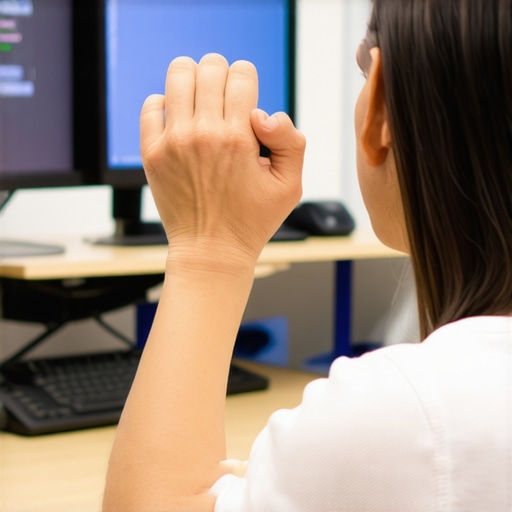
While many of us have absorbed basic advice on posture and mobility, there’s a surprising amount of misinformation circulating, often leading to unintended consequences. For instance, the widespread belief that all curvature corrections are inherently good can be misleading. Correcting spinal posture isn’t simply about ‘sitting straight’ at all costs—sometimes, forcing alignment without regard to individual anatomy can cause muscle imbalances and joint stress. Evidence from expert studies shows that personalized, dynamic adjustments outperform rigid postural corrections, emphasizing the importance of understanding individual nuances. Moreover, the common myth that stretching alone will fix mobility issues neglects the crucial role of strength training and neural control in maintaining healthy movement patterns. Another trap is the over-reliance on self-adjustments, such as cracking your back, which might offer temporary relief but could also mask underlying dysfunctions—particularly if done improperly or too aggressively. To truly master healthier movement, it’s essential to recognize that authentic change requires a combination of tailored adjustments, consistent strengthening, and awareness of your body’s unique limits. For instance, professional manual therapy differs significantly from self-cracking; the former incorporates precise, evidence-based techniques that realign joints without risking tissue damage. If you’re curious to explore how specific approaches can enhance your mobility, check out these insights into professional adjustments. Remember, blindly following trend-based advice without understanding your body’s specifics is where many falter. Have you ever fallen into this trap? Let me know in the comments.
Maintaining excellent posture and mobility over months and years requires more than just awareness; it demands reliable tools and established routines. I personally rely on a handful of carefully selected accessories and software that have transformed my approach to long-term back health and functional movement. One tool I can’t recommend enough is the ergonomic sit-stand desk converter. Investing in a adjustable surface allows me to switch between sitting and standing seamlessly, helping prevent stiffness and pressure build-up that often come from static postures. Additionally, I use a high-quality lumbar roll that fits perfectly when seated, ensuring my lower back maintains its natural curve during lengthy work hours, as emphasized in office ergonomics tips. For mobility tracking and habit enforcement, I incorporate apps like UpRight, which monitors my posture in real-time and provides gentle reminders to straighten up when slouching occurs, fostering consistent good habits over time. To address stubborn tension and muscle tightness, I utilize myofascial release tools such as a tennis ball or foam roller—especially targeting my thoracic spine and hips, crucial zones linked to back health and movement efficiency. Regular self-mobilization sessions with these are supported by professional techniques outlined in expert spinal adjustment insights, emphasizing the importance of combining self-care with professional care for sustainable progress. As technology advances, I foresee a growing integration of AI-driven posture correction devices and biofeedback wearables, making personalized health metrics more accessible and actionable. This trend could revolutionize how we maintain mobility, turning passive adjustments into active, data-informed practices. How do I keep my mobility routines effective long-term? Consistency becomes key, and I recommend setting up dedicated reminders—digital alarms or even integrating posture-focused notifications into your daily schedule. Incorporate an eye-opening tip: try the advanced method of periodically performing a thoracic rotation using a resistance band, which enhances spinal flexibility and reduces stiffness—it’s a game-changer worth trying today. If you’re eager to optimize your movement and prevent future discomfort, explore simple, evidence-based strategies like those outlined in mastering your mobility, then commit to a small, daily practice. Proper tools paired with mindful habits can practically guarantee that your body stays resilient and functional across your lifespan.
The Hardest Lessons I Learned About Adjustments, Mobility, Posture, and Back Pain
One of the most challenging realizations was that not all advice is universally applicable. Early in my journey, I believed every stretch or posture correction suited everyone, leading to frustration and sometimes worsening discomfort. I discovered that personalized approaches, including understanding my unique spinal alignment, made all the difference. Identifying my body’s specific needs taught me to listen more carefully and to adapt techniques like those discussed in ergonomic tips tailored to my daily habits.
Another tough lesson was realizing that quick fixes often mask underlying issues. Relying solely on self-adjustments, like cracking my back, gave temporary relief but ignored deeper mobility restrictions. Professional interventions, such as those explained in expert spinal adjustments, offered more sustainable progress. This taught me to balance self-care with seeking professional advice, fostering genuine improvements over time.
Finally, I learned that consistency beats intensity. Sporadic efforts yielded little long-term change. Incorporating daily routines, reminders, and mindful posture adjustments, as highlighted in habit-building strategies, transformed my movement quality. Embracing this consistency has become my most powerful tool against recurring pain, proving that patience and persistence are essential in mastering mobility and posture control.
Tools That Transformed My Approach to Movement and Back Health
If you’re serious about improving your posture and mobility, these tools have been game-changers:
- Sit-Stand Desk Converter: Switching between sitting and standing throughout the day prevents stiffness and supports dynamic movement, as discussed in spinal health resources.
- Lumbar Support Roll: Proper lower back support while seated helps maintain natural spinal curves, reducing strain and discomfort.
- Posture Tracking Apps: Apps like UpRight reinforce good habits with gentle reminders, making consistency effortless.
- Self-Myofascial Tools: Foam rollers and tennis balls target tight muscles, improving mobility and releasing tension efficiently. Learning their proper use has been vital, especially when combined with advice from professional techniques.
In the future, advancements like AI-driven posture correction devices will likely elevate this approach, offering personalized guidance that adapts in real-time. Embracing these tools, along with developing a disciplined routine, is your best bet for lasting health. Remember, progress in mobility and posture is a journey—small daily steps compound into significant transformation.
Take the Leap Towards Better Movement Today
The secret to long-term relief and movement freedom lies in consistent, mindful effort combined with smart tools. Your body is your most valuable asset—protect and nurture it with intentional habits and professional guidance. Start small, stay persistent, and watch how your posture and mobility improve steadily over time. I believe in your ability to transform discomfort into strength—now is the moment to take action. Need help tailoring your routine? Feel free to reach out via contact us.