

I remember the moment vividly—after a long day hunched over my desk, my neck was so tight it felt like I had a boulder resting on my shoulders. I attempted to stretch, massage, even craned my neck trying to find relief, but nothing seemed to work. Frustration crept in as I questioned if I’d have to accept this constant tension as part of my life. Then, I stumbled upon a simple but effective trick: a quick 10-second breath technique that changed everything.
Today, I want to share this eye-opening method that has helped me and countless others break free from neck tightness so often caused by day-to-day habits and poor posture. It’s not a complicated or time-consuming overhaul—just a tiny adjustment that can make a world of difference in how you feel and move.
Why Your Neck Gets Tense and What You Can Do About It
Many people underestimate how much our breathing influences muscle tension, especially in areas like the neck and shoulders. When I first learned about the connection, I realized I’d been making a simple but critical mistake: holding my breath or breathing shallowly during stressful or focused moments. This pattern triggers a sympathetic nervous system response, leading to muscle tightening as a survival mechanism. Correcting my breath pattern was like flipping a switch, instantly bringing my muscles back to relaxation.
What amazed me is that this isn’t some fancy, complicated technique reserved for yogis or athletes. It’s a natural reflex you can activate in less than 10 seconds—hence the name—and it’s grounded in sound science. Researchers have shown that controlled breathing can significantly reduce tension and improve circulation, which enhances mobility and comfort, even in stubborn areas like the neck.
Are you tired of suffering through neck stiffness that seems to develop out of nowhere? Do you find yourself clenching your jaw or holding your shoulders high without realizing it? If so, you’re not alone. I’ve been there, and that’s exactly why I want to introduce you to this simple, practical fix.
Before diving into the technique, I want to be upfront about a common mistake I made early on: I believed that strengthening my neck muscles alone would solve the problem. While exercise is valuable, ignoring how your breath impacts muscle tension can prevent you from making lasting changes. For a more comprehensive approach, check out [this article](https://chiromasteryz.com/unlocking-better-posture-simple-adjustments-to-relieve-back-pain) about posture adjustments that complement breathing techniques.
Now, let’s explore how to harness your breath to immediately release that grip in your neck and shoulders, and set the stage for movement and relaxation you might not have thought possible in just seconds.
Prime Your Body with Proper Posture
Start by sitting upright on a sturdy chair, feet flat on the floor, knees at a 90-degree angle. Imagine your head being delicately balanced on top of your spine, like a coconut perched carefully on a stem. This positioning reduces unnecessary strain on your neck muscles. To fine-tune this, gently tuck your chin slightly inward, as if creating a double chin, to align your cervical spine and prevent forward head slouching. Adjust your shoulders so they relax away from your ears, reducing upper trapezius tension. For a more detailed guide, check out these posture tweaks that can alleviate back and neck stress.
Breathe with Intention to Reset Muscle Tension
Once your posture feels stable, focus on your breath. Inhale deeply through your nose for a count of four, filling your lungs from the bottom up—think of your belly expanding like a balloon. Exhale slowly through your mouth for a count of six, allowing your shoulders to gently drop and your neck muscles to relax. This deliberate, diaphragmatic breathing switches your nervous system from sympathetic to parasympathetic dominance, which is your body’s relaxation mode. I remember trying this during a hectic workday; initially, I fumbled the inhale, but with practice, just a few breaths brought an instant wave of relief, loosening stubborn neck muscles. Proper breathing is more than just oxygen—it’s a tool for calming tension and restoring mobility.
Apply Gentle Neck Mobilization
After your breath resets your baseline tension, gently mobilize your neck. Slowly turn your head to the right, holding for a moment at your comfortable limit, then return to center. Repeat on the left side. Next, tilt your chin toward your chest, feeling a stretch along the back of your neck, then lift your chin upward gently. These movements act as a natural lubricant for your cervical joints, improving range of motion and reducing stiffness. During my first attempt, I was cautious—I moved too hurriedly and experienced slight dizziness. Now, I perform these slow, controlled motions, akin to turning a finely-tuned steering wheel. Remember, forcing movement can backfire, so respect your limits. Regular practice can help prevent the subtle tension that builds up from daily habits.
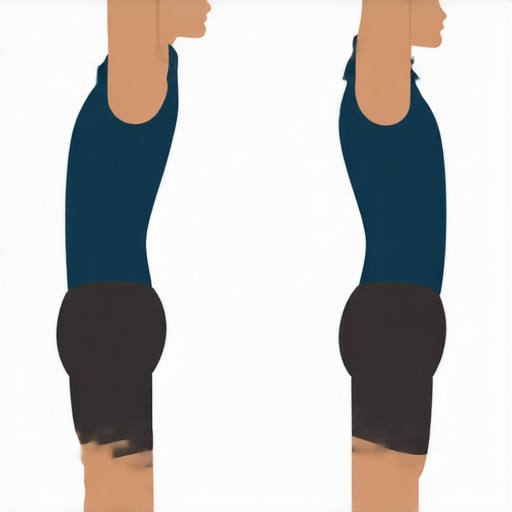
Illustration of controlled neck rotation and tilting exercises demonstrating proper technique.
Integrating these steps into your daily routine empowers you to take immediate control over neck tension. By aligning your posture properly, breathing deliberately, and mobilizing gently, you create a feedback loop that prompts your muscles to relax naturally, reducing pain and increasing mobility. For more strategies on improving your overall posture and movement, explore mobility enhancement tips or consult a professional through contact us for personalized guidance.When it comes to posture correction and back pain relief, many believe that simple adjustments—like slouching less or wearing lumbar supports—are the magic bullets. However, as an expert in spinal health, I’ve observed that most common advice misses critical subtleties that determine true progress. For example, a prevalent myth is that aligning your shoulders automatically resolves neck tension, but in reality, this ignores the dynamic role of core stability and breathing patterns in maintaining proper posture. Focusing solely on static position can lead to the trap of over-reliance on external fixes, neglecting how internal control and neuromuscular coordination influence lasting changes.
Another misunderstood aspect is the emphasis on posture ‘fixes’ rather than movement habits. Holding an ideal posture for minutes isn’t enough; the real secret lies in integrating natural, fluid motion that strengthens adaptive responses. Moreover, many mistake increased mobility for reduced stability, risking exercises that force joints beyond their comfortable ranges, potentially aggravating issues instead of resolving them.
Consider the misconception that pain is always a sign of structural damage. Recent studies, such as those cited by the Institute for Muskuloskeletal Research, reveal that pain sometimes stems from neural sensitization or muscular fatigue, not tissue injury. Addressing these nuances requires a layered approach, combining awareness, specific mobility drills, and controlled strength work.
For advanced practitioners, a common trap is neglecting the role of breath in posture and pain. Shallow, tense breathing perpetuates muscular tightness, especially in the upper back and neck. Techniques that incorporate diaphragmatic breathing, as highlighted by Dr. Belisa Vranich, can reset muscular tension and improve alignment from within. In my experience, integrating breathwork with movement recalibrates the body’s perception of tension, offering sustainable relief.
So, what’s the takeaway? If you only focus on static corrections without addressing internal control, breathing, and movement diversity, your efforts might be futile. To dive deeper into how to optimize your posture with nuanced strategies, explore these advanced adjustment tips. Remember, true mastery of posture doesn’t come from quick fixes but from understanding and applying these foundational nuances. Have you ever fallen into this trap? Let me know in the comments.Maintaining proper posture and back health over the long term requires more than just awareness; it demands the right tools and consistent routines. For me, integrating specific equipment and software has transformed my approach from reactive to proactive, ensuring sustained mobility and pain-free living.
One of the foundational tools I rely on is a high-quality posture corrector brace. Unlike generic supports, I prefer models that offer adjustable straps and ergonomic design, allowing me to fine-tune the fit for daily wear during work or exercise. This helps reinforce proper spinal alignment, especially during prolonged sitting sessions. Additionally, I frequently use foam rollers with targeted patterns to release muscle tension in my upper back and hips. The Deep-Tissue Foam Roller from TriggerPoint offers the right density for my needs, providing leverage to break up adhesions and fascia restrictions that often contribute to back pain.
Beyond physical tools, tracking software plays a crucial role. I use a posture monitoring app that connects to my wearable device, providing real-time feedback on my sitting and standing habits. These apps analyze your posture alerts and data, helping you identify patterns of slouching or misalignment. This feedback loop encourages continuous self-correction throughout the day.
To support long-term results, I incorporate a daily mobility routine, supported by instructional videos from experts like Dr. Kelly Starrett. His methods emphasize controlled, deliberate movements that enhance joint range of motion and muscular balance. A specific favorite is the World’s Best Hip Opener, which indirectly benefits back stability.
Looking ahead, I predict that wearable neurofeedback devices integrated with AI will become standard in posture maintenance. These devices will adapt training protocols based on individual movement patterns, making personalized corrections more accessible.
### How do I maintain my posture over time?
Consistency is key. I schedule regular check-ins with a professional, either through virtual consultations or in person, using platforms like [our contact page](https://chiromasteryz.com/contact-us). I also keep a dedicated space with ergonomic essentials—like adjustable desks, supportive chairs, and balance cushions—to reinforce healthy habits.
Remember, tools are only effective if used properly. For instance, I recommend trying the advanced technique of targeted myofascial release with a lacrosse ball, which can be used to release tight spots in muscles that regular foam rolling might miss. This method is a game-changer for stubborn tension areas that cause recurring back pain.
To deepen your understanding of long-term mobility and posture strategies, explore these upcoming mobility tips. Remember, proactive maintenance now will pay dividends in your comfort and function for years to come.
The Hardest Lessons I Learned About Posture, Adjustments, Back Pain, and Mobility
One of my most profound realizations was that quick fixes only offer temporary relief. Sustained improvement requires understanding the root of the problem—internal habits like breathing and movement patterns. I also found that embracing a holistic approach, combining internal awareness with external adjustments, leads to genuine progress. Finally, patience and consistency are vital; improvements compound over time, and rushing can undo even the best efforts.
My Go-To Tools for Better Posture and Relief
Personally, I rely on ergonomic accessories like adjustable desks and supportive cushions that reinforce healthy habits. My favorite mobility equipment includes foam rollers and lacrosse balls, which help release stubborn tension. I also trust digital tools, such as posture monitoring apps, for real-time feedback that keeps me aligned throughout the day. These resources empower me to stay proactive and informed, making a tangible difference in my daily comfort and mobility.
Embrace the Change: Your Body’s Invitation to Thrive
The journey toward better posture and back health isn’t about perfection but progress. Every mindful breath, gentle movement, and small adjustment builds resilience and vitality. You have the power to reshape your habits and, ultimately, your well-being. So, take that first step today—your body is listening and ready to support you in moving with ease and confidence. What’s one small change you’ll commit to today to improve your posture? Share below, and let’s support each other on this transformative path.