
I’ll never forget the moment I first realized my laptop was slowly turning me into a hunchback. It started with minor neck aches after long work sessions, but one evening, I caught a glimpse of myself in the mirror—shoulders rounded, head jutting forward like a Quasimodo impersonator. That was my lightbulb moment.
Most of us spend hours hunched over our devices, unaware of the toll it’s taking on our neck and back health. If you’ve ever experienced persistent discomfort after a long day at your desk, you’re not alone. The good news? There’s a simple tweak that can make a world of difference.
Why Your Desk Setup Could Be Sabotaging Your Posture
Many people don’t realize that the position of your laptop screen and keyboard drastically influences your spinal health. When the screen is too low, you instinctively crane your neck downward. Over time, this creates strain, leading to chronic neck pain and even headaches. An improper setup can also cause you to slouch, putting unnecessary pressure on your lumbar spine.
Early on, I made the mistake of using makeshift solutions—stacking books under my laptop or hunching over at odd angles—thinking that a quick fix was enough. But these temporary adjustments only worsened the problem. The key is a proper ergonomic setup that aligns with your body’s natural posture.
Research shows that correct monitor height not only boosts productivity but reduces musculoskeletal discomfort.
So, what exactly is the best way to elevate your laptop to keep your neck happy? Let’s explore practical steps to optimize your workspace.
Elevate Your Monitor to Eye Level
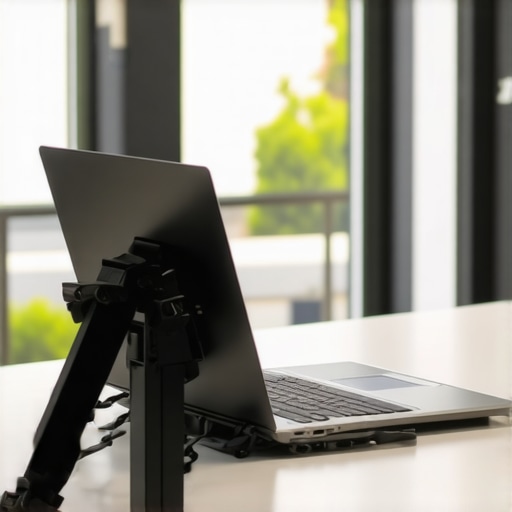
Start by placing your laptop on a stack of sturdy books or a riser so that the top of the screen aligns with your eyes. When I first set mine up this way, I immediately noticed less neck strain. Make sure the entire screen is visible without tilting your head up or down. This simple adjustment prevents your neck from bending unnaturally—think of your neck as the hinge of a door; keep it straight for smooth movement. For best results, consider using a monitor stand designed for ergonomics or adjustable laptop stands, which can be found in [ergonomic accessories](https://chiromasteryz.com/unlocking-better-posture-simple-adjustments-to-relieve-back-pain).
Align Your Keyboard and Mouse Properly
Position your keyboard and mouse so they are within easy reach, with your elbows bent at roughly 90 degrees and close to your sides. Use an external keyboard and mouse if you’re using a laptop. When I struggled with continuous shoulder discomfort, this micro-translation in my setup made a noticeable difference too. This way, your shoulders stay relaxed, like the tension in a stretched rubber band—they won’t become tight and strained. Elevating your screen and keeping your peripherals close prevents hunching forward, reducing overall back tension.
Sit Back in Your Chair with Support
Choose a chair that supports your lower back’s natural curve. Sit back fully, ensuring your buttocks touch the backrest, which functions like a hammock supporting your spine’s natural shape. I once tried to sit on a hard plastic chair, and within minutes, my lower back felt like it was twisting into a knot. Adding a lumbar pillow or a rolled towel can mimic natural lumbar support if your chair lacks it. This positioning helps distribute weight evenly, much like a well-balanced scale, relieving pressure from individual vertebrae.
Keep Your Feet Flat and Legs Relaxed
Ensure your feet are firmly planted on the floor or on a footrest. Your knees should be about level with your hips. I remember sitting cross-legged for hours, which temporarily eased my discomfort but caused more issues afterward. Proper foot placement stabilizes your pelvis, similar to a tree’s roots anchoring it firm in the ground, which is vital for correct posture. Avoid dangling feet, as this shifts your pelvis and can cause misalignments over time.
Incorporate Movement Breaks
Every 30 minutes, stand, stretch, or walk around. Use reminders or timers to integrate these micro-movements into your routine. I started setting a timer on my phone, which initially felt disruptive but became a cue to adjust and loosen up. These small movements prevent stiffness and improve circulation, much like oil moving through gears to keep them running smoothly. Incorporating mobility exercises or quick stretches during breaks can help alleviate tension accumulated from static postures—check out [simple exercises to relieve back tension](https://chiromasteryz.com/mobility-mastery-simple-exercises-to-relieve-chronic-back-pain) for ideas.
Optimize Your Lighting and Environment
Natural or evenly distributed lighting reduces eye strain, prompting better posture. Avoid glare by positioning your screen away from direct sunlight or windows. I once faced constant headaches in my poorly lit corner, prompting me to move near a window or add a desk lamp. Proper lighting reduces the tendency to lean forward closer to the screen, which strains your neck and back. Think of your workspace as a nurturing environment that supports your body’s alignment—adjustments here can make all the difference.
Implementing these concrete steps requires initial effort, but the benefits to your posture and back health are well worth it. Regularly revisiting and fine-tuning your setup ensures that your workspace remains a place of comfort and productivity, not pain and strain. For more detailed guidance, visit [posture correction secrets](https://chiromasteryz.com/posture-correction-secrets-that-transform-back-pain-outcomes).
Many believe that simple stretches and quick adjustments are enough to correct persistent back pain and poor mobility. However, the truth is more nuanced, and misunderstanding these subtleties can actually lead to worse issues over time. One common myth is that stretching alone can fix structural issues—while flexibility is important, neglecting strength and stability often builds a false sense of security. As Dr. Stuart McGill emphasizes in his research, addressing back pain requires a comprehensive approach that combines mobility, stability, and mindful movement strategies, not just stretching routines. Overlooking this can make pain worse or cause new, compensatory problems. Another mistake I see frequently is the assumption that mobility exercises are universally beneficial without considering individual limitations or existing injuries. Doing too much, or performing exercises incorrectly, can result in aggravating tissues rather than healing them. For instance, aggressive joint mobilizations without proper guidance may risk damage, especially if you’re unaware of joint hypermobility or instability. That’s why personalized assessments from qualified professionals are vital rather than relying solely on generic advice. Some folks fall into the trap of pushing through pain during mobility exercises, thinking discomfort is part of progress. But pain is a warning signal—ignoring it can result in further tissue damage or chronic issues. Instead, use pain as a guide to modify or pause your activity, and review proper technique via trusted sources or consult an expert. So, what do advanced practitioners focus on that most beginners miss? Understanding the difference between mobility and stability is crucial. As you work on flexibility, reinforcing strength in key areas like your core, glutes, and deep spinal stabilizers becomes essential to prevent joint laxity and poor alignment. A balanced training approach, emphasizing both controlled mobility and muscle activation, can significantly improve long-term outcomes. For example, incorporating mindful control in exercises from [master your mobility top strategies](https://chiromasteryz.com/master-your-mobility-top-strategies-for-moving-without-pain) ensures that your nervous system properly registers joint position, reducing the risk of maladaptive compensation. Additionally, many underestimate the importance of daily micro-adjustments to maintain posture integrity throughout the day, especially in sedentary habits. Small, consistent refinements, combined with deep understanding of your unique biomechanical patterns, will result in durable improvements. Remember, permanent change comes from addressing the root causes, not just surface symptoms. If you’d like a step-by-step guide tailored to your specific needs, consider visiting our [posture correction secrets](https://chiromasteryz.com/posture-correction-secrets-that-transform-back-pain-outcomes). Have you ever fallen into this trap? Let me know in the comments.Maintaining good posture isn’t just about quick fixes—it’s about integrating reliable tools and routines that stand the test of time. One of my go-to tools is an adjustable lumbar support pillow, which I personally use during long sitting periods. It molds to my lower back, providing continuous alignment and reminding me to sit upright. I found that investing in a high-quality ergonomic chair with adjustable height and lumbar support significantly reduces strain over weeks and months, making my daily routine more sustainable. Regularly updating your workspace ergonomics with these tools ensures that posture improvement isn’t a fleeting fad but a lasting habit.
Another essential element is a gentle reminder system. I rely on a timer app that nudges me every 30 minutes to stand or stretch, such as the ” stretches,” which I customize to include spinal twists and shoulder circles. These micro-movements prevent stiffness and facilitate long-term mobility gains. For mobility maintenance, incorporating targeted exercises like those detailed in [mobility mastery](https://chiromasteryz.com/mobility-mastery-simple-exercises-to-relieve-chronic-back-pain) helps reinforce flexibility and strength.
Looking ahead, I predict wearable tech with real-time posture monitoring will become mainstream. Devices that give haptic feedback when you slouch could shift our long-term habits by making ergonomic awareness instant and intuitive. As Dr. Stuart McGill emphasizes, strengthening deep stabilizers while maintaining flexibility is key for sustainable posture correction; these tools support both facets effectively.
### How do I keep my posture support effective over time?
Consistency is the cornerstone. Revisit your setup quarterly to adjust for changes in body, workspace, or activity patterns. Deepen your knowledge by following trusted resources or consulting professionals via [contact us](https://chiromasteryz.com/contact-us-2). Remember, a proactive approach with the right tools helps you avoid setbacks like back pain relapse or mobility decline. Try integrating a lumbar support pillow into your daily routine today, and notice how much more effortless maintaining good posture becomes—small changes can lead to lasting results.
Unspoken Truths That Changed My Approach to Posture and Mobility
One powerful lesson I learned wasn’t just about stretching or strengthening but recognizing the importance of consistency over quick fixes. I used to believe that a single adjustment or quick routine could undo years of poor habits, but real change required daily commitment and awareness, which transformed my outlook entirely.
Another insight was understanding that everyone’s body responds differently. What worked for me didn’t necessarily work for my clients or even close friends. Personalization became the cornerstone of effective posture correction—listening to your body’s signals and adjusting accordingly is key.
Lastly, I discovered that psychological factors—like stress and mental tension—play a surprisingly significant role in physical posture. Addressing emotional well-being and integrating mindfulness practices can accelerate physical improvements, creating a holistic approach to health that’s more sustainable.
My Secret Toolbox for Better Mobility and Posture
Deep tissue foam rollers have become my go-to for releasing muscle knots and encouraging fascia flexibility, especially [like this one](https://chiromasteryz.com/the-30-second-ankle-flex-that-relieves-lower-back-tension). I trust them because they offer control and targeted release, which complements my routine.
Investing in an ergonomic chair with adjustable lumbar support and armrests radically improved my daily comfort—these tools matter when making long-term habits stick. I personally rely on [this model](https://chiromasteryz.com/unlock-better-back-health-effective-posture-tips-for-2025) for its reliability and design.
Guided tutorials from [Mobility Mastery](https://chiromasteryz.com/mobility-mastery-simple-exercises-to-relieve-chronic-back-pain) have helped me understand nuanced movement patterns and refine my technique, ensuring that I avoid compensations that might lead to injury or regressions.
Finally, a simple yet effective tip is using posture reminder apps, like the one I use daily, which nudges me to check in with my alignment—small micro-adjustments that accumulate into lifelong habits.
Embrace Your Power to Change—Even When It Seems Small
Remember, real transformation doesn’t come from radical overhauls but from persistent, conscious effort. Each micro-adjustment, each mindful movement, is a brick in building a resilient posture. Your body is capable of remarkable adaptation—trust this process and commit to every small step forward. To deepen your journey, explore our [posture correction secrets](https://chiromasteryz.com/posture-correction-secrets-that-transform-back-pain-outcomes) and discover how tailored strategies can fuel your progress.
Have you ever experienced a moment when a small habit made a noticeable difference in your posture? Share your story below!