
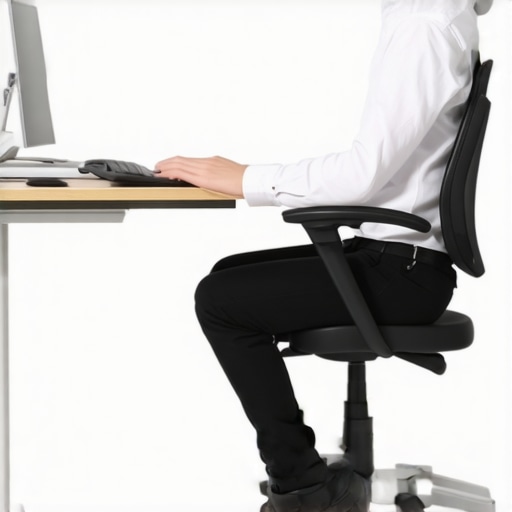
It was one of those mornings where I felt that familiar, dull ache creeping up my lower back. As I sank into my desk chair, I noticed how my legs barely touched the ground, and my knees were higher than my hips. That seemingly tiny adjustment—raising my chair—initially felt insignificant, but soon, the pain intensified, spreading down my leg. It was a jarring realization: my chair setup was harming me more than I thought.
Discovering the Real Cause of Sciatica at My Desk
For years, I believed my sciatic pain stemmed from long hours of sitting or perhaps some underlying disc issue. I tried all the typical remedies—stretching, medications, even fancy ergonomic gadgets. But nothing provided lasting relief. The breakthrough came when I finally took a closer look at one aspect I’d previously overlooked: my chair height.
It became clear that improper chair height was putting undue pressure on my lower back and hips, aggravating my sciatic nerve. This realization was a game-changer. I started experimenting with simple adjustments, and surprisingly, the pain started to diminish. That’s when I understood what many overlook—the angle and height of your seat can have a direct impact on your spinal health.
Your Biggest Fear: Is Changing Your Chair Unsafe or Unnecessary?
I remember feeling skeptical at first—what if adjusting my chair made things worse? I feared I’d waste time on a minor tweak that wouldn’t help. Early in my journey, I made the mistake of ignoring these subtle shifts and dismissing minor discomforts as part of aging or long-term issues.
But ignoring these signs only worsened my condition. The key is understanding that small, intentional changes—like adjusting your desk chair height—can have profound effects. If you’ve faced persistent back pain and dismissed it as normal, I assure you, it’s worth exploring these simple ergonomic tweaks.
Curious if your chair setup could be the hidden culprit? Keep reading. I’ll walk you through the essential steps to optimize your seating posture and reduce sciatic discomfort. Trust me, little changes can lead to big relief—just like they did for me. For personalized guidance, feel free to reach out here or check out our posture tips for 2025. Let’s get your workspace working for your back, not against it.
Adjust Your Chair Properly to Support Your Spine
When I first started tweaking my chair height, I found it helpful to sit with my feet flat on the floor and knees at a 90-degree angle—imagine sitting on a stool that supports every part of your lower body evenly. I used a simple foam cushion to elevate my hips slightly, which aligned my pelvis and minimized pressure on my sciatic nerve. This small change noticeably reduced my pain within days. To achieve this, set your chair so that your hips are slightly higher than your knees—this encourages an ergonomic tilt that favors spinal health. Remember, your goal is to keep your hips, knees, and ankles roughly aligned in a neutral position.
Experiment with Lumbar Support and Seat Depth
Next, I added lumbar support—either a shaped pillow or an adjustable lumbar roll—to fill the natural curve in your lower back. Position it so that it supports your lumbar spine’s inward curve without forcing it forward or backward. I also adjusted the seat depth: sitting so that about two to three fingers fit between the edge of the seat and the back of my knees prevents compression and promotes better circulation. Think of your spine like a stack of building blocks: each adjustment should keep all blocks aligned without tilting or twisting. Incorporate a small session of mobility exercises after any adjustments to reinforce this alignment.
Optimize Your Desk Position and Screen Height
Your monitor placement is critical. Position the screen so that you look straight ahead, avoiding tilting your head up or down—imagine balancing a book on your nose without tilting it. This reduces forward head posture, which can exacerbate back problems. Use an adjustable stand or stack books to raise your monitor to eye level. I also rearranged my keyboard and mouse so that my elbows stayed close to my sides, forming roughly a 90-degree angle—this prevents shoulder tension and promotes spinal stability. Micro-movements like these, repeated daily, prevent stiffness and promote better blood flow, reducing the risk of sciatic flare-ups.
Incorporate Regular Micro-Adjustments and Postural Checks
Throughout the day, I set reminders to reassess my seating posture—similar to how a pilot makes small course corrections to stay on track. Every 30 minutes, I adjust my hip tilt, straighten my back, or shift my weight slightly. These tiny tweaks prevent discomfort from settling in. Also, take time to stretch your hips and hamstrings, as tight muscles can pull on your pelvis and irritate your sciatic nerve. For stretching routines, see daily adjustments for back health.
Use Supportive Devices Wisely
If you find persistent discomfort, consider ergonomic aids like a footrest or adjustable chair with lumbar support. As I experimented, I discovered that a simple footrest helped maintain proper pelvic tilt when my chair couldn’t be adjusted further. Remember, every body is different—what worked for me might need tweaking for you. For personalized assistance, don’t hesitate to reach out here.
Many assume that maintaining perfect posture simply means sitting upright and avoiding slouching. However, this oversimplification can lead to costly mistakes, especially when it causes people to chase an ideal that’s neither practical nor effective in real life. In fact, rigid adherence to conventional posture rules often ignores the importance of dynamic movement and individual variability. The truth is that posture is a fluid concept; your body needs to adapt constantly to your activities, environment, and even your emotional state. For example, focusing solely on spinal alignment without considering mobility can result in stiffness and muscle imbalances, which may paradoxically worsen back pain. Researchers like Dr. Stuart McGill emphasize the importance of combining stability with mobility, rather than emphasizing static “perfect” posture (McGill, 2010).
Another common myth is that back pain always stems from poor posture. The reality is more complex: factors such as muscular asymmetry, movement patterns, and even psychological stress significantly influence pain experiences. Overcorrecting posture without addressing these nuances can create compensatory patterns, increasing the risk of injury. It’s crucial to approach posture as a comprehensive system, integrating strength, flexibility, and movement habits.
Beware the trap of fixating on one-size-fits-all solutions. For example, adjusting your chair height alone without considering hip flexibility or core strength might provide temporary relief but fail to solve the root cause. Instead, integrating mobility exercises, like those outlined in mobility strategies, can dynamically improve your posture and reduce back pain long-term.
So, what is the real secret? Combining personalized movement assessments with ergonomic adjustments creates a sustainable approach. Remember, every body is unique; a small tweak in your routine or posture approach can be the difference between chronic pain and pain-free living. For tailored advice, I recommend reaching out through our contact page.
Have you ever fallen into this trap? Let me know in the comments. Now, let’s explore some advanced strategies to optimize your posture and mobility for lasting relief.Maintaining a healthy posture over the long term isn’t about quick fixes; it demands a strategic approach combining quality tools, consistent routines, and mindful adjustments. One device I personally recommend is the **Wooden Lumbar Roll**, which I keep at my workspace. Unlike generic cushions, this handcrafted support aligns perfectly with my lumbar curvature, reminding me to sit upright naturally during extended work sessions. A properly positioned lumbar support prevents slouching and reduces sciatic nerve irritation, and it’s simple to incorporate into your daily routine. For sustained benefits, regularly replacing cheap supports with ergonomic-grade options ensures consistent alignment and prevents muscular fatigue. Additionally, I use **mobility software** like *Mobility Mastery*, which guides me through personalized daily exercises that bolster my flexibility and reduce stiffness—essential for those prone to chronic back pain. These tools help me stay conscious of my posture and make micro-adjustments throughout the day, preventing long-term issues before they develop. Looking ahead, the integration of smart posture trackers—wearable devices that alert you to poor alignment in real-time—is trending. These innovations promise to make maintaining good habits automatic and less effortful.
How do I keep my posture support system effective over time?
Consistency is key. I schedule daily check-ins with my posture, using reminders to assess and adjust my seating and movement patterns. Regularly revisiting ergonomic principles from cornerstone content, like that found [here](https://chiromasteryz.com/unlock-better-back-health-effective-posture-tips-for-2025), ensures I stay up to date with the latest insights. I also integrate mobility drills from *Mobility Mastery* to loosen tight muscles that might pull my spine out of alignment. The habit of incorporating micro-movements—such as gentle pelvic tilts or seated spinal twists—can diminish stiffness and reinforce proper posture habits.
Investing in reliable tools, like adjustable desk setups or ergonomic accessories, coupled with a mindset of continuous improvement, lays a foundation for lasting back health. Remember, even small, deliberate actions—like using a *footrest* or practicing the *deep neck flexor drill*—can aggregate into significant, long-term relief. Take time today to try one of these advanced tips, and notice how a minor change can have profound benefits for your spinal well-being.
Three Surprising Truths That Changed How I Approach Back Care
One of the most profound lessons I learned was that perfect posture isn’t about rigidly following a set of rules but about cultivating a fluid awareness of my body’s needs. I realized that listening to subtle cues—like tightness or discomfort—guides me toward effective adjustments rather than forcing an ideal position. Another insight was that mobility and stability must work hand in hand; neglecting either can undermine back health. Embracing gentle movement routines, especially after ergonomic tweaks, helped reinforce good habits and prevented stiffness. Lastly, understanding that progress isn’t linear was eye-opening—small, consistent changes over time build resilience, making long-term relief achievable rather than expecting overnight miracles.
Tools and Resources That Elevated My Posture Game
Among the indispensable tools I rely on are the comprehensive posture guides which provide personalized strategies aligned with modern ergonomic insights. A high-quality lumbar roll, like the handcrafted wooden lumbar support, reminds me to maintain lumbar integrity during long hours. I also incorporate mobility routines from Mobility Mastery that effectively loosen tight muscles and improve flexibility, preventing habitual misalignments. Lastly, sustained success comes from community and expert advice—regular consultations with knowledgeable practitioners have been invaluable, and exploring their insights through trusted sources has kept me motivated and informed.
Stepping Into Your Power for Lasting Back Wellness
Remember, every small effort you make toward optimizing your posture and mobility compounds into a healthier, more resilient back. Trust in your body’s innate ability to adjust and heal, and view your routine as a journey rather than a quick fix. Celebrate each micro-progress and stay curious about how subtle changes can bring significant relief. Now is the perfect time for you to embrace these principles and take proactive steps—your future self will thank you. What simple adjustment will you try first today to support your back health? Share your plan below and inspire others on their journey.