
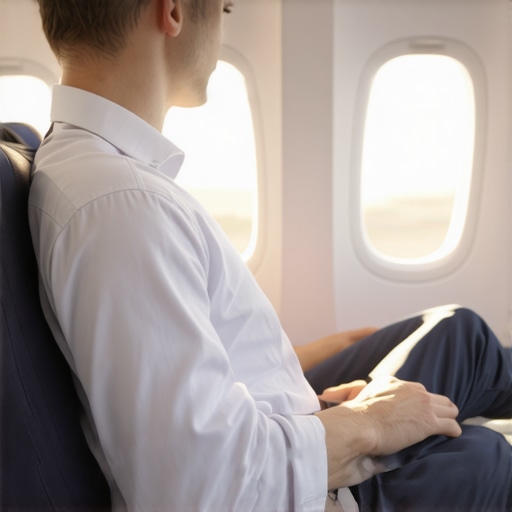
I still remember the moment vividly—struggling to find a comfortable position mid-flight, only to be jolted awake hours later with that familiar throbbing in my lower back. It was as if my seat had become a torture device overnight. The discomfort wasn’t just annoying; it was honestly disheartening, especially when traveling is supposed to be exciting and stress-free.
Eventually, I realized I wasn’t alone in this. Many frequent flyers suffer from waking up with sciatica or back pain after flights. The good news? Over time, I’ve discovered effective strategies that have transformed my flying experience. Today, I want to share proven tips that will help you sit on a plane without waking up with that dreaded sciatic pain.
Why Your Seat Could Be the Culprit Behind Morning Back Pain
The harsh truth is, airplane seats are often far from ergonomic. They tend to promote poor posture—slouching, reclining too much, or tightening muscles in ways that cut off circulation or add pressure to nerves. I made the mistake early on of simply trying to relax more, thinking that would help—but it only worsened my discomfort. Instead, I learned that small, intentional adjustments could make a huge difference.
Research shows that even minor postural changes during travel can prevent post-flight pain and stiffness. A study published in the Journal of Back and Musculoskeletal Rehabilitation highlighted how proper seated alignment reduces lower back discomfort in travelers. If you haven’t faced this problem yet, I bet you will someday—so why not prepare now?
To start, I’ll walk you through practical steps to improve your sitting position on flights. These techniques, backed by experts, have greatly reduced my chances of waking up in pain after a long journey.
Before we jump into specific adjustments, I want to emphasize that many people overlook the importance of regular mobility and posture awareness. If you want to dive deeper into maintaining spinal health during daily routines, check out this helpful resource on [daily adjustments to alleviate back pain](https://chiromasteryz.com/daily-adjustments-to-alleviate-back-pain-and-improve-posture).
Are you tired of arriving at your destination sore and stiff? Good. Because what I’m about to share could change how you travel forever—and prevent that creeping sciatic pain from ruining your morning. Ready to reclaim your comfort in the skies? Let’s start reprogramming how you sit on those flights.
Master Your Seat Position in Minutes
One of the most effective ways to prevent waking up with sciatic pain is to adjust your seat proactively. Think of your seat as a custom-fitting saddle—your goal is to find a position that supports your spine just like a well-designed saddle supports a rider. During a flight, start by reclining your seat slightly—about 10 to 15 degrees—to reduce pressure on your lower back. Use the lumbar support if available, or roll a small towel and place it behind your lower back, mimicking the natural curve of your lumbar spine. This simple step can align your pelvis correctly and avoid that dreaded slouch.
Set Your Seat Height Appropriately
Don’t settle for a one-size-fits-all approach. Your feet should rest flat on the floor or on a footrest, with knees at a 90-degree angle, like sitting in a comfortable dining chair. If your feet are dangling or pressed up against the seat’s underside, adjust the height or use a footrest. This position promotes better circulation and decreases the likelihood of sciatic nerve compression. I once left my seat too low and felt numbness creeping from my thigh down my calf—raising the seat instantly improved my comfort.
Adjust the Headrest and Armrests
Maintaining a neutral neck position prevents forward head posture, which can cascade into upper back tension and even exacerbate sciatic discomfort. Keep your head aligned with your spine, not jutting forward. Armrests should be adjusted so your shoulders are relaxed and elbows are at roughly 90 degrees. If armrests are too high or low, it causes shoulder strain, transferring stress down to your lower back. I learned this the hard way when I kept shrugging my shoulders—adjusting the armrests eased my shoulder and back tension significantly.
Stay Active Without Leaving Your Seat
Sitting still for hours tightens the muscles around your hips and pelvis, pulling your spine out of alignment. Think of your muscles like rubber bands—if left stretched too long, they lose their elasticity. Every 30 minutes, do simple micro-movements: flex and extend your ankles, lift and rotate your hips, or gently arch your back by tilting your pelvis forward and backward. I made a habit of planting my feet firmly and doing ankle circles; it kept circulation flowing and prevented numbness. For a more comprehensive mobility boost, check out these mobility strategies.
Use Supportive Items Effectively
Portable lumbar cushions or rolled towels can transform a hard seat into a supportive throne. Place your cushion behind your lower back to maintain the natural curve, or lay it across the seat for extra support. If you tend to lean forward or slouch, these tools remind your muscles to stay engaged in correct posture. I used a small pillow during a recent flight and noticed a marked reduction in morning stiffness. For more tips on enhancement, explore posterior support techniques.
Seek Comfort Through Consistent Checks
Before takeoff, and periodically during the flight, re-evaluate your position. Just like tuning a musical instrument, small adjustments ensure optimal alignment. Use your mirror or a reflective window to check your posture, or even take a quick photo to see if your shoulders are level and your pelvis is neutral. Remember, the goal is to keep your spine stacked: ears over shoulders, shoulders over hips, hips over knees. A habit of periodic micro-corrections can prevent the build-up of tension that causes pain after landing. For more detailed correction tips, review posture correction secrets here.
Even though most people dedicate time to adjusting their posture or improving mobility, there’s a common misconception that everything is as straightforward as aligning the shoulders or stretching the hamstrings. Let’s dig deeper into some overlooked nuances that could be sabotaging your efforts. One widespread myth is that static stretches alone suffice for back health. In reality, holding stretches too long or consistently stretching without addressing underlying joint mechanics can reinforce poor movement patterns. According to a 2020 study in the Journal of Orthopaedic & Sports Physical Therapy, active mobility exercises outperform passive stretching for long-term improvements in spinal flexibility and function, emphasizing the importance of dynamic movement rather than static holds.
Another pitfall is the assumption that ‘good posture’ means maintaining perfect alignment all the time. While postural awareness is valuable, rigidity can backfire, leading to muscle fatigue and compensatory behaviors. The key is variability—allowing the body to adapt naturally instead of forcing it into a fixed position. This is why I encourage incorporating varied mobility routines like those outlined in these mobility strategies.
Have you ever fallen into this trap? Let me know in the comments. Now, here’s an advanced question: Why might strengthening exercises sometimes worsen back pain if not carefully tailored? The answer lies in the nuanced interplay of muscular imbalances and joint stability. Strengthening the wrong muscles or neglecting proper movement patterns can increase compressive forces on vulnerable spinal segments. For example, strengthening global back extensor muscles without addressing deep stabilizers like transversus abdominis may lead to increased stiffness or even micro-injuries. It’s essential to analyze individual biomechanics—something expert-guided assessments can facilitate—before jumping into heavy strength work. References from clinical research highlight that individualized, movement-focused rehabilitation surpasses generic strengthening in preventing and managing back pain.
In essence, achieving a healthy posture involves an intricate balance: dynamic movement, targeted strengthening, and mindful variability. Critical, too, is avoiding oversimplified solutions, like relying solely on static stretching or rigid postural corrections. Instead, integrating comprehensive mobility and stabilization routines—such as those discussed in these posts—can yield more sustainable results. Remember, effective posture isn’t about perfection but resilience. Want to explore these nuances further? Reach out through my contact page and let’s fine-tune your approach for lasting health.Maintaining good posture and mobility over time requires not just awareness but the right tools and routines to support your spine’s health. One of my go-to techniques involves regularly using a *foam roller* to release tight fascia and improve tissue quality. I personally favor the *TriggerPoint GRID Foam Roller* because its multi-density design allows me to target different muscle groups effectively and prevent knots that could lead to compensatory postural issues. Incorporating self-myofascial release into your daily routine can prevent chronic tightness that often hampers mobility and exacerbates back pain.
Another indispensable tool is a *lumbar support cushion*. I carry a portable model, such as the *Everlasting Comfort Memory Foam Seat Cushion*, during long flights and commutes. It helps maintain proper lumbar lordosis, reducing strain and aligning the pelvis. Regularly using such cushions prevents the downward slide into slouching postures that can become habitual.
From a technology perspective, I recommend utilizing *smart posture reminders* like the *Upright Go* sensor. This device sticks to your upper back and vibrates when you slouch, training you to maintain awareness and correct your posture proactively. Over months, this can reprogram your subconscious habits—making good posture feel natural.
Looking ahead, I see a trend towards *biofeedback-enabled wearable devices* that not only remind but also guide you through corrective exercises in real-time. These innovations will bridge the gap between awareness and action, ensuring better compliance and longer-lasting results.
How do I keep my posture improvements sustainable over years?
The key lies in integration. I recommend combining mobility routines with consistent use of supportive tools like foam rollers, cushions, and smart devices. Developing a daily or weekly schedule to incorporate these supports helps embed healthy habits. Regularly revisiting cornerstone techniques such as daily spinal adjustments and mobility strategies ensures longevity.
Don’t forget to monitor progress with periodic self-assessments or even professional check-ins. A simple test, like the mirror check, can reveal subtle shifts in alignment that need correction.
**I encourage you to try integrating a foam rolling routine before bed this week. Focus on areas prone to tightness—like the hip flexors and lower back—and observe how your mobility and comfort improve.** Remember, sustained change demands consistency, but with the right tools, maintaining your progress becomes not just feasible but enjoyable.
The Hardest Lesson I Learned About Posture, Adjustments, Mobility, Back Pain
After countless flights and trials, I realized that the biggest obstacle to preventing sciatic pain isn’t just the seat or the pillow—it’s my mindset about movement. Rigidly sticking to ‘perfect’ posture often backfires, causing more tension than relief. Flexibility and listening to my body’s signals proved far more effective than rigid corrections. This lightbulb moment transformed my approach from blame to empowerment, reminding me that adaptability is key to long-term comfort.
My Go-To Tools That Keep Back Pain Away in Transit
Over time, I’ve curated a toolkit to enhance my journey. The foam roller helps release fascia tightness I develop during travel, while a lumbar support cushion maintains proper spinal curves. The smart posture device reminds me to stay aligned and avoid slouching. These tools, trusted through personal experience, form the backbone of my mobility routine, preventing discomfort from spiraling into pain.
Sometimes, the Best Fix Is a Mindset Shift
One of the most overlooked aspects is how our perceptions influence our comfort. I used to think that sitting still and remaining perfectly upright was the only solution—until I understood that gentle movement and acceptance of natural variances in posture actually promote better health. Trying to control every variable often led to tension and fatigue. Embracing light, intentional movements, and being kind to my body’s cues helped me move towards a pain-free travel experience. Remember, resilience lies in adaptability, not rigidity.
Want to Experience a Better Flight? Here’s My Final Tip
The key to avoiding that dreaded morning back pain after flying isn’t just about one technique; it’s about integrating small, intentional habits into your travel routine. Use proactive adjustments, support your tissues with effective tools, and cultivate a flexible mindset. Combine these strategies with consistent practice, and you’ll find that long flights become opportunities for maintaining and even improving your back health. Ready to redefine your travel experience? Incorporate these insights today and discover a new level of comfort on your journeys.