

I caught a glimpse of myself in a store window last Tuesday and honestly, I didn’t recognize the person looking back. I looked like a human parenthesis. My chin was practically glued to my chest, and my shoulders were curled inward as if I were protecting a precious treasure—which was really just a social media feed I wasn’t even enjoying. It was a wake-up call. I realized that my phone was making my shoulders permanently rounded, and no amount of ‘fixing it later’ was going to cut it. I used to be the guy who spent sixty minutes at the gym doing rows and face pulls, thinking I was a posture king, but then I would spend the next eight hours folded like a lawn chair over my screen. It was a massive mistake. You simply cannot out-train hours of garbage movement with one hour of good intention.
Your Phone is Training Your Body to Fail
The reality is that we check our phones dozens, if not hundreds, of times a day. Each time we do, we tend to drop our heads. According to research published in Surgical Technology International, tilting your head forward at a 60-degree angle to look at a phone screen can put up to 60 pounds of pressure on your cervical spine. That is like carrying an eight-year-old child around your neck every time you read a text. Over time, this constant strain leads to what many of us call ‘tech neck,’ but the damage goes deeper than just a stiff neck. It affects your breathing, your mood, and even how others perceive your confidence. I have spent years helping people realize that using your tablet or phone without ergonomic awareness is a recipe for chronic pain. Today, I want to share the exact 10-second habit I started using to stop the slump before it starts. Have you ever noticed your reflection in a dark screen and felt shocked by your own slouch?
Does a 10-Second Reset Actually Make a Difference?
I know what you are thinking because I thought it too: ‘How can ten seconds compete with hours of sitting?’ The secret is frequency, not duration. By performing a quick check every time you reach for your device, you are essentially rewiring your brain’s map of where your body should be in space. This isn’t about being perfect; it is about interrupting the pattern of collapse. If you do not interrupt it, you might find why your neck crunches when you look over your shoulder while driving becomes a daily mystery. Even a simple habit to fix forward head posture needs a trigger to make it stick. Your phone is that trigger. Instead of it being the tool that breaks your back, we are going to turn it into the tool that saves it. Let me show you exactly how to stack your spine in the time it takes to unlock your screen.
Bring the World to Your Eyes Instead of Your Chin
The first and most vital shift is the ‘Eye-Level Lift.’ I remember sitting in a busy airport lounge last month, watching a sea of people hunched over their devices like they were mourning their own laps. I realized I was doing the exact same thing. The moment I lifted my phone so the top of the screen was level with my nose, the tension in my upper traps vanished. It felt ridiculous at first, like I was filming everyone in the room, but my spine felt ten years younger. This simple elevation is the foundation of the 2-inch rule for your laptop stand to save your neck from strain, and it applies just as strictly to your handheld devices. If you don’t bring the screen to your horizon, you are essentially choosing to live in a permanent slump.
The Sternum String Trick for Instant Height
Think of your sternum as the anchor for your entire upper body. When we scroll, that anchor drops. To fix this in ten seconds, imagine a silver string attached to the center of your chest, pulling you gently toward the sky. This isn’t about puffing your chest out or looking like a drill sergeant; it is about creating internal space. When your chest collapses, you physically cannot take a full breath, and how your breathing pattern keeps your back muscles guarded becomes a major roadblock to recovery. I used this trick during a long-distance drive last weekend every time I hit a red light. By the time I reached my destination, that familiar burning sensation between my shoulder blades was completely gone. 
Your Grip is Quietly Killing Your Shoulders
Most people do not realize that tension starts in the fingertips and migrates north. If you are death-gripping your phone with one hand while your pinky supports the bottom, you are creating a chain of tension that ends in your neck. Learning how to fix your grip to save your neck and shoulders is a game changer. Use a pop-socket or a ring holder to let your hand relax, or better yet, use two hands to distribute the weight. This prevents the lopsided lean that often leads to why your shoulders always roll forward while you type. When your grip is soft, your shoulders are much more likely to stay in their neutral pockets.
Reset Your Scapula Before You Unlock
Before you even swipe to open an app, perform one quick ‘Scapular Reset.’ Roll your shoulders up to your ears, then pull them back and let them slide down into your back pockets. It takes three seconds, but it sets the stage for better movement. This is the ‘lite’ version of the simple scapular reset for instant shoulder tension relief that I recommend to anyone stuck at a desk. If you find that your back still feels ‘stuck’ even after these resets, you might be dealing with a lack of rotation, which is why you should how to test your thoracic mobility in under 60 seconds to see if the damage has already moved into your mid-spine. By making the reset a ‘gatekeeper’ to your phone use, you turn a bad habit into a corrective exercise.But even with these resets, many of us fall into a sophisticated trap: the belief that there is a ‘perfect’ static posture we must maintain at all costs. In my years of clinical observation, I have seen patients become so obsessed with sitting ‘correctly’ that they actually create more tension than the slouchers. This is where we need to peel back the layers and look at the nuances that most beginners miss. For instance, did you know that why you should stop stretching your hamstrings for back relief is one of the most common pieces of advice I give? It sounds counterintuitive, but if your pelvis is already tilted forward, your hamstrings are already over-lengthened. Stretching them further is like pulling on an already frayed rope. It feels good for five minutes because of the neural response, but it is actually destabilizing your lower back.
Stop Trying to Sit Perfectly Still
The biggest myth in ergonomics is that you should find one ‘good’ position and stay there for eight hours. This is fundamentally wrong. Research from experts like Dr. Stuart McGill, a leading authority on spine mechanics, suggests that the best posture is your next posture. Static loading, even in a theoretically perfect alignment, causes ’tissue creep’ where your ligaments and discs begin to deform under constant pressure. If you are relying on a high-end chair and wondering why your lumbar support might be making your pain worse, it is likely because you are using it as a crutch to remain stationary. Movement is the only true nutrient for your spinal discs. They don’t have a direct blood supply; they rely on the ‘pump’ of movement to bring in nutrients and flush out waste.
Does Your Lumbar Support Actually Do More Harm Than Good?
I see this all the time: people buy a thousand-dollar chair and then ‘set and forget’ their spine. They lean back into the support, which can actually flatten the natural curve of the lower back or create a localized pressure point that irritates the nerves. Instead of looking for the perfect chair, look for ways to enhance your mobility with expert tips for easier movement throughout the day. It is the micro-movements, not the expensive mesh, that save your spine. 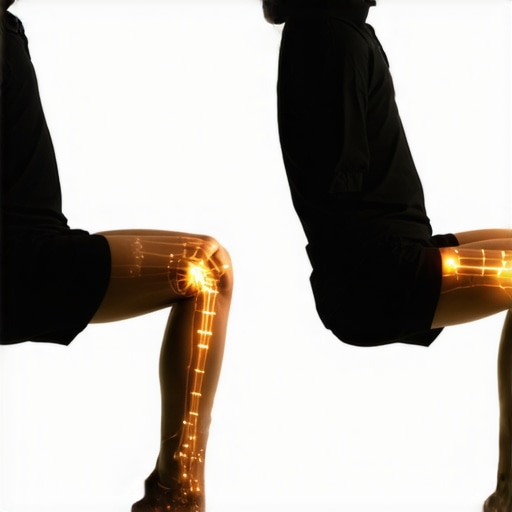
The Military Posture Trap and the Danger of Bracing
Another advanced mistake is the ‘military posture’ trap. People try so hard to be upright that they squeeze their shoulder blades together and suck in their gut. This creates a rigid, brittle system. When you suck in your stomach constantly, you are actually inhibiting your diaphragm. I often have to explain to patients why you should stop sucking in your stomach to look thinner, because it creates a pressure imbalance that forces your neck and back muscles to overwork just to keep you upright. It is a recipe for chronic tension that no massage can fix. If you want real relief, you have to understand posture correction secrets that transform back pain outcomes, which involve relaxation as much as they involve alignment. A truly healthy spine is supple, not stiff. When you get a professional treatment, you’ll notice how an adjustment restores more than just range of motion; it resets the nervous system so your body doesn’t feel the need to ‘brace’ against gravity all day. Have you ever fallen into this trap of trying to be too rigid with your posture? Let me know in the comments.If you want to keep these results, you need a toolkit that doesn’t require a suitcase. Personally, I keep a high-density lacrosse ball under my desk at all times. Most people think foot pain is just foot pain, but your fascia is a continuous sheet from your toes to your forehead. When I roll my arches out, I can literally feel the tension leave my lower back through the posterior chain. This is why I always tell people that learning how to use a tennis ball to release tension in your feet and back is more valuable than any fancy ergonomic mouse. It’s about active maintenance that moves with you. Kelly Starrett, the physical therapy expert and author of Becoming a Supple Leopard, emphasizes that the goal is to be ‘ready’ for any movement, which requires keeping your tissues sliding and gliding rather than glued together by hours of sitting. 
How do I maintain these spinal gains over the long haul?
The key is to stop thinking about ‘posture’ as a chore and start thinking about ‘alignment’ as a lifestyle. I’ve integrated the chair hack to keep your pelvis neutral while working into my daily flow, and it’s become second nature. But maintenance also means knowing when to seek professional help to clear the ‘static’ in your nervous system. Even with the best tools, you can develop movement blind spots where your brain forgets how to activate certain muscles. Understanding what your chiropractor specifically checks during a first visit can give you the roadmap you need for your specific anatomy, ensuring your DIY efforts are actually targeting the right spots. Consistency beats intensity every single time; five minutes of daily mobility is worth more than a two-hour weekend session.
The future of back health is invisible biofeedback
I suspect that in the next few years, we won’t be talking about bulky posture braces that cause muscle atrophy. Instead, the trend is moving toward ‘smart’ clothing with integrated haptic feedback sensors that gently buzz when you lose your spinal bracing sequence. We’re moving away from external support and toward internal awareness. Until that tech becomes mainstream and affordable, you have to be your own sensor. You can start today by mastering effective posture tips for 2025 that focus on neuro-muscular re-education rather than just ‘standing up straight.’ Don’t forget that your recovery happens while you sleep, too. If you are waking up with a kink in your neck, all your daytime work is being undone. I’ve found that the side-sleeper pillowing trick for optimal spine alignment is the missing link for most of my clients who wake up stiff and grumpy.
Try the 30-second chest opener right now
If you take nothing else from this, try this right now: Stand up, find a doorway, and perform the 30-second desk fix for your tight pectoral muscles. It’s the fastest way to counteract the ‘phone-slump’ we talked about earlier and reset your shoulder’s home position. Do this every time you finish a Zoom call, a long texting session, or even after a drive. Your future self—the one with the upright spine and the deep, easy breathing—will thank you for it. We’ve covered the habits and the tools; next, we need to talk about the mindset shift that makes this all stick without the constant mental effort.
The One Mistake That Kept Me in a Slump for Years
I used to think that fixing my back was all about more stretching. I would spend twenty minutes a day pulling on my legs, only to feel worse later. The hard truth is that why you should stop stretching your hamstrings for back relief is often the first thing people need to hear. If your pelvis is already out of alignment, you are just tugging on a system that is trying to stabilize itself. Another big realization was that my habit of popping my own neck was a trap; why self-cracking your neck makes the stiffness come back faster is because you are not actually hitting the joint that is stuck, you are just over-stretching the ones that are already too loose. True progress came when I stopped looking for the loudest ‘pop’ and started looking for the smallest daily movement. #IMAGE_PLACE_HOLDER_E#
My Go-To Tools for a Resilient Spine
You don’t need a thousand-dollar gym membership to see results, but you do need the right environment. I have found that the side-sleeper pillowing trick for optimal spine alignment is the most underrated way to prevent waking up with a headache. It is a simple change that costs nothing. I also swear by the chair hack to keep your pelvis neutral while working, which involves a simple towel roll to support your lumbar curve without relying on flimsy chair designs. These are not just gadgets; they are ways to ensure your body is not fighting gravity while you are trying to focus. If you are serious about your journey, I highly recommend checking out Becoming a Supple Leopard by Kelly Starrett—it is a masterclass in understanding how your joints should actually function.
Small Wins Build a Lifetime of Better Movement
At the end of the day, your spine does not care about your perfect form during a one-hour yoga class as much as it cares about what you do during the other twenty-three hours of the day. Embracing posture correction secrets that transform back pain outcomes is not about being a robot; it is about being aware. You can unlock better back health with effective posture tips for 2025 by just starting with that 10-second reset every time you pick up your phone. You deserve to live in a body that feels light and capable rather than heavy and restricted. The future of your mobility starts with the choice you make right now. What is the one small habit you are committing to today to finally save your neck from the slump? Let me know in the comments below!