
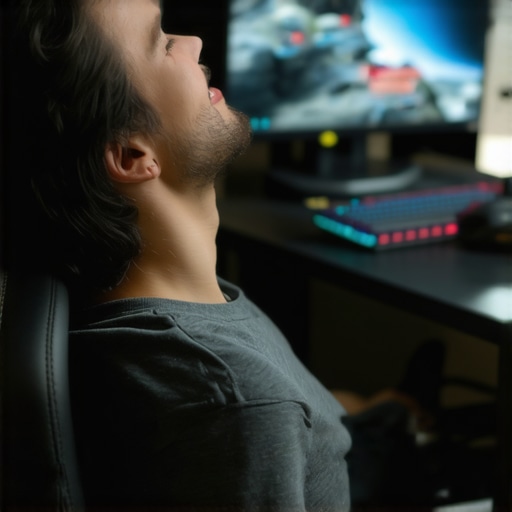
I remember the exact moment my neck finally gave up. It was 3:00 AM, the final boss was at 5% health, and I was leaning so far into my monitor I could practically taste the pixels. When the victory screen finally flashed, I tried to stand up, but my neck would not budge. It felt like a hot poker was being pressed into the base of my skull. I was not just tired; I was physically locked in a C-shape. That night, I realized that all the ergonomic gear in the world would not save me if I did not change how I moved.
My Friday Night Ended with a Locked Neck
I spent years ignoring the warning signs. I would get that dull ache between my shoulder blades and just pop an ibuprofen, thinking I was fine. I even fell for the monitor height hack but ignored my actual muscle tension. I made a massive mistake early on: I thought I could out-buy the pain. I bought a high-end racing-style chair, thinking it would magically fix my forward head posture. Spoiler alert: it did not. Your body does not care how much you spent on your setup if your muscles are stuck in a shortened state for eight hours. Today, I am going to show you how to break that cycle with a routine that actually fits into your life.
Is a five-minute fix actually worth the hype?
You are probably thinking that five minutes is a drop in the bucket compared to the hours you spend gaming. I was skeptical too. But here is the thing: consistency beats intensity every single time. We are not trying to become yogis; we are just trying to tell our nervous system to stop guarding our neck like a fortress. If you have ever wondered why your phone is making your shoulders permanently rounded, you already know that small, repetitive habits are what got you into this mess. It makes sense that small, repetitive fixes are what will get you out.
Your Head Weighs Sixty Pounds When You Slump
Here is a scary thought that changed my perspective forever. According to research published in Surgical Technology International, while the average human head weighs about 10 to 12 pounds, tilting it forward at a 60-degree angle—the classic gamer lean—increases the load on your cervical spine to a staggering 60 pounds. That is like carrying a 7-year-old child on your neck for the entire duration of a raid. No wonder we feel like we are falling apart! This constant strain is what leads to those deep knots and the feeling that you need a simple adjustment to relieve back pain. Have you ever felt that terrifying click in your neck when you finally look away from the screen? Let me know in the comments if you have experienced that instant panic. I want to show you exactly how I stopped that 60-pound weight from crushing my spine, and it starts with a few movements you can do during a loading screen.
How to Stop the 60-Pound Grind on Your Spine
The first thing you need to understand is that your muscles are like biological rubber bands. When you sit hunched over, the ones in the front get short and tight, while the ones in the back get stretched out and weak. To fix this, we have to wake up the muscles that have gone dormant. I remember the first time I tried a thoracic bridge during a long loading screen. My ribs let out a crack so loud my duo partner thought I’d snapped my headset through the mic. It wasn’t a break; it was my body finally moving in a direction it hadn’t seen in months. Moving your body shouldn’t feel like a chore, but rather a necessary maintenance for your most important hardware.
Pinch Your Shoulder Blades Like You’re Holding a Pen
Most of us try to ‘sit up straight’ by pulling our shoulders up to our ears. That is a massive mistake. Instead, imagine there is a pen sitting right between your shoulder blades. Your goal is to pinch that pen and hold it there using only your mid-back muscles. This is the foundation of the simple scapular reset for instant shoulder tension relief. Do this for ten seconds, five times a day. You aren’t just moving; you are retraining your brain to know where your shoulders should actually live. This is far more effective than the shoulder blade squeeze that fixes mid-back knots instantly because it focuses on sustained control rather than a quick, jerky motion that only provides a few minutes of relief. 
Give Yourself a Double Chin to Save Your C-Spine
This next move looks ridiculous, but it is the single most important tool in your arsenal. While looking straight ahead, pull your chin straight back, as if you are trying to make as many double chins as possible. Avoid looking down at your chest or tilting your head back. You should feel a deep stretch at the base of your skull. I call this the 2-minute habit to fix your forward head posture. When I first started doing this, I realized how much I had relied on why self-cracking your neck makes the stiffness come back faster. The chin tuck actually stabilizes the deep neck flexors, which are essentially the ‘core’ muscles of your neck. If those muscles are weak, your upper traps will try to do their job, leading to those massive, burning knots you feel after a long gaming session.
Flatten Your Back Against the Wall to Reset Your Hunch
If you really want to reverse the ‘gamer lean,’ you need to use a flat surface as a feedback tool. Stand with your heels, butt, and shoulders against a wall. Try to get the back of your head to touch the wall without tilting your chin up. This is the 30-second wall reset for hunchback posture. It’s a reality check for your nervous system. Think of the wall as a blueprint for your spine. When we spend all day in a chair, our internal map of what ‘straight’ feels like gets corrupted. By using the wall, you are basically hitting the factory reset button on your alignment. To truly enhance your mobility with expert tips for easier movement in 2025, you have to stop fighting your own anatomy and start working with it. I used to do this every time I went to the kitchen for water. It felt weird at first, like my body was resisting the straight line, but after a week, the locked feeling in my neck simply didn’t come back. You can also look into top strategies for moving without pain to ensure your lower body isn’t sabotaging your upper body’s progress.
Good Posture Isn’t a Statue You Can Build
I used to think that ‘perfect posture’ was a destination—a specific way of sitting that, once achieved, would solve all my problems. I spent hundreds of dollars on a chair that looked like it belonged in a spacecraft, convinced that the lumbar support would do the work for me. But here is the contrarian truth that most ‘experts’ won’t tell you: your best posture is your next posture. Staying in any one position for too long, no matter how ‘ergonomic’ it is, will eventually cause your tissues to lock up. When you rely solely on external tools, you are falling for the truth about posture braces and muscle atrophy. Your body stops using its internal stabilizers because the chair or brace is doing the work. This leads to a terrifying cycle where your muscles actually get weaker while you think you’re helping them.
What happens when your ergonomic chair actually creates new problems?
It sounds like a paradox, but an expensive chair can often mask the warning signs your body is sending. If you aren’t feeling the discomfort, you don’t move. And if you don’t move, your blood flow stagnates and your fascia begins to tighten. I eventually realized that why your expensive desk chair might be giving you false sciatica was the result of me being too comfortable in a static position. The ‘oops’ factor here is assuming that comfort equals health. Real spinal health requires active engagement, not passive lounging.
Stop Stretching Your Way Into More Chronic Pain
Most people respond to a tight back by stretching their hamstrings or psoas until they are blue in the face. This is often a massive mistake. In my experience, ‘tightness’ is usually a protective mechanism. Your brain is tightening those muscles because it feels your spine is unstable. If you stretch that protection away without building strength, you’re just making yourself more vulnerable. This is precisely why stretching your psoas might actually be making your back hurt more. Research by Dr. Stuart McGill, a world-renowned spine biomechanist, highlights that ‘stretching’ a painful back often provides a temporary analgesic effect by desensitizing the nerves, but it can actually delay healing by destabilizing the spinal segments. You need the deep core connection that stops your spine from shear stress, not more flexibility. 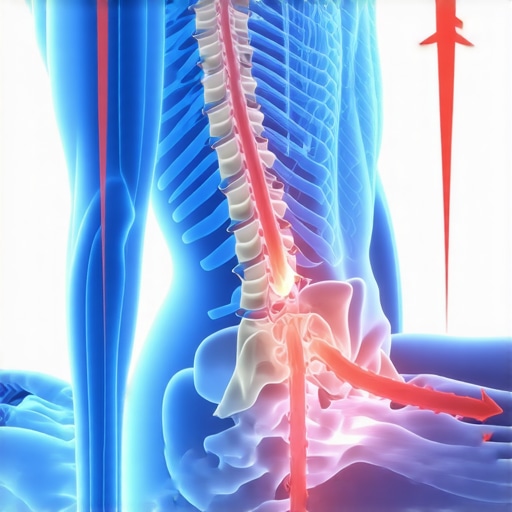
The Secret Driver of Your Upper Back Tension
One of the most overlooked nuances in posture isn’t your back at all—it’s your breath. When you are stressed or deep in a gaming session, you likely switch to ‘chest breathing.’ This forces your neck and upper trap muscles to lift your ribcage thousands of times a day. You can do all the stretches in the world, but if you don’t fix how your breathing pattern keeps your back muscles guarded, that tension will return within thirty minutes. True relief comes from posture correction secrets that transform back pain outcomes by addressing these internal systems. Have you ever fallen into this trap of over-stretching or over-relying on gear only to feel tighter the next day? Let me know in the comments below, and let’s figure out which habit is holding you back.
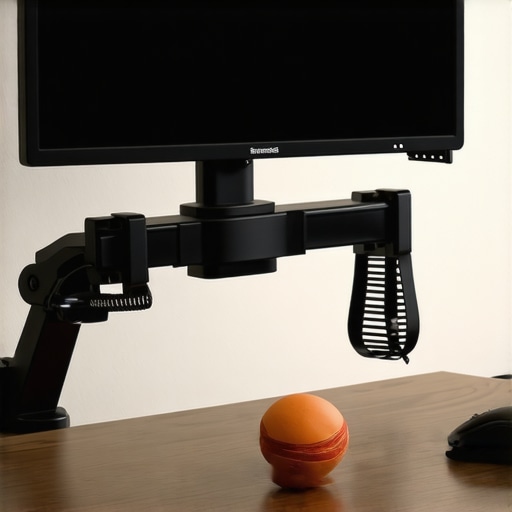
Maintenance isn’t about doing a 60-minute yoga session every morning; it’s about the micro-decisions you make while the match is loading or the coffee is brewing. I eventually swapped my static monitor stand for a gas-spring monitor arm. Why? Because it forces me to change my eye-line throughout the day. If you keep your monitor in one static spot, your neck stays in one static spot. By shifting the screen up and down by just two inches every few hours, I’m constantly varying the mechanical load on my C-spine. This is a subtle way to adjust your routine for daily spinal alignments without even thinking about it.
I also live by a $10 lacrosse ball. I don’t use it for sports; I use it to pin down those ‘hot spots’ in my rhomboids while I’m on a long conference call. It’s significantly more effective than those expensive vibrating massage guns because it allows for sustained, ischemic pressure on the fascia, which triggers a better release in the deep tissue. This is one of the top mobility strategies for active living that I’ve found actually sticks because you can do it while you work. I keep it right next to my mouse pad so I don’t have an excuse to forget it.
How do I maintain my spinal integrity over the long haul?
The secret isn’t a better chair; it’s a ‘movement snack’ culture. Every 30 minutes, my computer screen dims slightly—a software-based reminder from an app called Stretchly—and I perform a single wall-angel or a chin tuck. According to the Cornell University Ergonomics Web (CUErgo), sitting for more than 60 minutes has been shown to induce biochemical changes in the body that lead to muscle fatigue and discomfort. By breaking that cycle every half-hour, you prevent the ‘creeping’ deformation of your spinal discs. It’s about building a system that doesn’t rely on your willpower. If you’re looking to upgrade your environment, the best way to transition from a sitting to a standing desk is to do it in 15-minute intervals, not by standing for eight hours straight on day one, which can cause its own set of lower-back issues.
The Future of Posture is Integrated into Your Gear
We are moving toward a world where your hardware will actively correct you. I’m already seeing prototypes for VR headsets and premium headphones with built-in haptic sensors that vibrate when your neck exceeds a 15-degree tilt for more than two minutes. In the next few years, your chair won’t just support you; it will likely feature bio-feedback sensors that nudge your pelvis to prevent that ‘slump’ from setting in. Until then, you need to be your own sensor and master your mobility with top strategies that rely on internal awareness. I highly recommend trying the ‘1-minute ceiling reach’—standing up and reaching for the ceiling as high as possible—after every single match or meeting. It is the most effective way to provide daily adjustments to alleviate back pain and keep your thoracic spine from becoming a permanent curve. Give that ‘ceiling reach’ a shot right now; your lower back will thank you instantly.
The Truth About Why My Progress Kept Stalling
For a long time, I was my own worst enemy. I would do a few chin tucks, feel better for ten minutes, and then go right back to my C-shape slump. Here are the three hard truths I had to accept before I saw real change. First, your muscles have long-term memories; if you have spent 10,000 hours slouching, ten minutes of stretching won’t erase that overnight. You have to be more persistent than your bad habits. Second, pain is often a liar. Just because your neck hurts doesn’t mean the problem is in your neck. Often, it is your mid-back or even your hips causing the chain reaction. Finally, even the best gear is useless without active awareness. I had a top-tier chair and still felt terrible because I wasn’t using my internal stabilizers.
#IMAGE_PLACEHOLDER_E#
The Simple Gear That Actually Made a Difference
I stopped looking for miracle cures and started looking for feedback tools. If you want to build a toolkit that works, I highly recommend starting with mobility mastery and simple exercises to relieve chronic back pain. Beyond that, here is what I keep at my desk. I always have a lacrosse or tennis ball nearby; it is the cheapest physical therapist you will ever own. You can learn how to use a tennis ball to release tension in your feet and back to target those specific trigger points in your shoulders. I also rely on break software like Stretchly to force me to look away from the screen when my brain is too focused to care about my spine. A high-quality monitor arm is my final recommendation, specifically because it allows you to micro-adjust your eye-line throughout the day.
Your Spine Deserves a Long Gaming Career
We only get one body, and treating it like an afterthought is a recipe for a very short and painful hobby. You do not have to overhaul your entire life today. Just pick one move—maybe the wall reset or the chin tuck—and commit to doing it during your next loading screen. When you integrate posture correction secrets that transform back pain outcomes, you are not just fixing a slump; you are reclaiming your focus and your comfort. For more long-term strategies, check out these effective posture tips for 2025 that will keep you in the game for decades. Have you ever noticed a specific stretch or habit that actually makes your neck feel worse? Let me know in the comments below!