
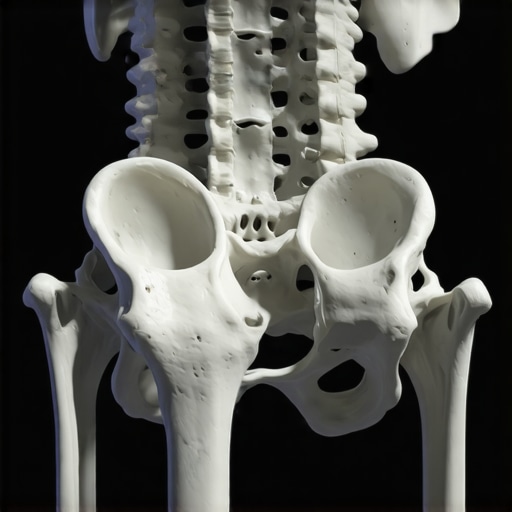
I spent three months basically living in a low lunge position. Every time my lower back flared up, I’d drop to one knee and push my hips forward, convinced that if I could just ‘loosen’ that stubborn psoas, the ache would vanish. Instead, I ended up with a hip that clicked like a metronome and a back that felt like it was held together by rusted springs. It was a classic case of doing exactly the wrong thing with the best intentions. I thought I was fixing the problem, but I was actually destabilizing my spine. Today, I want to walk you through why that aggressive tugging is likely making your spine unstable and how a few smarter moves can do more for your pain than an hour of yoga ever could.
Why Your Morning Lunges are Backfiring
For years, the psoas has been the villain of the lower back world. We’re told it’s tight because we sit too much, so we attack it with stretches. But here is the lightbulb moment I had after months of failure: your psoas is often ‘locked long’ or acting as a kickstand for a weak core. When you stretch a muscle that is already working overtime to keep you upright, your nervous system panics. It tightens the muscle even more to protect your spine, leading to that deep lower back ache that never seems to quit. I made the mistake of assuming ‘tightness’ always meant I needed to pull harder. In reality, my pelvis was tilting forward and my psoas was just trying to keep me from falling over.
Could your ‘tight’ muscle actually be screaming for stability?
It sounds counterintuitive, doesn’t it? Why would a tight muscle need strength instead of a stretch? According to a study published in the Journal of Biomechanics, the psoas plays a critical role in lumbar spine stabilization, but excessive tension without proper hip mechanics can actually increase the shear force on your L4-L5 discs. By constantly stretching, you might be removing the only thing keeping your spine stable. If you’ve ever wondered if a simple pelvic tilt might be better than a deep lunge, you’re already on the right track. We need to stop the war on our hip flexors and start looking at how they interact with our midsection. Have you ever felt that frustrating ‘rebound’ pain where you feel great for ten minutes after a stretch, only to have the stiffness return twice as hard an hour later? If so, you’re likely stretching a muscle that is desperate for a deadbug variation instead of more flexibility. We’re going to fix that cycle right now.
Reset Your Foundation with the Rib-Cage Stack
Think of your torso like a soda can. When the top and bottom are perfectly aligned, that can is incredibly strong; you could almost stand on it. But if you put even a tiny dent in the side—or in our case, tilt the pelvis forward and flare the ribs up—the whole structure collapses under the slightest pressure. To stop the psoas from acting like an emergency brake, you have to fix the stack. I remember spending weeks trying to ‘straighten’ my spine by tucking my tailbone as hard as I could, only to end up with even more sharp pains. The ‘dent’ in my soda can wasn’t a lack of effort; it was a lack of alignment. I was forcing a position rather than finding a neutral home for my spine. This is why learning why your pelvis tilts forward and how to reset it fast is more valuable than any hamstring stretch. By bringing your ribs down and your pelvis into a neutral bowl, you take the ‘tug-of-war’ off the psoas.
Find Your True Neutral Without Forcing It
To find this position, stand against a wall. Instead of trying to flatten your entire back, focus on the space between your lower ribs and your hip bones. If your ribs are jutting out like a ship’s prow, your psoas is being stretched like a rubber band before you even move. Gently exhale and feel those front ribs knit together. This isn’t about ‘sucking in’ your stomach; it’s about creating a 360-degree cylinder of support. I used to be a chronic rib-flarer, especially at my desk. Once I made this small adjustment, the ‘tightness’ in my hips didn’t need a stretch—it just needed the pressure to be turned off. 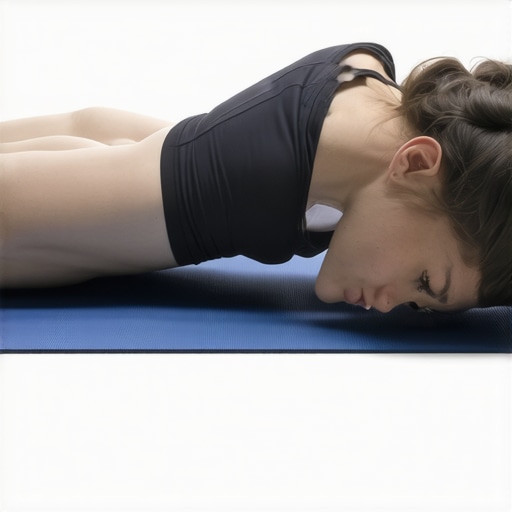
The Deadbug Fix That Actually Works
Most people treat the Deadbug like a simple ab exercise, but it is actually a diagnostic tool for your spine. The goal isn’t to move your limbs; it’s to keep your spine from moving while your limbs try to pull it out of place. This is the ultimate way to teach your nervous system that it is safe to let go of the psoas. In my early days of recovery, I’d fly through these reps, arching my back and wondering why I wasn’t getting better. It wasn’t until I tried the deadbug variation for people with weak lower backs that I realized I had been cheating for years.
Drive Your Lower Back Into the Floor
Lie on your back with your knees up. Before you move a finger, press your lower back firmly into the floor—not by squeezing your glutes, but by using your deep core. Lower one arm and the opposite leg only as far as you can maintain that floor contact. If your back lifts even a millimeter, you’ve gone too far. This ‘isometrics-first’ approach is what builds the deep core connection that stops your spine from shear stress. You are essentially telling your brain: ‘Look, the abs have the spine covered; the psoas can go on break now.’
Breathe Into Your Back to Release the Front
Your diaphragm and your psoas are physically connected; they share a zip code in your mid-back. If you only breathe into your chest, you’re constantly tugging on those hip flexors with every one of the 20,000 breaths you take a day. Learning how to breathe through your ribs to ease lower back tension is the ‘secret’ to a long-term release. I used to be a chest-breather, which kept my psoas in a constant state of high alert. By shifting the air into my side and back ribs, I felt my hips ‘unlock’ without a single lunge. If you find yourself stiffening up during the day, check your workspace—often the one thing your standing desk is missing for hip health is a footrest that allows your pelvis to stay neutral while you focus on deep, lateral breathing.We need to talk about the biggest lie in the world of mobility: the idea that every tight muscle is a ‘short’ muscle that needs to be elongated. This is where most people—including my former self—completely derail their progress. When you feel that searing tension in the back of your legs, your first instinct is to reach for your toes. But here is the nuance: if your pelvis is already tilted forward, your hamstrings are already being stretched to their absolute limit just to hold your pelvis in place. They aren’t short; they are over-lengthened. By pulling on them further, you aren’t releasing a knot; you are irritating your sciatic nerve. I spent years wondering why stretching your hamstrings might be making your back pain worse, only to realize I was essentially trying to stretch a rubber band that was already at its breaking point. This is a classic ‘trap’ where the symptom (tightness) is the polar opposite of the solution (stability).
Why does your ‘tightness’ feel more like a protective wall?
In many cases, your brain creates a sensation of stiffness as a defense mechanism. According to research led by Dr. Stuart McGill, a world-renowned expert in spine biomechanics, ‘clinical stability’ is often maintained by the very muscles we try to ‘loosen.’ If your nervous system senses that your L5-S1 joint is unstable, it will command the surrounding tissues to lock down. This is why you feel that frustrating rebound effect where the stiffness returns minutes after a deep session of mobility mastery simple exercises to relieve chronic back pain. You are fighting against your body’s own safety brakes. I’ve seen so many people make the the 90-90 hip stretch mistake that is hurting your lumbar spine because they prioritize ‘feeling’ a stretch over maintaining a neutral, protected spine. 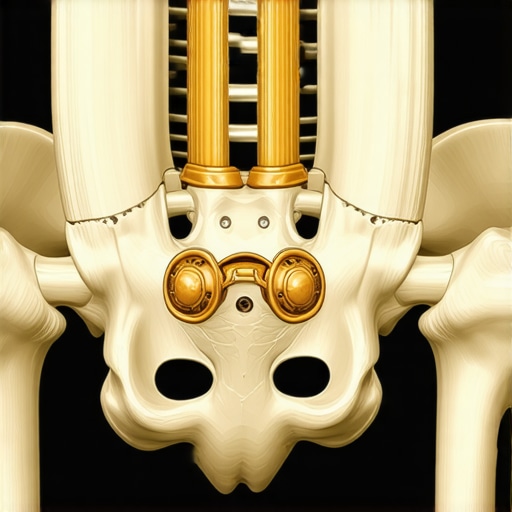
End the Constant Need to Crack Your Own Back
Another advanced mistake is the ‘self-adjustment’ addiction. We all know that person who twists their torso until they hear a satisfying *pop* every twenty minutes. I used to be that person. I thought I was ‘realigning’ myself, but I was actually creating hypermobility in the segments above and below the joints that were truly stuck. When you crack your own back, you are usually hitting the segments that are already moving too much. You get a temporary hit of endorphins, but why cracking your own back is only a temporary fix is because the underlying restriction remains untouched. Real progress happens when you stop chasing the noise and start addressing the ‘stuck’ joints through professional care. This is how an adjustment restores more than just range of motion—it resets the neurological feedback loop so your brain stops sending ‘stiffness’ signals to the wrong places. You have to stop treating your body like a collection of isolated parts and start seeing it as a pressurized system. If you keep releasing the pressure at the wrong valve, the whole system eventually fails. Have you ever spent weeks stretching a ‘tight’ spot only to feel tighter than when you started? I know I have. Let me know if you’ve fallen into that trap in the comments below; we need to break that cycle together. If you find yourself constantly tugging at your limbs without lasting relief, it’s time to trade that hamstring stretch that is actually hurting your nerves for a routine that respects your spine’s need for a solid foundation.Once you stop the cycle of aggressive stretching and self-cracking, you enter what I call the ‘preservation phase.’ This is where most people fail because they think the absence of pain means the work is done. In reality, your nervous system is like a computer that needs regular software updates to keep those new, stable patterns alive. I used to think I needed a high-end ergonomic chair to save my spine, but I eventually learned that why your expensive desk chair might be giving you false sciatica often comes down to it being too ‘comfortable’—it allows your muscles to completely switch off.
Turn your environment into a passive physical therapist
Instead of relying on a chair to do the work, I started using a simple McKenzie lumbar roll. It’s a firm foam cylinder that forces your lumbar curve into its natural shape. I use it everywhere: in the car, at my desk, and even on the couch. This small tool provides a constant tactile cue to my brain, preventing that dreaded C-curve collapse. If you are a desk worker, you should also realize that the one thing your standing desk is missing for hip health is a simple footrest or a ‘captain’s perch.’ By alternating which foot is elevated, you prevent the pelvis from locking into a forward tilt, which is one of the posture correction secrets that transform back pain outcomes over the long haul. 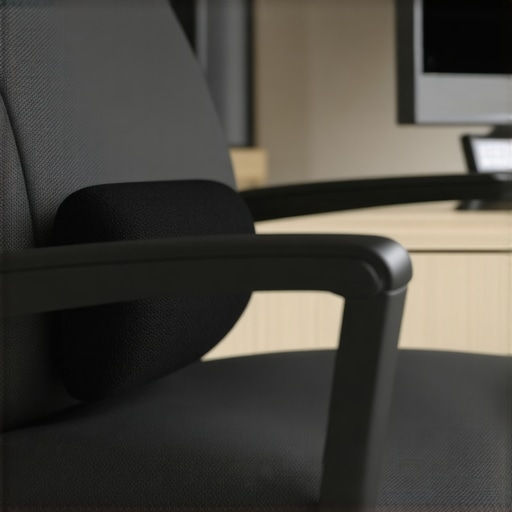
How do I maintain my spinal mobility over time without a gym?
The secret isn’t more exercise; it’s better ‘movement hygiene.’ I follow a rule from Dr. Kelly Starrett, author of Becoming a Supple Leopard, who emphasizes that ‘maintenance is a daily tax you pay for having a body.’ I spend ten minutes every evening doing a ‘couch stretch’ and a few minutes of mobility mastery simple exercises to relieve chronic back pain to reset the day’s damage. This isn’t about getting a workout; it’s about daily adjustments to alleviate back pain and improve posture so the stiffness never has a chance to accumulate. I’ve found that even the simple tweak to your walking stride that saves your hips—focusing on pushing through the big toe—can be more effective than an hour of yoga if you do it for 10,000 steps a day.
Wearables are about to end the slouching epidemic
Looking ahead, I predict we are moving toward a world of ‘biofeedback-first’ recovery. We’re already seeing wearable sensors that vibrate when your shoulders roll forward, but the next generation will likely integrate with our phones to track ‘spinal load’ in real-time. Imagine getting a notification saying your L5-S1 joint has been under 40 pounds of pressure for too long, prompting you to perform the 30-second wall reset for hunchback posture. This shift from ‘reactive’ care to ‘proactive’ data will change everything. For now, my best advice is to adjust your routine with daily spinal alignments for lasting relief. Don’t wait for the ache to return; try integrating one ‘isostatic’ hold—like holding the bottom of a squat while keeping your back flat—into your next commercial break or phone call. It’s these tiny, high-frequency wins that build a spine that lasts a lifetime.
Three Truths That Changed My Spine Forever
Reflecting on my journey from chronic stiffness to fluid movement, I’ve realized that my ‘stubborn’ psoas was never the enemy; it was a symptom of a nervous system that didn’t feel safe. First, I learned that more range of motion is useless if you can’t control it. If you have ‘flexible’ hips but a ‘loose’ spine, your brain will lock those muscles down to prevent injury. Second, I discovered that posture correction secrets that transform back pain outcomes aren’t about sitting up straight with military precision—they’re about finding a dynamic, neutral stack. Third, I finally accepted that ‘tightness’ is often just weakness in disguise. When I stopped stretching and started bracing, the ache finally left for good.
The Tools That Actually Earned a Spot in My Daily Life
You don’t need a gym full of equipment to maintain a healthy back, but a few specific tools made a massive difference for me. I swear by a basic McKenzie Lumbar Roll; it’s the only thing that stops my pelvis from tilting during long drives. For my desk setup, I swapped my fancy ergonomic chair for a simple stool and a footrest, which is the one thing your standing desk is missing for hip health. I also highly recommend keeping a physical copy of Becoming a Supple Leopard by Kelly Starrett on your coffee table. It’s a literal encyclopedia for human movement. Finally, never underestimate the power of professional help; unlocking better posture with simple adjustments to relieve back pain can provide the ‘reset’ your nervous system needs to start these new habits on a clean slate.
Your Spine is More Resilient Than You Think
It’s easy to feel like your back is ‘broken’ or that you’re destined for a lifetime of stiffness, but your body is incredibly adaptable. Every time you choose a stable breath over a desperate lunge, you are rewiring your system for success. Don’t try to fix everything at once. Start by trying to adjust your routine with daily spinal alignments for lasting relief and see how your body responds over a week. You deserve to move without fear, and that journey starts with a single, stable step. Have you ever felt like a specific stretch was actually making your pain worse instead of better? I’d love to hear your experience in the comments below.