
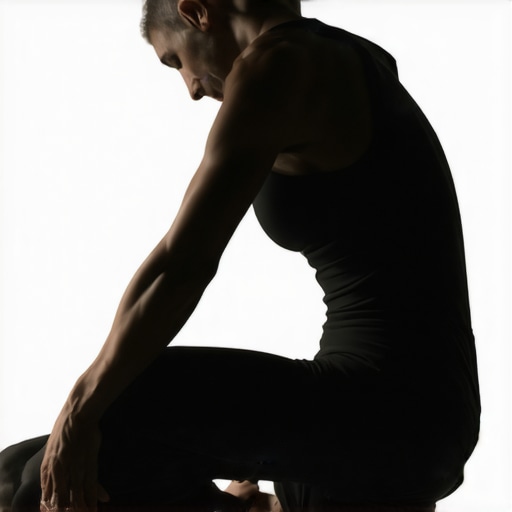
I spent years thinking I was just inherently ‘stiff.’ Every single morning, I would roll out of bed, groan at the ceiling, and immediately try to touch my toes. I figured that if I could just force my fingers to reach the floor, that nagging, dull ache in my lower back would finally pack its bags and leave. I was wrong. In fact, the harder I pulled on my legs, the more my back felt like it was made of dry kindling ready to snap. I was making the classic mistake of treating a protector like a problem, and I paid for it with months of unnecessary flare-ups. [IMAGE_PLACEHOLDER]
Your Tight Hamstrings are Probably Protecting Your Spine
I remember the exact moment I realized my strategy was backfiring. I was deep into a forty-minute stretching routine—trying to be a hero—when I felt a zing of electricity shoot down my leg. It turns out, I wasn’t actually ‘stretching’ a short muscle; I was yanking on an angry nerve. When your spine feels unstable or out of alignment, your brain sends an emergency signal to your hamstrings to lock down. They act like organic parking brakes to prevent you from moving into positions that might hurt your discs. I had to learn the hard way that why your hamstring stretch is actually hurting your nerves is often because you’re fighting your body’s own defense mechanism. According to a study published in the Journal of Orthopaedic & Sports Physical Therapy, hamstring stiffness is frequently a ‘protective guarding’ response rather than a structural length issue. If you keep pulling on those ‘brakes’ without addressing why the brain set them in the first place, you’re just creating more instability. This is why you might need to stop stretching your hamstrings for back relief and start looking at your pelvic position instead. Have you ever spent weeks stretching a specific spot only to find it feels even tighter the next day? I’d love to hear if you’ve felt that same frustration.
Wait, can stretching actually make things worse?
It sounds counterintuitive, I know. We’ve been told since middle school gym class that flexibility is the holy grail. But when I finally stopped the aggressive pulling and started focusing on mastering my mobility through stabilization, the ‘tightness’ simply vanished on its own. I started using the morning toe touch test as a diagnostic tool rather than a goal, which changed everything. Today, we are going to dive into why your body is keeping those muscles on a short leash and how you can finally convince your nervous system to let go.
Stop Yelling at Your Hamstrings and Start Talking to Your Pelvis
Think of your pelvis like a bowl of water. When you have an anterior pelvic tilt, that bowl is tipping forward, spilling water over your toes. Because your hamstrings are attached to the back of that bowl, they are already being pulled taut before you even start your day. No amount of stretching will ‘lengthen’ a muscle that is simply being held at its end-range by a tilted bone. I spent three months religiously doing toe touches, only to realize I was just spilling more water out of the bowl. Once I learned how to tell if your pelvis is tilted forward, the entire game changed for me. I had to learn why your pelvis tilts forward and how to reset it fast using deep core engagement rather than brute force. 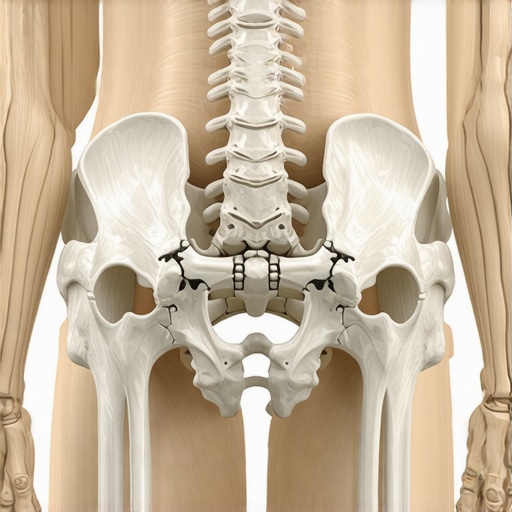
Reset the System with These Core Basics
Instead of pulling on your legs, you need to provide your spine with the stability it is craving. I remember the first time a physical therapist put me in a 90/90 position on the floor and told me to just breathe into my lower back. I thought it was a complete waste of time—until I stood up and my legs felt three inches longer without a single stretch. This is where the deadbug variation for people with weak lower backs comes into play. By keeping your spine glued to the floor while moving your limbs, you are proving to your brain that the ‘parking brakes’ can safely be released. This isn’t about strength in the traditional sense; it is about neural reassurance.
Glide the Nerve Instead of Yanking the Muscle
If you feel a burning or tingling sensation when you stretch, you aren’t hitting a muscle—you are irritating a nerve. Nerves hate being stretched, but they love to move. Instead of a static hold that feels like a wire about to snap, try a ‘nerve glide.’ This involves gently pumping your ankle while your knee is slightly bent, allowing the sciatic nerve to slide through the surrounding tissue like a silk thread. Using the nerve glide that calms sciatica pain in seconds was the only thing that stopped my post-workout leg zings and allowed me to walk normally after a long gym session.
Release the Hidden Tension in Your Psoas
Often, the reason your hamstrings are so tight is because the muscles in the front of your hips—the psoas—are pulling your pelvis out of whack and into that forward tilt. I used to have this deep, gnawing ache in my low back that felt like it was hidden deep behind my organs. It wasn’t until I tried the psoas release that finally stops your deep lower back ache that I felt my hamstrings finally go slack on their own. When the psoas lets go, the pelvis can sit level, and the hamstrings no longer have to pull double duty as emergency stabilizers. Focus on mastering your mobility by addressing these structural tug-of-wars rather than just attacking the symptom.Let’s dig deeper because there is a massive misconception that ‘more movement’ is always ‘better movement.’ I’ve seen so many people—myself included—obsessed with becoming a human pretzel, thinking that flexibility is a shield against pain. In reality, your spine actually thrives on a certain level of ‘stiffness’ for protection. As Dr. Stuart McGill, a world-renowned expert in spine biomechanics, explains in his research, ‘clinical instability’ occurs when the joints have too much wiggle room without the muscular control to support them. If you’re already hypermobile, pushing for more range of motion is like loosening the lug nuts on a car wheel and expecting a smoother ride. 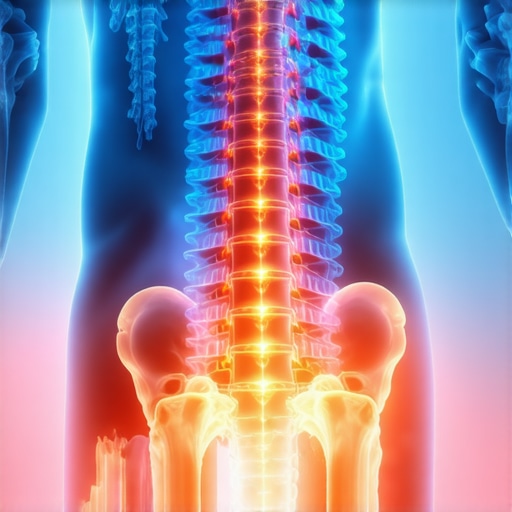
Your Body Needs Stability Way More Than It Needs a Split
One of the biggest traps I see is the ‘Oops Factor’ of self-adjusting. We’ve all been there: you feel a little stiff, so you twist your neck or back until you hear that satisfying ‘pop.’ You get an instant hit of dopamine and endorphins, but twenty minutes later, the tension is back with a vengeance. This is because why self-cracking your neck makes the stiffness come back faster is usually due to the fact that you’re moving a joint that is already moving too much, rather than the one that is actually stuck. You are essentially creating more instability in the ‘easy’ segments while the real culprit remains frozen. Have you ever fallen into this trap of constant self-popping? Let me know in the comments.
Why Does My Back Feel Loose One Minute and Locked Up the Next?
This frustrating ‘yo-yo’ effect happens because your nervous system is playing a constant game of tug-of-war. When you force a stretch—like the 90-90 hip stretch mistake that is hurting your lumbar spine—you might temporarily override the muscle spindles that regulate tension. But because you haven’t built the stability to control that new range, your brain perceives the area as ‘unsafe’ the moment you stand up and immediately slams the brakes back on. This is also why the truth about posture braces and muscle atrophy is so important to understand; if you rely on an external strap to do the work, your deep stabilizers go on vacation, leaving your spine vulnerable. True relief comes when you realize how an adjustment restores more than just range of motion—it actually reboots the communication between your joints and your brain. When that signal is clear, you don’t just move better; you feel more solid. This is exactly why you feel taller and lighter after a professional adjustment: your body has finally stopped fighting itself.Once you’ve felt that incredible sense of ease after a professional adjustment, the biggest challenge is preventing your body from sliding back into its old, distorted patterns. Think of an adjustment like a high-level software update for your nervous system; it clears the glitches, but your daily habits are the hardware that actually runs the program. If you go right back to slouching over a laptop, you’re essentially trying to run a 2025 operating system on a dusty 1995 motherboard. I’ve found that the key to lasting relief isn’t doing more work, but doing the right work consistently. This is why I started to adjust your routine daily spinal alignments for lasting relief by integrating micro-movements into my work blocks.
A Five-Dollar Tool That Saves My Lower Back
People often ask what expensive ergonomic gadgets I use, but my most trusted tool is actually a simple Lacrosse ball. I use it for a technique called ‘tack and stretch’ on my gluteus medius. When we sit for long periods, these muscles tend to become ‘amnesic’ and stop supporting the pelvis, which leads right back to that protective hamstring tension I mentioned earlier. By pinning the ball against a wall and moving my hip through a full range of motion, I’m performing what Dr. Kelly Starrett, author of Becoming a Supple Leopard and a pioneer in movement science, calls ‘SMFR’ (Self-Myofascial Release). Starrett argues that the goal isn’t just to mash tissue, but to restore the sliding surfaces between muscle layers. I personally spend three minutes on each hip every evening, and it’s the only thing that prevents that deep, gnawing ache from returning after a heavy lifting session. 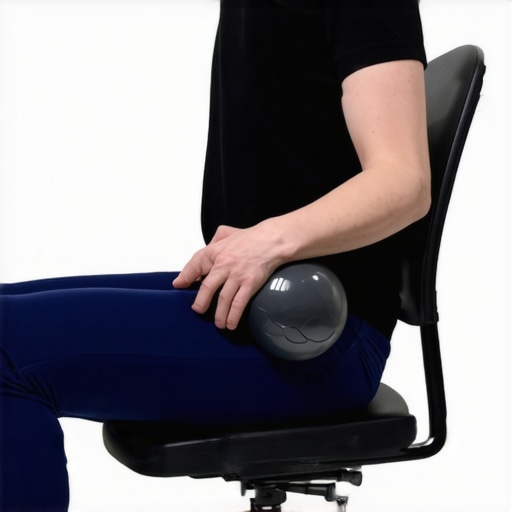
How do I maintain my spinal health between visits?
Consistency beats intensity every single time. Instead of a grueling hour-long gym session once a week, I focused on the morning glute squeeze that protects your spine all day to wake up my posterior chain before I even brush my teeth. I also rely on the chair hack to keep your pelvis neutral while working, which involves using a small rolled-up towel at the base of the spine to maintain that natural lumbar curve. These aren’t just ‘tips’; they are the posture correction secrets that transform back pain outcomes by turning your environment into a tool for health rather than a source of injury. Looking ahead, I suspect we are moving toward a future where AI-driven wearables will provide real-time biofeedback, vibrating the second our spinal alignment shifts out of neutral. But until those gadgets are perfected, the best sensor you have is your own awareness. I highly encourage you to try the ‘tack and stretch’ with a Lacrosse ball tonight—you’ll be amazed at how much ‘fictive’ tightness in your hamstrings simply melts away once the glutes are awake and doing their job.
Lessons My Nervous System Taught Me the Hard Way
Reflecting on my years of frustration, I realized that I was looking at my body like a car with rusty parts instead of a living, breathing ecosystem. The biggest epiphany was that tension is often a protective signal, not a structural flaw. I had to stop seeing my hamstrings as ‘short’ and start seeing my spine as ‘unsupported.’ I also learned that posture correction secrets that transform back pain outcomes are rarely about sitting up straight and almost always about how your brain perceives stability. Another lightbulb moment was realizing that ‘feeling a stretch’ isn’t the same as ‘gaining mobility.’ Sometimes, the best thing you can do for a tight muscle is to strengthen the muscle on the opposite side of the joint. I also discovered why cracking your own back is only a temporary fix; it usually just adds more instability to an area that is already crying out for control.
The Tools That Actually Move the Needle
I don’t believe in buying every expensive gadget on the market, but there are a few essentials I keep in my bag that I trust implicitly. First, a simple Lacrosse ball for ‘tack and stretch’ is non-negotiable; it helps me master your mobility without needing a full-time massage therapist. Second, I highly recommend the work of Dr. Stuart McGill, particularly his insights on spine hygiene, which provide a foundation for everything we have discussed. Lastly, I suggest looking into daily adjustments to alleviate back pain and improve posture as a way to maintain the progress you make during professional visits. These resources taught me that I wasn’t fragile; I was just misaligned and misunderstood by my own nervous system.
It is Time to Trust Your Body Again
Movement should be a source of joy, not a source of fear or a series of ‘shoulds.’ Once you stop fighting your body’s natural protective mechanisms and start working with them, you’ll find that relief isn’t just a temporary state—it becomes your new baseline. You can adjust your routine daily spinal alignments for lasting relief starting today, even if it’s just a few minutes of mindful breathing or a quick glute squeeze while you wait for your coffee. Your mobility is a skill that you can sharpen over time, and every small habit counts toward a more resilient version of yourself. Have you ever spent months stretching a specific muscle only to find it feels even tighter the next day? I would love to hear about your experience in the comments below!