
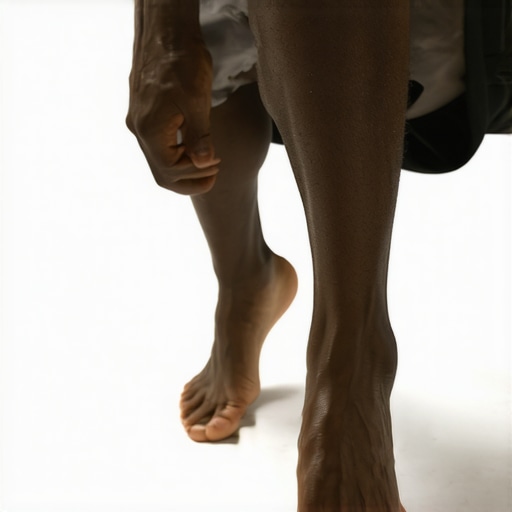
It was a morning like any other until I took a long, hard look at my ankles during a simple stretch. Suddenly, a lightbulb went off—I couldn’t lift my heels as high as I thought I should. That realization hit me hard because I knew it wasn’t just about flexibility. It was a glaring sign that I was missing a crucial piece of my mobility puzzle. Have you ever felt like your runs are dragging you down, despite putting in the miles? If so, you’re not alone, and today I want to share something that might just transform your running experience.
Why Your Ankle Mobility Might Be Screwing Up Everything
When I first learned about the significance of ankle mobility, I thought it was just a fancy fitness trend. Turns out, it’s actually a cornerstone of efficient, pain-free movement—especially for runners. Simple but often overlooked, the ability to move your ankles freely impacts everything from stride length to injury prevention. Research indicates that limited ankle dorsiflexion can lead to compensations up the kinetic chain, causing knee, hip, or even lower back pain (source). So, if you’ve been battling nagging pains or just feeling sluggish during your runs, your ankles might hold the key to unlocking better performance.
But here’s the thing—most runners skip this test altogether. They assume their ankles are fine, or they brush off minor discomfort as normal post-run soreness. That was me, early on. I made the mistake of never prioritizing my ankle health, which led to tight calves and inefficient movement patterns. It wasn’t until I started paying attention to that simple ankle test that I realized how much room I had for improvement.
Are you curious to find out whether your ankles are holding you back? Well, sticking your foot up against the wall and seeing how far your knee can push forward without your heel lifting—that’s the basic test I’m talking about. It’s quick, painless, and revealing. Want to see how I mastered this and what it revealed about my own running form? Keep reading. I’ll walk you through how to perform the test accurately and what steps you can take to improve. Trust me, understanding this test changed everything for me—and it just might help you, too.
And if you’ve ever felt the frustration of hitting a plateau or dealing with unexplainable aches, know this: improving your ankle mobility is often the missing link that can set you free. Ready to learn the practical steps? Let’s dive into why this test matters and how you can use it as a springboard for better, more effortless running.
Perform the Ankle Dorsiflexion Test Correctly
Stand facing a wall, place one foot about 2 inches away, and keep the heel flat. Slowly bend your front knee towards the wall, aiming to touch the wall without lifting your heel. If your knee can’t reach the wall or the heel lifts, your ankle mobility needs work. I recall the first time I tried this; my heel lifted instantly, revealing tightness that affected my running form. Recognizing this gave me a clear starting point for improvement.
Implement Specific Mobilization Exercises
Use a Foam Roller or Massage Ball on Calves
Before stretching, roll the calf muscles thoroughly to release tightness, much like loosening a stiff spring allows better movement. I spent five minutes rolling before workouts, noticing a significant increase in ankle flexibility after just a week, which translated into a smoother stride.
Practice Ankle Circles and Arm Swings
Perform slow ankle circles in both directions to lubricate the joint. This movement is akin to warming up a hinge before opening a door widely. I integrate this into my warm-up routine daily, and it helps prevent stiffness during long runs.
Stretch the Tight Areas Wisely
Stretch the calves and Achilles tendons with a gentle wall stretch. Imagine pulling the back of your lower leg like stretching a rubber band—gradually and carefully. I once over-ambitiously stretched and felt a sharp twinge; now I hold stretches gently, avoiding setbacks.
Strengthen Supporting Muscles
Engage in balance and strength exercises like single-leg stands and heel raises. These are like reinforcing the foundation of a building—you want stability. I added heel raises to my routine three times a week and noticed improved dorsiflexion over a month, which enhanced my running efficiency.
Gradually Progress and Monitor Improvements
Track your ankle flexibility regularly. Progressing slowly is key—think of it as slowly turning a dial rather than forcing a switch. I kept a simple journal and celebrated small gains, which kept me motivated and prevented overtraining.
Remember, consistency is essential. Incorporate these movements into your daily routine, and over time, you’ll notice better mobility, less pain, and a more effortless running experience. Want more tips? Check out similar strategies at Master Your Mobility and learn how small daily adjustments can lead to big changes.
Many health practitioners and enthusiasts propagate the idea that perfect posture and simple adjustments are the ultimate keys to alleviating chronic back pain or improving mobility. However, this oversimplified view often overlooks the complex nuances that truly influence our musculoskeletal health. Contrary to popular belief, an isolated adjustment or static posture fix isn’t a magic bullet—especially if the deeper, often neglected nuances aren’t addressed.
One prevalent myth is that maintaining a “correct” posture constantly is necessary to prevent pain. Many fall into the trap of rigidity, believing that muscles and joints must maintain a perfect alignment at all times. In reality, our bodies thrive on dynamic movement and adaptive positioning. For example, overly focusing on sitting straight can lead to muscle fatigue and tension, a phenomenon highlighted in recent studies emphasizing variability over rigidity (see why constant sitting upright may harm you). Recognizing this nuance helps prevent the common mistake of over-correcting, which might result in more discomfort than relief.
Another mistake often overlooked is the tendency to treat symptoms without addressing the root cause. For instance, stretching a tight hamstring might seem like an intuitive fix, but if the underlying issue is pelvic misalignment or core instability, such isolated stretches won’t provide lasting relief. This is where the importance of comprehensive assessments comes in—not just focusing on flexibility but examining the entire kinetic chain. Learning to identify these nuanced causes is a skill that separates seasoned practitioners from amateurs.
What about joint adjustments like chiropractic therapies? Are they Overhyped or Overused?
Many believe that chiropractic adjustments are a quick fix for back pain. While they can provide temporary relief, relying solely on adjustments without integrating movement-based strategies often leads to short-lived benefits. Furthermore, unnecessary adjustments, especially when performed without proper diagnosis, can lead to instability or over-mobilization of joints.
Research from the Master Your Mobility guide suggests that the most effective approach combines manual therapy with active mobility exercises and neuromuscular training. This holistic approach respects the body’s need for both stability and mobility, avoiding the trap of linear thinking that adjustments alone are enough.
Finally, a common yet subtle mistake is neglecting the role of habitual movement patterns formed over years. These ingrained behaviors often become the true hidden culprits behind pain and dysfunction. For example, habitual asymmetrical postures while working or carrying loads can create compensations that no adjustment alone can fix if ignored.
In essence, true progress comes from understanding the nuances—the dynamic interplay of muscles, joints, habitual patterns, and psychological factors. It’s about recognizing that no single fix exists, and ongoing awareness and small daily adjustments are key. If you want to explore more about how to avoid these pitfalls and truly enhance your mobility, check out expert tips for easier movement.
Have you ever fallen into this trap? Let me know in the comments.
Once you’ve taken the crucial steps to improve your mobility and posture, the key to lasting results lies in consistent maintenance and the right tools. Regularly integrating targeted exercises, such as foam rolling your calves and practicing ankle circles, keeps your tissues supple and your joints functioning optimally. Personally, I rely on a high-density foam roller and a massage ball designed with firm grip and durability, which allow me to work out tighter areas more effectively and efficiently. These tools are compact, portable, and easy to incorporate into any daily routine, making them ideal for maintaining mobility on the go.
Looking ahead, the trend will likely shift toward smart, app-connected devices that monitor movement patterns and provide real-time feedback, enabling personalized adjustments to optimize mobility and prevent regressions. Emerging technology like sensor-enabled wearables is starting to measure joint angles and muscle activation, giving users insights previously only accessible through professional assessment.
So, how do I keep my mobility working over time? The secret is consistency combined with proper tracking. I recommend setting a daily reminder to perform a brief mobility check, similar to the ankle dorsiflexion test I discussed earlier—this helps you catch deteriorations before they become ingrained. Additionally, leveraging resources like [Master Your Mobility](https://chiromasteryz.com/master-your-mobility-top-strategies-for-moving-without-pain) can offer guidance on advanced techniques to sustain progress.
Remember, muscles and joints adapt to the demands we place on them. Neglecting maintenance can cause regressions, so keep your tools and routines consistent. For instance, dedicating just five minutes daily to foam rolling and mobility drills can significantly prolong the benefits of your initial improvements. Think of it as tuning a musical instrument—you need regular adjustments to keep it sounding perfect.
If you want to elevate your practice further, consider exploring smart devices that track your movement and offer tailored program suggestions. This proactive approach aligns with the future of personalized health tech and can help you stay aligned with your mobility goals. Dive into the latest innovations and see how integrating technology can give you an edge in maintaining health.
Why not begin today by incorporating my favorite mobility drill—like the wall slide—to your routine? This simple move effectively trains shoulder posture and can prevent the common slump that leads to discomfort. Regularly practicing this not only reinforces your progress but also ensures that your improvements become second nature. If you’re ready to take your mobility maintenance up a notch, explore the detailed strategies at [Enhance your mobility](https://chiromasteryz.com/enhance-your-mobility-expert-tips-for-easier-movement-in-2025).
Over years of experimenting with posture correction and mobility exercises, I uncovered a crucial insight: progress isn’t just about doing daily routines but about identifying the subtle patterns that sabotage our efforts. The biggest lesson I learned about adjustments, posture, mobility, and back pain is that consistency paired with nuanced awareness creates lasting change. For example, understanding that slight habitual misalignments—like uneven weight distribution when standing—can impair mobility helped me focus on micro-corrections daily. I also realized that over-focusing on static postures, without dynamic movement incorporated, can hinder true mobility improvements. Additionally, I found that personalized tools, such as smart sensors, can provide feedback that the naked eye can’t catch, speeding up progress and preventing regression. Lastly, I’ve learned that patience trumps intensity—tiny, persistent adjustments outperform hurried, forceful efforts, leading to sustainable health and pain-free movement.