
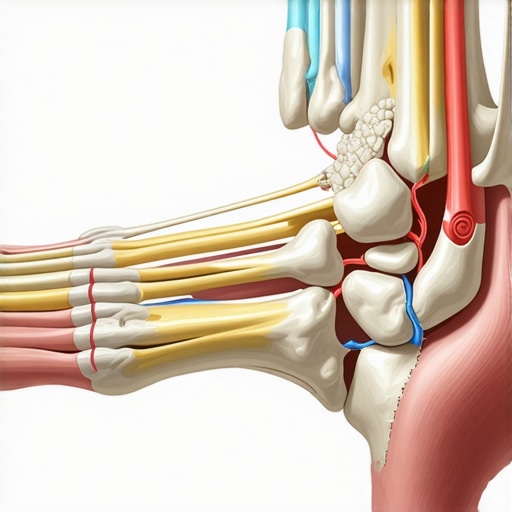
I remember the day I finally understood that my relentless lower back spasms weren’t just about my back— they were whispering from my feet. It hit me during one restless night when an old pair of shoes had me hobbling after a quick walk. Suddenly, I realized that my arch support was non-existent, and my feet were crying for help. That lightbulb moment changed everything. If you’ve been battling chronic lower back pain, especially spasms that come out of nowhere, there’s a chance your foot arch might be secretly contributing to your discomfort.
The Hidden Connection: Foot Arches and Your Back
Our bodies are intricate systems, and surprisingly, the way our feet connect with the rest of our posture can make or break our back health. When your arch collapses or isn’t properly supported, it causes misalignment up the chain— affecting knees, hips, and ultimately your spine. This cascading effect can lead to those stubborn spasms you just can’t shake. Early in my journey, I made the mistake of only focusing on my back, neglecting my feet entirely. Trust me, that was a costly oversight.
Research backs this up— studies have shown that foot mechanics play a critical role in lower back pain. According to a report published in the Journal of Manipulative and Physiological Therapeutics, correcting foot alignment can significantly reduce back discomfort and spasms (more details here). Recognizing this link was the turning point that got me on the path to lasting relief.
Is Your Focus Only on the Back Actually Wasting Your Time?
I used to believe stretching and strengthening my back would solve everything. It didn’t. It wasn’t until I examined my feet that I discovered the root cause. Many folks overlook their arches, thinking their back is the sole culprit. Don’t make that mistake. Addressing your foot mechanics might be the missing piece in your puzzle. If you’re tired of temporary fixes and want to truly tackle your spasms, understanding this connection is essential.
If you’re ready to explore practical strategies to realign your entire posture, I’ll guide you through simple steps that transformed my back health. First, let’s debunk some doubts and see why this overlooked factor could be your ticket to relief.
Assess Your Foot Arch and Choose the Right Support
Start by examining your foot arches—are they flat or high? Stand barefoot in front of a mirror or take a picture from the side. A collapsed arch can distort your entire posture, leading to back spasms. If you notice your arches are low, invest in supportive insoles designed for your foot type. When I first identified my collapsed arch, I visited a podiatrist who recommended custom orthotics—this was a game-changer. Proper support stabilizes your foot, preventing misalignment up the chain, which can ultimately reduce back pain.
Replace Worn-Out Shoes Promptly
Worn footwear loses its ability to support your arches effectively. Check the soles and insoles regularly—if they show uneven wear or flattening, it’s time for new shoes. I once kept my running shoes five months too long, which exacerbated my back issues. After replacing them with supportive sneakers, I felt immediate relief. Think of your shoes as the foundation of a building—if it’s compromised, everything above suffers.
Integrate Foot Stretches and Mobility Exercises
Target tight foot muscles with simple stretches. For example, roll a tennis ball under your foot for five minutes to release tension. Incorporate toe stretches and calf raises into your daily routine. I added a quick five-minute foot roll before bed, noticing my back spasms diminished over a week. Enhancing foot flexibility improves your gait and alignment, easing strain on the lower back. For a detailed routine, explore mobility strategies.
Practice Proper Walking Technique
Imagine your foot as a lever—land softly with your heel first, then roll to your toes. Avoid overstriding or heel striking heavily, which can destabilize your posture. Doing this consistently keeps your pelvis aligned and reduces strain. I once concentrated solely on my stride length without considering foot placement; correcting my gait reduced my back spasms significantly. You can experiment by walking barefoot on soft surfaces to feel the natural movement of your feet and trigger better alignment.
Incorporate Daily Posture and Spinal Adjustments
Combine foot support with daily posture tweaks. Stand up periodically, align your pelvis, and avoid slouching. Gentle spinal adjustments, like those described here, reinforce your efforts. I set a timer to remind me to straighten my back every 30 minutes, which synergized with my improved foot support and substantially reduced back spasms over weeks. Remember, supporting your feet is a crucial step towards lasting relief from low back spasms caused by misalignment.
Many believe that improving back health is primarily about stretching or strengthening the back muscles, but this oversimplifies a complex system where subtle nuances make all the difference. One common misconception is the idea that spine adjustments alone can resolve chronic issues, yet in my experience, neglecting the interconnected role of joint mobility and fascial restrictions can lead to incomplete or temporary relief.
Another trap many fall into is thinking that mobility exercises are universally beneficial without customizing them to individual needs. Performing generic stretches without understanding the root cause can sometimes worsen the condition. For example, oversimplified mobility routines that ignore underlying joint restrictions may loosen tissues temporarily but fail to address the stiffness that perpetuates poor biomechanics and back pain.
Why does forcing mobility sometimes backfire? This is especially relevant for advanced practitioners seeking rapid progress. Pushing beyond natural joint limits without proper preparation or understanding can cause micro-injuries, leading to increased pain or longer recovery times. External research underscores this risk: a study published in Frontiers in Physiology highlights the importance of a cautious, evidence-based approach to mobility work to prevent overload injuries (source).
Furthermore, many practitioners overlook the significance of neural restrictions—where tight neural tissues limit movement—often mistaken for muscular tightness. Treating muscles alone without addressing neural tension can create a false sense of progress and neglect the true bottleneck in movement quality. Incorporating neural flossing techniques or fascial releases can provide more comprehensive relief and improved mobility.
Optimizing posture involves not just static alignment but dynamic control. Overemphasizing corrective postures without integrating functional movements can lead to rigidity rather than resilience. Effective posture training combines precision adjustments with mobility and strength exercises tailored to individual patterns. For deeper insights into these nuances, exploring posture correction strategies will help you move beyond surface-level fixes.
Remember, the goal isn’t just to move better temporarily but to develop a nuanced awareness of how your joints, nerves, and fascia interact in your unique body. This approach ensures lasting improvements and prevents common pitfalls in mobility practice. Have you ever fallen into this trap? Let me know in the comments.Maintaining your improved mobility and posture requires the right tools and strategies that support long-term results. Personally, I rely on a combination of evidence-backed equipment and smart habits to ensure lasting progress. One of my go-to tools is a high-density foam roller, which I use daily to release fascial restrictions and keep my tissues supple. Unlike cheaper rollers, a dense foam roller provides the necessary firmness to target deep muscle layers effectively, which is vital for maintaining spinal alignment and preventing setbacks. I typically incorporate the foam roller into my morning routine, focusing on areas prone to tightness such as the hip flexors and thoracic spine, and I’ve noticed a significant reduction in discomfort and spasms over time.
Another indispensable item is a set of targeted mobility straps. These straps help me perform safe, controlled stretching exercises that enhance flexibility without risking overstretching or injury. For example, I use a resistance strap for hamstring and hip stretches, ensuring consistent tension that promotes gradual lengthening. This approach aligns with the principles outlined in mobility strategies, emphasizing the importance of controlled movement for sustainable improvements.
For posture adjustments, I highly recommend a posture corrector brace designed for long-term wear during daily activities. It helps reinforce optimal spinal alignment and reminds me to maintain good posture, especially during prolonged screen time. Compatibility with ergonomic furniture, like adjustable desks and chairs, further enhances these benefits. Maintaining consistent posture habits is crucial, and using supportive gear minimizes the chances of regressions.
In terms of software, I use posture tracking apps that prompt me to adjust or move throughout the day. These apps utilize device sensors to detect slouching or poor alignment, providing real-time feedback. As we look forward, AI-powered posture coaching could become more personalized, integrating data from wearables for customized routines.
How do I keep these tools effective over time? Routine maintenance is key. I schedule weekly check-ins to clean and inspect my foam roller, replace worn straps, and recalibrate my software settings. Staying consistent with these small but impactful tasks ensures that my tools remain effective and that my back health stays on track.
Finally, I encourage you to experiment with an advanced tip: incorporate self-myofascial release with a massage ball into your daily routine. Applying targeted pressure to tender points can break down adhesion and keep muscles pliable, significantly reducing the likelihood of spasms. A study published in Manual Therapy highlights how foam rolling and ball massage can improve neuromuscular function and tissue health (source). Give this a try for a week, and observe how your resilience and mobility improve.
In the future, we can expect more integrated tools—like smart wearables—that continuously monitor posture and muscle tension, offering real-time adjustments and guidance. These innovations will make maintaining your gains even more intuitive and personalized. Remember, investing in the right tools today sets the foundation for lasting back health. Try adding a massage ball to your routine and experience the difference firsthand.
The Hardest Lesson I Learned About Mobility and Posture
One of the most eye-opening realizations in my journey was how overlooked foot support can sabotage your efforts to heal your back. I used to think focusing solely on back exercises was enough, but neglecting my feet kept me trapped in a cycle of pain. Recognizing this was a turning point that reshaped my entire approach—from just stretching to whole-body alignment.
Three Myths About Back Pain That Held Me Back
Initially, I believed that intense stretching, quick fixes, and ignoring support were the keys to relief. Turns out, these myths prevented me from addressing the real issues—poor foot arch support, worn-out shoes, and neural tightness. Challenging these misconceptions helped me unlock lasting change and should do the same for you.
What No One Tells You About Mobility and Long-Term Relief
Everyone talks about stretches and exercises, but few mention how vital neural and fascial releases are for sustainable progress. Incorporating tools like foam rollers and self-myofascial release techniques can prevent setbacks and ensure your improvements stick. This holistic view transformed my recovery into a journey of continual growth instead of temporary relief.
Curated Resources for Your Back and Mobility Journey
My essential toolkit includes a high-density foam roller—it’s a game-changer for releasing deep fascial restrictions and maintaining spinal alignment. I trust mobility strategies that emphasize controlled, evidence-based movements, which are crucial for sustainable progress. For detailed postural corrections, posture correction secrets offer tailored insights that have profoundly impacted my daily habits. Finally, a good pair of supportive insoles, like those recommended by my podiatrist, made all the difference in aligning my entire posture.
Empower Yourself to Take Action Today
The path to lasting back health isn’t a quick fix—it’s a mindful journey that involves understanding your body as a connected system. My experience proves that addressing foot support, neural tightness, and mobility in tandem can eliminate stubborn spasms and improve quality of life. Start small, stay consistent, and trust that every step brings you closer to a pain-free life.
Have you ever overlooked the role of your feet or neural restrictions in your back pain? Share your story below—I’d love to hear your insights and experiences.