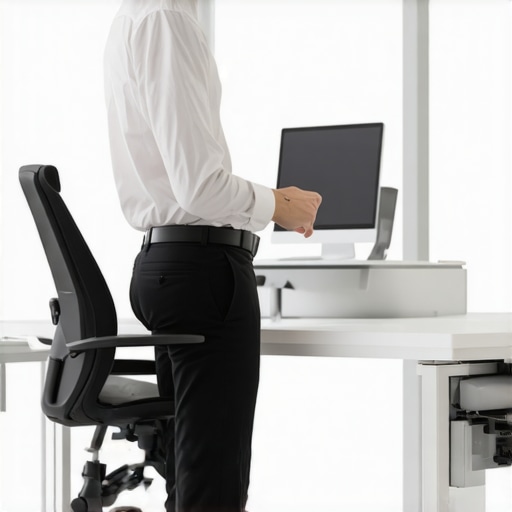
It happened during a typical workday — I shifted my weight, glanced at my standing desk setup, and suddenly felt a dull ache in my hips that wouldn’t go away. That lightbulb moment made me realize: despite investing in a premium standing desk, I was missing something crucial for my hip health, something that’s often overlooked. Have you ever felt persistent hip tightness or discomfort, even with your ergonomic setup? If so, you’re not alone.
Why Your Standing Desk Might Be Sabotaging Your Hip Mobility
Many of us focus on height adjustments, anti-fatigue mats, and proper monitor placement, but what about the subtle, often ignored aspects that keep our hips happy and healthy? I learned the hard way that a nearly perfect ergonomic setup can still leave your hips feeling stiff and achy if you neglect certain movements and positions.
A common mistake I made early on was assuming that simply standing more would improve my posture and relieve back pain. However, shifting into prolonged static standing without movement can actually tighten hip flexors and weaken supporting muscles. According to a study published in the Journal of Physical Therapy Science, prolonged standing without breaks can lead to increased discomfort and musculoskeletal issues, especially in the hips and lower back.
But here’s the truth: your standing desk is just one part of a bigger picture. Mobility and flexibility are vital for maintaining hip health, and that’s where the missing piece often lurks. I discovered that incorporating specific movements and adjustments into my routine made all the difference. I’ll guide you through the simple adjustments and exercises that can turn your workspace into a hip-friendly zone.
If you’ve been struggling with hip tightness, numbness, or pain, you might be making some common mistakes that are preventing relief. Don’t worry — with intentional tweaks, you can reclaim mobility and reduce discomfort. Ready to learn what your standing desk is missing? Let’s dive in.
Is your setup really working for you? Or is it quietly causing harm?
Early in my journey, I mistakenly believed that standing more was the ultimate solution. I ignored the importance of movement, posture shifts, and targeted stretches, which are critical for hip health. This oversight delayed my progress and, frankly, made my discomfort worse. If you want to avoid this pitfall, check out my recommended routine that combines smart adjustments with mobility exercises. For more tips on daily back relief, you might find this article on simple exercises to relieve back pain particularly helpful.
Now, let’s explore what can be added to your workspace to ensure your hips stay healthy, mobile, and pain-free.
Adjust Your Desk and Foot Position for Better Hip Support
Start by ensuring your desk height allows your elbows to be at a 90-degree angle when typing. Your hips should be positioned so that your thighs are parallel to the floor, preventing any tilt that causes strain. When standing, shift your weight between both feet periodically, avoiding locking your knees, which can over-activate hip flexors. Think of your hips as a hinge—you want smooth, controlled movements rather than static holding. I remember the first time I adjusted my standing desk to allow a slight forward lean and shifted my weight every few minutes—I immediately felt relief in my hips and lower back.
Incorporate Dynamic Movements Every 30 Minutes
Use your break times for movement. One effective move is the While many assume that simply aligning your desk or following standard posture advice guarantees relief, the reality is far more nuanced. A common misconception is that static adjustments alone can fix persistent pain or mobility issues, but recent research suggests that dynamic, mindful movements are crucial for true improvement. For instance, relying solely on a perfectly adjusted chair overlooks the importance of habitual movement patterns and muscle engagement that maintain spinal health over time. Ignoring these subtleties can lead to a false sense of security and even exacerbate discomfort, especially when underlying habits promoting static postures are ignored. An advanced mistake many make is assuming that one-size-fits-all adjustments work universally; instead, individual anatomical differences require personalized routines—something I emphasize in my mobility strategies. In fact, experts warn that neglecting the interplay between mobility, muscle strength, and habitual posture can cause overcompensation in other areas, leading to pain elsewhere in the body.
Are Your Adjustments Addressing the Root Causes or Just the Symptoms?Maintaining your hip mobility and ensuring your ergonomic setup continues to serve you long-term requires the right tools and routines. From adjustable equipment to smart software, I personally rely on specific items that make this ongoing process manageable and effective.Invest in a Quality Sit-Stand Desk
My go-to is a height-adjustable desk that allows me to switch between sitting and standing effortlessly. I chose one with programmable height presets, so I can easily recall my optimal positions. Regularly alternating between positions prevents static strain and keeps my hips engaged. According to research by Harvard Health Publishing, using a desk that prompts movement can significantly reduce discomfort and improve posture over time. To get the full benefits, I set alarms to remind me to change positions every 30 minutes. Daily adjustments are key to long-term success.
Use a Foam Roller for Targeted Release
I incorporate a foam roller into my routine for my hips and thighs. Specifically, I target tight flexors and connective tissue to improve my range of motion. I find that rolling my hip flexors and quads daily helps prevent stiffness, especially after long periods of static standing or sitting. A study by the Journal of Sports Rehabilitation indicates that self-myofascial release with foam rollers can enhance tissue extensibility and reduce muscle soreness. Personally, I keep mine close at my workspace to perform quick releases during breaks. Want to deepen your routine? Check out dead bug variations for core stability that also supports hip health.
Leverage Mobility Apps and Guided Exercises
I use a mobility-focused app that offers quick, guided routines for hip flexibility and mobility. These routines include dynamic stretches and activation exercises that are quick enough to fit into my workday but effective for long-term health. The app helps me track progress and makes sure I stay consistent. As Kelly Starrett emphasizes in his work, integrating mobility drills into your daily routine enhances movement quality and prevents injuries over the years. A good rule of thumb: dedicate 10 minutes daily to mobility drills, and incorporate them into your existing workflow.
Keep It Going: How Do I Maintain This Over Time?
Long-term maintenance demands consistency and periodic assessment. Set reminders to adjust your desk height, incorporate brief mobility drills, and replace equipment like foam rollers as they wear out. Review your setup and routines every few months—minor tweaks can prevent developing discomfort. Also, consider consulting a professional periodically for personalized assessments, particularly if you experience persistent issues. My recommendation? Schedule quarterly check-ins with a chiropractor or physical therapist to fine-tune your approach and verify you’re on the right track. For a comprehensive guide, visit daily spinal adjustments that complement your mobility efforts. And don’t forget: try adding a dedicated mobility session using the app next Monday; it’s a game-changer for ongoing hip health.
The Hardest Lesson I Learned About Micro-Adjustments and Hip Mobility
Initially, I believed that setting my standing desk perfectly was enough to eliminate my hip discomfort. Turns out, static positions—even if ergonomically optimized—can secretly sabotage mobility. The real breakthrough came when I realized that frequent mini-adjustments and targeted stretches kept my hips loose and pain-free—something I wish I had embraced earlier. Always remember, sometimes the smallest tweaks have the biggest impact.
Tools That Transformed My Approach to Hip Health
One essential resource was a high-quality foam roller, which I now keep within arm’s reach. It’s not just about convenience; it’s about preventing stiff hips before discomfort sets in. A recommended mobility app also became my daily partner, guiding me through quick routines to keep my flexors happy. These tools are reliable companions in maintaining long-term hip vitality, and I personally trust them because they’ve proven their worth through consistent results.
Feeling Empowered to Take a Stand for Your Hip Well-Being
Remember, your desk setup and daily habits shape your hip health more than you might realize. By incorporating simple supports, intentional movement, and mindful routines, you can reclaim mobility and reduce discomfort. Your journey toward pain-free hips starts now—small, consistent actions will build a resilient, mobile foundation for years to come. I encourage you to explore smarter adjustments and stay committed to your mobility routine.
Have you experienced a simple adjustment that significantly improved your hip comfort? Share your story below and let’s grow stronger together!