
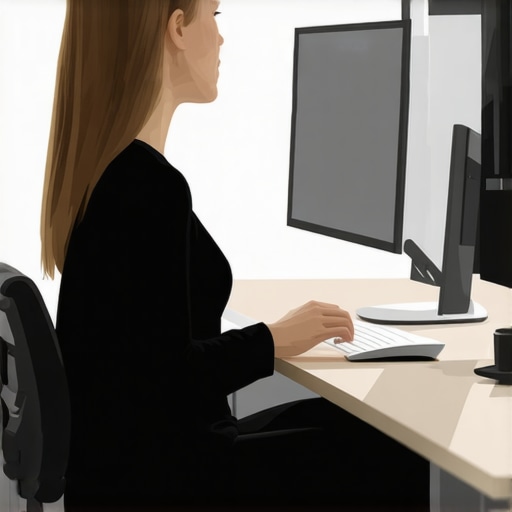
It was a morning like any other, but as I settled into my standing desk, a sudden dull ache gripped my lower back. I had assumed that switching to standing would alleviate my discomfort, yet here I was, feeling more fatigued than ever. That lightbulb moment hit me—my posture was everything. After countless tweaks and research, I realized that how I sit at my standing desk can make or break my back health.
The Real Reason Your Back Fatigue Won’t Quit
If you’ve ever found yourself wondering why your back still protests despite standing more, you’re not alone. The truth is, many of us miss the subtle cues our bodies give us about proper posture. It’s not just about standing up; it’s about how you position your body when you do. I used to overlook simple adjustments, thinking I was doing enough by just standing. But I learned the hard way that even the slightest misalignment can lead to persistent back fatigue. In fact, maintaining the wrong posture can increase back strain over time, as highlighted in a study published by the National Institutes of Health.
Today, I want to share with you the proper way to sit at your standing desk—based on my personal experience and backed by professional advice—to help you avoid back pain and fatigue. Whether you’re new to standing work or a seasoned pro, these tips will ensure your posture supports your health rather than hinders it. Ready to stop the backache cycle? Let’s get into the practical steps that can transform your workspace and your well-being.
Is Posture Adjustment Really Worth the Effort?
Early on, I thought, “It can’t be that simple,” when trying to perfect my sitting and standing positions. I made the mistake of neglecting small details, like the height of my monitor or the way I distribute my weight. These seemingly minor mistakes compounded, leading to more discomfort. But once I started paying attention—aligning my ears with my shoulders, keeping my hips level, and ensuring my knees were slightly bent—I noticed a real difference. Trust me, small changes can have a big impact. Want to learn more? Check out daily adjustments to alleviate back pain for additional insights.
Align Your Desk Setup Before Anything Else
Start by ensuring your workspace aligns with your body’s natural posture. Adjust your monitor so the top third is at eye level, which prevents you from craning your neck forward, akin to pulling a puppet string smoothly. Place your keyboard and mouse within reach so your elbows form a 90-degree angle, reducing shoulder strain. I once spent an afternoon rearranging my desk, struggling with cable clutter, but the relief in my back made it worth the effort. Proper alignment creates a foundation for sustainable posture.
Engage Your Core and Distribute Your Weight
When standing, imagine your core as a corset gently pulling your spine upright. Engage these deep abdominal muscles without holding your breath; this stabilizes your pelvis, much like tightening a belt to keep your pants from slipping down. Shift your weight evenly across both feet, balancing like a tightrope walker. Initially, I caught myself favoring one side, which caused new discomfort, but deliberate practice kept my pelvis level and my back pain diminished significantly. Consistent awareness here prevents muscles from overcompensating.
Fine-Tune Your Posture in Small Steps
Think of your posture adjustments as tuning a guitar. Small, precise tweaks produce the correct harmony. First, align your ears over your shoulders by gently tucking your chin slightly inward, avoiding the tendency to jut forward. Next, ensure your hips are neutral—neither tilted forward nor back. A trick I learned was checking my silhouette in a mirror after adjusting—if I looked like a straight line from head to heels, I was on the right track.
For your knees, maintain a slight bend, avoiding locking them, as locking is like stiffening your joints, which invites fatigue. Regular micro-adjustments keep your spine in harmony, reducing strain caused by prolonged static postures.
Incorporate Movement into Your Routine
After maintaining posture for about 30 minutes, incorporate gentle movements—akin to shaking out a stiff limb. Shift your weight from heel to toe, or do heel raises to boost circulation. I set a timer to remind me to perform a quick stretch or walk around, which acts as a reset button for your muscles. Dynamic movement prevents stiffness and diminishes the buildup of stress in your lower back. Remember, static holds are like a stretched rubber band; gentle flexibility is key.
Use Supportive Accessories Wisely
Support cushions or footrests can be game-changers when tailored correctly. I experimented with a lumbar roll, placing it at the curve of my lower back, which acts like a brace for your spine, encouraging a natural lordotic curve. However, over-support can cause your muscles to weaken, like relying on training wheels. Find a balance where your back is supported but still active. Check daily adjustments to alleviate back pain for more insights. Proper support encourages proper posture without leading to dependency, maintaining your back’s strength and flexibility.Many assume proper posture is a straightforward fix—standing upright with shoulders back. However, this oversimplification overlooks critical nuances that can undermine even well-intentioned adjustments. **Contrary to popular belief, stiffness and pain don’t always stem from poor posture; sometimes, they result from over-correcting or misapplied cues.** For example, forcing the shoulders into a ‘perfect’ position without engaging the stabilizing muscles can cause muscle fatigue and imbalance over time. In fact, a study published in the National Institutes of Health highlights that excessive focus on static postures often worsens discomfort, rather than alleviates it.
**Beware the trap of rigid adherence to textbook corrections**—as real-life movement and muscle engagement are essential for resilient posture. The biggest mistake I see is people thinking that holding a posture statically is the goal; instead, maintaining a dynamic awareness and incorporating micro-movements is far more effective. Incorporate regular movement breaks and micro-adjustments, like shifting weight from one foot to another or gentle spinal rotations, to prevent muscles from becoming stiff and overused. Discover more about optimizing your daily posture routines in this guide on simple posture adjustments.
How can advanced adjustments improve long-term mobility without risking overstretching?
It’s a common misconception that stretching and posture corrections alone can sustain back health; however, over-stretching the muscles or forcing joints beyond their natural limits can cause micro-tears or nerve impingements. The key lies in *precision* and *gradual progression*. Engage in targeted mobility exercises that focus on strengthening supportive muscles rather than solely elongating tight ones. For example, integrating controlled movements like gentle cat-cow stretches or thoracic rotations can enhance flexibility safely. According to recent biomechanical research, *gradual and controlled movements foster better neural adaptations*, leading to more sustainable improvements in mobility. For detailed strategies, see these proven mobility fixes.
**The ultimate goal** is to blend flexibility, strength, and dynamic awareness into your routine—avoiding the pitfalls of static correction without movement. Remember, the right adjustments are personalized; what works for one person may not suit another. Regularly consult with a professional to tailor your approach, and stay attuned to how your body responds. You’re not just fixing posture for today but investing in long-term resilience.
Have you ever fallen into this trap? Let me know in the comments. For more tips on enhancing your mobility and avoiding common pitfalls, check out expert mobility strategies for 2025.Maintaining good posture and mobility over the long term requires more than just awareness; it involves equipping yourself with targeted tools and developing consistent routines. One of my personal favorites is a high-quality foam roller, such as the TriggerPoint GRID Foam Roller. I use it daily to release muscle tension in my thoracic and lumbar regions, helping prevent stiffness that can lead to pain. Regular rolling helps keep my fascia flexible and muscles responsive, which is crucial for sustaining posture improvements achieved through targeted adjustments. For those dealing with chronic back discomfort, incorporating foam rolling into your routine is a game-changer.
Another tool I rely on extensively is an ergonomic sit-stand desk converter, like the Varidesk Pro Plus. It allows me to seamlessly alternate between sitting and standing throughout the day, reducing static load on my spine. But the key isn’t just switching modes—it’s doing so with proper posture. I set the desk height so that my monitor is at eye level, and my keyboard is positioned so I can maintain a 90-degree elbow angle. This setup minimizes strain and promotes healthier movement patterns.
For mobility exercises, I recommend the use of resistance bands, especially the loop varieties like the Theraband. These are incredibly versatile for strengthening stabilizer muscles around the core, hips, and shoulders. I incorporate specific routines using these bands to improve hip mobility and pelvic stability—fundamental components of good posture. According to recent biomechanical research, targeted resistance training can significantly enhance joint range of motion and muscular support, reducing the risk of misalignments over time. You can explore effective routines in the article Master Your Mobility.
Investing in a supportive ergonomic chair with adjustable lumbar support, such as the Herman Miller Aeron, has also transformed my long workdays. Adjustable support helps maintain the natural lumbar curve, especially when sitting for extended periods. Remember, proper support is not about keeping muscles constantly engaged but about promoting correct alignment so muscles can function optimally.
Looking ahead, I believe the trend toward smart tools and AI-driven posture correction devices will revolutionize long-term care. Devices equipped with real-time feedback can alert you when your posture drifts into harmful positions, guiding micro-adjustments that prevent pain before it starts.
**How do I maintain posture and mobility tools over time?** Regularly cleaning and inspecting your equipment ensures longevity and effectiveness. For instance, foam rollers and resistance bands should be cleaned to prevent bacteria buildup, and their wear points checked for cracks or tears. Scheduling routine assessments—either self-checks in the mirror or with a professional—helps you fine-tune your setup. My advice is to integrate these tools into daily habits, turning proactive posture maintenance into a seamless part of your routine.
Start by choosing one tool, like a foam roller or resistance band, and commit to using it daily for at least a few minutes. Over time, you’ll notice improved flexibility, reduced discomfort, and enhanced posture stability. Curious to see real changes? Try incorporating this simple step today and experience the difference for yourself. Need more guidance? Reach out through my contact page.
Lessons that Changed My Perspective on Back Care
The most profound lesson I learned was that posture isn’t a static fix; it’s a dynamic dance between muscle engagement and alignment. I once thought holding my shoulders back was enough, but I found out the hard way that muscular endurance and micro-movements are essential for long-term relief. Additionally, integrating movement into daily routines, rather than viewing posture as a set-it-and-forget-it solution, transformed my experience—small, intentional tweaks make huge differences. Lastly, trusting the process and being patient with gradual progress helped me avoid frustration, reinforcing that sustainable change takes time and consistency.
My Go-To Resources for Staying Ahead in Back Wellness
I’ve relied heavily on tools like the daily posture adjustments guide which offers practical, evidence-based tips I personally practice daily. A favorite book, Becoming a Supple Leopard, has been instrumental in understanding functional movement and safe mobility routines, trusted for its thorough approach and clear illustrations. For equipment, I trust my resistance bands and foam rollers—both versatile and effective for muscle release and strengthening. Lastly, subscribing to expert blogs like this one keeps me updated on emerging techniques and tools that refine my approach continually.
Seize the Power to Transform Your Back’s Future
Your journey toward a healthier, pain-free back starts today. Embrace the small adjustments, nurture your mobility, and make proactive choices—your body will thank you. Remember, sustained change is within your reach, and the effort you invest now can redefine how you move, sit, and live for years to come. Don’t wait for discomfort to become a crisis; take charge with the knowledge and tools that suit your unique needs. You’ve got this—start where you are, and keep moving forward toward a stronger, more resilient back.