
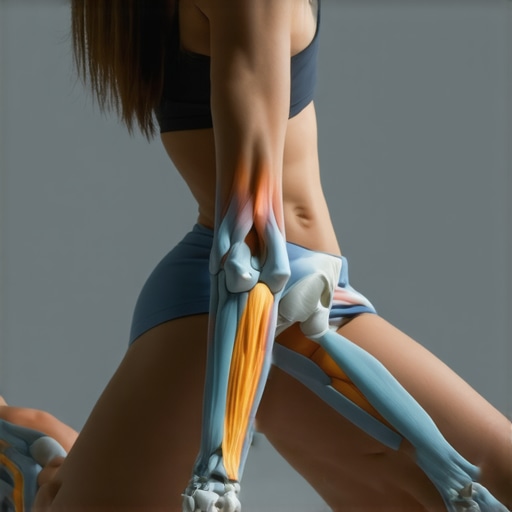
It hit me one morning during my workout—a sharp, unexpected jolt in my knees that made me pause. I was mid-lunge, feeling confident just seconds before, but suddenly, pain shot through my joints like a lightning bolt. Frustration bubbled up. I had been diligently working on my fitness, yet this persistent discomfort kept sneaking in during the simplest of movements.
That lightbulb moment made me realize something crucial: I wasn’t paying enough attention to what was happening beneath the surface. I was doing all the right stretches, following workout routines, but the pain persisted. Turns out, the root cause wasn’t just poor technique or overexertion. It was something far more subtle—something I had overlooked early on.
So, if you’ve ever experienced that burning or ache in your knees during lunges, you’re not alone. Many people blame overuse, bad shoes, or improper form. But what if the real reason is related to your posture, muscle imbalances, or even how you’re engaging your hips and core? Understanding this can make all the difference.
Today, I want to share what I discovered about the underlying causes of knee pain during lunges, and more importantly, how you can address them. No more guessing or hoping it goes away—I’ll guide you through practical adjustments that have worked wonders for me and countless others.
Before we dive into solutions, consider this: Did you know that improper alignment of your hips and pelvis can increase stress on your knees, leading to pain and injury? In fact, research shows that muscle imbalances around the hips can directly influence knee health, making simple movements painful or even dangerous if uncorrected. Recognizing these patterns early can save you a lot of suffering and setbacks.
Now, let’s explore the common mistakes many of us make—mistakes I definitely made early on—and how to correct them for good. Whether it’s mastering your posture, unlocking tighter hips, or learning to brace correctly, these steps can redefine your workout experience and keep your knees happy.
Align Your Hips Properly During Movements
First, focus on mastering your hip positioning, which is crucial for knee health. Imagine your hips as two pulleys guiding your leg; if one pulley is misaligned, the cable (your knee) bears unnecessary strain. I recall a session where I consciously adjusted my hip alignment during lunges, shifting my pelvis slightly forward and engaging my core. The result was immediate relief in my knees and a smoother, pain-free movement. Practice this by placing your hands on your hips, sensing the natural tilt, and gently leveling them before each lunge.
Engage Your Core for Stability
Think of your core as the foundation of a building. A weak or disengaged core lets the structure wobble, causing undue stress elsewhere. I once neglected this and experienced a grinding sensation in my knees. After integrating mindful core activation—drawing your belly button in and tightening your abs before lunging—I noticed significantly less joint discomfort. To do this, brace your abs as if preparing for a gentle punch and maintain that tension throughout the movement. This stabilizes your pelvis and reduces knee load.
Activate Your Hips Before Exercise
Hip mobility directly impacts knee safety. Consider a hinge; if the hinge’s movement is restricted, the connected joints compensate, leading to pain. I used to skip hip warm-ups, resulting in stiff, aching knees. One effective method is the hip circle: stand on one leg, lift the opposite knee, and rotate it outward and inward in controlled circles. Performing 10 reps per side, I found my hips loosened, and lunges felt effortless. Incorporating dynamic hip opens into your warm-up prepares your joints and prevents misalignments.
Adjust Your Foot Placement Strategically
Foot positioning influences knee direction and hip engagement. Think of your feet as the steering wheel—if mismatched with your hips, your knees turn inward or outward unnecessarily. I remember during a workout, deliberately aligning my feet slightly wider and pointing them forward, which corrected my knee tracking. Experiment with a stance that feels natural but stable, ensuring your toes point forward and knees track over your second toe. Proper foot placement minimizes unnecessary stress on your knees and pelvis.
Practice Controlled Breathing for Better Posture
Breathing may seem unrelated, but deep, diaphragmatic breaths stabilize your spine and pelvis. I noticed my posture deteriorated during intense sets, leading to shoulder slump and knee pain. By focusing on slow, deep inhales through the diaphragm—filling your belly like a balloon and then exhaling fully—I maintained better posture. Use this technique before each lunge, inhaling to set your position and exhaling as you perform the movement, enhancing core engagement and spinal alignment. To learn more about breathing’s impact, check out this guide.
 Many people believe that poor back health stems solely from injury or lifting heavy objects incorrectly. However, as an expert in spinal health, I’ve observed that common misconceptions often lead us astray. For example, the widespread idea that “good posture” simply means sitting or standing upright at all times is oversimplified. In reality, maintaining rigid alignment can cause muscle tension and restrict natural movement, which may exacerbate pain over time. Instead, dynamic and thoughtful adjustments—like incorporating varied mobility drills—are more effective, as discussed in our [top strategies for moving without pain](https://chiromasteryz.com/master-your-mobility-top-strategies-for-moving-without-pain). Another myth is that stretching is always beneficial. Certain stretches, especially when performed improperly or at the wrong times, can worsen existing issues. For instance, overstretching tight hip flexors without releasing associated tension can pull the pelvis out of alignment, increasing strain on the lower back. A nuanced approach involves identifying and releasing specific tight muscles, such as the psoas, which you can learn about in [this targeted release](https://chiromasteryz.com/the-psoas-release-that-finally-stops-that-deep-hip-flexor-pinch). Beware of the trap of seeking quick fixes like posture braces or frequent adjustments; these often mask the underlying movements or stability deficits. Consistent, mindful corrections—like adjusting your workspace or integrating daily mobility routines—are more sustainable. For advanced practitioners, understanding how subtle muscle imbalances, such as weak glutes combined with tight hip flexors, influence each other is crucial. This interconnectedness underscores the importance of comprehensive assessments, rather than isolated exercises. As seen in research by Dr. Stuart McGill, emphasizing core stabilization combined with mobility work can prevent the cycle of pain and stiffness. Have you ever fallen into this trap? Let me know in the comments. Remember, proactive and nuanced adjustments to your posture and mobility are the keys to long-term back health, and avoiding the simplistic myths can save you from unnecessary suffering.Maintaining your back health requires more than just sporadic stretches or quick fixes—it involves consistent practice, understanding the right tools, and adopting habits that support your body over time. One of my primary tools personally is the **Foam Roller**; I use it daily to release my psoas and tight hip flexors, which are often culprits in back pain. A well-chosen foam roller helps me target deep muscle knots, promote blood flow, and improve mobility, especially before workouts or long desk sessions. For example, the **TriggerPoint GRID Foam Roller** provides firm support and durability, making it ideal for my needs. Additionally, I rely heavily on **Mobility Apps** like the *ROMWOD* platform, which guides me through daily mobility routines tailored to maintain spinal and joint flexibility. These routines are designed with both static and dynamic stretches that can prevent stiffness and injury, and I find them especially useful as I prepare for physical activity or after long bouts of sitting.
How do I keep my posture corrections effective over time?
Consistent reinforcement is key. I integrate quick daily checks, like the doorway stretch I recommend in our posture adjustment article, which helps keep my shoulders and upper back tension in check. Another often-overlooked tool is the **Lumbar Support Cushion**, which I use during extended periods at my desk. It encourages me to sit with the natural curve of my lumbar spine, reducing strain. I recommend selecting a cushion with firm but comfortable support, like the *Everlasting Comfort Memory Foam* cushion, to adjust your seating ergonomics effectively. As research from Dr. Stuart McGill emphasizes, integrating targeted stabilization and mobility exercises, supported by proper tools, is vital for long-lasting results. To further enhance your mobility, consider trying my favorite hip opener: the 2-minute hip stretch I detail here. In the coming years, I anticipate the trend toward smart, biofeedback-enabled devices—like wearable posture coaches—that can offer real-time corrections and remind us to move or adjust posture. These tools will become integral for proactive back health maintenance. Remember, investing in quality tools like foam rollers and mobility apps can make a real difference. I encourage you to pick one—perhaps that foam roller—and commit to a daily routine. Over time, these simple but effective tools can significantly improve your posture, reduce pain, and elevate mobility levels. To explore additional practical tips, visit our mobility strategies.Throughout my journey addressing back pain and improving posture, I’ve encountered moments of revelation that reshaped my approach entirely. One of the most profound lessons was realizing that superficial fixes cannot substitute for understanding the root causes—like muscle imbalances or postural habits—that silently sabotage progress. I learned that consistent, mindful adjustments, driven by a genuine grasp of my body’s mechanics, are the key to sustainable relief. Embracing this mindset transformed my daily routines from mere routines to empowering rituals. If you’re serious about lasting change, prioritize internal awareness over quick fixes. Remember, the journey to pain-free movement isn’t linear, but each insight brings you closer to a resilient, healthier body.