
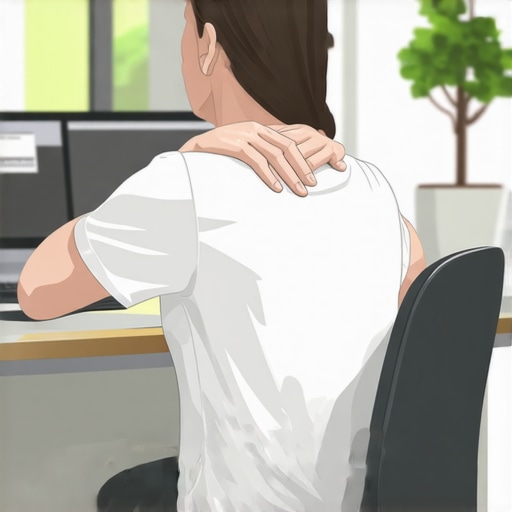
I remember the moment crystal clear—working late at my desk, shoulders tense, and that nagging ache deep in my mid-back that just wouldn’t quit. I had tried every stretch, every gadget, hoping something would finally ease the discomfort. Frustrated, I realized I was unknowingly making a crucial mistake: neglecting the subtle how and why of my posture. That lightbulb moment led me to discover the power of the simple scapular squeeze—an exercise so straightforward yet profoundly effective.
Why Fixing Mid-Back Tension at Your Desk Is Non-Negotiable
Late nights hunched over a computer, endless meetings, or just plain bad habits can turn your daily routine into a battleground for your spine. Mid-back tension isn’t just a fleeting discomfort; it can evolve into chronic pain, limit mobility, and even trigger headaches or neck pain. The good news? Small, mindful adjustments can prevent this cascade. I promise that sticking with this approach can make a real difference.
But here’s the thing—the real challenge is knowing what actually works. I used to think I needed a fancy massage or expensive therapy sessions each week. Turns out, I was overlooking a simple move that anyone can do right at their desk. Interested in discovering this game-changer? Keep reading.
Is the Simple Scapular Squeeze Actually Worth the Hype?
I get it—skepticism is natural. We’ve been conditioned to believe that complex exercises or costly treatments are the only solutions for back pain. Early on, I made the mistake of dismissing little things like this because they seemed too simple. But studies show that consistent postural exercises can drastically reduce discomfort and improve spinal health (source: https://chiromasteryz.com/adjust-your-routine-daily-spinal-alignments-for-lasting-relief). So, if you’re tired of wasting time on ineffective remedies, this might just be the answer.
Now that we’ve set the stage, let’s dive into the how. I’ll show you exactly how a few seconds of mindful movement can unlock relief and set you on a path to better mobility. Ready to give your mid-back the attention it deserves? Great—let’s get started.
Get Comfortable with Your Shoulder Blade Reset
The first step is to perform what I call the scapular squeeze. Sit at your desk and engage your shoulder blades by pulling them back and together, as if trying to hold a pencil between them. Maintain this contraction for 5 seconds, then relax. I remember once doing this between emails, and surprisingly, my mid-back tension eased within minutes. Repetition is key—aim for three sets of this squeeze every hour.
Perfect Your Form
Think of your shoulder blades as the brakes of your car—applying gentle pressure to keep your posture steady. Keep your chest open, and avoid shrugging your shoulders upward. Visualizing your blades as two small butterfly wings can help you target the correct muscles without overextending the neck. For best results, practice in front of a mirror a few times to ensure proper engagement.
Integrate Movement with the Thoracic Rotation
Next, incorporate the thoracic rotation to unlock your upper spine. Sit upright, cross your arms over your chest, and gently rotate your torso to one side, holding for 3 seconds before switching sides. The goal is smooth, controlled motion—like turning a steering wheel. I once tried this during a conference call; after a few rotations, I noticed my shoulders felt lighter and my back less stiff. This simple move enhances mobility and breaks up prolonged sitting. Want to amplify this? Try adding a twist while holding a light resistance band.
Watch Your Breathing
Breathing is the foundation of these exercises. Deep diaphragmatic breaths activate your core and relax tight muscles. Inhale through your nose, filling your belly, then exhale slowly through your mouth. Imagine inflating a balloon in your stomach—this expands your thoracic region without straining your neck. During a moment of tightness, I focused on focused breathing, which dramatically reduced my pain signals. These calming breaths can make movements more effective and less intimidating.
Adopt Micro-Adjustments Throughout Your Day
Beyond exercises, small daily tweaks multiply over time. Adjust your chair height so your feet rest flat, and your knees are level with your hips. Use a lumbar pillow if necessary, and keep your monitor at eye level. Think of your body as a building—small, consistent reinforcements prevent collapse. I remember once slouching forward during a long project, which immediately increased my discomfort. Resetting my posture by sitting upright with proper support allowed relief and prevented further tension.
Conscious Sitting Techniques
Practice mindful sitting: periodically remind yourself to re-engage your scapular muscles and avoid slouching. A quick trick is to imagine a string pulling your head upward—lengthening your spine. This mental cue aligns your posture without effort. Remember, posture correction isn’t a one-time fix but a continuous process of micro-corrections. If you’d like a tailored plan, consider visiting our contact page.
Build a Routine That Lasts
Consistency transforms these actions from a momentary fix into lasting relief. Set alarms or calendar reminders to perform these exercises every 60 minutes. Over time, these small movements strengthen muscular support and enhance your overall mobility. While initially messy, persistence pays off—like my own experience when I first started combining these steps; progress was gradual but undeniable. Make these practices routine, and you’ll notice your mid-back becoming more resilient over weeks.
Tracking Your Progress
Keep a simple journal to record how your back feels each day. Note improvements, setbacks, or new symptoms. This feedback loop helps tailor your routine and motivates continued effort. Remember, every journey is unique; what works for one person might need adjustment for another. Stay patient and committed—your spine will thank you.
Many well-intentioned individuals believe they know the basics of maintaining good posture and mobility, but often, subtle misconceptions lead to worse outcomes. A common myth is that stretching always improves mobility; however, over-stretching or stretching at the wrong times can destabilize muscles and worsen pain (source: https://chiromasteryz.com/why-stretching-your-hamstrings-will-not-fix-your-tight-lower-back). Additionally, many assume that ‘good posture’ means holding perfect alignment constantly, but this rigidity can inhibit natural movement, leading to muscle imbalance and tension. The key nuance here is that mobility isn’t just about maintaining static positions but involves dynamic control and understanding muscle function.
A crucial mistake many make is neglecting the fact that individual differences drastically affect which adjustments work best. For example, some people benefit from targeted joint mobilizations, while others require soft tissue release techniques. Rigidly following generalized advice without personal calibration often results in frustration or injury. For advanced practitioners, considering the tissue-specific behavior—such as fascia restrictions or joint hypomobility—and tailoring interventions accordingly is essential. This approach is supported by research indicating that personalized mobility routines outperform generic ones (see https://chiromasteryz.com/unlock-better-back-health-effective-posture-tips-for-2025).
Another often overlooked aspect is that postural correction isn’t a one-time fix but a continuous process of micro-adjustments. A single postural stance can’t compensate for habitual patterns of movement that have ingrained over years. For example, persistent asymmetrical habits, like favoring one side when carrying bags, can create compensatory patterns that mislead people into thinking their posture is correct when it isn’t. Recognizing and correcting these subtle habits requires mindfulness and sometimes external feedback, like video analysis or expert guidance.
Advanced practitioners should also question the assumption that static exercises alone suffice for long-term improvement. Integrating movement variability—such as dynamic stretches or functional movement drills—enables the nervous system to adapt and strengthens control across different ranges. For instance, combining flows of thoracic rotation with diaphragmatic breathing enhances not just mobility but also neuromuscular coordination.
Remember, the goal isn’t just to look aligned but to move freely and painlessly through daily activities. This means understanding the nuanced interplay between joints, muscles, and fascia—an insight supported by emerging research in myofascial health (https://chiromasteryz.com/posture-correction-secrets-that-transform-back-pain-outcomes). So, when evaluating your regimen, ask: Am I respecting my body’s unique needs? Or am I blindly following generic advice that might be doing more harm than good?
Have you ever fallen into this trap? Let me know in the comments and share your experience with adjusting your mobility practices.Achieving lasting improvements in posture and back comfort requires more than just exercises; it demands the right tools to support your routine. One indispensable resource I personally rely on is a high-quality foam roller, specifically designed to target fascia restrictions in the thoracic region. I prefer the dense, ridged foam rollers because they offer enough pressure to release muscle knots without causing discomfort, unlike softer ones that often lack efficacy. Regularly integrating foam rolling into my daily routine has helped me maintain mobility and prevent stiffness, especially during periods of prolonged sitting or intense activity.
Another vital tool is a resistance band with handles. I use it for controlled thoracic rotations and shoulder stabilization exercises, which bolster my postural gains. The band provides adjustable tension, making it accessible for various strength levels and allowing for progressive overload. Using resistance bands helps me refine my movement patterns, ensuring that my corrective efforts translate into real-world mobility improvements.
In addition, I advocate for the use of a proprioceptive pillow or lumbar support cushion in your chair. Personally, I keep mine at my workstation, which encourages maintaining a neutral spine posture throughout the day. This simple addition acts as a constant reminder to avoid slouching and supports micro-adjustments that guard against long-term misalignments. Proper support combined with targeted exercises creates a powerful synergy.
Looking ahead, the trend in spinal health emphasizes integrating smart technology. Devices equipped with movement sensors and feedback algorithms are emerging as game-changers. For example, wearable posture trackers can alert you when you slouch and guide micro-corrections in real-time. I predict that in the next few years, these tools will become commonplace, making self-maintenance even more accessible.
**How do I maintain my mobility routine over time?** The secret lies in consistency and smart supplementation. I schedule daily sessions with my foam roller and resistance band, adjusting intensity based on how my body feels. Incorporating these tools into your routine not only saves time but also provides quantifiable progress, boosting motivation. To maximize results, complement this with regular professional evaluations—an expert can fine-tune your approach, especially if your pain persists or worsens.
If you’re ready to elevate your self-care, I highly recommend trying dynamic foam rolling combined with resistance band exercises. These interventions are proven to unlock stubborn fascia restrictions and stabilize your thoracic spine, which directly alleviates back tension. For personalized guidance, consider consulting a professional through our contact page.
For more advanced strategies tailored to long-term results, exploring detailed routines on mobility mastery and posture correction can be invaluable. Remember, sustained effort and the right tools make all the difference in keeping your back healthy and pain-free for life.Over time, I learned that the biggest breakthroughs often come from subtle shifts and honest self-awareness rather than dramatic exercises. Embracing small, consistent adjustments—like mindful breathing combined with gentle movements—created a ripple effect in my mobility and confidence. Real progress happened when I tuned into my body’s unique signals and stopped chasing quick fixes. Understanding this transformed my approach from frustration to empowerment, proving that genuine change stems from patience, personalized care, and internal awareness.