
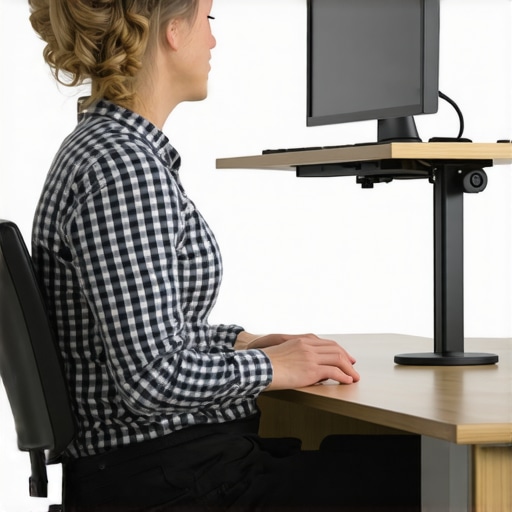
I remember the moment vividly — it was after a long day of working at my standing desk, and I couldn’t shake off the dull ache radiating from my lower back into my hip. It was as if I had traded one set of aches for another, and I knew I wasn’t alone. Many of us think that switching from sitting to standing is a quick fix for back pain, but what if I told you that a common mistake could actually be making things worse?
Why Your Standing Desk Might Be Causing More Harm Than Good
Standing all day sounds healthy, right? Well, not if your setup isn’t optimized. One of the most overlooked mistakes is improper height adjustment and poor posture alignment, especially around the pelvis and SI joint. I personally struggled for months because I thought I was doing the right thing by standing more, but I was unknowingly putting strain on my sacroiliac joint, leading to persistent pain.
The SI joint, which connects your pelvis to your spine, plays a crucial role in stability and movement. When you stand with a misaligned pelvis or bad posture, you can cause uneven pressure on this joint, leading to inflammation and discomfort. A study published in the Journal of Bodywork and Movement Therapies revealed that poor postural habits significantly contribute to SI joint pain. This means that simply standing more isn’t enough — how you stand matters immensely.
If you’ve experienced lower back stiffness, hip pain, or the feeling that your pelvis is uneven while working at your standing desk, you’re not imagining things. These issues can stem from a well-intentioned but flawed setup. The good news? There are straightforward adjustments that can realign your posture, reduce joint strain, and help you enjoy the benefits of a standing desk without the pain.
In this post, I’ll share the common mistake I made early on and how it cost me, plus practical tips to correct your setup. Trust me, avoiding this mistake can save you from prolonged discomfort and improve your overall movement health. Ready to take control of your standing routine? Let’s dive into what you need to know to get it right—and keep your SI joint happy.
Set the Desk Height Properly to Align Your Pelvis
Begin by adjusting your desk so that your elbows are at a 90-degree angle when your hands rest comfortably on the surface. This ensures your shoulders stay relaxed and your pelvis maintains a neutral position, preventing tilt that can strain your SI joint. I once struggled for weeks with persistent hip pain until I realized my desk was too high, forcing me into an unnatural tilt. Adjusting it lowered my stress on the pelvis significantly.
Position Your Feet and Legs for Stability
Plant both feet flat on the ground, shoulder-width apart, and avoid crossing your legs. Think of your hips as the foundation of a building; a stable base prevents misalignment. I made the mistake of standing with one foot slightly forward, which created uneven pressure on my pelvis. Switching to a balanced stance helped realign my hips and eased SI joint discomfort.
Engage Core Muscles to Support Posture
Activate your abdominal and lower back muscles gently to support your spine. Imagine tightening your core as if bracing for a light impact—you don’t have to be rigid, just engaged. I noticed reduced lower back tension when I consciously kept my core active throughout the day, which also helped stabilize my pelvic tilt.
Keep Your Pelvis in a Neutral Position
A neutral pelvis is neither tucked under nor overly arched. To check, place your hands on your hips; your thumbs should rest on the front pelvis bones, and your fingers on the sides. Slightly tilt your pelvis forward, then backward, and find the middle position. I used a mirror to monitor my pelvic alignment and trained myself to maintain this position, reducing SI joint strain.
Use Supportive Footwear and Anti-Fatigue Mats
Wearing supportive shoes with good arch support minimizes unwanted sway and misalignment. Additionally, standing on an anti-fatigue mat reduces pressure on your feet and joints, promoting better alignment overall. I invested in a quality mat, which diminished fatigue and helped me maintain proper posture longer during work sessions.
Incorporate Dynamic Movements Regularly
Shift weight between your legs, perform gentle pelvic tilts, or march in place to prevent stiffness. Think of your body as a machine needing lubrication and motion to stay healthy. Incorporating short movement breaks kept my pelvis active and prevented static misalignments that could worsen SI joint issues.
Consult a Professional for Personalized Guidance
If discomfort persists, consider seeking advice from a chiropractor or physical therapist. They can assess your specific posture and recommend tailored adjustments. I visited a specialist who showed me subtle but impactful tweaks during my setup, making a notable difference. To find a trusted professional, visit this contact page for expert assistance.
Remember, optimizing your standing desk isn’t just about height—it’s about creating a balanced, supportive environment that keeps your pelvis and SI joint functioning smoothly. Making these adjustments can be a game-changer in preventing pain and promoting long-term mobility.
Many people believe that simply correcting their posture or performing targeted stretches will resolve chronic back pain, but the reality is often more nuanced. A common misconception is that static adjustments are enough—yet, in my experience, the most effective strategies involve dynamic, personalized approaches. For instance, relying solely on generic ergonomic setups or standardized exercises can lead to overlooked nuances that perpetuate discomfort or even worsen it.
A widespread myth is that all back pain stems from poor posture, but studies show that pain often arises from complex interactions within spinal biomechanics, muscle balance, and neural pathways. As noted by expert Dr. Stuart McGill, optimizing spinal stability through tailored movement patterns is more critical than static corrections alone. This means that many of us need to *move smarter*, not just sit or stand in ‘correct’ positions.
Beware the trap of over-adjustment. For example, obsessively fine-tuning your desk height without considering your daily movement variability can cause micro-misalignment and muscle imbalances. A simple adjustment like incorporating periodic movement breaks or varied postures has been shown to significantly reduce back pain risks. Consider exploring effective posture tips for 2025 to stay ahead of these pitfalls.
An often-overlooked aspect is the importance of mobility variability. Stiffness isn’t just about lack of stretching; it often indicates insufficient motor control or compensatory patterns developed over time. Advanced practitioners recognize that embracing controlled mobility through dynamic exercises can restore proper joint function—a concept supported by research from the Journal of Orthopaedic & Sports Physical Therapy, which emphasizes functional movement integration.
A crucial warning: Avoid falling into the trap of static ‘perfect’ postures at the expense of natural, functional movement. For instance, maintaining a rigid upright position all day can stiffen the spine and decrease its resilience. Instead, I recommend integrating mobility strategies that allow your body to adapt and recover.
Ever wondered how minor daily habits impact your back health? Small adjustments, like varying your sitting positions, engaging in periodic movement, or practicing mindful breathing, can create a resilient, pain-free spine. The key is understanding that back health isn’t static—it’s a dynamic balance of mobility, stability, and neural control.
Have you ever fallen into this trap? Let me know in the comments! Remember, the path to lasting back health involves digging beneath surface-level fixes and understanding the intricate mechanics at play.Maintaining your back health over the long term requires more than just initial adjustments; it demands a strategic approach utilizing effective tools and consistent routines. One of my favorite tools is a high-quality foam roller, which I use daily to keep my muscles pliable and prevent stiffness that can lead to pain. Unlike generic rollers, I prefer a dense, moderate-density foam roller because it offers sufficient pressure without risking tissue damage. Regular use helps break up adhesions and improves mobility, making it easier to perform daily activities without discomfort.
How do I keep my mobility tools effective over time?
Consistency is key. Set aside five minutes each morning to roll out your lower back, hips, and legs. Over time, you’ll notice increased flexibility and reduced pain episodes. Additionally, incorporating mobility exercises from trusted sources such as Mobility Mastery ensures you’re promoting joint health and neural control. Ensuring your tools are clean and replacing them when they show signs of wear maintains their effectiveness, preventing undue strain or injury.
For tracking progress and maintaining your routine, I recommend a simple app like ‘StretchIt’ or ‘MobilityWOD’ which guides you through personalized daily routines. These apps keep you accountable and ensure you’re targeting the right areas, which is crucial for long-term results. As research shows, regular movement and targeted mobilization can delay or even reverse degenerative changes in spinal structures—something I’ve experienced firsthand. You can explore more about these benefits in top mobility strategies.
Tools are just one part of the equation. Proper maintenance also means paying attention to your posture habits and making routine adjustments. A good example is using a standing desk with a supportive mat and an anti-fatigue mat, which I use daily to reduce overall stress on my joints. Additionally, periodic checks and minor tweaks to your workspace setup can prevent misalignments before they become chronic issues. For more insights on optimizing your workspace for back health, visit posture optimization tips.
Looking ahead, I predict a growing emphasis on integrated tech solutions such as smart wearables that monitor posture and movement, providing real-time feedback to prevent strain. Think of devices like posture-tracking sensors that wirelessly alert you when you slouch or tilt—these innovations will become essential tools for anyone serious about maintaining back health long-term. If you’re ready to take control now, try setting a daily reminder to perform a 2-minute mobility drill, such as the simple hip opener from this technique. Consistency with small tools and routines composes the foundation of lasting back health and mobility.
The Lessons That Took Me Beyond Surface-Level Fixes
One of the most profound insights I gained was recognizing that not all pain can be solved through quick fixes or static adjustments. It took personal trial and error to realize that my body needed dynamic movement and nuanced alignments, not just rigid postures. This journey taught me that understanding the deeper mechanics—like the role of the pelvis and SI joint—was essential for lasting relief.
Another lightbulb moment was appreciating the importance of listening to my body’s subtle signals. Instead of dismissing minor discomforts, I learned to observe and adapt my routines accordingly. Tiny habits, such as shifting my stance or engaging my core consciously, compounded over time to make a significant difference.
Finally, I discovered that consistent, personalized mobility practices are more effective than sporadic stretching. Integrating targeted exercises from sources I trust—like this mobility guide—helped me regain fluid movement and prevent future issues, proving that proactive care yields sustainable results.
Curated Gems for Better Back Health
My go-to tools include a dense foam roller, which I use daily to release tension and maintain flexibility—it’s a game-changer for preventing stiffness. I also swear by mobility apps like ‘StretchIt’ that provide structured routines tailored to individual needs—these keep me accountable and focused. Additionally, reading books like Posture Correction Secrets expanded my understanding beyond simple posture corrections, emphasizing movement strategies. Lastly, consulting a trusted physical therapist, such as through this contact page, has been invaluable for personalized guidance that aligns with my unique biomechanical needs.
Let Action Be Your Guide Toward Pain-Free Living
Embracing the insights I’ve shared can truly change your back health journey. Remember, small, consistent adjustments built into your daily routine create a resilient spine capable of handling life’s challenges. The path to a pain-free, mobile life starts with action—so I encourage you to experiment with the tips discussed and see what works best for you. Your back deserves this gentle, intentional attention. Ready to take that first step toward lasting relief? Your future self will thank you.
What’s one change you’re willing to try today to improve your back health? Share your thoughts below—I’d love to hear about your journey!
,