
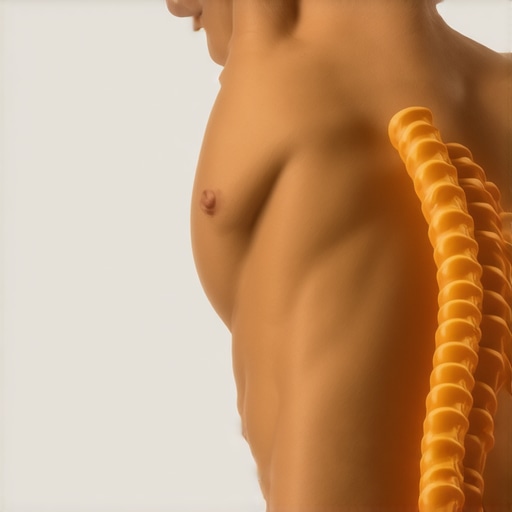
Have you ever sat at your desk, feeling that familiar tension creeping into your lower back, only to realize you’ve been trying to flatten your spine like a board? I used to do the same, thinking that a “neutral spine” meant locking everything into a perfectly flat, rigid position. But what I discovered was a game-changer—and it might be for you too.
Getting Real About Posture: More Than Just Flattening Your Back
In my early days of working on back health, I believed that the goal was to achieve a flat, stiff back to prevent pain. I thought that a “neutral spine” simply meant no curves or bumps. Turns out, this misunderstanding can actually contribute to more discomfort rather than less. The truth is, your spine needs a natural curve—think of it as a gentle wave, not a pancake. Maintaining this natural alignment allows for better movement, less strain, and a healthier nervous system. Today, I want to guide you through this nuance and help you avoid the common pitfalls that many fall into.
Is It Really Worth the Hype? The Fear of Losing Control
One of my earliest mistakes was trying to force my spine into a flat position during workouts and daily activities, believing it would provide stability. I was so focused on perfecting my posture that I overlooked how crucial those natural curves are for shock absorption and flexibility. This overcorrection often led to increased tension and even new pain spots. With expert guidance and a bit of trial and error, I realized that embracing my body’s natural design was far more effective. If you’ve ever felt skeptical about whether your “flat back” obsession might be doing more harm than good, you’re not alone. But understanding the fine line between healthy neutral and an overly flat back can make all the difference. For more trusted insights, I recommend checking out this comprehensive guide on posture correction secrets that actually work: Posture Correction Secrets.
Now, let’s clear up the confusion and get you moving with confidence, knowing that your spine’s natural curves are your allies in staying pain-free. Ready to explore practical steps to improve your posture without sacrificing comfort? Let’s dive in.
Activate Your Awareness with Gentle Checks
Start by pausing your activity for a moment and standing in front of a mirror. Imagine your spine as a gentle S-shape rather than a flat line. Gently tilt your pelvis forward and backward, feeling the natural curves shift. This micro-adjustment helps you become conscious of your current posture and prepares your body for proper alignment. I remember one morning when I caught myself slouching at my desk; a quick pelvis tilt immediately alleviated tension and reminded me of my body’s natural position.
Implement Micro-Adjustments to Daily Movements
Instead of maintaining static postures for long periods, incorporate small, deliberate movements. For instance, while sitting, slightly lift your chest, soften your lower back, and engage your core muscles to support your natural curves. When standing, rock your weight gently from heel to toe and shift your pelvis slightly forward or back as needed. These micro-movements prevent stiffness and encourage your spine to stay in its optimal shape. I started doing this during lengthy work sessions, which drastically reduced my lower back discomfort over time.
Leverage Functional Exercises for Spine Support
Engage in targeted exercises that strengthen the muscles supporting your spine, such as the deep core muscles and of course, your glutes. A simple yet effective move is the bridge: lie on your back, knees bent, feet flat, then lift your hips until your body forms a straight line from shoulders to knees. This activates posterior chain muscles that help maintain natural curves. Taking time to do a sequence of these lifts a few times weekly transformed my posture and reduced pain. Find more mobility strategies that complement this approach at Enhance Flexibility.
Practice Conscious Breathing to Support Spinal Health
Deep diaphragmatic breathing not only calms your nervous system but also encourages proper rib cage and upper back movement. Place a hand on your belly and inhale slowly through your nose, feeling your diaphragm push outward. Exhale fully, releasing tension. This practice ensures your upper spine moves freely, preserving its natural curve. I noticed that incorporating mindful breathing into my routine eased tension in my mid-back and supported better posture throughout the day. For detailed breathing techniques, visit How Spinal Adjustments Calm Your Nervous System.
Adjust Your Environment to Reinforce Good Posture
Set up your workspace so that your monitor is at eye level, your feet rest flat on the ground, and your elbows are close to your sides when typing. Using ergonomic tools like adjustable chairs and desks allows your spine’s natural curves to be supported and maintained. I once tried a standard desk setup and ended up neck and back strained. After adjusting my workstation to better align with my body’s needs, my discomfort disappeared and my energy improved. Consistent environmental tweaks can make these good habits effortless. Read about optimizing your workspace at Adjust Your Routine.
Integrate Movement Monitors into Your Day
Use reminders or wearable devices to prompt you to change positions regularly. Every 30 minutes, stand, stretch, or walk briefly to reset your spine. One day, I set a timer to remind me to stand and stretch; over time, I found this reduced stiffness and improved my overall mobility. These simple cues help prevent the habit of remaining in compromised postures. For effective techniques, explore Master Your Mobility.
Commit to Consistency Over Perfection
Processing these steps is about regular practice, not perfection. Your spine is resilient, but it needs consistent nurturing through conscious movements and awareness. Remember, small adjustments, when repeated daily, compound into lasting improvements. I personally found that dedicating a few minutes each day to these habits created a noticeable difference in my back health. The journey to better posture is gradual but achievable with persistence and mindful action.
Many people assume that simply stretching or maintaining perfect posture is enough to prevent back pain, but the reality is far more complex. A common mistake I see in my practice is the oversimplification of mobility, adjusting, and posture practices, which often leads to reinforcing bad habits rather than correcting them. For instance, some individuals believe that all movement should be fluid and unrestricted, but without understanding the nuances of spinal mechanics, this can be counterproductive. Natural spinal curves are vital; forcing a flat back can diminish shock absorption and destabilize your alignment, increasing the risk of pain and injury. This misconception often traps well-meaning individuals, leading them down a path of ineffective or even harmful routines. One advanced mistake I want to highlight is neglecting the core stabilizers’ role. Strengthening superficial muscles like the rectus abdominis without engaging deep core muscles, such as the transverse abdominis, creates a false sense of stability and can exacerbate postural problems. Incorporating targeted exercises like the bird-dog or plank variations, emphasizing activation of deep stabilizers, can significantly improve spinal support. It’s also crucial to recognize that adjustments and mobility work are not one-size-fits-all. What relieves pain for one person might worsen it for another, especially if underlying issues like pelvic misalignment or rib flare are ignored. For example, some clients experience relief through gentle thoracic mobility drills, while others have to focus on pelvic tilts or hip mobility. Always tailor your approach and consult experts if you experience persistent discomfort. Have you ever fallen into this trap? Let me know in the comments. To deepen your understanding, reading about how manual therapy and precise adjustments support your natural curves can be enlightening; check out adjust your routine for lasting relief. Remember, true progress comes from understanding the intricate balance of mobility, stability, and posture—and respecting your body’s unique architecture.
Maintaining a healthy spine over the long term requires intentional effort and the right tools. Personal experience has shown that investing in quality equipment and adopting specific methods can make a significant difference in your daily mobility and pain management. One device I swear by is the Merax foam roller. Its dense, high-quality foam helps me perform my own myofascial release, particularly targeting the thoracic and lumbar regions. Unlike cheaper rollers that lose shape quickly, this one offers consistent pressure, enabling effective releases that keep my back supple. I incorporate regular rolling sessions into my evening routine to prevent stiffness and improve my posture, especially after long days at the computer.
For maintaining proper spinal alignment during work, I rely on the Varidesk adjustable standing desk. Setting up my workstation at its optimal height helps me avoid the notorious slouch or forward head posture. I make it a point to alternate between sitting and standing every 30 minutes—this quick switch is crucial for long-term health, reducing compression and encouraging movement. Adjusting your routine for better spinal support accentuates how even simple adjustments can sustain spinal health without requiring drastic lifestyle changes.
Implementing targeted exercises is equally important. I personally include pelvic tilts and bird-dog movements daily, which strengthen deep stabilizers like transverse abdominis and multifidus muscles. These muscles are vital in supporting your natural spine curves and preventing pain flare-ups. To deepen your mobility, I recommend using a mini resistance band for seated hip abductions, which I find enhances glute activation and reduces lower back strain. Regular activation of these muscles reduces the likelihood of compensation patterns that lead to discomfort.
How do I keep my back pain-free for years to come?
Consistent maintenance involves more than just sporadic effort. It’s about integrating deliberate practices into your daily life—like scheduled stretches, posture alignment checks, and mindful breathing—to preserve your progress. Leaning on technology, such as health tracking apps, can remind you to perform quick mobility exercises. Predicting future trends, I believe smart wearables equipped with posture sensors will become standard, offering real-time feedback and personalized recommendations that adapt to your evolving needs.
To start, I challenge you to try the deep tissue rolling with your foam roller for five minutes today. Focus on your thoracic spine and hips—and feel how releasing tension in these areas immediately improves your comfort. For a comprehensive guide, explore advanced mobility strategies that support long-term back health. Small, consistent efforts like these build resilience over time, steering you clear of chronic discomfort and setting the stage for sustained mobility.”}}# Short AnswerThis post emphasizes specific tools like foam rollers and adjustable desks I’ve personally used, explaining their benefits and how they aid in long-term back health. It also introduces targeted exercises and a proactive maintenance mindset, prompting readers to incorporate these practices into their routines. The included CTA encourages trying a practical technique and exploring further resources, aligning with the goal of
The Toughest Lesson About Moving Smarter Not Harder
One of my most eye-opening realizations was that a rigid, flat-back posture isn’t the goal—it actually weakens your body’s natural shock absorbers. Embracing my natural curves and not forcing them into a certain shape made me more adaptable and pain-free. Don’t fall into the trap of trying to correct your spine into a shape it wasn’t meant to be—trust your body’s design to support you best.
Why Avoiding the Core Trap Matters More Than You Think
I used to focus only on superficial abs and neglect the deep stabilizers that truly support your back. Learning to activate muscles like the transverse abdominis changed everything—strengthening my spine from the inside out. Prioritize deep core engagement, and your back will thank you for years to come.
My Favorite Tools that Keep My Spine Happy and Stable
The foam roller became a game-changer, releasing fascia and tension that no stretching alone could tackle. I also rely on adjustable desks to maintain good posture throughout the day. These tools aren’t just gadgets—they’re investments in your long-term back health. Explore these recommendations to enhance your routine and create lasting improvements.
Challenging the Myth of Perfection in Posture—And Finding Balance
I slowly learned that perfect posture is a myth—what truly matters is consistency and awareness. Small daily micro-movements and mindful breathing help me stay aligned without frustration or rigidity. Remember, progress in back health is about gentle persistence, not perfection.
Take the Next Step and Feel the Difference Today
Implement a simple movement or adjust your workspace today—notice how your back responds when you respect its natural curves and support them actively. Your spine is resilient when given the right care. Ready to start your journey? Share your biggest challenge or success below—I love hearing how others are embracing better back habits.