
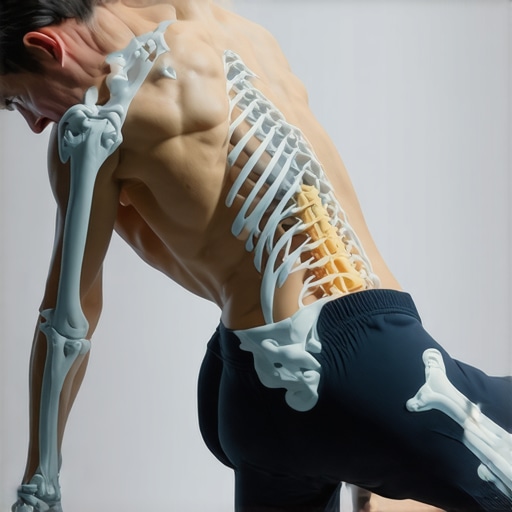
Ever found yourself lying on the floor, stretching your hamstrings after a long day, only to notice your back aching even more? I remember the lightbulb moment when I realized my usual hamstring stretches might actually be pulling my back into trouble. It felt counterintuitive, like I was doing all the right things but somehow making things worse instead of better.
Why Common Hamstring Stretches Can Widen Your Back Pain Gap
Many of us are told that tight hamstrings contribute to back pain, so it seems logical to stretch them regularly. I, too, bought into this idea early on—believing that loose hamstrings equal a happy back. But here’s the kicker: if your pelvis isn’t in proper alignment, those stretches can actually pull your lower back into even more strain. When I started paying attention, I noticed my pain worsened after certain stretches, especially when my mobility routine was more aggressive than my body’s needs.
This isn’t just my personal experience. Experts have found that over-aggressive stretching without addressing underlying posture issues can increase back discomfort (see this guided resource for simple mobility exercises).
Is Stretching Your Hamstrings Actually Worth the Hype?
It’s easy to assume that more stretching means better flexibility and less pain—but my early mistake was doing it blindly, without considering my unique posture or spinal health. I want to help you avoid that trap. So, in this post, we’ll explore why hamstring stretches might be sabotaging your back and what smarter alternatives you can try instead.
If you’ve been battling stubborn back pain and wondered whether touching your toes is hurting more than helping, stay with me. We’ll uncover the truth behind hamstring flexibility and how to approach it the right way. Ready to take control of your mobility and say goodbye to unnecessary pain? Let’s go!
Assess Your Pelvic Position
Begin by identifying your pelvic tilt. Lie on your back with knees bent and feet flat on the floor. Place your hands under your lower back; if there’s excessive space, your pelvis may be tilted forward. This misalignment pulls your lower spine into strain, exacerbating pain. Recognizing this is the first step toward correction, much like noticing a crooked picture frame before straightening it.
Activate Your Core Muscles
Engage core muscles—transverse abdominis and multifidus—by gently pulling your navel toward your spine while maintaining normal breathing. Think of your core as a corset that stabilizes your pelvis, preventing unnecessary tilting. Consistent activation helps balance pelvic position, reducing the load on your lower back. I practiced this during a morning routine, and within days, I noticed less tension and more control over my posture.
Implement Micro-Adjustments Throughout the Day
Throughout your day, make small adjustments to maintain pelvic neutrality. When sitting, use a lumbar roll or a small pillow behind your lower back to encourage proper alignment. Standing, engage your core and imagine leveling your pelvis so it’s parallel to the floor. These tiny, constant corrections act like tiny steering adjustments steering a boat—preventing drift into misalignment. Incorporating these into daily activities transformed my back comfort over a couple of weeks.
Practice Pelvic Tilts Regularly
Perform controlled anterior and posterior pelvic tilts to train your muscles to hold correct alignment. Lie on your back with knees bent, feet flat, and gently tilt your pelvis forward (arching your lower back), then tuck your pelvis under (flattening your lower back). Repeat these movements slowly—like fine-tuning a guitar string—to build muscle memory. I dedicated five minutes daily to this, noticing my pelvis becoming more stable, which eased my back pain significantly.
Stretch Tight Muscles and Strengthen Weak Links
Identify and stretch muscles contributing to misalignment, such as hip flexors and hamstrings, which can pull your pelvis forward. Incorporate targeted stretches, like the kneeling hip flexor stretch, and strengthen core stabilizers with planks and bird-dogs—exercises that act as the scaffolding supporting your pelvis. This dual approach addresses the root causes of tilting—not just the symptoms—making your correction sustainable. Explore further mobility strategies for lasting relief here.
Consistent Check-Ins and Adjustments
Regularly reassess your pelvic position, especially after sitting for long periods or intense activity. Use a mirror or ask a partner to observe your posture. If you notice tilting returning, pause and re-engage your core, perform pelvic tilts, and stretch tight muscles. Think of this routine as tuning a musical instrument—small, frequent adjustments keep everything in harmony and prevent long-term issues.
 Many individuals assume that simply performing adjustments or stretching routines will fix long-standing back pain, but this overlooks a subtle yet critical detail: the environment in which these corrections occur. While popular advice emphasizes perfect posture or routine adjustments, the real challenge lies in understanding how your daily habits and misconceptions sabotage these efforts. For example, one common myth is that static stretches alone can realign your pelvis; in reality, without addressing core stability and movement patterns, these stretches can be ineffective or even harmful.
Advanced practitioners know that muscular imbalances and habitual movement patterns create a ‘fault line’—a vulnerable zone—that cannot be fixed by isolated stretches or adjustments alone. Instead, the key lies in integrating micro-movements and conscious habits into your daily routine. Research by experts such as Dr. Stuart McGill underscores the importance of personalized mobility exercises that retrain your neuromuscular system, rather than generic stretching routines which often ignore the complex interplay of muscles involved in spinal health.
Moreover, many people fall into the trap of over-relying on external corrections like chiropractic adjustments without simultaneously improving movement mechanics. This is akin to tuning a piano without tuning the room’s acoustics; the instrument may be in tune, but external factors sabotage the harmony.
So, what many don’t realize is that the true nuance is the relationship between habitual movement patterns and internal muscular balance. Without addressing this relationship, even the most sophisticated adjustments can be rendered ineffective. For instance, if you habitually lean to one side or have a sitting posture that promotes lateral tilt, adjustments won’t hold longer than a few hours until these habits are corrected.
To truly improve, focus on integrating movement-oriented habits that reinforce proper spinal alignment throughout the day. Simple daily practices like micro-adjustments during prolonged sitting, controlled pelvic tilts, and targeted activation of stabilizing muscles can make the difference between short-term relief and lasting change. Check out posture correction secrets for step-by-step strategies.
Remember, it’s not just about fixing the problem temporarily but creating an environment where proper motion and stability reinforce each other. This synergy prevents the recurrence of pain and builds resilience in your spine’s structure.
Have you ever fallen into this trap? Let me know in the comments. For a thorough approach, consider exploring comprehensive mobility strategies at this resource to start retraining your body’s natural alignment today.Maintaining your spinal health over time requires a combination of effective tools and consistent habits. Personally, I rely on a few key pieces of equipment and techniques that have proven invaluable in preserving my mobility and reducing back pain. One essential tool I swear by is a high-quality foam roller, specifically a dense, 36-inch model. It helps me perform self-myofascial release on tight muscles like the thoracic spine and hip flexors, preventing post-session regressions. I also incorporate resistance bands, which I use for guided exercises targeting deep core stability, essential for supporting proper posture long-term.
In addition to physical tools, I utilize mobility tracking software on my smartphone—such as a dedicated mobility app—that prompts me with daily routines and tracks my progress. These digital reminders help me stay accountable and ensure I don’t skip crucial reinforcement exercises. Over the years, I’ve integrated techniques like mindful posture checks during work hours, which I review weekly to fine-tune my habits.
Looking ahead, I predict the trend toward smart, AI-powered wearable devices that monitor posture and muscle engagement will become mainstream. These will provide real-time feedback, fostering better self-awareness and immediate correction—a game-changer for long-term spinal health.
< h3 >How do I keep my back healthy for the long haul? < /h3 >To sustain your progress, consistency is key. Incorporating daily micro-movements and maintaining a disciplined routine with your tools can make a tremendous difference. For instance, I perform brief resistance band exercises during breaks, focusing on activating stabilizer muscles that often weaken with sedentary lifestyles. Pairing these with regular stretching—especially targeting areas like the hip flexors and hamstrings—greatly enhances durability.
Remember to reassess your habits periodically. Use a mirror or record yourself performing key movements, adjusting as needed. Adopting these practices ensures your improvements are durable and adaptable to changing circumstances, like injury or aging.
If you’re serious about guarding your back, I recommend integrating targeted mobility strategies from resources like this guide. Focus on combining physical tools with mindful habits, and you’ll build a resilient spine that withstands daily stresses.
Finally, stay informed about emerging tools—such as AI coaching apps—that personalize your routines based on real-time data. This personalized feedback loop can exponentially improve your long-term outcomes. Begin by incorporating one advanced tip today—perhaps using a mobility tracking app—to step confidently toward a pain-free future.
The Hardest Lesson I Learned About Adjustments and Movement Patterns
One of my toughest realizations was that quick fixes like adjustments or stretching alone rarely resolve chronic back issues. The real breakthrough came when I understood that habits—like how I sit, stand, and move—held the key to lasting relief. It’s tempting to chase after the latest mobility hack, but without addressing underlying movement patterns, setbacks are inevitable.
Secrets Only Top Practitioners Know About Posture Correction
Many experts emphasize core activation and micro-movements rather than isolated stretches. Over time, I uncovered that integrating small, mindful habits—such as micro-adjustments during daily tasks—retrained my neuromuscular system. This subtle shift transformed my approach, turning posture correction from a chore into a seamless part of everyday life.
Realize Why Your Comfort Routine Might Be Sabotaging You
What surprised me was how some well-meaning routines could reinforce poor habits—like over-reliance on passive stretching or neglecting the importance of active stability. I learned to balance muscle release with targeted strengthening, creating a resilient foundation for my spine. Explore more strategies on how consistent habits can cement long-term mobility here.
Curated Tips for Deep Internal Change
Among my favorite tools are foam rollers for myofascial release and resistance bands for stabilizer strengthening. These are backed by research and helped me make tangible progress. Combining physical tools with daily mindfulness made my mobility routine not only effective but sustainable. For cutting-edge tips, check out these mobility strategies.
Lean Into Your Journey—It’s Worth It
The path to better back health is built on patience, small wins, and consistent habits. My advice is to trust the process—celebrate even tiny improvements and stay curious. Remember, lasting change arises when you view mobility as a lifestyle, not just a quick fix. So, what daily habit can you start today to reinforce your progress? Share your thoughts below and let’s build resilient spines together.
,