
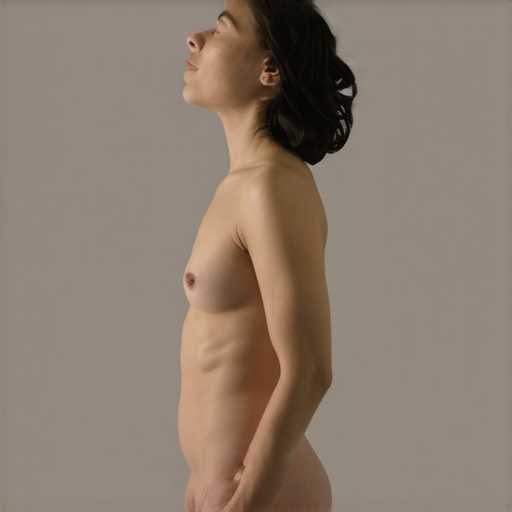
I was standing at my best friend’s wedding, squeezing into a suit that felt a size too small, and I spent four hours pulling my belly button toward my spine. I wanted to look lean in the photos. By the time the cake was cut, my lower back felt like it was being squeezed in a vise, and a dull ache had migrated all the way up to my jaw. I used to think this was just the price of looking good. I was wrong. For years, I treated my torso like a corset, unaware that I was actually suffocating my spine and forcing my muscles into a state of permanent panic. Today, we are going to fix that habit and learn why letting your belly hang out a little is actually the best thing you can do for your long-term mobility.
The Day I Finally Let Go
I spent most of my twenties believing that a tight stomach was synonymous with a strong core. It was a massive mistake. I would walk, sit, and even lift weights while maintaining a constant, rigid ‘suck.’ Eventually, this led to a point where I couldn’t even take a deep breath without my ribs feeling stuck. I realized that how your breathing pattern keeps your back muscles guarded is directly linked to this constant abdominal tension. When you suck in, you aren’t building strength; you are just creating a pressure cooker inside your abdomen. Have you ever felt that weird, sharp pain in your mid-back after a long day of trying to look ‘composed’? That is your body screaming for air.
Is this habit actually destroying your posture?
You might be skeptical. We have been told for decades to ‘engage the core’ and ‘keep it tight.’ But there is a huge difference between functional stability and aesthetic bracing. According to research cited by the Journal of Physical Therapy Science, prolonged abdominal bracing can lead to restricted diaphragmatic excursion, which essentially means you stop breathing into your belly and start shallow-breathing into your chest. This creates a domino effect. It sends your nervous system into fight-or-flight mode and causes the deep core connection that stops your spine from shear stress to fail because your diaphragm can’t do its job.
Why Your Lungs and Spine Are Paying the Price
When you constantly pull your stomach in, you lose the ability to how to breathe through your ribs to ease lower back tension. Instead of your core acting like a dynamic shock absorber, it becomes a rigid pillar that passes every ounce of force directly into your spinal discs. I learned the hard way that this ‘aesthetic’ posture was the hidden cause of my morning stiffness and those annoying knots between my shoulder blades. We need to stop prioritizing how we look in a mirror over how our bodies actually function. Do you find yourself subconsciously holding your breath when you walk past a window or see a camera? If so, you are likely part of the millions of people who are accidentally ‘bracing’ themselves into chronic pain. It is time to let it go—literally.
Let the Air Fill Your Entire Torso
To stop the ‘sucking in’ habit, you first have to understand that your core is not a flat sheet of muscle; it is a three-dimensional canister. When you pull your belly button in, you collapse that canister. To fix this, we practice 360-degree breathing. Place your hands around your waist, just above your hips, with your thumbs on your back and fingers on your stomach. As you inhale, try to push your fingers and thumbs away from each other simultaneously. You aren’t just pushing your belly out; you are expanding your sides and your back. This creates an internal ‘air cushion’ that supports your vertebrae from the inside out. If you feel like your ribs are stuck and won’t move, you might need to use the thoracic move that makes deep breathing feel natural to unlock the joints that have become rigid from years of bracing. 
Stop Fighting Your Own Pelvic Tilt
Chronic abdominal bracing almost always forces the pelvis into a weird position. Most people end up with an anterior tilt, where the tailbone flares back like a duck’s tail. This happens because the front of your body is so tight it pulls your pelvis down. To find neutral, I want you to imagine your pelvis is a bucket of water. If you suck your stomach in too hard, the water spills out the front. You need to use the simple pelvic tilt that makes sitting for hours painless to level the bucket. Once the bucket is level, your abdominal muscles can actually rest instead of acting like a constant, over-stretched rubber band.
The Habit-Breaking Drill for Every Morning
I remember a specific Tuesday about three years ago when I tried to go for a run after a high-stress morning. I was subconsciously ‘bracing’ for the day, holding my stomach tight while I hit the pavement. Within ten minutes, a sharp, electric pain shot through my right hip. It wasn’t a muscle tear; it was my psoas seizing up because I wasn’t letting my core absorb the impact. I had to stop, lay on the grass, and perform the psoas release that finally stops your deep lower back ache right there in the park. It was messy, and a few neighbors gave me weird looks, but the relief was instant. To avoid this, you need to retrain the brain with the ‘Deadbug’ exercise.
Mastering Dynamic Stability Without the Bracing
Instead of just holding a plank and squeezing for dear life, try the deadbug variation for people with weak abs. This movement teaches your nervous system how to move your arms and legs while keeping your spine stable—all without needing to ‘suck in.’ The goal is to keep your lower back gently pressed against the floor using your deep muscles, while still taking those big, 360-degree breaths. If you can’t breathe while you move, you aren’t stable; you’re just rigid. If you aren’t sure if your alignment is right, you can how to test your thoracic mobility in under 60 seconds to see if your mid-back is actually doing its share of the work. Breaking this habit isn’t about being lazy with your posture; it’s about shifting from a state of constant ‘shielding’ to a state of ‘readiness.’Let’s dig deeper into why simply ‘trying harder’ to have good posture often backfires. I see it every single day: people who are incredibly fit but live in constant discomfort because they’ve been taught to treat their bodies like a set of rigid blocks rather than a dynamic system. One of the biggest myths I encounter is the idea that if your back hurts, you just need to stretch your hamstrings. This is often where the real trouble begins.
Stop stretching your hamstrings for back relief
Most people assume that tight hamstrings are the cause of their lower back pain. However, in many cases, your hamstrings aren’t actually short; they are under constant tension because they are trying to stabilize a pelvis that is being pulled out of alignment by your ‘sucking in’ habit. When you force a stretch on a muscle that is already working overtime to protect your spine, you aren’t releasing tension—you’re inviting injury. In fact, why you should stop stretching your hamstrings for back relief becomes clear when you realize that most ‘tightness’ is actually neural tension. If you feel a sharp, zingy pull behind your knee during a stretch, you aren’t stretching a muscle; you are tugging on your sciatic nerve. This is why why your hamstring stretch is actually hurting your nerves and potentially making your disc issues worse. Dr. Stuart McGill, a leading expert in spine biomechanics, explains that many back issues are ‘flexion intolerant,’ meaning the very act of bending forward to touch your toes can increase the internal pressure on your spinal discs to dangerous levels. 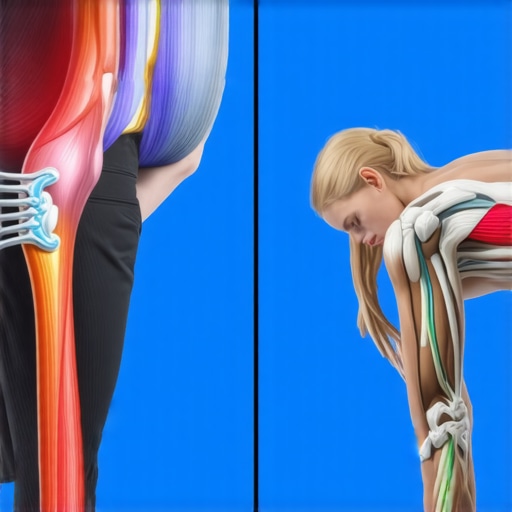
Is your yoga routine actually damaging your SI joint?
This is a question many dedicated practitioners hate to hear, but it’s a nuance that matters for long-term mobility. Many yoga poses prioritize extreme range of motion over joint stability. If you already have a habit of abdominal bracing, your lower back is likely locked up, forcing your sacroiliac (SI) joint to move more than it was ever designed to. I’ve found that why your yoga practice might be hurting your sacroiliac joint is often due to this lack of 360-degree core support we discussed earlier. Without that internal air pressure, the sheer force of deep twists and folds goes straight into the ligaments of the pelvis.
Why self-cracking your spine keeps you in a loop of pain
We’ve all done it—that quick twist in the office chair to get a satisfying ‘pop’ from the mid-back. It feels great for about ten minutes, and then the stiffness returns, often worse than before. This is the ‘Oops’ factor of DIY adjustments. When you crack your own back, you are usually moving the segments that are already hypermobile (too loose) rather than the ones that are actually stuck. This creates a cycle where why cracking your own back is only a temporary fix because you aren’t addressing the underlying structural restriction. Unlike a targeted clinical move, how an adjustment restores more than just range of motion involves specific vectors that calm the nervous system rather than just irritating it further.
Decompress your spine before you reach for the coffee
To truly break the habit of bracing and ‘sucking in,’ you have to address how you start your day. Your discs are most hydrated and vulnerable first thing in the morning. Instead of jumping out of bed and immediately ‘engaging the core’ to look slim, try the morning routine to decompress your spine before coffee. This allows your vertebrae to settle into a neutral position naturally. Have you ever fallen into this trap? Let me know in the comments. Moving away from aesthetic-based posture toward functional-based mobility is the only way to stay pain-free into your later years.I used to think that once the pain stopped, the work was over. That is the quickest way to end up right back where you started. To keep these changes permanent, I rely on a few ‘non-negotiable’ tools that I’ve tested over a decade of trial and error. First, I threw away my soft foam roller. It was too forgiving. Now, I use a high-density lacrosse ball for localized trigger points and a grid-textured roller for my upper back. Why? Because the texture mimics the thumb pressure of a manual therapist, helping to break up fascial adhesions that a flat surface simply ignores. If you spend hours at a computer, the 30-second desk fix for your tight pectoral muscles is your best friend to prevent that forward slump from returning. It is not just about the tools, though; it is about the habit of checking in with your body before the tension becomes a crisis.
The two tools that actually live in my gym bag
For years, I struggled with a rib cage that felt permanently flared. No matter how much I practiced breathing, the old ‘sucking in’ habit would creep back during high-stress meetings. That’s when I started using a simple resistance band looped around my lower ribs. It provides tactile feedback—if I stop feeling the band expand against my breath, I know I’ve started bracing again. I also swear by a firm lacrosse ball for my glutes. When your glutes are ‘off,’ your lower back takes the hit. If you find your hips are always tight despite stretching, you might need to realize the one thing your standing desk is missing for hip health isn’t a better chair, but a way to keep your pelvis moving. 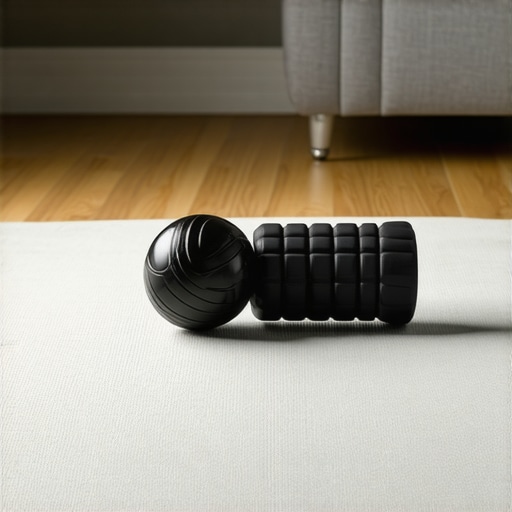
How do I maintain these spinal gains over the long term?
Maintenance is not about a two-hour gym session; it is about the 1% changes you make every hour. I recommend setting a ‘posture alarm’ every sixty minutes. When it goes off, don’t just sit up straight. Instead, perform the simple scapular reset for instant shoulder tension relief and take three 360-degree breaths. This resets your nervous system and prevents the ‘bracing’ pattern from locking in. Dr. Kelly Starrett, author of ‘Becoming a Supple Leopard’ and a pioneer in movement science, argues that we should treat our bodies like high-performance machines that require daily ‘tuning’ rather than waiting for a total breakdown. By prioritizing daily adjustments to alleviate back pain and improve posture, you move from a reactive state to a proactive one.
Why the future of posture is about feedback, not force
Looking ahead, I predict a massive shift away from rigid posture braces and toward biofeedback technology. We are already seeing the rise of wearable sensors that track diaphragmatic expansion rather than just ‘straightness.’ The goal isn’t to force your body into a shape, but to teach it how to feel when it is out of alignment. Until those tools are in everyone’s hands, you have to be your own sensor. This is why unlocking better posture simple adjustments to relieve back pain depends entirely on your internal awareness. I challenge you to try this: for the next 24 hours, every time you walk through a doorway, check if your belly is pulled in. If it is, let it go, breathe into your back, and feel the instant release in your spine. This one advanced ‘tweak’ can change your entire mobility profile.
Three Realities My Spine Had to Learn the Hard Way
For a long time, I thought that a ‘hard’ stomach was the same as a stable one. I couldn’t have been more wrong. The first big lesson was that my constant bracing was actually masking a total lack of deep core control. I found that posture correction secrets that transform back pain outcomes often start with silence and stillness, not more tension. Secondly, I learned that my body was using that abdominal ‘shield’ to protect itself from emotions I didn’t want to feel—stress, anxiety, and the pressure to look perfect. When I let the belly go, those feelings surfaced, but so did my ability to move without a deep, grinding ache. Finally, I realized that true strength is the ability to transition from loose and fluid to tight and braced in an instant, rather than being stuck in one gear forever. This is the essence of mastering your mobility for the long haul.
What’s Inside My Daily Spinal Maintenance Kit
If you want to stop the cycle of pain, you need a few high-value tools. I don’t go anywhere without a high-density lacrosse ball for ‘unsticking’ my hips and glutes. I also highly recommend the book ‘Becoming a Supple Leopard’ by Dr. Kelly Starrett; it is basically the owner’s manual for the human body that we should have been given at birth. Another game-changer for me was ditching my soft sofa for a firmer setup, because the couch position that is quietly ruining your lumbar curve is often where our best intentions go to die. I also use a simple loop resistance band to remind my ribs to expand sideways every single day. #IMAGE_PLACEHOLDER_E#
Your Movement Potential Is Waiting for You to Let Go
Your body is a masterpiece of engineering designed for movement, not for holding a static pose to please a camera lens. The journey to a pain-free life isn’t about achieving ‘perfect’ posture; it is about reclaiming the natural rhythm of your breath and the fluidity of your joints. Start small. Tomorrow morning, try the morning glute squeeze that protects your spine all day and see how it changes your awareness. Don’t be afraid to let your guard down and let your belly move. Your spine will thank you for years to come. Have you ever noticed that you hold your breath when you are focusing hard at your desk? Let me know in the comments how you plan to ‘let go’ today.