
I was crouched on the floor, hunting for a stray Lego under the couch, when I finally stood up and my legs turned into wet noodles. I didn’t just stumble; I fell right back onto my heels, heart racing, wondering if my body was finally calling it quits. It was humiliating, especially because I thought I was in decent shape. That moment of sudden weakness wasn’t a fluke—it was a loud, clear signal from my nervous system that something was disconnected. If you’ve ever reached for the kitchen counter just to stay upright after standing up, you know exactly that cold flash of panic I’m talking about. Today, we are going to dive into why this happens and how you can reclaim that rock-solid foundation so you can move with confidence again.
Why Gravity Suddenly Wins the Battle for Your Balance
For a long time, I made the classic mistake of thinking I just needed to be more flexible. I spent weeks focusing on why stretching your hamstrings might be making your back pain worse, only to realize I was actually making my joints less stable by over-loosening the wrong areas. The truth is, that ‘buckling’ feeling usually comes down to a communication breakdown between your brain and your stabilizers. When you move from a low position—perhaps after learning how to sit on the floor without hurting your hips—your body has to rapidly adjust your blood pressure and muscle tension. According to the Mayo Clinic, a sudden drop in blood pressure, known as orthostatic hypotension, is a common culprit for dizziness, but when the knees specifically give way, we often have to look at proprioception and joint alignment. I realized that my own issues were compounded by the couch position that is quietly ruining your lumbar curve, which was putting my pelvic nerves in a constant state of ‘sleep mode.’ Have you ever felt that terrifying moment where your legs just quit on you mid-stride? It is more common than you think, and it usually isn’t just about ‘getting old.’
Does my blood pressure have to be perfect to stop the buckling?
It’s easy to get skeptical and think this is just a permanent medical condition you have to live with. You might worry that unless you have the blood pressure of a professional athlete, you’re destined to wobble. But here is the secret: while internal chemistry matters, the mechanical readiness of your muscles is something you can actually control. We are going to look at how a few simple shifts in how you stand can take the pressure off your nervous system and keep your knees locked and loaded. When I stopped obsessively stretching and started focusing on stability, the buckling stopped within a week. We’ll get into the exact moves next, but first, let’s look at why your current routine might be working against you.
Fix Your Foundation Before You Take a Single Step
The first time I really tried to fix my ‘wet noodle’ legs, I made the mistake of focusing on my knees. I thought the joint was the problem. I was wrong. I remember standing in my kitchen, trying to perform a basic squat, and my right knee just caved inward. It wasn’t a muscle failure; it was a sensory one. To stop the buckling, you have to start with your feet. If your arches are collapsing, your brain gets garbage data about where you are in space. You can actually see this in action by checking what your foot arch says about your chronic hip pain. When that arch drops, it forces the tibia to rotate, which creates a ‘false’ weakness in the quadriceps. To fix this, I started ‘rooting’ my big toe into the ground before standing. This simple mechanical shift creates a tripod of stability that tells your nervous system it is safe to engage the big muscles.
Stop the Pelvic Tilt Before It Trips You Up
Once your feet are set, the next culprit is usually a pelvis that is stuck in a forward dump. I spent years in an anterior pelvic tilt because I sat at a desk for ten hours a day. This position puts your glutes on a permanent vacation and stretches your femoral nerve to its limit. If you want to know if you are dealing with this, you should learn how to tell if your pelvis is tilted forward. When you go to stand up with a tilted pelvis, your lower back takes the hit, and your legs lose their leverage. I found that by performing a tiny pelvic tuck—just enough to feel my lower abs engage—the sudden buckling stopped. It was like finally plugging a lamp into a socket that had been loose for years. 
The 3-Second Rule for Standing Up Without the Wobble
We often stand up like we are being launched out of a cannon, which is a nightmare for a nervous system that is already struggling with blood pressure or coordination. I developed a habit called the ‘Three-Point Reset’ that I still use every time I get off the floor. First, I find my feet and spread my toes. Second, I perform a quick glute contraction—think of the morning glute squeeze that protects your spine all day—to wake up the primary movers. Finally, I exhale as I ascend. Most people hold their breath when they stand, which spikes internal pressure and can actually make you more dizzy. By exhaling, you allow your diaphragm to stabilize your spine naturally. I remember trying this at a family picnic after sitting on the grass for an hour. Normally, I would have stumbled and looked like I’d had three beers too many. Instead, I rose smoothly, and for the first time in months, my knees didn’t even quiver.
Why Your Mid-Back Is Secretly Killing Your Leg Strength
It sounds crazy, but a stiff middle back can make your legs feel heavy and weak. When your thoracic spine is locked up, your body can’t breathe deeply, which forces you into a ‘fight or flight’ posture. This state of high tension makes your muscles reactive rather than proactive. If you feel like your legs are shaking after a long drive, it might be the hidden reason your middle back burns after driving manifesting as leg instability. I started using a simple wall-based move to open my chest before I knew I’d be on my feet for a while. This lowered my overall nerve ‘noise’ and allowed my legs to do their job without interference from a stressed-out upper body. You can even try the 30-second wall reset for hunchback posture to see if clearing that upper tension immediately improves how solid your legs feel when you walk.It’s easy to think that if your legs are buckling, they are simply ‘weak.’ But after working through this myself, I realized that raw strength is rarely the missing ingredient. Most of us fall into the trap of thinking we need more squats, when in reality, our nervous system is hitting the ’emergency brake.’ Here is the nuance most people miss: your body would rather make you stumble than allow you to snap a nerve. This is why you should stop stretching your hamstrings for back relief if you’re already feeling unstable. You might be tugging on a sensitized sciatic nerve, which causes your brain to ‘shut off’ the quadriceps to protect the spine.
Can ‘loose’ joints actually cause your legs to give way?
Yes, and this is where the common advice fails. While the world tells you to get flexible, many people experiencing sudden knee or hip failure are actually hypermobile or have ‘micro-instability.’ According to a study in the Journal of Orthopaedic & Sports Physical Therapy, when joints lack passive stability, the nervous system uses ‘protective guarding’ to keep you upright. If you try to stretch through that guarding, you’re essentially disabling your body’s only remaining safety net. This is also why your yoga practice might be hurting your sacroiliac joint rather than helping it. One major ‘oops’ factor I see constantly is the reliance on external supports. I once tried wearing a compression sleeve and a back brace for two weeks straight, thinking I was helping my body heal. Big mistake. I fell right into the trap of the truth about posture braces and muscle atrophy. When you outsource your stability to a piece of velcro, your deep stabilizers—the ones that prevent that ‘wet noodle’ feeling—simply stop firing.  Instead of bracing, you need to look at the ‘why’ behind the weakness. Often, it’s not the leg at all, but a signal blockage higher up. For instance, understanding why your lumbar support might be making your pain worse is a classic example of how ‘good’ ergonomics can actually compress the very nerves that keep your legs steady. Have you ever fallen into this trap of over-stretching or over-bracing? Let me know in the comments below, because I’d love to hear how you broke the cycle.
The Gear That Actually Earned a Permanent Spot in My Gym Bag
Once I moved past the ‘quick fix’ phase, I realized that maintenance isn’t about doing more work; it is about having the right tools to reduce the friction of daily life. I stopped buying generic foam rollers that were too soft to do anything and switched to a high-density lacrosse ball for localized pressure. I use it specifically for joint centration—a concept emphasized by Dr. Pavel Kolar in the Dynamic Neuromuscular Stabilization (DNS) protocol. By placing that ball right against the tissue near my shoulder blades, I can perform the simple scapular reset for instant shoulder tension relief while I am just watching TV. It is about making the maintenance invisible. I also became obsessed with my workspace. I used to think a stack of books was fine, but I finally invested in a dedicated riser because I had to ask myself is your laptop stand actually making your neck tension worse by forcing your chin into your chest. 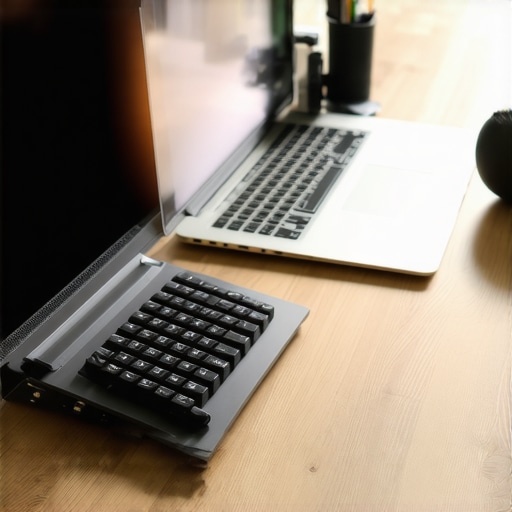
How do I keep my legs from turning into jelly long-term?
Maintaining this rock-solid foundation requires a shift from ‘exercise’ to ‘movement hygiene.’ You would not brush your teeth once a month and expect no cavities, so why do we treat our spine differently? I have found that you have to adjust your routine daily spinal alignments for lasting relief rather than waiting for a crisis to strike. My personal rule is the ’10-minute audit’ every evening. I check my foot arches, my pelvic tilt, and my ribcage position. If I feel that familiar tightness creeping back in, I immediately use the monitor height hack for preventing c7-t1-nerve-pressure to ensure my workday tomorrow does not undo today’s progress. Consistency in these micro-adjustments is what keeps the buckling at bay. I have noticed that on the days I skip this audit, my legs feel heavy by the afternoon. It is a direct cause-and-effect relationship that you cannot ignore once you have felt the difference.
The Future of How We Move and Stand
I predict that in the next few years, we are going to see a massive shift away from passive furniture and toward active bio-feedback. We are already seeing wearables that vibrate when your shoulders slump, but the real game-changer will be AI-driven vision tech that analyzes your gait in real-time through your phone. You will be able to enhance your mobility expert tips for easier movement in 2025 by having a digital coach tell you exactly when your glutes have stopped firing mid-walk. This is not just sci-fi; it is the logical conclusion of the ‘smart home’ moving into ‘smart health.’ My advice? Do not wait for the tech. Start by mastering one advanced move today—try the ‘Tripod Foot’ engagement while brushing your teeth tonight and see if you can feel the stability travel all the way up to your hips. It is a tiny shift that pays massive dividends.
The Hardest Truths I Learned When Strength Training Failed My Balance
The most shocking realization during my recovery was that my ‘weakness’ wasn’t about small muscles, but about a protective warning system. I had to learn the deep core connection that stops your spine from shear stress because without it, my nervous system simply wouldn’t allow my legs to fully engage. Another lightbulb moment was realizing that my ‘tight’ hamstrings were actually just my brain’s way of trying to keep me from falling over. If you feel that same tension, you might find that why your sitting habits are causing your hamstrings to tighten explains more about your instability than any gym workout ever could. Finally, never underestimate the power of your breath; learning how to breathe through your ribs to ease lower back tension was the final piece that stopped my mid-day wobbles by acting as a natural internal brace.
The Daily Gear That Keeps Me Steady on My Feet
I don’t believe in buying every gadget on the market, but three specific tools changed everything for me. First, a high-density lacrosse ball for pinpoint tissue release is non-negotiable for my evening recovery. I also swear by the morning routine to decompress your spine before coffee to set my alignment right from the moment I wake up. You can find that specific sequence in the morning routine to decompress your spine before coffee. Lastly, I’ve integrated a dedicated riser because the monitor height hack for preventing c7-t1-nerve-pressure keeps my upper body from stressing out the very nerves that control my lower body stabilizers. #IMAGE_PLACE_HOLDER_E#
Take Back Your Stride One Inch at a Time
Your journey to solid, reliable legs doesn’t have to be a grueling uphill battle. It is about making small, intentional choices that respect your body’s need for safety and alignment. You can enhance your mobility expert tips for easier movement in 2025 by starting with the tripod foot method we discussed earlier today. Every time you stand up with intention, you are re-training your brain to trust your muscles again. Don’t let the fear of falling keep you from moving—let it be the fuel that drives you to master your mechanics and reclaim your foundation. Have you ever felt your knees give way at the most inconvenient moment? Let me know your experience in the comments below!