
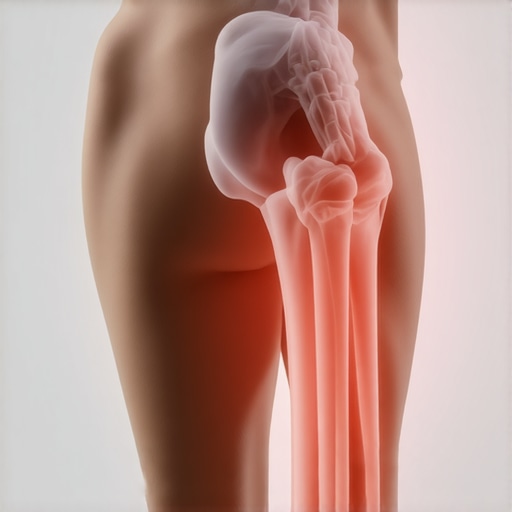
Three years ago, I was absolutely convinced I needed a hip replacement. I was thirty-five, hobbling around like a wooden puppet, and spending a small fortune on massage therapists who just couldn’t quite reach the ‘spot.’ It was physically and mentally exhausting, waking up every morning wondering if this was just my ‘new normal.’ One afternoon, while standing barefoot in my kitchen waiting for the kettle to boil, I looked down and saw my arches melting into the floor like soft butter. My feet were practically flat against the tile. That was my lightbulb moment, and it changed how I viewed my body forever.
Your Kinetic Chain Starts on the Ground
You see, our bodies aren’t just a collection of separate parts; they’re a tightly linked system, often referred to by experts as the kinetic chain. When my arches collapsed, my knees naturally rotated inward, and my hip joints had to work overtime just to keep me upright and moving forward. I wasted months trying to figure out how to stop your knees from caving in during daily walks without realizing the very foundation was crumbling beneath me. If you’ve been feeling that deep, dull ache in your outer hip or a pinching sensation in the front, it’s time to stop staring at the joint and start looking at your footprint. Today, I’m going to show you exactly how your foot arch collapse is creating a hip impingement and how we can finally quiet that pain using simple, everyday adjustments.
Is this arch connection actually worth the hype?
It’s easy to be skeptical, especially when you feel the pain so clearly in your hip and not your feet. I used to think the ‘arch connection’ was just a marketing ploy to sell expensive custom orthotics. In fact, my biggest mistake early on was buying generic drugstore insoles and expecting a miracle cure. It didn’t work because I was just bracing a weak structure instead of fixing the underlying mechanics. However, researchers at Harvard Health have long noted that because the body is a kinetic chain, a problem in the feet can easily translate to pain in the knees, hips, and even the neck. Have you ever noticed your hip pain flares up specifically after a day of wearing flip-flops or flat sneakers? I’d love to hear if you’ve made that same connection in your own life.
Why Your Hip Is Taking the Blame for Your Foot’s Failure
When your arch falls—a process known as overpronation—your femur, or thigh bone, is forced to rotate inward. This constant internal rotation puts massive pressure on the hip socket and can lead to labral tears or bursitis over time. You might even notice the foot arch connection to your chronic lower back spasms as your pelvis tilts forward to compensate for the lack of stable support from below. By implementing the simple tweak to your walking stride that saves your hips, you can begin to offload the pressure on the joint and allow the inflammation to finally subside. We aren’t just masking the symptoms today; we’re rebuilding the way you stand.
Rebuild Your Foundation from the Ground Up
To fix a collapsing arch, you have to stop thinking about the foot as a flat plank and start treating it like a dynamic dome. The primary goal is to re-establish the “Tripod Foot.” This means maintaining firm pressure through three specific points: the center of your heel, the base of your big toe, and the base of your pinky toe. When I first started this, I realized I was putting almost all my weight on my heels and the outside of my feet, which is the real reason your feet turn out when you squat or walk. By consciously pressing the ball of the big toe into the ground, you engage the posterior tibialis—the muscle that acts as the primary hoist for your arch.
Master the Tripod Foot for Instant Stability
Try this right now: stand up and feel where your weight is distributed. Most of us with hip impingement will feel a “leak” of pressure toward the inner edge of the foot. To correct this, pull the ball of your big toe toward your heel without curling your toes. You should feel the muscles in your arch tighten and lift. 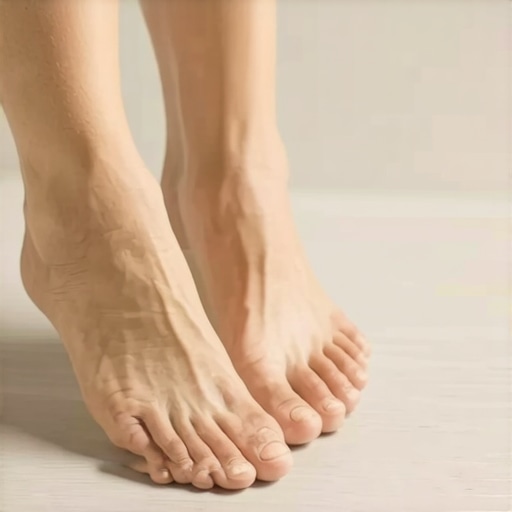 The first time I tried this ‘Short Foot’ exercise, I felt like an absolute failure. My toes would cramp, and I couldn’t move my arch even a millimeter. I was at a physical therapy clinic, and I remember looking at the person next to me effortlessly lifting their arch while I just stared at my unresponsive foot. It wasn’t until I focused on ‘rooting’ the big toe that the connection finally clicked, and the dull ache in my hip suddenly felt like it had ‘space’ for the first time in years.
Fix Your Stride to Stop the Pinch
Once you can hold that arch while standing, you need to carry that stability into your movement. If your arch collapses every time you take a step, your femur will keep slamming into the hip socket. You must learn how to relieve si joint pressure while walking by ensuring your foot strikes the ground neutrally rather than rolling inward. This isn’t about taking giant steps; it’s about a controlled “roll” from the heel to the big toe. Many people find that daily adjustments to alleviate back pain and improve posture are actually rooted in these small, repetitive foot movements. If you’re struggling to keep your pelvis level, you might need to check how to tell if your pelvis is tilted forward, as a forward tilt often goes hand-in-hand with arch collapse.
Avoid the Mistakes That Stall Your Progress
One of the most common errors I see is overcompensating by rolling too far onto the outside of the foot. This doesn’t fix the impingement; it just creates a new set of problems for your lateral ankle ligaments. Another trap is trying to “stretch” the hip out of the pain. If you’re doing aggressive stretches, be careful, because the 90-90 hip stretch mistake that is hurting your lumbar spine is often made by people trying to ‘open’ their hips without a stable foot foundation. Focus instead on the foot-to-hip connection, and the joint will often release its protective tension on its own.
Most people think that if a muscle feels tight, it needs to be pulled. But here is the nuance: feeling ‘tight’ is often a neurological signal that your muscle is already overstretched and trying to protect itself from further damage. When you have that hip impingement we discussed, your body often shifts into a forward tilt to find a path of least resistance. If you keep pulling at your legs during this phase, you might find why stretching your hamstrings might be making your back pain worse. It is a common paradox where you are essentially tugging on an already frayed rope. Experts at the Mayo Clinic emphasize that building stability within your natural range is far more effective for long-term relief than pushing into painful, static stretches. 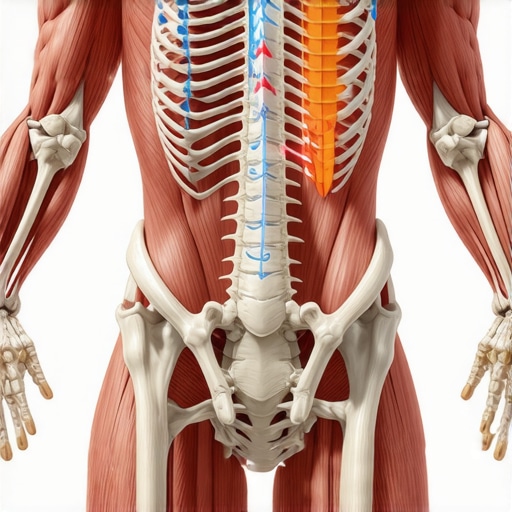
Does stretching actually address the root of the stiffness?
In many cases, the answer is a resounding no. If your pelvis isn’t neutral, no amount of yoga will fix the ‘pinch’ in your hip socket. In fact, many of the posture correction secrets that transform back pain outcomes center on active engagement rather than just passive relaxation. I spent years trying to ‘open up’ my hips with deep lunges, only to realize I was making my SI joint hypermobile and unstable. If you have been doing the same stretching routine for months with no change, you might be falling for the ‘Oops’ factor of over-bracing. People often ask if they should use a support belt or a fancy ergonomic chair, but why your lumbar support might be making your pain worse is a reality many discover far too late. These external tools can actually shut down your intrinsic core muscles. You can find more about the dangers of this in the truth about posture braces and muscle atrophy. Instead of leaning on a cushion, I recommend learning how to breathe through your ribs to ease lower back tension. This dynamic stability protects the spine from the inside out and prevents the common error of ‘hanging’ on your ligaments for support. Have you ever fallen into this trap of over-stretching or over-bracing only to feel more stiff the next day? Let me know in the comments.
The Two Tools That Finally Rebuilt My Arches
Once I stopped trying to ‘stretch’ my way out of pain, I realized I needed a way to provide a specific stimulus to the mechanoreceptors in my feet. I threw away the generic store-bought insoles and invested in two things: a 40mm high-density lacrosse ball and a set of anatomical toe spacers. I use the lacrosse ball specifically because it doesn’t yield like a tennis ball; it forces the intrinsic muscles of the foot to release their grip. I spend two minutes every morning rolling from the heel to the first metatarsal, which is a key part of master your mobility. Dr. Ray McClanahan, a renowned podiatrist and developer of ‘Correct Toes,’ explains that most modern shoes act like a cast, causing the muscles that support our arches to atrophy. By using spacers, I’m manually resetting the big toe into a position where it can actually provide leverage, which is often the one thing your standing desk is missing for hip health.
How do I maintain these arch gains long-term?
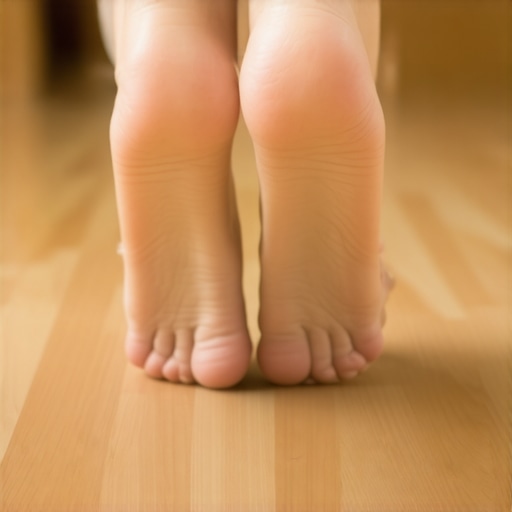
Consistency is the only thing that prevents a relapse into that old, wooden-puppet feeling. I’ve found that daily adjustments to alleviate back pain and improve posture are much easier to stick to when you treat them as ‘micro-doses’ of movement. I don’t set aside an hour; I simply integrate the ‘Short Foot’ exercise into my workday. Every time I stand up to grab a glass of water, I root my big toe. If you are someone who recently switched to a home office, you should look into the best way to transition from a sitting to a standing desk to ensure you aren’t just trading one set of postural issues for another. Maintenance isn’t about being perfect; it’s about making adjust your routine daily spinal alignments for lasting relief a non-negotiable habit, much like brushing your teeth. This neurological consistency is what finally told my brain it was safe to let go of the hip impingement.
Expect This Shift in Foot Health Technology
Looking ahead, I believe we are on the verge of a revolution in bio-feedback. I predict that within the next five years, we’ll see ‘smart socks’ or low-profile insoles equipped with haptic sensors that vibrate when they detect your arch collapsing mid-stride. This real-time feedback will do more for posture correction secrets that transform back pain outcomes than any passive brace ever could. We are moving away from ‘support’ and toward ‘engagement.’ The future of mobility isn’t in a thicker cushion; it’s in a more responsive foot. I want you to try one specific advanced tip today: the next time you are standing in line or waiting for the elevator, try to ‘shorten’ your foot without curling your toes and hold it for ten breaths. It’s an invisible workout that builds the structural integrity your hips have been begging for.
The Hardest Truths About Rebuilding My Foundation
I’ve learned that the biggest hurdle isn’t the physical exercise—it’s the mental shift. You have to stop viewing your hip as the ‘problem’ and start seeing it as the ‘messenger.’ When your hip pinches, it’s actually your body screaming that it lacks a stable base. Also, remember that simple exercises can relieve chronic back pain when they target the root cause. Another breakthrough for me was realizing that your feet don’t need ‘support’ in the form of heavy cushions; they need the opportunity to work. If you’ve been looking for tips for easier movement in 2025, look at how often you actually let your toes spread and grip the earth.
My Go-To Kit for Restoring Movement
If you’re ready to take this seriously, I highly recommend a high-density massage ball for the soles of your feet and a pair of wide-toe-box shoes. #IMAGE_PLACEHOLDER_E# These aren’t just gadgets; they are the keys to moving without pain. I also suggest keeping a small journal of your ‘pain triggers.’ Did your hip flare after wearing those tight dress shoes? That data is more valuable than any generic medical chart. For those looking for deeper alignment, posture correction secrets can provide the missing link between your feet and your upper spine.
Your Journey to Pain-Free Steps Starts Today
You have the power to rewrite your movement story. It starts with the very next step you take. Don’t let a temporary pinch define your lifelong mobility. Top mobility strategies are within your reach, and your foundation is ready to be rebuilt. Focus on that tripod foot, engage your big toe, and watch as your hips finally find the space they need to move freely. Have you noticed your hip pain gets worse after wearing certain shoes? Let me know in the comments below!