
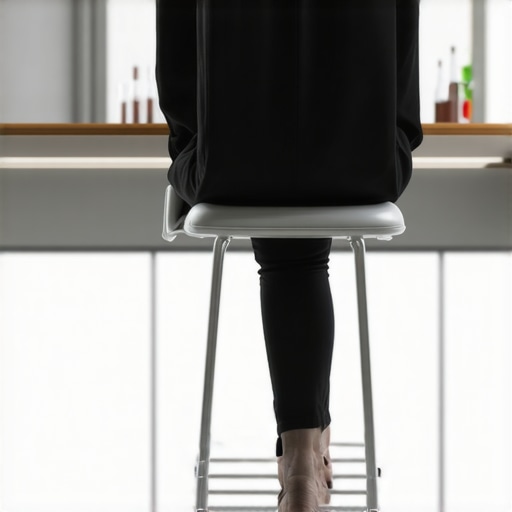
I vividly remember the night I realized I wasn’t twenty-one anymore. I was sitting at a local brewery, third stool from the left, enjoying a craft IPA and feeling great—until I tried to stand up. That’s when the ‘lightning bolt’ hit my L5-S1. I had spent two hours in what I thought was a relaxed ‘perch,’ only to realize I’d been slowly grinding my lumbar discs into dust. My lower back was so locked up I had to shuffle to my car like a person three times my age. It was embarrassing, it was painful, and it was entirely avoidable. I’d made the classic mistake of thinking I could just ‘power through’ a backless seat by tensing my core, not realizing that your sitting habits are likely wrecking your hamstrings and pulling your pelvis out of alignment long before you feel the first twinge. We’ve all been there, stuck at a high-top table for a friend’s birthday, secretly wishing for a couch. Today, I’m going to show you how to own that stool without paying for it with a week of stiffness.
Stop Treating the Footrest Like a Suggestion
The biggest problem with bar stools isn’t the height; it’s the lack of leverage. When your feet dangle, your psoas—that deep hip flexor that connects directly to your spine—is under constant, low-grade tension. I used to think hooking my heels onto the rungs was just a style choice, but it’s actually a survival tactic for your vertebrae. When you don’t use the footrest, your pelvis naturally tilts forward, putting immense shear pressure on your lower back. Research by legendary spinal expert Alf Nachemson famously demonstrated that unsupported sitting can increase intradiscal pressure by roughly 40% compared to standing. That’s a lot of extra weight for a few tiny discs to carry while you’re just trying to enjoy a burger. If you find yourself constantly shifting from side to side, you probably need a quick psoas release to undo the damage of a long night out. Have you ever felt that sharp, nagging ache after a simple dinner at a high-top table? You aren’t alone, and it isn’t just a sign of ‘getting old’—it’s a sign of poor mechanics.
Is it actually possible to sit comfortably on a stool for more than ten minutes?
Most people think bar stools are inherently ‘evil’ for the spine, but the truth is, the stool isn’t the enemy—your center of gravity is. My early mistake was trying to sit ‘tall’ without any base of support, which just caused my mid-back to seize up and my shoulders to creep toward my ears. I learned the hard way that you need to find the specific way to sit that stops tailbone pressure before the inflammation sets in. Today, we’re going to fix your ‘stool posture’ so you can actually focus on your conversation instead of your radiating sciatica. We are going to dive into how a simple pelvic tilt can change everything and why your choice of footwear might be sabotaging your spine before you even take a seat. Let’s reclaim your social life from the clutches of back pain.
Lock Your Pelvis into a Neutral State
To survive a backless stool, you have to think of your pelvis as a bowl of water. Most of us sit down and immediately let that ‘water’ spill out the back, which rounds the lumbar spine and stretches the ligaments to their breaking point. To fix this, you need to employ a technique I call the ‘Active Perch.’ Instead of sitting in the middle of the seat, move slightly toward the front edge. This allows your thighs to angle downward, making it much easier to maintain a natural curve in your lower back. I remember being at a wedding last year where the only seating was high-top tables on a patchy lawn. My back was screaming within ten minutes because I was slouching to compensate for the uneven ground. I finally remembered to reset my base by performing a quick pelvic reset, shifting my weight forward onto my sitting bones. The relief wasn’t just immediate; it was a total game-changer for the rest of the night. You want to avoid the standing errors that put 50 pounds of pressure on your L5-S1 even when you’re technically seated.
Turn the Footrest Into Your Spine’s Best Friend
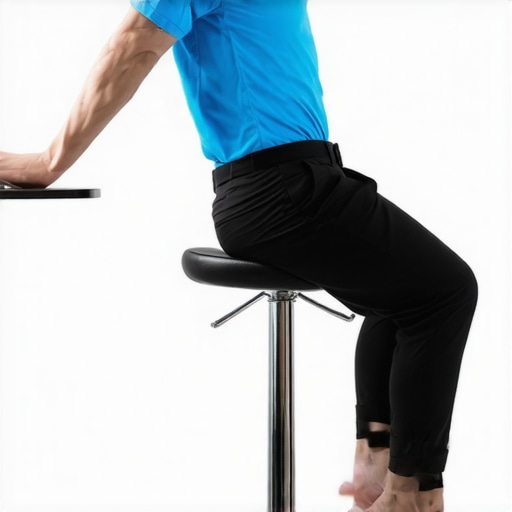
The footrest on a bar stool isn’t there for aesthetics; it is your primary tool for spinal decompression. When your feet are tucked back onto the rungs, it shortens the distance your hip flexors have to travel, which reduces the ‘tug’ on your lower vertebrae. However, there is a trick to it: don’t just rest your toes. Press your mid-foot firmly into the rung. This engagement creates the deep core connection that stops your spine from shear stress. By pushing down slightly, you create an upward lift in your torso that takes the weight off your discs. If you’re wearing flat shoes or flimsy flip-flops, you might notice your back hurts sooner; this is often because your foot arches are collapsing and sending a chain reaction of instability up to your hips. When I started treating the footrest like a platform for leverage rather than a shelf for my shoes, my post-dinner stiffness vanished.
Shift Your Weight Before the Spasm Starts
Static posture is the enemy of a healthy back. Even the ‘perfect’ position will eventually cause blood flow to restrict and muscles to fatigue. I used to try to sit perfectly still, thinking that ‘good posture’ meant being a statue. That’s a recipe for a massive flare-up. Instead, you should adopt ‘micro-movements.’ Every few minutes, alternate which foot is on the rung and which is dangling, or better yet, place one foot on the floor if the stool height allows. This mimics the the chair hack to keep your pelvis neutral while working by constantly changing the load on your sacroiliac joints. If you feel a dull ache starting to creep in, it’s a signal that your psoas is tightening. Using a simple pelvic tilt while seated—tucking your tailbone under and then gently arching back—can act like a pump for your spinal discs, bringing in fresh nutrients and flushing out inflammatory markers. It’s also vital to watch your hip angles; many people make a 90-90 hip mistake by keeping their knees too high, which forces the lower back to round. Keep those knees below your hips, and you’ll breathe a lot easier.
Ditch the Military Posture to Save Your Lumbar Discs
We’ve been told since grade school to ‘sit up straight’ and ‘shoulders back,’ but in my experience as a mobility advocate, this is the quickest way to end up with a chronic mid-back burn. Most people think they are fixing their slouch by pinning their shoulder blades together, but they are actually creating a rigid ‘thoracic extension’ that forces the rib cage to flare up. This doesn’t just look awkward; it creates massive tension in the transition zone where your mid-back meets your lower back. I spent years trying to force this ‘perfect’ alignment until I realized that posture correction secrets that transform back pain outcomes aren’t about being rigid—they’re about being adaptable. When you force a ‘military’ posture on a bar stool, you’re just swapping one type of strain for another, often leading to that deep, gnawing ache that won’t go away.
Does your mid-back feel like it’s made of concrete even after a massage?
If you find yourself constantly rubbing the space between your shoulder blades, you’re likely falling for the ‘over-correction’ trap. This happens when you try to fix a rounded upper back by arching through the spine instead of opening the chest. According to Dr. Stuart McGill, a leading authority on spinal biomechanics, the spine thrives on stability, not forced, unnatural positions. To find real relief, you should focus on a 30-second desk fix for your tight pectoral muscles rather than just pulling your shoulders back. When the front of your body is open, your spine naturally falls into a neutral state without you having to ‘work’ for it. If you’ve ever wondered why your mid-back feels stiff even after a massage, it’s usually because your nervous system is locking those muscles down to protect a spine that feels unstable in its ‘perfect’ position.
Stop Stretching Your Hamstrings for Lower Back Relief
Here is the nuance most ‘stretching’ gurus miss: your hamstrings are often tight because your brain is using them as ’emergency brakes’ for your pelvis. If you have an anterior pelvic tilt, your hamstrings are already being pulled taut like a guitar string. When you try to stretch them further, you aren’t releasing tension; you’re actually irritating the sciatic nerve. I see people at the gym or in bars trying to ‘loosen up’ their legs, not realizing that stretching your hamstrings might be making your back pain worse by increasing neural tension. Instead of reaching for your toes, try the morning glute squeeze that protects your spine all day. By activating the back of your hips, you tell your hamstrings they can finally let go of their protective grip.
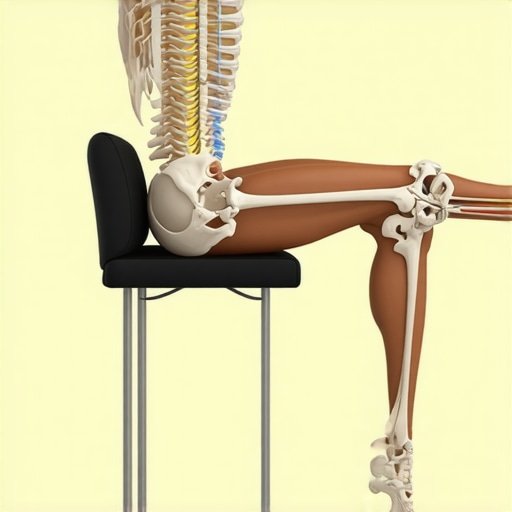
The real ‘oops’ factor in spinal health is confusing muscle tightness with muscle length. When your hamstrings feel ‘tight’ while sitting on a stool, it’s often a sign of why your hamstring stretch is actually hurting your nerves rather than your muscles. If you’ve ever felt a ‘zing’ or a numbness after a long night out, you’ve crossed the line from muscle fatigue into nerve irritation. Have you ever fallen into this trap of thinking a tighter stretch means more progress? Let me know in the comments. We need to move away from the idea that more flexibility is always better. In reality, a stable, slightly stiffer spine is often a much healthier one for daily life.
I used to think that surviving a single night on a bar stool was the ultimate victory. But I quickly learned that the real challenge isn’t just surviving the social event; it’s preventing that one-off stiffness from becoming a permanent fixture in your life. If you don’t have a plan for ‘after-care,’ your nervous system stays in a high-alert, guarded state that keeps your muscles tight for days. I’ve transitioned my focus from just ‘sitting better’ to a lifestyle of mastering your mobility through consistent, small-scale maintenance. It’s the difference between fixing a leak and maintaining the entire plumbing system. We are moving toward a future where wearable haptic feedback sensors will likely tell us exactly when our L5-S1 is under stress, but until then, we have to rely on our own internal biofeedback and the right tools.
Make Spinal Hygiene as Automatic as Brushing Your Teeth
Maintenance isn’t about spending two hours at the gym; it’s about the three minutes you spend decompressing before you jump into bed. I personally swear by the ‘Gravity Reset.’ After a day of fighting gravity on stools or at a desk, I spend five minutes with my legs up the wall. This simple move allows the fluid in your spinal discs to rehydrate and resets the blood flow in your lower extremities. It is a fundamental part of how you can adjust your routine for lasting relief. When I skip this, I wake up with that familiar ‘rusty’ feeling in my hips. As Dr. Kelly Starrett, author of Becoming a Supple Leopard, often points out, most of our back issues are actually ‘downstream’ problems caused by poor mechanics in our hips and ankles. If you ignore the maintenance, you’re just waiting for the next flare-up.
How do I keep my back from regressing after a long week?
The secret is consistency over intensity. You can’t undo forty hours of sitting with one deep-tissue massage on Saturday. I keep a lacrosse ball in my car and one at my desk. Whenever I feel that ‘burn’ starting under my shoulder blade, I use the ball against a wall to perform a simple scapular reset. This prevents the tension from traveling down into my lumbar spine. I also recommend a psoas release tool for anyone who spends significant time on stools. By targeting the tissue that literally anchors your spine, you stop the ‘tug-of-war’ that causes chronic aches. If you find your progress stalling, it might be time to enhance your mobility with expert tips designed for the long game.
Invest in Tools That Actually Reach the Source of the Tension
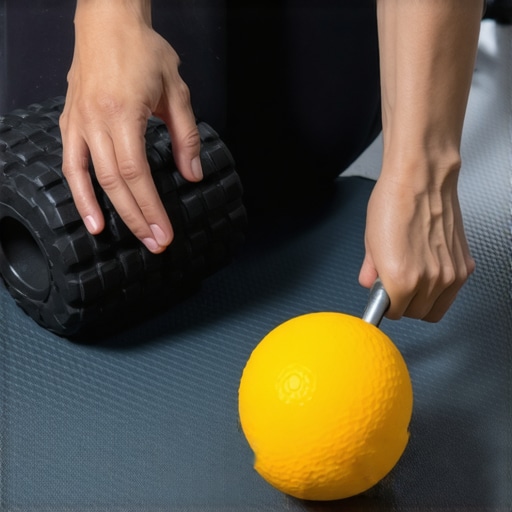
Generic foam rollers are great for large muscle groups, but for the intricate layers of the spine, you need something more surgical. I’ve found that using a ‘peanut’ roller—two balls fused together—allows me to massage the spinal erectors without putting direct pressure on the spinous processes themselves. This tool is essential for anyone trying to unlock better back health at home. When you use these tools, you are essentially performing a form of self-directed neuro-muscular re-education. You’re teaching your brain that it’s safe to let those muscles relax. If you’re dealing with a specific ‘catch’ in your movement, I highly recommend trying the 2-minute habit to fix your forward head posture today. It’s the highest ROI move I’ve found for immediate relief. Stop waiting for the pain to become unbearable before you act; your spine deserves a proactive defense.
The Hard Truths About Living Without Constant Lumbar Stress
After years of trial and error, I’ve realized that pain is a lagging indicator. By the time your L5-S1 starts screaming at the brewery, the postural debt was already piling up throughout your workday. One of the biggest shifts in my perspective was learning why you should stop stretching your hamstrings for back relief and start focusing on pelvic stability instead. It’s not about being a statue of perfect alignment; it’s about giving your nervous system enough variety that it doesn’t feel the need to ‘lock down’ your muscles in a protective spasm.
Another lightbulb moment was realizing that ‘comfort’ is often a trap. The softest couch can be more damaging than the hardest stool if it forces your spine into a C-curve. You have to learn simple exercises to relieve chronic back pain that you can do anywhere, even just subtle weight shifts while waiting for your drink. Your spine thrives on micro-adjustments, not rigid adherence to a ‘correct’ position.
#IMAGE_PLACEHOLDER_E#
My Go-To Kit for Maintaining a Resilient Spine
I don’t leave my spinal health to chance anymore. My toolkit includes a double-lacrosse ‘peanut’ ball for those deep paraspinal releases and a commitment to daily adjustments to alleviate back pain that take less than five minutes. I also highly recommend the book Becoming a Supple Leopard by Dr. Kelly Starrett—it changed how I view human movement. Lastly, never underestimate the power of a firm footrest; it is your primary tool for decompression in any high-seated environment.
Your Body Was Designed to Move With Ease Again
Don’t let the fear of a flare-up keep you from enjoying your social life. With a few simple adjustments to relieve back pain, you can reclaim your seat at the table without the dread of tomorrow’s stiffness. You have the tools now to own that bar stool and keep your lumbar health in check. Have you found a specific ‘perch’ or footrest technique that works for you at high-top tables? Let me know in the comments below!