
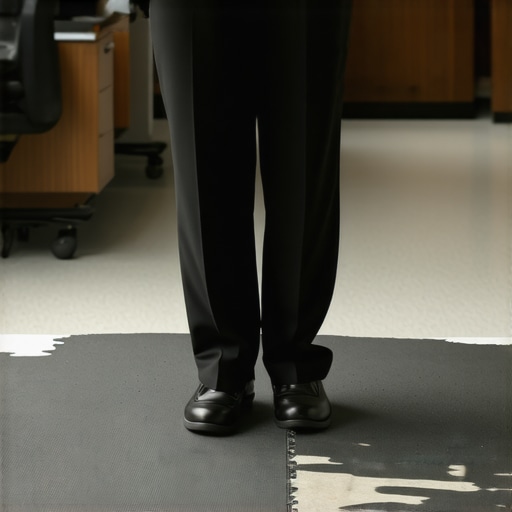
It was a day like any other at my home office, but I felt a sharp twinge in my hips that threw me off balance. I couldn’t ignore how that little discomfort grew into persistent pain, affecting my posture and even my mood. That lightbulb moment made me realize something simple yet overlooked—my office floor mat might be silently hurting my hips more than I thought. Have you ever noticed stiffness or pain after a long day working at your desk, only to shrug it off as part of aging or stress? Well, I found that the culprit could be something as innocuous as where I was standing or sitting.
Why Your Floor Mat Might Be the Hidden Villain in Your Hip Pain
Many people overlook their office environment, assuming the furniture and layout are neutral or even beneficial. But, as I learned through personal experience and expert advice, the type of floor mat you stand or sit on can influence your hip health significantly. An improper mat can alter your natural hip alignment, leading to uneven weight distribution, muscle strain, and, eventually, chronic pain.
According to a study published in the Journal of Bodywork and Movement Therapies, improper support surfaces can contribute to postural misalignments that cascade into hip and lower back issues. This shows how something seemingly minor can have a major impact over time. I made the mistake early on of only focusing on my chair, ignoring how I stood on the floor mat during those quick stretches or when I was on my feet tending to chores. It wasn’t until I started paying attention to the details that I realized how essential this piece of my workspace was.
If you’ve been experiencing unexplained hip discomfort, stiffness after long hours standing, or even misaligned gait, your floor mat could be part of the problem. But don’t worry—these issues are often easy to address once you understand the underlying mechanics.
Are you curious about how to fix this sneaky cause of hip pain? Well, stay tuned. In the next section, I’ll share practical tips and simple adjustments that transformed my daily comfort—and could do the same for you. If you’re ready to tackle this head-on, you might want to consider assessing your current setup or even reaching out to a professional for tailored advice. After all, taking small steps now can save you a lot of discomfort down the line. Interested in learning how minor changes can lead to major relief? Check out [our comprehensive guide on posture correction](https://chiromasteryz.com/posture-correction-secrets-that-transform-back-pain-outcomes) and start your journey to better hip health today.
Assess Your Standing Posture and Mat Setup
Start by evaluating how you stand on your floor mat. Stand barefoot on the mat in your natural stance. Notice if one hip feels higher or if your pelvis tilts forward or backward. To correct this, imagine your pelvis as a bowl of water. If it’s tilting, you can use your core muscles to level it. Engage your abdominal muscles gently to realign the pelvis. A quick check is to place a mirror perpendicular to your side to observe your posture. If you notice uneven hips, this small adjustment can make a big difference in relieving hip strain. For detailed guidance, review simple adjustments to improve your posture.
Choose the Right Floor Mat for Support
Changing your mat can be as simple as switching from a hard rubber mat to a cushioned, anti-fatigue mat. I once replaced my dense rubber mat with a softer, springy foam mat, which immediately reduced the pressure on my hips during long standing periods. Think of it like cushioning a blow: the softer surface absorbs more impact, lessening muscle strain. Look for mats with medium firmness—too soft can cause instability, and too firm can increase joint stress. When selecting your mat, consider its thickness and surface texture. A textured surface prevents slipping and promotes better weight distribution. For a comprehensive shopping list, see mobility drills for hip stiffness.
Incorporate Micro-Movements to Relieve Pressure
During your workday, avoid static positions that lock your hips. Instead, perform micro-movements—small shifts that keep blood flowing and muscles active. For example, every 10-15 minutes, gently sway from side to side or lift one heel at a time. I recall a day when I set a timer to remind me to do ankle circles and hip tilts. Initially, it looked messy—I was fidgeting and shifting awkwardly—but over time, these micro-adjustments became natural, and my discomfort diminished. Think of your hips as a boat; small, continuous shifts keep it steady amidst waves. To learn more effective mobility movements, check top mobility strategies.
Stretch and Strengthen Supporting Muscles
Tight hip flexors and weak glutes are common culprits for hip pain. Incorporate targeted stretches like the Thomas stretch to lengthen your hip flexors and strengthening exercises such as bridges to activate your glutes. One session I did involved lying on my back, pulling one knee to my chest, and holding—then switching sides. Initially, my hip felt more tender, but after consistent practice over a week, I noticed reduced stiffness and pain. Consider adding hip flexor releases and glute activation drills into your daily routine for sustained relief.
Even Small Routine Changes Matter
Adjusting when and how you stand, sit, or move can prevent future pain. For example, elevating your heels slightly with a footrest reduces hip tilt; switching your standing position periodically prevents muscle fatigue. I found that simply shifting my weight from one foot to another every few minutes prevented stiffness. It’s like alternating the steering wheel of a bike—keeps things moving smoothly. For ongoing tips, explore daily adjustments for better posture.
Many assume that achieving good posture and mobility is merely about stretching regularly and maintaining awareness of body positions, but this oversimplification can lead to overlooked nuances and common myths. One prevalent misconception is that stretching alone can fix mobility issues, yet research shows that targeted strengthening and neural reprogramming are often necessary to produce lasting improvements. For instance, a study published in the Journal of Sport and Health Science highlights that passive stretching without active engagement may temporarily improve flexibility but often does not address the underlying motor control deficits contributing to poor posture and chronic pain.
Another trap many fall into is believing that all adjustments are static fixes—once you align your pelvis or modify your chair, the problem is solved. However, true mobility gains come from understanding how your nervous system adapts to movement patterns in real-life scenarios, emphasizing the importance of dynamic, functional exercises rather than isolated static postures.
Have you ever fallen into this trap? Let me know in the comments.
Why Do Some Mobility Exercises Backfire Even When They Feel Good?
A common mistake is to perform high-repetition stretching routines believing more is better, but this can lead to overstretching or destabilizing joints, especially if done without proper engagement of the stabilizing muscles. For example, excessive hamstring stretching without strengthening your core and posterior chain can worsen hip and lower back issues. Integrating both mobility and stability training, as recommended by experts like Gray Cook, ensures balanced progress. Avoid the pitfall of aligning purely on flexibility; instead, focus on re-patterning movement with coordinated efforts.
Furthermore, many underestimate the impact of subtle habitual patterns—such as your sitting angle or the way you carry your bag—that gradually undermine even the best mobility routines. External cues, like ergonomic modifications, combined with neuromuscular training, can prevent these common pitfalls.
To dive deeper into creating effective routines that prevent back pain and improve posture, check out our comprehensive guide on effective posture tips for 2025.
Awareness of these nuances can save you from wasted effort and prevent injury. Remember, consistent small adjustments, mindful movement, and understanding the underlying mechanics are keys to long-term success. Want to optimize your mobility strategy? Start by assessing your routines and consulting a professional for personalized guidance through our contact page.Keeping your posture and mobility improvements effective over time requires more than just initial effort; it demands reliable tools and consistent routines. Personally, I swear by specific equipment and methods that have stood the test of time in my practice and daily life. The first essential in my toolkit is a quality foam roller, specifically the TriggerPoint GRID foam roller. Its textured surface and firmness allow me to target deep muscle tension in my hips and back, preventing stiffness from creeping back in, especially after long periods of sitting or standing. I use it every morning and evening, integrating simple rollouts into my routine. Research indicates that foam rolling can enhance tissue quality and improve range of motion, which aligns perfectly with my experience.
How do I maintain mobility over time?Three Surprising Truths I Discovered About Hip Relief
One of the most eye-opening lessons I learned was that tiny details in my daily routine—like the firmness of my standing mat or subtle posture adjustments—could make or break my comfort. I realized that ongoing hip pain isn’t just about stretching or strengthening, but also about how I support my body during routine movements. This insight pushed me to focus on holistic support, including proper footwear, balanced standing habits, and mindful micro-movements, which I now see as essential to lasting relief.
Another lesson was the importance of listening to my body’s signals. Often, I ignored mild discomfort, thinking it was just part of aging or stress. But soon, I recognized that persistent aches are messages, urging me to re-evaluate my workspace setup, movement patterns, and daily habits. Recognizing these signs early helped me implement simple changes before minor issues snowballed into chronic pain, reinforcing the power of mindfulness.
Lastly, I discovered that consistency trumps intensity. Instead of long, infrequent sessions of mobility exercises, integrating short, daily micro-movements and posture checks transformed my approach. These small, regular adjustments provided cumulative benefits, preventing stiffness and pain from creeping back. It taught me that sustainable change is built on tiny, deliberate steps, a principle I now advocate to everyone seeking better mobility and pain-free living.
My Go-To Arsenal for Ongoing Mobility Success
Real change required trusted tools and resources. First, I swear by the mobility strategies highlighted in this comprehensive guide. They helped me reprogram movement patterns and restore natural joint function. Next, a high-quality foam roller, like the TriggerPoint GRID, became my daily reset ritual, soothing tight muscles and maintaining flexibility. I also rely on targeted stretches and strengthening routines from trusted mobility drills, which keep my hips and back resilient. Lastly, staying connected with experts through consultations has been invaluable for personalized advice, encouraging sustained progress and confidence in my journey.
Take Small Steps, Experience Big Changes
If you’re tired of feeling limited by hip pain or stiffness, remember that you’re not alone—and lasting relief is within your reach. Prioritize consistent micro-movements, mindfulness in your daily habits, and proper workspace ergonomics. Your journey toward better mobility and pain-free living begins now. Curious to see how tiny adjustments can lead to major improvements? Don’t wait—start today and explore our expert-backed posture tips for 2025 to guide your next step. What small change will you try first to improve your hip comfort? Share your plan below—let’s inspire each other to move better and live pain-free.