
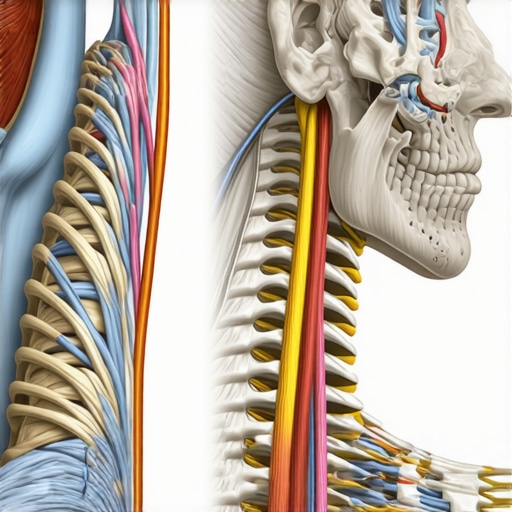
I remember the moment it hit me. I had been battling nagging wrist pain for weeks, trying every stretch and posture adjustment I could find. Yet, no matter what I did, the pain stubbornly lingered. Frustration turned into curiosity, and then finally, a lightbulb moment. It wasn’t just my wrist; it was my neck, subtly sending pain signals down to my hand. That realization transformed how I approached my discomfort—and it can do the same for you.
Uncovering the Hidden Connection Between Your Neck and Wrist Pain
Many people, including myself early in my journey, wrongly assume that wrist pain stems solely from repetitive strain or overuse. We tend to focus on the site of pain, thinking the problem is localized. But here’s the truth that surprised me: your neck can be the root cause, subtly influencing your wrist’s health. When your cervical spine isn’t aligned properly, it can irritate the nerve pathways that travel down your arm, leading to sensations like numbness, tingling, or even persistent aches.
Now, does this mean your wrist is innocent? Not entirely. It’s crucial to recognize that multiple factors contribute, but overlooked neck issues often play a significant role. I made the mistake early on of ignoring my neck altogether, only treating the wrist—trust me, it’s a mistake that hampers recovery. Understanding this connection opens up a new path toward relief.
Before diving into practical solutions, I want to ask: have you ever experienced wrist pain that persisted despite rest or ergonomic adjustments? If so, keep reading; what you learn here might just change your approach to pain relief.
Is It Really Worth the Hype to Look at Your Neck?
This question often crosses my mind when I see patients or my own clients skeptical about the neck’s influence on distal pain. It’s understandable—our initial instinct is to target the obvious source, like the wrist or hand. But research indicates that nerve compression or misalignment in the cervical spine can cause radiating pain far from their origin. An article in the Journal of Orthopaedic & Sports Physical Therapy highlights how cervical nerve root compression can lead to upper limb symptoms, including wrist discomfort.
Early in my work, I wrongly believed that my wrist pain was only mechanical, caused by repetitive motions. I didn’t realize that a simple cervical adjustment could alleviate symptoms I’d suffered from for months. The mistake? Ignoring the neck entirely. That’s a lesson I now share freely—sometimes, the key to lasting relief is in the cervical spine.
As we explore this topic further, I’ll share how to identify if your neck might be involved and practical steps to address it. Stay tuned—your pain-free wrist might be closer than you think, just a neck adjustment away.
Straighten Your Posture with Micro-Adjustments
Begin by evaluating your sitting setup. Sit upright with your back against the chair, ensuring your head aligns over your shoulders. Use a small cushion or lumbar roll if needed to support the natural curve of your lower back. As I once did after noticing persistent wrist discomfort, I placed a rolled towel behind my pelvis during work hours. This tiny tweak made my neck slightly more aligned, reducing nerve irritation that contributed to wrist pain. Remember, consistent small corrections can cumulatively improve your posture and nerve health. For detailed strategies, check out https://chiromasteryz.com/posture-correction-secrets-that-transform-back-pain-outcomes.
Many people fall for oversimplified notions about mobility and posture, thinking that just stretching or popping a few joints will solve their back pain or alignment issues. However, as an expert in spinal health, I’ve seen that these beliefs often overlook critical nuances that can lead to ineffective treatments or even worsen the problem. For instance, the widespread myth that cracking your neck relieves tension ignores the complex relationship between joint mobility, nerve pathways, and muscular tension. In reality, repetitive self-manipulation without proper understanding can lead to ligament laxity or joint instability, which may perpetuate pain rather than resolve it.
Another common misconception is that increased flexibility always equals better mobility. While flexibility is beneficial, excessive or forced stretching can cause microtears or overstretching of ligaments, ultimately destabilizing the joint. Instead, the focus should be on improving controlled movement and strengthening surrounding muscles.
Beware of the trap of purely mechanical approaches. Many assume that adjusting posture or mobilizing joints in isolation will permanently fix issues. But true long-term improvement requires a holistic perspective, addressing neuromuscular control, proprioception, and habitual movement patterns. Incorporating strategies like those outlined in mastering mobility can lead to far more sustainable results.
What many don’t realize is that the nervous system plays a pivotal role in proper movement and posture. For example, persistent tightness might be a neurological protective response rather than a true muscular shortness. Recognizing when pain or stiffness is neurogenic allows for targeted interventions, such as nerve gliding exercises—more sophisticated than basic stretching.
An essential warning: avoid the temptation to believe that single adjustments or quick fixes will produce lasting change. Repeatedly, I’ve seen cases where patients seek quick fix methods like aggressive joint cracking, only to find their condition deteriorates over time. Instead, gradual, controlled, and well-informed adjustments, combined with mobility mastery, provide transformative results. To deepen your understanding, explore comprehensive approaches at this resource.
In summary, challenge your assumptions about mobility and posture. Embrace complexity over simplicity, and prioritize strategies that consider neurological, muscular, and skeletal factors. Do you know other myths that block progress? Let me know in the comments!Maintaining optimal mobility and posture over the long term requires the right equipment and practices. One tool I personally rely on is a high-quality foam roller, specifically the TriggerPoint GRID foam roller. I use it daily to release trigger points in my back and hips, which helps maintain flexibility and ease tension accumulated from daily activities. Its grid pattern mimics professional hands-on therapy, providing targeted pressure that’s adaptable to different areas of the body.
Another essential item is a cervical support pillow, like the TEMPUR-Neck pillow. I find it invaluable during sleep because it promotes proper alignment of the neck and reduces morning stiffness. Proper support during rest is critical because it sets the foundation for good posture throughout the day.
For posture correction during work hours, I recommend a sit-stand desk converter such as the VariDesk. Switching between sitting and standing helps prevent stiffness and nerve compression caused by prolonged static positions. I personally adjust my desk every 30 minutes, which research shows can significantly reduce discomfort and improve circulation.
Digital tools also play a role. I utilize posture reminder apps like Upright GO, which gently vibrates if I slouch. This instantaneous feedback trains me to recognize and correct my posture real-time. Consistency with these tools ensures long-term benefits; otherwise, old habits tend to resurface.
Looking ahead, the trend indicates a move towards integrated, smart posture systems that combine wearable sensors with AI to give personalized feedback. This evolution could make maintaining proper alignment effortless and more precise.
<--!?Image placeholder increasing in importance-->
How do I maintain these tools over time? Regular maintenance, including cleaning and checking for wear, ensures they remain effective. For example, foam rollers should be cleaned monthly to prevent dirt buildup, and replacement is recommended after approximately six months of daily use. For software apps, updating them periodically ensures compatibility and new feature access.
Investing in quality tools makes a noticeable difference. If you’re serious about keeping your mobility in top shape, try incorporating the TriggerPoint foam roller or a cervical pillow into your routine this week. Consistent use can prevent minor discomforts from turning into chronic issues, saving you time and pain long-term. Want more personalized guidance? Reach out through our contact page for tailored recommendations.
Lessons That Changed My Perspective on Mobility and Pain
One of the most profound realizations I had was that progress often comes from questioning long-held beliefs. For instance, I used to believe that stretching alone could fix all mobility issues, but I discovered that neuromuscular control and habits play a bigger role than mere flexibility.
Another insight was understanding the importance of integrating small, consistent adjustments into daily routines rather than relying on quick fixes. These micro-movements accumulated over time, leading to lasting improvements in posture and pain relief.
I’ve also learned that the mind-body connection is powerful. Recognizing neurogenic factors behind stiffness or discomfort opened new avenues for targeted interventions, like nerve gliding exercises, which I hadn’t considered before.
Finally, embracing a holistic approach—addressing skeletal alignment, muscular tension, and nervous system health—transformed my approach from reactive to proactive, empowering me to maintain better mobility and reduce pain long-term.