
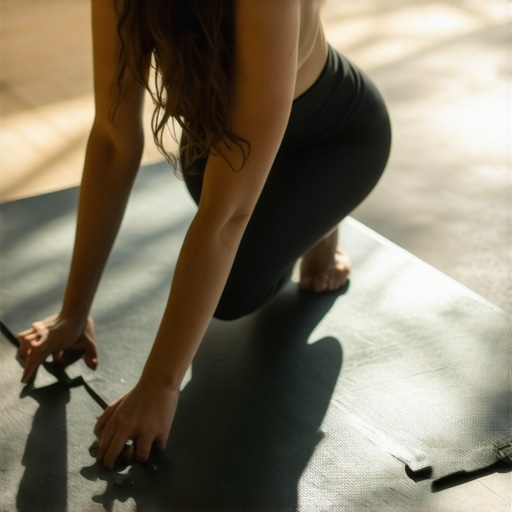
I’ll never forget the Tuesday I actually got stuck. Not emotionally, but physically—bent over the sink trying to brush my teeth, my lower back decided it was done for the day. It’s that ‘rusty’ feeling, right? Like someone poured sand into your hips while you slept. I spent years thinking this was just my new normal, a tax for surviving my twenties, but I was wrong. We aren’t supposed to feel like a stack of dry wood. Today, I’m showing you the exact movement sequence that fixed my morning creaks and why your current morning routine to decompress your spine before coffee might be the missing piece of your sanity. I used to think the answer was more caffeine, but it turns out my joints just needed an oil change.
Give Your Body a Proper Oil Change Before Breakfast
When we sleep, our joints don’t get much circulation. Think of your joints like a car engine in sub-zero temperatures; you can’t just redline it immediately. You need movement to stimulate synovial fluid, which is essentially your body’s natural WD-40. According to Harvard Health, regular movement is the primary way to keep cartilage nourished because it doesn’t have its own blood supply. I made a huge mistake for a long time by trying to ‘power through’ the stiffness with aggressive static stretches right after waking up. I’d reach for my toes and wonder why stretching my psoas was making my back hurt more. The secret isn’t pulling on the cold muscle; it’s gently gliding the joint to get that fluid moving. If you’ve ever felt like your spine pops when you take a deep breath, you know exactly the kind of internal friction I’m talking about. We need to stop the friction before it starts.
Is this actually worth the extra five minutes of sleep?
Look, I’m a neighborly guy, and I value my snooze button as much as anyone. But here is the reality: those five minutes are the difference between a day spent in ‘survival mode’ and a day where you actually feel light. You might be skeptical that such a short routine can enhance your mobility, but it’s about consistency over intensity. Have you ever felt that sudden ‘catch’ in your hip or neck the moment you stand up? That’s your body screaming for a little lubrication. I promise you, once you feel the difference, you won’t go back to the ‘zombie hobble.’ Have you faced that terrifying moment where you aren’t sure if your back will actually straighten out in the morning?
Stop Reaching for Your Toes and Start Gliding
The first rule of a pain-free morning is to stop the aggressive static stretching. When your back is tight, your brain is sending a signal to protect the area. If you try to force a stretch, the brain actually tightens the muscle even more to prevent a tear. I learned this the hard way when I tried to perform a deep hip stretch right out of bed; instead of feeling loose, I spent the rest of the day feeling like my L5-S1 was being squeezed by a vice. This is why the 90-90 hip stretch mistake is so common. You have to earn the right to stretch by moving first.
The Pelvic Tilt That Actually Works
Think of your pelvis as a bucket full of water. If you tip it forward, water spills out the front; tip it back, it spills out the back. Most of us live in a state where the ‘water’ is always spilling forward, which jams the joints in our lower back. To fix this, lie on your back with your knees bent. Gently press your lower back into the floor by tilting your pelvis toward your chin. Don’t lift your butt off the floor. This is a subtle glide, not a workout. Mastering the simple pelvic tilt resets the tension in your lumbar spine and tells your nervous system that it is safe to move.

Breathe Into Your Ribs to Unlock Your Spine
Most people do not realize their neck tension starts in their diaphragm. If you are a ‘chest breather,’ your neck muscles (scalenes) have to work 20,000 times a day just to pull air in. This constant pulling is often how your mouth breathing habit is locking up your neck muscles. To break the cycle, place your hands on the sides of your lower ribs. Inhale through your nose and try to push your hands outward with your breath. When you breathe through your ribs to ease lower back tension, you create internal pressure that naturally decompresses the vertebrae from the inside out. It is like using a car jack to lift the pressure off a flat tire.
Reset Your Shoulders Without Thinking About It
Once your lower back and breath are settled, you need to address the ‘hunch.’ Most of us try to fix posture by pulling our shoulders back, but that just creates more tension. Instead, try the ‘back pocket’ trick. Imagine you are trying to tuck your shoulder blades into your opposite back pockets. This downward and inward movement engages the lower trapezius. Combining this with the shoulder blade squeeze will instantly open your chest. If you feel stuck, the 30-second wall reset is the ultimate way to reinforce this position. I remember the first time I did this sequence correctly—I stood up and felt about two inches taller, simply because I was not fighting my own anatomy to stand straight. To truly master your mobility, you have to treat these movements as a conversation with your body, not a command.
Most people think if something feels tight, the solution is to pull on it until it gives up. But here is the secret: tension is often a defensive strategy by your nervous system. If your brain perceives a lack of stability, it will ‘lock’ certain muscles to protect your spine. This is why why stretching your hamstrings might be making your back pain worse. You are essentially trying to take away the only brake system your body has left. When I first started my mobility journey, I thought I was ‘stiff,’ but I was actually just unstable. I spent years attacking my symptoms while ignoring the fact that my body was simply trying to survive.
Your tight hamstrings are a shield and not the enemy
We have been told for decades that touching your toes is the gold standard of health. However, if your pelvis is constantly tilted forward, your hamstrings are already being pulled like a guitar string. Stretching them further just irritates the sciatic nerve. Instead of mindlessly reaching for the floor, you need to address the root cause of that tension. Many people find that once they engage the deep core connection that stops your spine from shear stress, their hamstrings miraculously ‘loosen’ without a single stretch. This is because the brain finally feels safe enough to let go of that protective guarding. 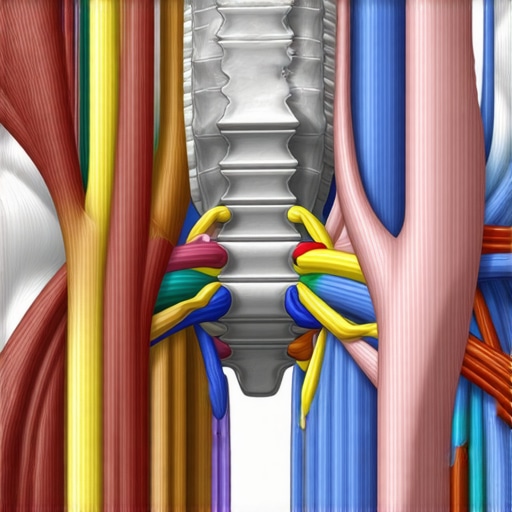
Why does my back still ache even though I am flexible?
This is the million-dollar question for many yoga enthusiasts and athletes. The answer lies in the ‘Joint-by-Joint’ approach popularized by strength coach Mike Boyle and physical therapist Gray Cook. Their research suggests that the body is a stack of alternating segments: the ankles need mobility, the knees need stability, the hips need mobility, and the lumbar spine must have stability. If you are ‘too flexible’ in your lower back because you have over-stretched, your muscles will spasm to create the stability you lack. To truly enhance your mobility, you must stop treating your body like a collection of isolated parts and start treating it like a connected system. If one joint isn’t doing its job, the next one up the chain will pay the price.
Stop the self-cracking loop before you damage your ligaments
One of the most dangerous ‘traps’ I see people fall into is chronic self-adjusting. We have all been there—that satisfying ‘pop’ that provides thirty minutes of relief. But have you noticed the stiffness always comes back faster? This is because why self-cracking your neck makes the stiffness come back faster is rooted in hypermobility. You are likely ‘popping’ the joints that are already moving too much, rather than the ones that are actually stuck. This leads to ligament laxity, making you feel even more unstable over time. It is a similar issue with the truth about posture braces and muscle atrophy; when you rely on an external force or a quick fix to feel ‘loose,’ your internal stabilizers go on vacation. Have you ever fallen into the trap of stretching a ‘tight’ spot only to feel worse an hour later? Let me know in the comments below!
Why your $1,000 chair is secretly failing your spine
I used to believe that if I just spent enough money on a high-end ergonomic chair, my back pain would vanish like magic. It turns out that even the most expensive seat in the world can’t save you if you don’t know how to use it. In fact, why your expensive desk chair might be giving you false sciatica is usually due to the way it encourages you to turn off your core muscles entirely. When we lean back into those mesh supports, our deep stabilizers go on vacation, leaving the heavy lifting to our ligaments. This is why I eventually ditched the ‘bells and whistles’ for a simpler setup. I found that mastering the chair hack to keep your pelvis neutral while working did more for my L5-S1 than any lumbar pillow ever could. It’s not about the equipment; it’s about the alignment you maintain within that equipment.
How do I maintain these mobility gains for the long haul?
The biggest mistake I see people make is treating their mobility like a 30-day challenge. If you want results that last into your 70s, you have to transition from ‘fixing a problem’ to ‘spinal hygiene.’ I’ve adopted a specific set of daily adjustments to alleviate back pain and improve posture that take less time than brewing my morning coffee. Maintenance isn’t about doing an hour of yoga; it’s about the small wins. For instance, I use a simple tennis ball every evening while watching TV to roll out the fascia in my feet. You would be shocked at how to use a tennis ball to release tension in your feet and back simultaneously. This works because the plantar fascia is the starting point of the entire posterior chain of your body. If the feet are tight, the back is tight. It’s a low-cost tool with a high-stakes payoff.

As we look toward the next decade of wellness, I predict we will see a massive shift away from passive devices. While many people still fall for the marketing of ‘posture braces,’ the clinical reality is far different. The truth about posture braces and muscle atrophy is that they teach your body to become weak and dependent. The future of spinal health lies in biofeedback and active awareness, not in strapping yourself into a corset. According to Dr. Stuart McGill, the world-renowned expert on lower back biomechanics and author of The Back Mechanic, ‘spinal hygiene’—the way you move, sit, and stand throughout the entire day—is significantly more impactful than any single exercise performed in a gym. He argues that most back injuries are the result of ‘accumulated micro-trauma’ from poor daily habits rather than a single traumatic event.
To really master your mobility, you need to be proactive about your environment. I personally swear by the 2-inch rule for your laptop stand to save your neck from strain. It seems small, but that tiny elevation changes the entire leverage of your skull on your cervical spine. If you are serious about posture correction secrets that transform back pain outcomes, you have to look at your workspace. I encourage you to try this right now: Raise your monitor so the top third is at eye level. It will feel strange for ten minutes, but by the end of the day, your upper back will thank you. If you’ve been struggling with that persistent ‘burn’ between your shoulder blades, the simple scapular reset for instant shoulder tension relief is the advanced tip you’ve been missing. Don’t just read this and move on—adjust your screen height right now and feel the pressure lift off your neck.
Three Hard Truths I Learned While Rebuilding My Spine
After years of trial and error, I had a massive lightbulb moment: my back wasn’t actually ‘bad,’ it was just bored and neglected. One of the hardest truths to accept is that spinal health isn’t something you achieve once; it is a conversation you have every single day. I used to think I needed a complex hour-long routine, but I found that simple, daily spinal alignments were far more effective than a once-a-week yoga marathon. Also, don’t ignore your environment. If you unlock better back health by fixing your workspace, you stop the damage before it even starts. Most importantly, learn to trust your body’s signals—that ‘tight’ feeling is often a request for movement, not a warning to stop.
#IMAGE_PLACEHOLDER_E#
My Personal Toolkit for Staying Limber Every Day
If you are ready to take this seriously, I highly recommend checking out The Back Mechanic by Dr. Stuart McGill; it completely shifted how I view spinal stability. For physical tools, I keep a tennis ball under my desk at all times—nothing beats it for quick relief. To truly enhance flexibility, I also suggest looking into functional movement patterns rather than just static stretching. If you ever feel overwhelmed or need specific guidance, don’t hesitate to reach out via our contact page or consult a professional who can assess your unique biomechanics.
Your Body Is Waiting for You to Lead
It is easy to feel like your body is failing you when you’re in pain, but your spine is incredibly adaptable. You don’t need to be perfect; you just need to be consistent. Every time you choose to glide instead of force, or breathe through your ribs instead of your chest, you are casting a vote for a future where you move with ease. The road to moving without pain starts with that very first morning tilt. Have you found that a specific morning habit or desk adjustment made the biggest difference for your back stiffness? Let me know in the comments below!