

I remember one Tuesday morning last November. The sky was that bruised shade of grey, and a fine drizzle was hitting the window. I tried to swing my legs out of bed, and *bang*—my lower back felt like it had been fused with rusted iron. It wasn’t a new injury; it was just that familiar, heavy ‘rainy day back’ that makes every movement feel like you are wading through wet cement. I stood there, gripping my dresser, wondering why on earth my joints seemed to have a better weather forecast than the local news station. [IMAGE_PLACEHOLDER]
Your Spine Really Does Know When a Storm is Coming
If you have ever felt like a walking barometer, you aren’t imagining things. When the atmospheric pressure drops—which usually happens right before a storm—the fluids in our joints can actually expand. This isn’t some old wives’ tale; it is physics. This expansion puts tiny amounts of extra pressure on already sensitive nerves. I used to make the massive mistake of thinking the best response to this stiffness was to stay perfectly still under a heavy blanket. I thought I was protecting myself, but I was actually letting my muscles seize up even further. Now, I know that [mastering your mobility](https://chiromasteryz.com/master-your-mobility-top-strategies-for-moving-without-pain) is the only way to counteract that seasonal slump. We are going to solve this today by looking at why the cold locks you up and how to use specific movements to ‘thaw’ out those stubborn lumbar segments before the first cup of coffee.
Is the weather-pain connection actually just in your head?
I get the skepticism. For years, some doctors dismissed this, but a notable study published in *Pain Medicine* confirmed that changes in barometric pressure and ambient temperature are significantly associated with increased back pain intensity for many chronic sufferers. My ‘lightbulb moment’ came when I realized that my [morning routine to decompress my spine before coffee](https://chiromasteryz.com/the-morning-routine-to-decompress-your-spine-before-coffee) needed to be twice as long on rainy days just to achieve the same result. You have to respect the environment your body is living in. Have you ever felt that sudden, sharp ‘lock-up’ the moment the temperature dips or the humidity spikes? It is a frustrating cycle, but once you understand the ‘why’ behind the ache, we can start implementing [simple exercises to relieve chronic back pain](https://chiromasteryz.com/mobility-mastery-simple-exercises-to-relieve-chronic-back-pain) that actually work when the clouds roll in. We aren’t just going to wait for the sun to come back out; we are going to change how your body reacts to the cold.
Waking Up Your Pelvis Before You Stand Up
Think of your spine on a rainy morning like an old, cast-iron engine. You cannot just turn the key and floor it; you have to let the oil circulate first. Before your feet even touch the cold floor, stay in bed and perform [the simple pelvic tilt that makes sitting for hours painless](https://chiromasteryz.com/the-simple-pelvic-tilt-that-makes-sitting-for-hours-painless). It is a tiny, rocking movement of your hips that pumps fluid back into those dry, compressed discs. I remember a morning last February when I ignored this. I jumped out of bed to grab a ringing phone, and my lower back seized so hard I had to crawl to the kitchen. It was a messy, painful reminder that cold muscles are brittle. By rocking your pelvis for just sixty seconds, you are essentially ‘greasing the gears’ and signaling to your nervous system that it is safe to move without triggering a protective spasm. 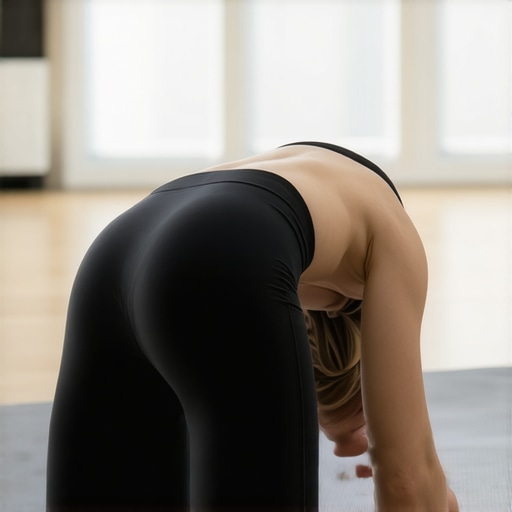
Stop the Pressure Before it Starts
Once you are upright, your main goal is to create space between those vertebrae that the barometric pressure is trying to squish together. This is where you implement [the morning routine to decompress your spine before coffee](https://chiromasteryz.com/the-morning-routine-to-decompress-your-spine-before-coffee). Think of your spine like a vertical accordion. When the weather is damp and heavy, that accordion gets stuck in the closed position. You need to use gravity to your advantage. Finding a sturdy countertop or the back of a couch to lean your weight into allows your lower back to ‘hang’ and decompress. I’ve found that doing this for just two minutes—focusing on letting my belly relax toward the floor—drops my pain levels from a ‘grumpy six’ to a ‘manageable two’ before I’ve even started the kettle.
The Psoas Release You Have Been Missing
Many people focus entirely on the back of their body when it hurts, but the real culprit is often hiding in the front. Your psoas muscle connects your spine to your legs, and when it gets cold, it tightens like a guitar string, pulling your lumbar spine into a painful arch. You must master [the psoas release that finally stops your deep lower back ache](https://chiromasteryz.com/the-psoas-release-that-finally-stops-your-deep-lower-back-ache) to counteract this. It is like releasing the tension on a bowstring. When I first started doing this, I realized my ‘back pain’ was actually just my hip flexors acting like a pair of tight suspenders pulling my spine forward. Stretching the front of your hips effectively ‘thaws’ the connection between your lower and upper body.
Floss Your Nerves to Quiet the Ache
When joints expand due to low pressure, they don’t just squeeze bone on bone; they pinch the nerves. This is why you might feel that buzzing or tingling down your leg. Instead of aggressive stretching, which can actually irritate a nerve further, you should use ‘nerve glides.’ Imagine a piece of silk thread running through a straw. If the straw is bent or dirty, the thread gets stuck. [The nerve glide that calms sciatica pain in seconds](https://chiromasteryz.com/the-nerve-glide-that-calms-sciatica-pain-in-seconds) helps that nerve slide smoothly through its pathways again. I use this technique whenever I feel that sharp ‘lightning bolt’ sensation during a thunderstorm. By gently pointing and flexing your foot while your leg is extended, you ‘floss’ the nerve, reducing inflammation and signaling the brain to turn down the pain volume. Mastering these [simple exercises to relieve chronic back pain](https://chiromasteryz.com/mobility-mastery-simple-exercises-to-relieve-chronic-back-pain) turns you from a victim of the weather into a master of your own mobility.
Most people reach for their toes the moment they feel that rainy-day stiffness, thinking that a long, deep stretch is the cure. But here is the contrarian truth that most beginners miss: why stretching your hamstrings might be making your back pain worse. When your back is unstable, your brain sends a signal to your hamstrings to tighten up to act as ’emergency brakes’ for your spine. If you force them to stretch, you are essentially cutting your own brakes. It is a common ‘oops’ factor that leads to more micro-tears and instability rather than relief. I spent years trying to ‘stretch away’ the pain, only to realize I was making my lumbar spine more vulnerable.
Stop Stretching Your Hamstrings if Your Back Hurts
The nuance that often gets lost in basic mobility advice is the difference between muscular tightness and neural tension. A study published in the Journal of Biomechanics suggests that for many chronic back pain sufferers, the issue is not a lack of flexibility but a lack of ‘stiffness’—the healthy, protective kind—in the core. This is why you need to understand the deep core connection that stops your spine from shear stress. We often mistake a protective neural lock for a simple tight muscle. If you force a stretch when the body is in protective mode, the nervous system reacts by tightening the area even further. 
Is your ‘tightness’ actually a protective neural lock?
This is a question I wish I had asked myself years ago when I was first starting my recovery. If you find that your muscles feel tight again just ten minutes after a long stretching session, you are likely not dealing with a short muscle; you are dealing with a nervous system that is on high alert. Aggressively pushing through this can actually irritate the nerves. Instead of more intensity, you need to follow master your mobility: top strategies for moving without pain, which focuses on resetting the brain’s perception of threat rather than just pulling on tissue.
The Hidden Trap of Over-Lengthening Your Psoas
Wait, let’s look at another common trap: why stretching your psoas might actually be making your back hurt more. If your pelvis is already tilted too far forward—a common result of modern desk life—stretching an already over-lengthened psoas just adds more strain to the lumbar discs. This is where unlocking better posture with simple adjustments becomes critical. You have to ensure your pelvis is neutral before you try to release the front of your hips. If you don’t, you’re just tugging on the bottom of your spine. Have you ever fallen into this trap of stretching a ‘tight’ muscle only to feel worse the next day? Let me know in the comments.
Why Professional Adjustments Target the Nervous System
Finally, we have to debunk the idea that an adjustment is just about ‘putting a bone back in place.’ That’s a huge simplification. In reality, how an adjustment restores more than just range of motion is about the neurological input to the brain. It’s like rebooting a frozen computer. By providing a high-velocity, low-amplitude input to a ‘stuck’ joint, you are clearing the static in the communication line between your spine and your brain. This is why you often feel a sense of clarity or ‘brain fog’ lifting immediately after. It isn’t just mechanical; it is biological.
Once you understand that an adjustment is a neurological reset, the focus shifts to how you keep that ‘software update’ from crashing. I’ve spent thousands of dollars on fancy ergonomic chairs and massage guns, but the most profound shift in my daily comfort didn’t come from a gadget; it came from maintaining my ‘spinal hygiene.’ This is a concept championed by Dr. Stuart McGill, a world-renowned expert in spine biomechanics at the University of Waterloo, who argues that the way we move during our ‘off hours’ matters more than the hour we spend at the gym. For me, that meant moving beyond passive stretching and into active maintenance. I started using a firm foam roller not just to roll, but to specifically target thoracic extension. If you haven’t tried it, the proper way to use a foam roller on your upper back is a game-changer for desk-bound workers who feel that mid-day burn.
Why Your Daily Setup Is Your Most Important Mobility Tool
Maintenance isn’t just about what you do when you’re in pain; it’s about the environment you inhabit for eight hours a day. I realized my ‘ergonomic’ chair was actually encouraging a pelvis tuck that killed my lumbar curve. Now, I use a simple lumbar roll and ensure my screen is at eye level. I cannot stress enough how much the monitor height hack for preventing c7-t1 nerve pressure saved me from those late-afternoon tension headaches. If you’re working on a laptop, you’re essentially asking for a neck injury. I predict that by 2025, we will see a massive surge in biofeedback wearables that vibrate the moment your shoulders slump forward, forcing us to engage our postural muscles in real-time. Until then, you have to be your own sensor. 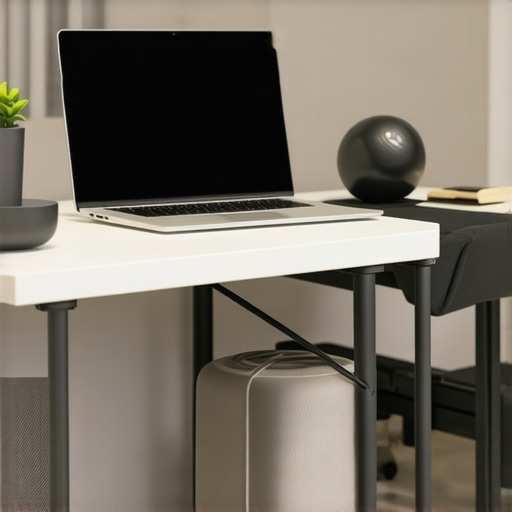
How do I maintain my spinal alignment while working a 40-hour week?
The secret isn’t a better chair; it’s frequent, micro-adjustments. I set a timer for every 30 minutes to perform a quick scapular reset. This prevents the ‘creeping’ slouch that eventually leads to permanent structural changes. You should also adjust your routine with daily spinal alignments for lasting relief by incorporating standing breaks. When I’m standing, I use a lacrosse ball under my feet to break up the plantar fascia tension that eventually tugs on my calves and lower back. It sounds small, but how to use a tennis ball to release tension in your feet and back is one of the most effective mobility hacks I’ve ever shared. It’s about creating a lifestyle where movement is ‘greased’ into your day rather than treated as a chore.
As we look toward the future of back care, the trend is clearly moving away from ‘fixing’ problems and toward unlocking better back health with effective posture tips for 2025. We are moving into an era of proactive stability. If you want to scale your results and move without that constant ‘nagging’ sensation, you need to master the basics of core bracing during mundane tasks. I want you to try one thing today: Apply the 2-inch rule for your laptop stand to save your neck from strain and see if your energy levels don’t double by 3 PM. You’ll be surprised how much brain power you gain when your nervous system isn’t busy screaming at your neck muscles to hold up your ten-pound head. Maintenance is the difference between a one-week fix and a lifetime of freedom, so start enhancing your mobility with expert tips that focus on the long game.
Why My Progress Kept Resetting Every Winter
For years, I fell into the trap of ‘seasonal maintenance’—I would only focus on my back when it hurt. The hardest lesson I learned is that your nervous system has a long memory. If you only move when you are in a state of crisis, your brain begins to associate movement with threat rather than relief. My biggest lightbulb moment was realizing that daily adjustments to alleviate back pain and improve posture are not just about fixing a sudden ache, but about teaching your body that it is safe to remain flexible regardless of the barometric pressure. I also discovered that the truth about posture braces and muscle atrophy is something most people ignore until their core becomes completely dependent on external support. Consistency on the sunny days is what actually builds the resilience that saves you when the storm clouds finally roll in.
The Minimalist Kit for Spinal Freedom
You don’t need a room full of expensive equipment to stay mobile during a cold snap. My essential toolkit is focused on high-impact, low-cost items that I use every single day. First is a simple lacrosse ball for foot releases, which is surprisingly effective at unlocking better posture with simple adjustments that start at your base. Second, a firm foam roller is non-negotiable for my thoracic spine. Finally, a portable lumbar roll ensures that no matter where I am sitting, my lower back isn’t being forced into a slump. These aren’t just gadgets; they are environmental anchors that keep my nervous system calm. If you want to stay ahead of the curve, I highly suggest looking into these expert tips for easier movement in 2025 to keep your approach to health as modern as your lifestyle.
Your Weather Forecast Doesn’t Have to Be Your Destiny
It is easy to feel like a victim of the climate, but your anatomy is much more adaptable than you give it credit for. By integrating these specific micro-movements and postural resets into your daily routine, you are building a ‘weather-proof’ spine that can handle the heaviest dampness and the sharpest cold. Do not wait for the next flare-up to decide to master your mobility. Start right now, even if it is just sixty seconds of movement before your next meeting. You have the tools, the science, and the plan; now you just need the first step. Have you noticed your back pain flares up more during sudden rainstorms or when the winter temperature drops? Let me know your experience in the comments below!