

I remember it vividly—the day I thought I could single-handedly move a solid oak bookshelf across my living room. I didn’t want to wait for help. I leaned over, grabbed the base, and heaved. That sickening ‘pop’ in my lower back wasn’t just a sound; it was a three-day sentence to a heating pad and a bottle of ibuprofen. We’ve all been there, standing over a box of old books or a delivery that’s heavier than it looks, thinking, ‘I can handle this.’ Then, the next morning, your spine feels like it’s been replaced by a rusty hinge.
Your Spine Doesn’t Have to Suffer for Your Chores
Everyone tells you to ‘lift with your legs,’ but if it were that simple, I wouldn’t have spent years nursing a cranky lumbar. My biggest mistake early on was ‘ego lifting.’ I thought because I stayed active, I could ignore the physics of my own body. I was wrong. The truth is, most of us are one bad pivot away from a flare-up. By making a few daily adjustments to alleviate back pain and improve posture, you can prep your body for the heavy lifting life throws at you. Today, I want to share the exact method I use to move boxes without feeling like I’ve aged twenty years by sunset. Whether you are learning how to lift a toddler without blowing out your l5-s1 or just moving house, these rules apply.
Is it really possible to lift heavy stuff without any pain?
You might be skeptical, especially if you have a history of ‘throwing your back out’ just by sneezing. However, the secret lies in managing shear stress on your vertebrae. According to the Mayo Clinic, back pain is one of the most common reasons people seek medical help, yet so much of it stems from avoidable mechanical errors. Have you ever felt that sharp, hot twinge the second you stood up with a heavy load? I’d love to hear about your most ‘heroic’ and painful lifting fail—does it still bother you today? Before we dive into the grip, we have to talk about the morning glute squeeze that protects your spine all day, because a stable spine starts long before you reach for that cardboard box. Let’s get into the nitty-gritty of the setup.
Turn Your Midsection into a Human Back Brace
Before your hands even touch the object, you need to create a pressurized ‘shield’ around your vertebrae. Think of your torso as a soda can; when it is full and pressurized, you can stand on it without it buckling. If it is empty and crinkled, it collapses under the slightest weight. Most people make the mistake of sucking their stomach in, but you actually want to expand your lower ribs and brace your abs outward. I learned this the hard way when I tried to shift a massive patio planter. I hadn’t properly engaged my deep core connection that stops your spine from shear stress, and halfway through the lift, I felt my stability evaporate. Now, I always start with a sharp exhale to set the ribs and then a ‘brace’ as if someone is about to poke me in the stomach. 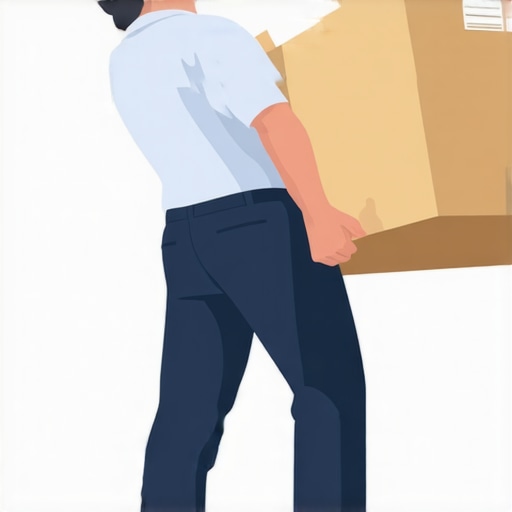
Breathe Through Your Ribs to Stay Stable
If you hold your breath while lifting, your blood pressure spikes and your muscles tense in the wrong way. You need to learn how to breathe through your ribs to ease lower back tension while maintaining that abdominal pressure. It sounds like rubbing your head and patting your stomach, but once you master it, you’ll feel a sense of ‘armored’ stability in your lumbar spine that makes even heavy boxes feel lighter.
Hug the Box Like You Never Want to Let Go
Physics is a cruel mistress. The further an object is from your center of gravity, the more its effective weight multiplies. Holding a ten-pound box at arm’s length can put hundreds of pounds of pressure on your discs. You want that box touching your shirt. When I was helping a friend move last summer, I watched him try to ‘reach’ for a crate of books. I stopped him and showed him how to pull the crate against his belt buckle before even standing up. This simple change reduces the standing error that puts 50 pounds of pressure on your l5-s1 for every inch of distance. If you aren’t getting your knees dirty by getting close to the load, you aren’t doing it right.
Let Your Hips Take the Heavy Hit
Your spine is a delicate stack of bones designed for movement and support, not for being a crane. Your glutes and hamstrings, however, are massive powerhouses designed specifically for heavy labor. Instead of bending at the waist, you must ‘hinge’ at the hips. Imagine there is a string pulling your tailbone straight back toward the wall behind you. This stretches the hamstrings and loads the glutes. If you find your feet turning out awkwardly, it might be the real reason your feet turn out when you squat, which can throw off your balance. Keep your shins as vertical as possible and drive through your heels.
Step Your Way Through the Turn
The absolute fastest way to end up in a clinic is to ‘twist’ while holding weight. Your spinal discs are incredibly strong against vertical pressure but surprisingly weak against rotation. If you need to turn while carrying a load, move your feet. Never, ever rotate from the waist. Use small, shuffling steps to point your whole body in the new direction. I once saw a guy ‘throw’ his back out just by pivoting his torso to put a grocery bag in the trunk while his feet stayed planted. If you feel a ‘click,’ it might be why your lower back pops when you straighten up after a long day of moving.
While avoiding the ‘twist’ is basic safety, the real secret to a bulletproof spine is understanding that mobility without stability is a recipe for disaster. One of the biggest myths I see in the fitness world is the obsession with ‘flexibility’ as a cure-all. People often spend twenty minutes a day trying to touch their toes because they think a tight back means tight muscles that need lengthening. In my experience, why stretching your hamstrings might be making your back pain worse is a hard lesson many learn the long way. If your hamstrings feel like steel cables, it is often because your nervous system is using them as a secondary stabilizer because your core isn’t doing its job. By forcing them to relax, you remove the body’s natural ‘brake’ system, leaving your lumbar discs to take the full hit of a heavy lift. Have you ever fallen into this trap of over-stretching? Let me know in the comments—you aren’t alone.
The Posture Brace Trap That Weakens Your Core
Another common ‘oops’ moment is reaching for a store-bought back brace or posture corrector the second things start to ache. It feels great for an hour because it does the work for you, but that is the danger zone. The truth about posture braces and muscle atrophy is that your deep stabilizers essentially ‘go to sleep’ when an external strap takes over the responsibility of keeping you upright. You want to build an internal brace, not buy a velcro one. This is why learning the deep core connection that stops your spine from shear stress is far more valuable than any gadget. Dr. Stuart McGill, a world-renowned expert on spine biomechanics, emphasizes that spinal health is about managing ‘stiffness’ and ‘load’ rather than just chasing ‘loose’ muscles. When you wear a brace, you stop training that natural stiffness, leaving you even more vulnerable once the brace comes off.
Why does your middle back still feel stuck even after a deep tissue massage?
It is incredibly frustrating to pay for a massage only to have that familiar ‘burning’ sensation return by the time you drive home. Often, why your mid-back feels stiff even after a massage is because the issue isn’t actually the muscle—it’s the rib cage or a lack of thoracic mobility. If your ribs aren’t moving correctly when you inhale, your lower back will try to compensate by over-moving during daily tasks, leading to those chronic flare-ups. This is where the diaphragm release for stiff mid-back muscles comes in. If your breathing is shallow, your spine is never truly supported from the inside out.
Look at Your Feet Before You Blame Your Back
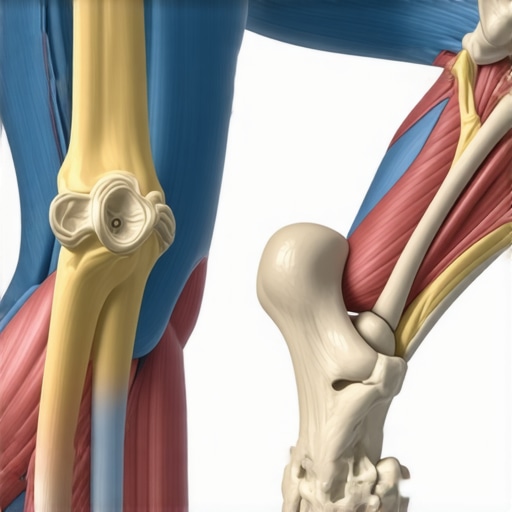
We rarely think about our shoes when we are lifting boxes, but the foot arch connection to your chronic lower back spasms is profound. If your arches collapse, your knees cave inward, which forces your pelvis to tilt forward. This puts your L5-S1 disc at a mechanical disadvantage before you even touch the object you’re trying to move. Strengthening your foundation is just as important as the lift itself. By combining top strategies for moving without pain with a solid understanding of your own mechanics, you can finally stop fearing the heavy lifting life requires. Remember, the best posture isn’t a static ‘perfect’ position; it’s the ability to move through different positions without losing control of your spine’s stability.
The One Tool That Saved My Spine During Long Commutes
I used to think ergonomic chairs were a scam until I realized I was using them wrong. My personal holy grail isn’t a thousand-dollar office throne; it is a simple McKenzie Lumbar Roll I keep in my car. If you have ever wondered about the real reason your sciatica flares while driving, it is usually because most car seats are designed for ‘comfort’—which inevitably leads to a C-shaped slump—rather than spinal integrity. By placing that firm foam roll right at my belt line, I force my lumbar spine into its natural lordotic curve. This is not just about comfort; it is about mechanical advantage. Dr. Kelly Starrett, a physical therapy expert and author of Becoming a Supple Leopard, discusses the importance of creating torque and maintaining a neutral spine to avoid ‘leaking’ energy and causing micro-trauma. When I am in my car now, I am essentially training my body to adjust your routine daily spinal alignments for lasting relief instead of letting my discs slowly compress under vibration.
How can I keep my back healthy without a daily professional appointment?
Consistency beats intensity every single time. You do not need a lifestyle overhaul; you need what I call ‘trigger movements.’ I use the transition from my desk to my car as a physical reminder to check my pelvic position. If you can unlock better back health with effective posture tips for 2025, you will realize that the ultimate goal is to make these corrective movements entirely subconscious. My favorite long-term maintenance strategy is the ’30-second wall check.’ Every time I get up to refill my water, I back up against the nearest wall to ensure my heels, glutes, and shoulder blades are making contact. This quick calibration helps me master your mobility with top strategies for moving without pain because it resets the brain’s internal map of where ‘center’ actually is.
The Future of Your Spine is Probably Wearable
I am predicting that within the next few years, we will move away from ‘guessing’ how we stand or sit. We are already seeing a massive shift toward wearable biofeedback sensors that use haptic alerts to nudge you when your shoulders begin to roll forward. I have been experimenting with a small device that clips to my collar, and the data was a wake-up call; it showed me exactly when my energy dips and my posture follows suit. This kind of tech is going to revolutionize how we enhance your mobility with expert tips for easier movement in 2025 because it removes the ‘human error’ of forgetting to stay upright. Instead of waking up with a flare-up, you get a gentle vibration to fix the problem before the inflammation sets in. If you want to start today without the tech, make sure you use the side sleeper pillowing trick for optimal spine alignment to ensure your eight hours of rest are actually restorative. I challenge you to try the 30-second wall reset right now—stand up, find a flat surface, and feel the immediate change in your height.
The Hardest Realizations I Faced on My Journey to a Pain-Free Spine
First, I had to accept that there is no such thing as a ‘perfect’ posture that you can just set and forget. Your spine is built for movement, and the best way to protect it is to keep it guessing with varied, controlled positions. Second, the fear of movement is often more debilitating than the movement itself; when we ‘guard’ our back by moving like a robot, we actually create more tension and stiffness. Finally, I learned that mobility mastery involves simple exercises that address the root cause rather than just chasing the symptoms of a flare-up. It is about the small, daily wins—not just the big lifts.
#IMAGE_PLACEHOLDER_E#
My Personal Toolkit for Guarding Against Gravity
If you want to move from theory to practice, I highly recommend a few specific staples. First, get your hands on ‘Becoming a Supple Leopard’ by Dr. Kelly Starrett; it is the definitive manual for human movement. For the car or office, a McKenzie Lumbar Roll is non-negotiable to maintain that natural curve. I also swear by a standard lacrosse ball for self-myofascial release, especially when you need to target the glutes or that deep ache in the hips. If you are struggling with a specific ‘catch’ in your movement, exploring the psoas release that finally stops your deep lower back ache can be a complete game-changer for your functional range.
Take Your Power Back From the Fear of Heavy Lifting
You were not born with a ‘bad back.’ You were born with a highly complex, incredibly resilient system that sometimes gets its signals crossed due to modern living. By integrating these posture correction secrets that transform back pain outcomes, you are giving your body the permission it needs to function correctly. Don’t let a past injury dictate your future. Start small, stay consistent, and remember that every time you hinge properly or breathe through your ribs, you are making a deposit into a lifelong ‘spine health’ account. You have the tools now to enhance flexibility and top mobility strategies for a truly active life. I promise you, the freedom of movement is worth the effort. Have you ever found a specific tool or exercise that felt like it ‘reset’ your entire back? Let me know in the comments below!