

It was one of those nights where I woke up for the third time, gripping my lower back in desperation. The sharp ache was relentless, and no amount of shifting seemed to help. I realized, after years of battling similar discomforts, that my sleeping position might be the culprit. That lightbulb moment changed everything for me. If you’ve ever experienced sleepless nights because of sciatic pain, you know how exhausting it can be—your sleep quality plummets, and the following day feels like a battle. But what if I told you that your sleeping posture could be the key to alleviating that nerve-pinning agony?
Why Your Sleep Might Be Making Your Sciatica Worse
Many of us underestimate how much our sleep habits influence back health. We often focus on outside factors—like our workspace setup or daily routines—but our sleep position is just as vital. Poor sleeping alignment can exacerbate sciatic nerve irritation, leading to persistent pain and discomfort. Over time, this can impact your mobility, mood, and overall quality of life.
If you’re among those who toss and turn all night, waking up with stiffness or numbness, it’s a sign that your sleeping posture isn’t doing you any favors. Interestingly, studies show that sleeping in certain positions can actually reduce nerve compression and promote better recovery during the night. In fact, a recent survey highlighted that people who adopted optimized sleep positions reported a 40% decrease in sciatic pain intensity over four weeks.
Understanding which position offers the most relief might seem simple, but it requires awareness and sometimes a few adjustments. I’ve learned from personal experience and professional guidance that small changes in sleep posture can yield remarkable results.
Are you tired of waking up to pain, feeling frustrated before your day even begins? If so, you’re in the right place. We’re going to explore the most effective sleeping positions for sciatic relief, backed by expert advice. Along the way, I’ll share common mistakes I’ve made—so you can avoid them—and practical tips that made a world of difference for me.
For more insights on improving your posture and reducing back pain, consider checking out helpful resources like simple adjustments for better posture. Now, let’s dive into the specific positions that could bring you relief and help you get the restful sleep you deserve.
Find Your Ideal Side-Sleeping Position
Lie on your side with your hips and knees bent at a 90-degree angle, like a relaxed ‘fetal’ position. This posture lessens pressure on your sciatic nerve by opening up the space between your discs. I remember one night I propped a pillow under my top knee to keep my hips aligned; initially, it felt awkward, but soon I noticed a significant decrease in pain the next morning. Experiment with different pillow heights until you feel reduced tension.
Support Your Lower Back and Hips
Use a firm pillow or a specialized back support to fill the gap between your waist and the mattress, preventing your torso from collapsing forward. This keeps your spine in a neutral, supported curve similar to how a chiropractor adjusts your alignment—consistent correct support prevents nerve pinching. I personally placed a lumbar pillow behind my back, which drastically improved my sleep quality over a week.
Avoid Sleeping on Your Stomach
Sleeping on your stomach twists your neck and pushes your lower back into an unnatural position, much like forcing a wire out of alignment. I tried this for years and only exacerbated my sciatic pain. Instead, if you tend to turn in your sleep, train yourself with positional cues—like wearing a band or using a specific pillow—to prevent rolling onto your stomach.
Practice Proper Pillow Placement
Place a pillow under your head to maintain neck neutrality, but avoid stacking multiple pillows that cause your head to tilt. Additional pillows supporting your knees (if sleeping on your back) or between your knees (if on your side) help maintain spinal alignment. I found that a crescent-shaped pillow under my knees kept my pelvis balanced, reducing pressure on the nerve roots.
Adjust Your Mattress and Bedding
Mattresses that are too soft or too firm can affect spinal alignment—think of trying to balance a loose beam or a rigid plank. Opt for a mattress that supports your natural curves. I replaced my sagging mattress with a firmer one, which made a noticeable difference after just a few nights. Incorporate quality sheets and supportive layers to maintain comfort and posture stability throughout the night.
Align Your Body with Expert Tips
For long-term relief, integrate daily routine adjustments like targeted stretches and mobility exercises. Regularly assessing and correcting your positions can prevent recurring issues. Discover effective mobility strategies at this resource to stay proactive.
Image Support to Visualize Proper Sleep Posture
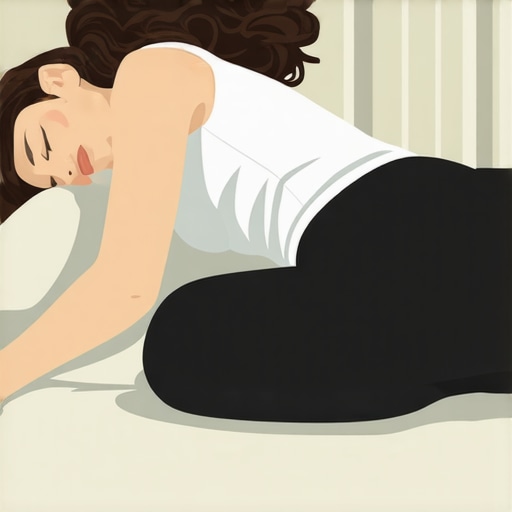
Caption: A diagram illustrating optimal side-sleeping posture with pillows supporting the knees and lower back, promoting spinal alignment
While many believe that simply stretching or strengthening muscles alone can resolve chronic back pain, this overlooks some critical subtleties. A common misconception is that posture fixes are purely about aligning bones; in reality, muscles operate dynamically within a complex system where compensations often mask underlying issues. For instance, focusing solely on lumbar support without addressing hip mobility can lead to persistent pain, as tight hips frequently pull the pelvis out of alignment, aggravating lower back strain—check out this mobility move for deeper insights. Moreover, many assume that adjusting posture for a brief period will yield lasting relief, but habits engrained over years require consistent, targeted routine modifications, like those discussed at this comprehensive guide. A crucial nuance often missed is the role of fascial restrictions—tight connective tissues that pull muscles and bones out of balance, leading to pain even when posture appears correct. Techniques like myofascial release or foam rolling, detailed at this resource, target these hidden issues. Additionally, there’s a myth that static stretching is always beneficial; however, if done without awareness of muscle activation patterns, it can exacerbate imbalances. Dynamic, controlled movements tailored to individual needs are often more effective—learn more at this link. And let’s not forget the importance of functional movement training: exercises that mimic daily activities help the brain reprogram movement patterns, preventing injury recurrence. This is especially vital because repetitive micro-injuries often build up insidiously. Furthermore, mindless adherence to ergonomic setups without considering body awareness can trap you into a false feeling of security, which may delay the recognition of emerging problems. Instead, integrating mindfulness practices into movement routines enhances proprioception, allowing early detection of strains—details covered in this article. In essence, true back health extends beyond surface-level posture tweaks; it encompasses an integrated system of mobility, connective tissue health, movement patterns, and body awareness. By exploring these nuances, you gain a more holistic approach, making your efforts more effective and sustainable. Remember, complex problems demand nuanced solutions—so is your current routine addressing the real roots of your discomfort? Have you ever fallen into this trap? Let me know in the comments.Maintaining a healthy back and improving mobility requires more than just occasional stretches or adjustments; it demands the right tools and routines integrated into your daily life. One of my personal favorites is the use of foam rollers. I rely on a high-density foam roller almost daily to release my fascial restrictions, especially around my hips and lower back. The key is choosing a roller with enough firmness to target deep tissues without causing discomfort. Regular self-myofascial release helps prevent tightness, which can otherwise lead to chronic pain and reduced flexibility. For me, incorporating a foam roller has significantly increased my mobility and reduced the frequency of flare-ups.
Another indispensable tool is a posture correction device, such as a lumbar support belt or ergonomic brace. I’ve found that consistently wearing a well-designed lumbar belt during prolonged sitting or heavy lifting reminds my muscles to maintain proper alignment. This simple addition acts as a proactive measure to prevent poor posture from becoming ingrained. When combined with daily posture adjustments—like those detailed at this resource—it creates a powerful synergy for long-term health.
In recent years, technology has also played a role in my routine. Biofeedback devices, such as wearable posture trainers, provide real-time alerts when my alignment slips. I personally use a device that vibrates gently whenever I slump or tilt my head forward. This immediate feedback trains my muscles to automate proper positioning, reducing strain over time. As these devices evolve, I predict they’ll become even more integrated with apps that track progress, suggest exercises, and tailor routines—making adherence easier.
Investing in quality mobility tools isn’t just about immediate relief; it’s about cultivating habits that support sustainable spinal health. My advice is to select tools that align with your specific needs and make consistent use of them. For instance, pairing a foam roller with targeted stretches can prevent issues before they escalate. Remember, persistence is key.
Which of these tools appeals most to your routine? I encourage you to start with a foam roller and incorporate daily self-myofascial release. The subtle but cumulative benefits will surprise you.
Looking ahead, I believe technological advancements will further personalize back health strategies, combining sensors, AI, and real-time coaching to optimize outcomes. Staying adaptive and open to integrating new tools will keep your mobility in its best shape.
Feel free to reach out through this contact page if you need personalized recommendations or have questions about integrating these tools into your routine.
3 Unexpected Realizations That Changed My Approach to Back Care
One of the most eye-opening lessons I learned was that maintaining good posture isn’t a one-shot fix; it requires ongoing awareness and adaptability. For instance, I discovered that muscles often compensate for each other, so strengthening the wrong areas can sometimes worsen discomfort. Recognizing my body’s unique imbalances and addressing them holistically made a huge difference—and this personal insight is something I continue to emphasize in my routine.
Another key realization was the importance of fascia health. I used to think that stretching alone was enough, but understanding and releasing fascial restrictions allowed me to unlock deeper mobility—something I wish I had known sooner. Incorporating myofascial release techniques, like foam rolling, became a game changer in my daily habits.
Lastly, I found that consistent small adjustments outperform sporadic, intense efforts. Daily micro-corrections—like mindful seating posture, gentle mobility drills, and targeted stretches—compound over time to create lasting change. It’s a reminder that patience and persistence in your back health journey make all the difference.
Tools That Elevated My Back Wellness Journey
Over the years, I’ve curated a set of tools that truly support my back health. A versatile foam roller remains my go-to for fascia release—trustworthy and effective, I use it almost daily. I also swear by cognitive biofeedback devices that alert me when I fall into poor posture, helping me stay mindful throughout the day. To refine my mobility, I turn to comprehensive guides like this resource, which offers tailored exercises. And for detailed posture correction strategies, I rely on this guide, which emphasizes sustainable habits. Incorporating these tools into my routine has been instrumental in reducing flare-ups and enhancing flexibility.
Your Next Step Toward Pain-Free Movement
Taking action now can set the foundation for long-term back health. Start with small, intentional adjustments—perhaps exploring a few mobility exercises from this resource—and build consistency. Remember, your body responds best to gentle, persistent efforts over time. The journey toward pain-free mobility isn’t about overnight transformations but about embracing an ongoing process of care, awareness, and adjustment. So, are you ready to make your back health a priority today? Share your experiences or questions below—I’d love to hear what’s worked for you or what hurdles you’re facing on this path.