
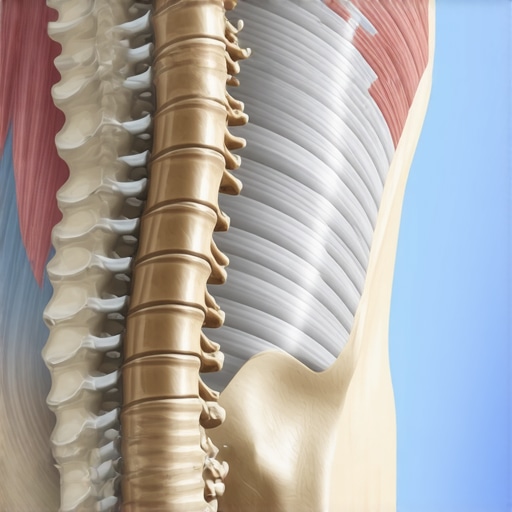
Yesterday, I reached a breaking point during my morning stretch—my back suddenly cramped up, and I felt like I was being pulled apart at the seams. It was a jarring reminder of how fragile our spine can be when it’s not properly supported from within. For years, I struggled with nagging back discomfort, trying countless stretches and routines that only temporarily masked the pain. Then, I had that lightbulb moment—realizing that there’s a crucial deep core connection that, when established, can truly protect your spine from shear stress.
Why Your Spine Needs More Than Just Surface-Level Support
Most people think that strengthening your abs or doing regular stretches is enough to keep back pain at bay. But I learned early on that superficial fixes often fall short. The real game-changer came when I understood how the deep core muscles act as an internal corset—stabilizing the spine when you move, breathe, or even sit at your desk. Without this internal support, shear stress—those forces that slide and distort our vertebrae—can wreak havoc over time, leading to chronic pain or even injury.
Scientists have shown that engaging the deep core reduces shear stress on the spine significantly. According to a study published in the Journal of Biomechanics, spinal stability isn’t just about surface muscles; it relies heavily on the deep intrinsic muscles that snugly hold your vertebrae in place during movement. Yet, early in my journey, I made the mistake of focusing only on visible abs and neglecting these vital deep muscles. That oversight allowed shear stress to accumulate, sometimes painfully.
Do you ever feel strain or discomfort after sitting for long periods, or perhaps an ache that doesn’t quite come from the surface? You’re not alone—and the good news is, there are specific, effective ways to reinforce that deep connection, turning it into your body’s natural armor. Over the next sections, I’ll guide you through simple routines and mindsets I wish I knew earlier. Curious to see if this connection is part of your struggle? Keep reading, and let’s uncover the secret to a resilient, pain-free spine.
Activate Your Deep Core Muscles During Daily Movements
Start by mastering diaphragmatic breathing, which engages the transverse abdominis—the body’s natural corset. Lie on your back with knees bent, place a hand on your chest and another on your abdomen. Breathe deeply through your nose, feeling your stomach rise without moving your chest. Exhale slowly, tightening your abdominal muscles. Practice this for 5 minutes daily to develop conscious control over your deep muscles.
Incorporate Functional Strengthening Exercises
Once you can activate your deep core consciously, integrate exercises like the ‘Dead Bug.’ Lie on your back, knees bent at 90°, arms extended toward the ceiling. Slowly lower your right arm and left leg towards the floor, keeping your back flat. Return to start and switch sides. Think of this as orchestrating a controlled sway, stabilizing your spine during movement. Messy at first, but consistency improves core stability, reducing shear stress over time. Check out these exercises for more practical routines.
Practice Postural Adjustments Throughout the Day
Every hour, assess your sitting position—ensure your pelvis is neutral, shoulders relaxed, and head aligned over your shoulders. Imagine your spine as a stack of balanced blocks; avoid hunching or over-arching. Visualize this like stacking plates: each must sit evenly for stability. For instance, during a recent workday, I used a mirror to check my posture, correcting my lumbar curve and preventing fatigue. Use small cues or reminders to maintain awareness, which reinforces the deep core connection needed for long-term support.
Use Movement Patterns That Reinforce Core Engagement
Integrate movements that mimic real-life demands while activating your internal corset. For example, during a squat, focus on bracing your abdominal muscles before descending—this tactile cue improves stability. Think of bracing like tightening a belt around your waist before lifting an object; it primes your core. Keep your chest lifted, knees tracking over toes, and avoid collapsing into your knees. This approach trains your deep muscles to activate automatically, shielding your spine from shear stresses. Want a guided routine? Explore these mobility drills to turbocharge your progress.
Reinforce Deep Core with Breath and Movement
Combine breath control with movement for optimal activation. During daily activities, inhale to expand your rib cage, then gently exhale and contract your core muscles simultaneously. Picture filling a balloon with air, then tightening the strings to keep it stable. This synergy minimizes unwanted shear forces during dynamic tasks like bending or reaching. Earlier, I noticed that integrating breath with movement allowed me to stabilize my spine more effectively, especially during sudden shifts or lifting. Practice this during routine tasks to internalize the deep core connection and diminish the risk of injury or pain recurrence.
Remember, building a resilient spine means training your deep muscles to work before symptoms appear. Consistency in these movements and mindful posture will gradually create a natural internal support system, reducing shear stress and safeguarding your back long-term. For more tailored strategies, consider exploring expert mobility tips and how to implement daily adjustments that align with your unique body mechanics.
Dispelling the Myth of Perfect Posture
Many believe that achieving perfect posture is the universal solution to back pain, but this oversimplification can be misleading. Proper alignment is undeniably beneficial; however, rigidity and obsession with “perfect” posture may actually restrict natural movement and muscular engagement. Instead, focus on dynamic postural habits that promote resilience, such as varying your positions and integrating movement throughout the day. Rigid adherence to static postural ideals often neglects the nuanced function of our muscles and the importance of adaptive flexibility, as highlighted by research in Manual Therapy journals, emphasizing the need for functional mobility over static perfection.
Common Missteps in Mobility Training
One of the most frequent errors is targeting isolated muscles without considering the holistic movement patterns. For instance, stretching hamstrings aggressively can sometimes increase pelvic tilt issues if not balanced with core strengthening and hip mobility work. The key nuance is understanding how interconnected our musculoskeletal system is—focusing solely on one area may inadvertently create imbalances elsewhere. Incorporating exercises that promote integrated movement, rather than isolated stretches, ensures you’re stimulating the nervous system to adapt appropriately; find out how to balance this through practical routines like those in top mobility strategies.
Is Flexibility Always the Answer in Back Pain Relief?
Contrary to popular belief, increased flexibility isn’t the universal remedy. Over-flexibility, especially without proper control, can compromise stability and lead to hypermobility injuries. Instead, focus on enhancing your body’s ability to control its range of motion, emphasizing strength and neuromuscular control. According to a study in the Journal of Orthopaedic & Sports Physical Therapy, controlling movement and engaging deep stabilizers plays a crucial role in pain reduction and injury prevention. This means that mobility isn’t just about stretching; it involves retraining your nervous system to activate muscles correctly during functional movements. Think of it as tuning your body’s motor control rather than just loosening stiff tissues. Would you like to learn more about controlled mobility routines? Check out these exercises.
Warning: The Hidden Trap in Posture Correction
A common pitfall is overemphasizing posture correction without addressing underlying control and muscular engagement. This approach can lead to a cycle of temporary fixations, with the individual returning to poor habits once the corrective device or cue is removed. The real benefit comes from integrating proprioceptive awareness into movement patterns, enabling your body to naturally find optimal alignment under dynamic conditions. An illustrative example is the use of strategic cues during functional movements, which reinforce adaptive positioning rather than static snapshots of ‘good posture.’ For a practical guide, see posture correction secrets.
Remember, the key to true mobility and pain-free movement lies in understanding the complex interplay of muscles, nervous system, and habitual patterns. Instead of chasing elusive perfect postures or isolated stretches, aim for integrated control and resilience. Have you ever fallen into this trap? Let me know in the comments.
Keeping your spine and mobility routines effective over time demands the right tools and consistent adjustments. Personally, I rely heavily on a combination of specialized equipment and digital resources that serve both as anchors and guides in my journey toward lasting back health. One staple in my toolkit is the **Bosu Balance Trainer**. Its unstable surface challenges deep core engagement, forcing activation of stabilizing muscles during exercises like squats or plank variations. I use it daily because it not only improves proprioception but also enhances my ability to maintain proper posture during dynamic movements, thus reducing shear stress on my spine. For example, incorporating **Bosu-assisted dead bugs** amplifies core strength and helps me sustain spinal stability under load.
How do I maintain mobility tools over time?
Regular inspection ensures that equipment like the Bosu remains inflated and free from tears, maintaining its effectiveness. I also integrate a **foam roller** into my routine, targeting fascial restrictions that can compromise movement patterns. I prefer the **Rumble Roller** for its textured surface, which effectively releases tight muscles in my back and hips—areas crucial for spinal health. Additionally, I leverage digital applications such as **Mobility Mastery** and **Master Your Mobility**, which provide guided routines tailored to common postural issues and pain points. These platforms are invaluable for tracking progress and tackling specific mobility barriers systematically. Looking ahead, I predict that personalized, AI-driven rehabilitation tools will become the norm, offering real-time feedback and adaptive programming that align with individual biomechanics. This evolution promises to make long-term maintenance more intuitive and accessible. Stay consistent—integrating these tools thoughtfully into your daily routine can lead to remarkable improvements. One advanced tip I recommend trying is the **dynamic diaphragmatic breathing combined with instability exercises**; this enhances neuromuscular control, which is foundational for spinal resilience. Want to give it a shot? Explore guided routines in Mobility Mastery and see how they transform your movement quality.
The Hardest Lesson I Learned About mobility, adjustments, posture, and back pain
One of the most profound insights I discovered is that quick fixes and superficial routines can be tempting but ultimately incomplete. I used to think that stretching or muscle-strengthening alone would solve my back issues, but I kept hitting walls and setbacks. The real breakthrough came when I realized that consistent, mindful engagement of the deep core muscles creates a resilient foundation that supports every movement and position, preventing shear stress from sneaking in and causing damage.
My Essential Tools for Building a Pain-Free Spine
Over the years, I’ve curated a toolkit that makes a tangible difference: the Bosu Balance Trainer challenges my stability and deep core activation during functional movements. The guided routines from Mobility Mastery help me fine-tune my neuromuscular control and prevent imbalances. Additionally, a personalized digital app offers me adaptive progressions, making consistency manageable and motivating. These tools aren’t just gadgets; they’re allies in my daily journey toward lasting back health.
Embracing Change: The Heart of Lasting Transformation
What truly fuels my progress is an attitude shift—seeing mobility and posture as dynamic, integrated parts of my life rather than rigid prescriptions. Every habitual movement, posture correction, or breathwork session is an opportunity to reinforce my internal support system. It’s about small, intentional changes, like bracing before a squat or checking my pelvis during long sitting periods, that compound over time, rewriting the story my spine tells. If you’re ready to take ownership of your back health, starting with awareness is key; just imagine what your body can achieve when its internal balance is restored and nurtured daily.
Want to Feel Confident in Your Movement Again?
Remember, meaningful change isn’t about perfection—it’s about consistent effort and listening to your body’s subtle signals. Embrace the journey, stay curious, and celebrate each step forward. If you’re wondering how to begin, consider exploring posture correction strategies tailored to your unique body mechanics. What’s the one movement or habit you’ve hesitated to adjust that could make a real difference? Share your thoughts below—your story might inspire someone else to start their own transformation.