
I remember the morning I couldn’t even grip my favorite coffee mug. It wasn’t just a slight ache; it was that terrifying, pins-and-needles static that makes your hand feel like it belongs to someone else. I stood in my kitchen, shaking my arm like a Polaroid picture, desperate for some blood flow, but the numbness wouldn’t budge. If you’ve ever felt that sharp zing when typing or woken up at 3 a.m. with fingers that feel like they’re encased in concrete, you know exactly the kind of frustration I’m talking about. For the longest time, I thought I was headed straight for a surgical consult, but it turns out I was looking at the problem all wrong. Today, I want to show you how a specific, gentle movement—something we call a nerve glide—can act like a reset button for your median nerve, providing the kind of relief that stretches alone simply can’t touch.
Stop Living with Hands that Feel Like Static
Many of us make the same mistake I did early on: we treat the wrist like an isolated island. I spent months wearing a rigid brace and doing basic wrist stretches for office workers, only to find the tingling came back the second I sat down at my desk. The reality is that your nerves aren’t just strings; they are more like garden hoses that need to slide and glide through your muscles and joints. When they get ‘snagged’ by inflammation or poor positioning, they start screaming in the form of numbness. I’ve learned that wrist pain often stems from the neck or shoulders, and if you don’t address the whole path, you’re just putting a band-aid on a dam break.
Does a simple movement really beat a heavy wrist brace?
It sounds too good to be true, doesn’t it? I was the biggest skeptic until I realized that braces can actually cause muscle atrophy if you rely on them too much. According to the American Academy of Orthopaedic Surgeons, nerve gliding exercises help the median nerve move normally through the carpal tunnel, which is essential for reducing the pressure that causes those painful symptoms. By using a nerve glide that calms tingling, you’re essentially flossing the nerve through its pathway to clear out the ‘junk’ and restore communication between your brain and your fingertips. It’s not about force; it’s about finesse. Have you ever felt like your wrist braces were actually making your hand feel weaker over time? Let’s dive into why we need to stop squeezing the nerve and start letting it move again.
Turn Your Hand into a Waiter’s Tray
To get that median nerve sliding again, you have to think like a high-end waiter carrying a heavy tray of drinks. Stand up straight and extend your arm out to the side, level with your shoulder. Flip your palm up toward the ceiling and gently pull your fingers back toward the floor. Now, here is the secret sauce: as you extend your wrist, tilt your head away from that arm. When you bring your hand back to a neutral position, tilt your head toward the arm. You are essentially ‘flossing’ the nerve from the neck down to the fingertips. This simple nerve glide that calms tingling works because it prevents the nerve from getting snagged on the ‘cobwebs’ of inflammation in your carpal tunnel. If you feel a slight pull, that is normal; if you feel a lightning bolt, you are pushing too hard. Most people fail because they treat their nerves like hamstrings, but nerves have the consistency of silk, not a rubber band. 
Keep the Movement Light to Avoid Flare-ups
One of the biggest mistakes I see is people trying to ‘stretch through’ the pain. Nerves have their own blood supply, and when you stretch them too tight, you actually cut off that circulation, making the numbness worse. Think of the median nerve as a garden hose running through a narrow pipe. If the hose is kinked or caught on a rough edge, yanking it only makes the snag tighter. Instead, you want to use rhythmic, gentle movements to wiggle it free. While doing this, check your shoulder position; if you are hunched over, you are closing the ‘gate’ at the neck. I often recommend a 30-second wall reset for hunchback posture before you even start the glides. This opens up the chest and ensures the nerve has a clear runway from your spine to your palm. If your workspace is cramped, you might even consider the best way to transition from a sitting to a standing desk to give your body more room to move throughout the day.
When I Almost Made Things Worse by Overstretching
I’ll never forget the Tuesday I decided that if three nerve glides were good, thirty must be better. I spent twenty minutes aggressively flossing my arm while watching TV. By dinner time, my thumb and index finger didn’t just tingle—they felt like they were vibrating on a high-voltage wire. I had irritated the nerve sheath by being too greedy with the movement. The lesson? Less is more. Start with 5 to 10 repetitions, twice a day. If you notice your symptoms increasing, back off the range of motion. You can also try a 2-minute habit to fix your forward head posture to take the pressure off the nerve roots in your neck, which often acts as a primary ‘choke point.’ If you don’t address the neck, you can glide your wrist until you’re blue in the face and the static will remain. I found that once I combined these gentle glides with a focus on how to fix your grip to save your neck, the 3 a.m. wake-up calls from my numb hand finally stopped. It wasn’t about more effort; it was about better alignment.
The Stretching Trap: Why Your Best Intentions Might Be Causing More Harm
We have been conditioned to believe that if something feels tight, we should pull on it. But here is the hard truth that many clinicians won’t tell you: your nerves do not want to be stretched. While your muscles are like elastic bands that thrive on being lengthened, your nerves are more like high-voltage power lines. When you aggressively pull on an irritated median nerve, you aren’t ‘loosening’ it; you are actually triggering a protective spasm. I’ve seen so many people try to fix their tingling hands with long, static holds, only to wake up the next morning in a full-blown flare-up. This is because mobility strategies for active living need to distinguish between muscle tension and neural tension. If you treat a nerve like a hamstring, you will lose every time.
Is Your Quest for Flexibility Actually Hurting Your Recovery?
The most common ‘oops’ factor I see in my practice involves the hamstrings and the lower back. People with ‘stiff’ legs often spend hours touching their toes, but they fail to realize that your hamstring stretch is actually hurting your nerves if that tightness is coming from the sciatic nerve rather than the muscle belly. This same principle applies to your carpal tunnel. If you are constantly cranking your wrist back to ‘feel the stretch,’ you are likely compressing the median nerve against the transverse carpal ligament. A study published in the Journal of Hand Therapy found that patients who used neurodynamic glides—which prioritize sliding over tension—showed significantly better outcomes in nerve conduction and pain reduction than those who stuck to traditional static stretching. 
The Critical Difference Between Moving and Pulling
To achieve moving without pain, you must understand that the nervous system is a closed loop. If you pull at the wrist, you are pulling all the way up to the neck. This is why I often suggest that stretching your hamstrings might be making your back pain worse if you aren’t careful about your spinal position. The nuance lies in the ‘slump.’ If your head is down and your back is rounded while you stretch your limbs, you are putting the entire nervous system on a rack. Instead, focus on ‘flossing.’ In the waiter’s tray movement we discussed, the goal is to keep one end of the ‘string’ slack while the other moves. This ‘feed and pull’ mechanism is the only way to clear out the metabolic waste that builds up when a nerve is compressed.
How do I know if I’m gliding the nerve or just irritating it further?
The litmus test is simple: the ‘After-Effect.’ If you do a movement and feel an immediate, sharp increase in numbness that lasts more than a few minutes, you’ve crossed the line into irritation. Real mobility shouldn’t feel like a battle; it should feel like a release. If you find your progress has stalled, it might be time to look at expert tips for easier movement that prioritize stability over raw range of motion. We often focus so much on getting ‘limber’ that we forget the nerve needs a stable home to live in. Have you ever fallen into this trap of overstretching only to feel worse the next day? Let me know in the comments.I’ve spent a small fortune on gadgets that promised to ‘cure’ my carpal tunnel, but most of them ended up in the back of my closet. However, switching to a vertical mouse was a non-negotiable game-changer for me. When you use a traditional mouse, your forearm is constantly ‘pronated’ or twisted downward, which keeps the radius and ulna bones crossed and puts extra pressure on the median nerve. A vertical mouse keeps your hand in a ‘handshake’ position, which is the most natural, neutral state for your wrist. I also swear by a split, tented keyboard. By angling the keys, I can keep my elbows flared slightly out, which prevents that internal shoulder rotation we all get from hunchback typing. If you are struggling with your desk setup, check out the best way to position your keyboard to prevent neck strain to see how much of a difference a few inches of height can make.
How do I keep these results for the long haul?
Consistency beats intensity every single time. You can’t just do one ‘mobility day’ and expect your nerves to stay happy while you sit like a cashew for the rest of the week. I personally use a ‘Movement Snack’ strategy. Every 45 minutes, a silent timer on my desktop goes off, and I perform two nerve glides and a quick scapular reset. This prevents the ‘settling’ effect where your tissues begin to mold into a slumped position. To really stay on top of it, you should adjust your routine with daily spinal alignments so your nervous system never has the chance to get ‘stuck.’ I’ve also found that effective posture tips for 2025 emphasize dynamic movement rather than static sitting. According to Dr. Alan Hedge of Cornell University’s Ergonomics Laboratory, even slight deviations in wrist posture can significantly increase the pressure in the carpal tunnel. His research suggests that a ‘negative tilt’ keyboard tray, where the top of the keyboard is lower than the bottom, is actually the gold standard for nerve health. 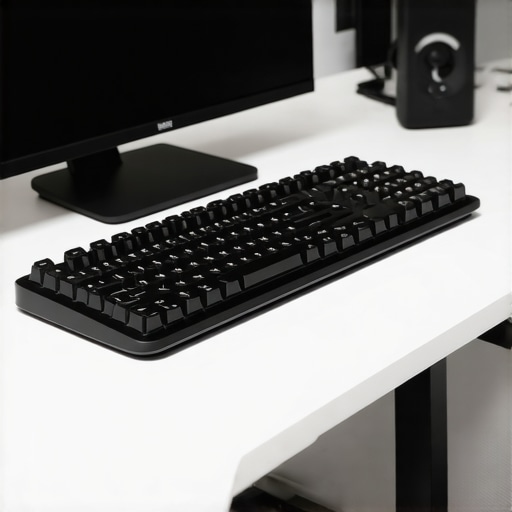
Why Your Future Workspace Will Look More Like a Cockpit
I predict that in the next few years, we are going to see a massive shift toward ‘haptic feedback’ clothing and sensors that vibrate gently when your head drifts too far forward. We are moving away from passive furniture and toward active biofeedback. Until then, you have to be your own sensor. I use a simple chair hack to keep your pelvis neutral which involves a small lumbar roll that acts as a physical reminder to stop slouching. Combine this with the monitor height hack for preventing nerve pressure, and you’ve essentially built a protective bubble around your spine. If you take one thing away from my journey, let it be this: your body is an adaptable machine, not a fixed statue. If you feel that old ‘static’ creeping back in, don’t panic. Just go back to the basics of mobility mastery and simple exercises. My advanced tip for today? Check your ‘elbow pits’ while typing. If they are facing each other, your shoulders are rolled in. Rotate them slightly forward until they face your monitor, and you’ll feel the tension in your neck disappear instantly. Give it a try right now—it’s the quickest way to reset your upper body alignment.
Why Fighting Through the Numbness Only Makes It Stronger
The median nerve is like a high-maintenance guest; if you ignore it, it screams, but if you push it too hard, it leaves the building entirely. I spent years thinking I could ‘muscle through’ the pain, but mastering your mobility means knowing when to be gentle. Here is what I finally figured out: the static in your fingers is a signal, not an obstacle to be crushed. Your body isn’t trying to fail you; it’s trying to protect the nerve from further damage. Once you stop the aggressive stretching and start using mobility mastery and simple exercises, the healing actually begins. I wish I had known that a 1% improvement every day is better than a 50% improvement that causes a flare-up that lasts a week. Remember, nerves thrive on blood flow and space, not tension and force. #IMAGE_PLACEHOLDER_E#
The Minimalist Kit That Saved My Career from Carpal Tunnel
You don’t need a thousand-dollar chair to start feeling better, but you do need to adjust your routine with daily spinal alignments to keep the ‘nerve pipeline’ open. My essentials are simple: a vertical mouse to prevent forearm twisting, a small lumbar roll for my chair, and a silent timer that forces me to stand up. I also highly recommend following effective posture tips for 2025 that focus on the ‘dynamic’ workspace. These tools work because they stop the constant micro-trauma that leads to carpal tunnel inflammation in the first place. These resources are what I personally trust because they address the root cause—the physical compression of the nerve—rather than just masking the symptoms.
Take Back Control of Your Hands and Your Day
The road to recovery isn’t always a straight line, but every gentle nerve glide you perform is a vote for a future without pain. Don’t let the frustration of ‘static hands’ make you feel like surgery is your only option. Your body has an incredible capacity to heal when you give it the right environment and the right movement. Start small, be consistent, and listen to the signals your body is sending. You have the power to reset your nervous system and get back to doing the things you love without the fear of that 3 a.m. wake-up call. Have you noticed your hand numbness getting worse after a long day of typing or during the night? Let me know your experience in the comments below!