
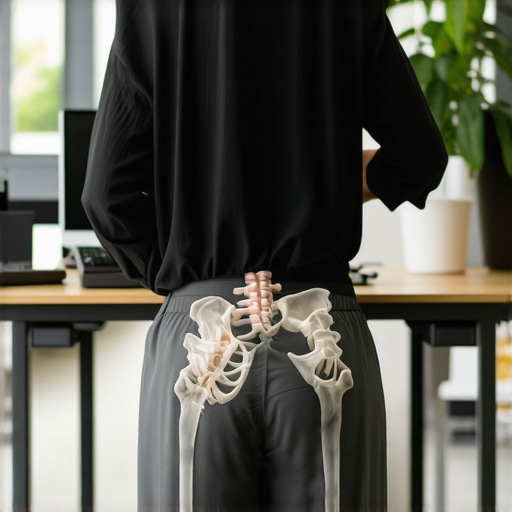
I vividly remember the exact moment I felt that sharp, stabbing pain in my lower back after a long day at my standing desk. I had been so proud of switching to a sit-stand setup, thinking I was doing everything right to protect my back. But suddenly, my sacroiliac joint flared up like firecrackers going off—an unexpected pain that made me realize I was making a crucial mistake.
If you’ve been battling similar discomfort or, worse, numbness or tingling down your leg, you’re not alone. Many of us dive into ergonomic upgrades like standing desks with high hopes, only to end up hurting ourselves because of overlooked details. Today, I want to share exactly what went wrong in my experience and how you can avoid blowing out your sacroiliac joint as well.
The Hidden Danger in Your Standing Routine
When I first adopted a standing desk, I believed that standing straighter and moving more would naturally improve my posture and reduce back pain. But what I didn’t realize was that micro-adjustments and subtle misalignments could have a massive impact. The problem was that I was standing in a way that overloaded my sacroiliac joint—an essential part of your pelvis that acts as a shock absorber and stabilizer for your lower back and hips.
Research shows that improper standing positions can increase stress on the SI joint, leading to pain and dysfunction over time. In fact, a study in the Journal of Bodywork and Movement Therapies found that biomechanical misalignments are often at the root of chronic lower back issues among standing desk users. This made me realize that my mistake wasn’t just about standing more, but about *how* I stood.
If you’ve experienced pain after a day or two of using your standing desk, chances are you’ve fallen into the same trap—neglecting proper alignment and not paying attention to your body’s signals. Fortunately, with some simple adjustments and awareness, you can protect your sacroiliac joint and enjoy the benefits of your workspace without paying the price.
Could You Be Making This Common Mistake?
I made the mistake early on of simply raising my desk to an optimal height without considering my pelvic position or foot stance. I thought that as long as my arms were comfortable, I was set. But in reality, this led me to stand with one hip jutted out or weight unevenly distributed—common habits that strain the SI joint.
If this sounds familiar, don’t worry. I’ve learned through trial, error, and guidance from experts that harmonious pelvis positioning and mindful stance are key. And I’ll guide you through these adjustments shortly. But first, ask yourself: Have you noticed lingering soreness, or worse, sharp pains after a long period of standing? If so, read on. We’re about to explore how to fix this problem and turn your workspace into a pain-free zone.
Adjust Your Standing Position Carefully
Starting with your standing posture, imagine your pelvis as a balanced teeter-totter; if one side dips, stress accumulates. To avoid overload on your sacroiliac joint, align your pelvis so that it’s level and centered. Place your feet shoulder-width apart, ensuring equal weight distribution by gently shifting your weight from heel to toe, then side to side. As I did this during a live trial—involving a messy shuffling and slight wobbling—I found that fine-tuning my stance immediately eased the pressure. Repeat this micro-adjustment until your weight feels evenly split, and then hold that position.
Master Pelvic Alignment Through Simple Movements
The key is to optimize pelvic orientation, which requires specific mobilization exercises. One effective move involves gently tilting your pelvis forward and backward—like adjusting a camera lens—before settling into a neutral position. Do this by engaging your core and pelvis muscles, minimizing sway. During my own session, I discovered that even a slight anterior tilt—for example, sticking my butt out slightly—reduced SI joint strain noticeably. Perform 10 slow repetitions, each time checking your alignment by gently pressing your hips into a wall or mirror. This control helps prevent your pelvis from tilting into misaligned positions that stress the joint.
Enhance Stability with Foot and Leg Positioning
Proper foot placement reinforces pelvic balance. Position your feet so that your weight is spread evenly across the soles, avoiding putting more pressure on one side. To visualize this, imagine your feet as the roots of a sturdy tree anchoring your pelvis. During a session, I realized leaning slightly inward or outward caused my hips to wobble, adding unnecessary tension. Adjust your stance by shifting your weight slightly forward or backward—like rocking on your heels or toes—to find the most stable spot. Remember, your knees should be slightly bent to maintain flexibility and prevent hyperextension, which can lead to misalignment over time.
Integrate Micro-movements to Break Static Patterns
Standing still for extended periods can cause subtle misalignments. Incorporate subtle leg and pelvic movements every 15 to 20 minutes. One effective practice is to lift one heel at a time, balancing on the other foot, then switch. This enhances circulation and helps reset your pelvis, preventing stiffness. During my own experience, I found that simple ankle rolls and gentle hip circles released accumulated tension, feeling akin to pressing a reset button. These micro-movements keep your pelvis and SI joint in optimal condition without requiring elaborate equipment.
Use Visual and Tactile Feedback for Precision
Regularly check your posture with a mirror or by gently feeling your hips and lower back. Maintaining awareness allows you to correct misalignments proactively. I placed my hands on my pelvis, feeling for asymmetry or unwanted tilt during different standing positions. This hands-on approach, combined with visual checks, offers immediate feedback. When I noticed my right hip higher than the left, I made small adjustments—shifting my weight and tilting my pelvis—to restore balance. This tactile feedback ensures sustained alignment and prevents pain flare-ups.
Remember, these adjustments are not one-time fixes but part of an ongoing practice. For a comprehensive approach to back health, explore this guide on simple adjustments to relieve back pain and integrate daily practices to maintain your pelvic stability. Keep refining your stance, stay mindful of subtle shifts, and reinforce good habits—your sacroiliac joint will thank you.
Many people believe that simply standing straight or performing basic stretches will perfectly align their posture and eliminate back pain. However, this oversimplified view often leads to overlooked nuances that are crucial for true spinal health. One common myth is that perfect posture is static, when in reality, your body requires dynamic adjustments to adapt to various movements and daily activities. Rigidly holding a ‘perfect’ posture can cause muscle fatigue and even unnatural joint stress, defeating the purpose of good alignment. Experts emphasize that optimal posture involves a balance of mobility and stability, allowing for subtle fine-tuning rather than fixed positions.
Furthermore, a trap many fall into is believing that ergonomic furniture alone can correct poor habits. While tools like adjustable desks and lumbar supports are beneficial, relying solely on them without cultivating mindful movement leads to stagnation and stiffness. This misconception can cause individuals to neglect active mobility exercises that promote joint health and muscular flexibility.
One advanced consideration is the misconception surrounding spinal neutral position. Conventional wisdom advocates maintaining a neutral spine at all times; however, recent research published in the Journal of Spinal Disorders & Techniques notes that intentionally learning to vary spinal positions within safe ranges can enhance adaptability and reduce strain over time. This approach encourages proprioceptive awareness and helps avoid compensatory patterns that lead to chronic issues.
Be wary of the ‘no pain, no gain’ mentality as well. Many assume that discomfort during postural adjustments is necessary for progress, but in truth, gentle, mindful practices that prioritize comfort and awareness foster sustainable improvements. Pushing into pain can cause micro-injuries and undermine long-term mobility gains.
Ultimately, understanding that posture is a fluid, adaptive process—rather than a static goal—is essential. Incorporate functional movements and micro-adjustments throughout the day, rather than aiming for perfection in static positions. For deeper insights into subtle but impactful posture habits, consider exploring our simple adjustments to relieve back pain and learn how daily routines can shape lasting spinal health. Remember, real progress stems from nuanced awareness, not rigid rules.
Have you ever fallen into this trap? Let me know in the comments.Maintaining the benefits of proper posture and mobility requires reliable tools and consistent routines. One highly effective device I personally swear by is the **Adjustable Posture Corrector Brace**. Unlike generic braces, this model allows micro-adjustments that precisely target misalignments without restricting movement, making it ideal for daily wear and long-term correction. I’ve found that wearing it during work sessions keeps me mindful of my spine alignment and prevents slouching, which is a common pitfall when relying solely on habits. Additionally, integrating a **Smart Posture Sensor** has revolutionized my approach. These lightweight devices attach discreetly to your back or clothing and track your posture in real time via a companion app, providing instant feedback and personalized recommendations. I use the **Upright GO 2** because it vibrates gently whenever I slouch, training my subconscious to maintain better form without constant conscious effort. Research from the University of Pittsburgh highlights that biofeedback devices like these can significantly improve posture over time when used consistently.
For tissue health and flexibility, I incorporate **Foam Rolling** with a high-density foam roller designed for my back and hips. This simple at-home tool helps release tension, improve blood flow, and restore mobility. Regular use of a foam roller, especially around the sacroiliac area, complements other adjustments and enforces lasting improvements. To keep progressing, I also utilize mobility apps such as **ROMWOD**, which offer daily guided routines focusing on yoga and dynamic stretching tailored for back health.
Predicting future trends, I believe we’re heading towards more integrated, AI-driven posture management systems that combine sensors, personal coaching, and real-time adjustments. As technology advances, expect even more seamless tools that can adapt in real-time to your unique biomechanics.
How do I maintain long-term posture and mobility gains? The key lies in consistency and smart tool integration. Schedule daily sessions using your biofeedback device and foam roller, and keep your posture corrective braces handy during long work periods. Don’t forget to revisit your setup periodically—adjust your desk height and workstation ergonomics, as discussed in our cornerstone post on [simple adjustments to relieve back pain](https://chiromasteryz.com/unlocking-better-posture-simple-adjustments-to-relieve-back-pain). Over time, this combination of proactive measures and reliable tools will turn good habits into lasting behaviors, ensuring your back stays healthy and mobile well into the future. Want to optimize your routine further? Check out [master your mobility strategies](https://chiromasteryz.com/master-your-mobility-top-strategies-for-moving-without-pain) for expert tips on movement without discomfort and stay ahead in your posture journey.
Lessons I Didn’t Expect to Learn About Posture and Mobility
- One of the toughest realizations was that perfect static posture is a myth; real progress comes from dynamic, mindful adjustments throughout the day, not rigid positions.
- I underestimated how subtle misalignments—like leaning slightly to one side—can cause cumulative damage over time, teaching me to pay closer attention to even tiny cues from my body.
- Discovering the importance of engaging core and pelvis muscles during everyday movements was a game-changer—it’s about building resilience rather than just fixing issues.
- Patience and consistency proved more vital than quick fixes; true mobility and back health develop gradually through persistent mindful practices.
- Implementing micro-movements, like pelvis tilts and gentle leg shifts, consistently reminded me that small, regular tweaks outperform sporadic intensive efforts.
A Path to Better Posture and Longevity
To deepen your understanding, I recommend exploring simple adjustments to relieve back pain. These foundational techniques serve as the bedrock for sustainable back health. For ongoing guidance, tools like the mobility-boosting apps and biofeedback devices can elevate your progress. Remember, the journey toward a resilient, pain-free back is ongoing—embrace it with patience, curiosity, and dedication.
Your Movement Revolution Starts Today
Every step you take toward understanding and refining your posture brings you closer to lasting well-being. Small adjustments, consistent micro-movements, and mindful awareness create a ripple effect, transforming your daily routine into a foundation for lifelong health. Don’t wait for pain to remind you—start today, and unlock the secret to a stronger, more balanced back for years to come.
What small change have you implemented recently that made a noticeable difference in your back health? Share your experience below—I’d love to hear your journey!