
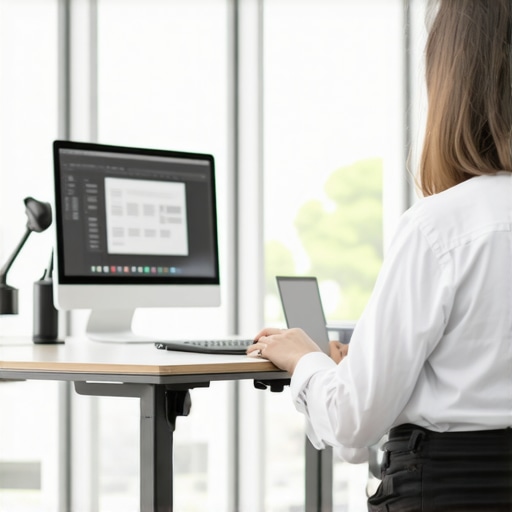
Ever been caught mid-work, feeling that familiar tightness in your hips or a sudden twinge that reminds you you’re not quite as mobile as you’d like to be? I remember the exact moment I realized my standing desk was doing more harm than good. I had been diligently standing for hours, convinced I was boosting my health, but my hips felt stiff, heavy, and just plain tired. It was a lightbulb moment — my attempt at staying active was actually contributing to pain and poor posture.
Why Our Standing Desks Might Be Sabotaging Our Mobility
When I first switched to a standing desk, I thought I was making a smart move to combat the sedentary lifestyle. But I soon noticed that my hips weren’t loving the change. It turns out, standing all day without proper movement can cause your hip flexors to tighten up, leading to discomfort and even long-term mobility issues. According to some recent studies, prolonged standing can actually reduce circulation and increase muscle tension, especially in the hips and lower back (source: ChiroMasterYZ).
My mistake early on was sticking to my new routine without incorporating enough movement. I believed that simply switching positions was enough — spoiler, it’s not. The good news? There’s a simple shift you can make that drastically reduces hip flexor strain and keeps your mobility intact. And trust me, once I made it, I felt a noticeable difference. If you’ve faced similar struggles, you’re not alone. Let’s explore what you can do to keep your hips happy and healthy.
Is The Standing Desk Trend Really Worth It?
Like many, I was skeptical at first. It’s easy to think that standing all day will surely improve posture and reduce back pain. But I learned that standing in one spot isn’t a magic fix — it can actually worsen hip tightness if you’re not careful. My initial mistake was neglecting to add movement and proper adjustments, which only amplified the problem. To truly benefit, you need a routine that combines standing with targeted mobility exercises and smart positioning. Want to learn how to make that switch for good? Stay with me — the solution is simpler than you think, and it can save your hips from years of unnecessary strain.
Start with Smart Positioning
Adjust your monitor height so your eyes are level with the top third of the screen, reducing neck strain and encouraging better spinal alignment. Your feet should be flat on the ground, hips at a 90-degree angle, and knees slightly below hip level. Think of your body as a vertical pillar that needs a solid foundation—proper positioning prevents undue tension in your hips and lower back. I once caught myself slouching and realized that my hips were twisting uncomfortably; correcting my setup made an immediate difference.
Incorporate Movement Breaks
Every 30 minutes, take a two-minute walk or perform light stretches. Use this time to walk around your space or do hip circles—standing tall, lift one knee, rotate it outward, and then switch sides. This mimics the motion of a car’s suspension, absorbing shocks and relieving tension in your hips. Once, I forgot to set a timer and stayed stationary for an hour; the result was stiff hips and discomfort. Regular movement keeps circulation flowing and muscles happy.
Simple Hip Mobility Drill
Stand with feet shoulder-width apart, place one hand on a surface for balance, and gently swing one leg forward and backward, keeping it straight. Aim for 10 swings per leg. This action acts like oiling a rusty hinge, loosening tight hip flexors. I added this to my routine after reading about hip mobility exercises; within a week, I noticed reduced stiffness and greater ease in movement.
Adjust Your Body for Comfort
Use an anti-fatigue mat or an ergonomic mat under your feet if your flooring is hard, preventing fatigue and promoting better posture. Additionally, consider a footrest to alternate resting one foot at a time, reducing hip load and encouraging natural sway—a trick I used after noticing my hips were stiffening from prolonged standing. Think of your posture like a well-balanced see-saw; tiny adjustments can prevent imbalance and discomfort.
Monitor and Change Your Stance
Switch stances frequently—shift weight from one foot to the other every few minutes. Use a timer or reminder app to prompt these shifts. This avoids static muscle engagement, which can cause tightness. I experimented with a standing desk app that nudged me to change positions regularly; this simple change kept my hips supple and pain-free.
Leverage Simple Adjustments for Long-Term Relief
Utilize postural correction tools like lumbar rolls or cushions to support natural spinal curves, aiding in maintaining proper alignment. Regularly perform spinal and hip stretches or consult resources like adjustments for spinal health. Remember, small, consistent tweaks in your routine reinforce good posture habits and prevent chronic discomfort.
Adding these concrete steps into your daily routine transforms your standing desk experience from a source of pain to a pillar of mobility and comfort—keeping your hips healthy and your posture on point.
Many assume that perfect posture is simply about standing straight or sitting upright, but this oversimplification overlooks critical nuances that can sabotage your efforts. A prevalent myth is that maintaining a static, upright position alone guarantees a healthy back; however, this ignores the vital role of dynamic movement and muscle balance. In fact, rigid adherence to any posture without considering individual anatomy and movement variability can lead to muscle imbalance and contribute to chronic pain. For example, focusing solely on “correct” alignment often causes people to clamp their muscles or hold tension unnecessarily, which exacerbates discomfort over time.
One common trap to avoid is the misconception that posture adjustments are permanent fixes. Posture is a dynamic process—your body adapts continually to how you position, move, and load it. Relying on a single correction method, like wearing a posture brace or doing a one-time adjustment, neglects the ongoing nature of musculoskeletal health. Instead, integrating daily mobility drills and intentional movement patterns ensures sustainable improvements. For instance, incorporating consistent mobility exercises prevents the muscles from becoming stiff or weak—issues that often arise from static postures.
Curiously, many overlook the importance of spinal and joint rhythm. Your spine and joints function best when they move in harmony, much like a well-oiled machine. Misalignment or stiff movement patterns disrupt this rhythm, causing compensations elsewhere that may manifest as back pain or limited mobility. Skilled practitioners emphasize that effective adjustments aren’t just about realigning bones but restoring fluid movement sequences. A study by the American Chiropractic Association highlights that adjustments enabling proper joint glide significantly improve long-term outcomes when combined with targeted exercises (see more here).
Another subtle mistake is neglecting inherent asymmetries. Many people assume their bodies are perfectly symmetrical, but slight differences in limb length, muscle strength, and joint mobility are normal and require tailored strategies. Ignoring these nuances leads to one-size-fits-all solutions that may only mask symptoms temporarily. A comprehensive assessment can reveal these subtleties, allowing for custom adjustments and exercises. Are you addressing your body’s unique needs or just following generic advice?
Finally, keep in mind that posture and mobility improvements are a holistic journey. Small daily tweaks—like brief spinal and hip stretches—compound over time, leading to lasting change. Regular attention to movement quality, combined with informed adjustments, prevents the pitfalls of misinformation. If you’d like to learn how to fine-tune your routine, check out expert tips for effective posture correction, which delve into personalized practices (more details here).
Have you ever fallen into this trap? Let me know in the comments.
To keep your posture, mobility, and back health improvements sustainable over the long term, employing the right tools and maintaining a consistent routine are essential. Personally, I rely heavily on ergonomic accessories and targeted exercises to reinforce good habits. For example, I highly recommend using a lumbar roll or ergonomic cushion during workdays, which helps maintain the natural curve of your spine even when you’re seated for extended periods. I prefer adjustable standing desks that allow seamless transition between sitting and standing, minimizing the risk of stiffness and promoting circulation. These desks often come with programmable height settings, enabling quick changes to suit various tasks and postures. Adjusting your routine to include daily spinal alignments with ergonomic tools solidifies your gains and prevents regression. Using foam rollers and massage balls regularly can also release muscle tension accumulated from repetitive or static positions. I personally integrate a tennis ball for deep glute releases, which keeps my hips mobile and relieves chronic tightness. Looking ahead, I predict that smart, connected devices—like posture-tracking wearables—will become commonplace, offering real-time feedback and personalized recommendations to ensure sustained improvements. To maximize your progress today, try incorporating a simple yet effective technique: use a lumbar roll or sit on an ergonomic cushion while working. It’s a small adjustment that yields significant benefits for your spinal health.
How do I maintain my posture and mobility routines over time?
Your best bet is to combine regular self-assessments with tools that prompt proactive corrections. For instance, consider setting up reminders to perform daily mobility drills and position checks, leveraging apps or timers. Consistency is key, so integrating these practices into your daily workflow ensures that your posture and mobility improvements aren’t just fleeting fixes but lasting habits. For more detailed guidance, explore our comprehensive strategies for daily adjustments that prevent back pain and enhance posture.
3 Hidden Lessons I Didn’t Expect to Learn About Posture and Mobility
One of the biggest revelations was realizing that rigidly sticking to a perfect posture can actually hinder my progress. Sometimes, aiming for the ‘correct’ position makes us tense up or compensate elsewhere, creating more issues than it solves. I also discovered that small, daily tweaks—like shifting my stance every few minutes—are more effective than drastic overhauls. Lastly, I learned that listening to my body’s signals is crucial; ignoring subtle discomforts only prolongs recovery and hampers mobility. These lessons reshaped my approach, reminding me that flexibility and awareness are key to long-term health.
My Go-To Gear and Guides for Better Movement
I’ve found that ergonomic accessories like lumbar rolls and adjustable desks make a significant difference. The book Mobility Mastery provided insights into simple exercises that I now incorporate daily. For practical, reliable advice, I trust resources like Effective Posture Tips for 2025 and Simple Exercises for Chronic Back Pain. These sources are backed by experts and have transformed how I approach movement, making sustainable mobility an achievable goal.
Take That First Step Toward Movement Freedom
Your journey to better posture and mobility is a personal one, but it begins with a single conscious move. Whether it’s adjusting your workspace, committing to regular stretches, or practicing mindful positioning, small actions add up. Remember, your body is meant to move—embrace the process and celebrate each improvement. I encourage you to start today, knowing that every step you take is a step toward pain-free living and lasting mobility.
What’s the first change you plan to make to improve your posture or mobility? Share your thoughts below—I’d love to hear your plans and support your progress!