

I remember the exact moment I realized my phone was winning the war against my spine. I was trying to back out of a tight parking spot, and I physically couldn’t turn my head far enough to see the curb. My neck felt like it was encased in concrete. I had spent the entire morning scrolling through emails and news feeds, and my body had simply frozen in that “C-shape” position. It wasn’t just a stiff neck; it was a structural lockdown. We’ve all been there, feeling like our phone is making our shoulders permanently rounded. But I found a way out that doesn’t involve expensive gadgets or hours at the gym. Today, I want to show you the Wall Angel—a move that specifically targets the damage done by the tech-neck lifestyle.
Your Shoulders Weren’t Meant to Live Near Your Ears
The average human head weighs about 10 to 12 pounds. However, the physics changes the moment we look down. According to research published in the International Journal of Environmental Research and Public Health, the effective weight on your neck can spike to 60 pounds when you tilt your head at a 60-degree angle. That is essentially like carrying a small child on your shoulders for eight hours a day. No wonder we feel exhausted by 3:00 PM. I spent years making the classic mistake of thinking I could just stretch my way out of this. I would pull my neck to the side or crack my own neck constantly, hoping for a release that never lasted. What I didn’t realize was that I needed to wake up the muscles that had gone dormant while I was slouching. The 30-second wall reset is about more than just standing straight; it’s about re-teaching your nervous system what neutral actually feels like. Have you ever caught your reflection in a store window and been genuinely shocked by how much you were slouching? It is a wake-up call we all need eventually.
Does Standing Against a Wall Really Change Anything?
It sounds too simple to be effective, doesn’t it? Most people are skeptical that a move that opens your chest instantly could come from just leaning against a flat surface. But the wall provides the one thing our bodies lack when we’re out in the world: an objective reference point. When you are hunched over a screen, your brain loses the map of where your spine should be. By using the wall as a guide, you force your shoulder blades and your thoracic spine to interact in a way that reverses the hunch. It’s not about flexibility; it’s about recalibration. We’re going to stop fighting the pain and start fixing the mechanics.
Find Your Flat Surface and Move Your Feet
To get started, find a clear patch of wall—no pictures, no coat hooks. Stand with your back to it, but don’t jam your heels against the baseboard. I made that mistake my first time and nearly fell over. You want your feet about six inches away from the wall. This gap allows your pelvis to sit neutrally rather than forcing a massive arch in your lower back. I remember trying this for the first time in a narrow hallway at the office; when my heels were flush against the wall, my head was still floating three inches forward like a turtle. It was a literal ‘aha’ moment that showed me how far my center of gravity had shifted. Moving my feet out allowed me to drop my weight into my heels and create a stable base for the simple scapular reset for instant shoulder tension relief. 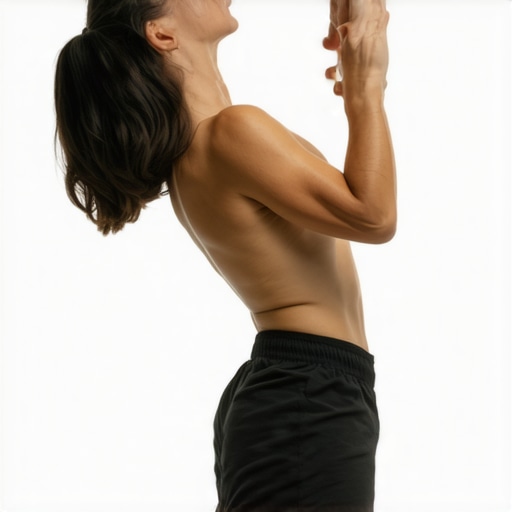
Identify the Three Points of Contact
Once your feet are set, focus on three specific areas: your tailbone (sacrum), your mid-back (the area between your shoulder blades), and the back of your head. For many of us, getting the head to touch the wall without looking at the ceiling is the hardest part. If you have to tilt your chin up to make contact, your neck is likely too tight. Instead, think of pulling your chin straight back, like you’re trying to make a ‘double chin.’ This is the 2-minute habit to fix your forward head posture in real-time. If your mid-back refuses to touch, don’t force it with aggression; use your breath to expand your ribcage backward into the flat surface.
Slide Your Arms Like a Snow Angel on Vertical Ice
Now for the actual ‘angel’ part. Bring your arms up into a ‘W’ shape. Your elbows and the backs of your hands should ideally touch the wall. If you feel a massive stretch in your chest or a pinch in your shoulders, you’re seeing exactly why your shoulders always roll forward while you type. Slowly slide your hands upward, keeping as much contact with the wall as possible. Imagine your shoulder blades are elevators moving up and down a track. If your hands come off the wall, stop right there. That is your current boundary. I used to get frustrated that I couldn’t reach full extension, but the progress comes from the quality of the slide and keeping that contact, not the height you reach.
Keep Your Ribs Down and Your Breathing Wide
The most common way people ‘cheat’ during this move is by flaring their ribs. As your arms go up, your lower back will want to arch away from the wall to compensate for tight shoulders. You have to fight that urge. Engage your core as if someone is about to poke you in the stomach. This deep core connection stops your spine from shear stress while you work on the upper half of your posture. While you move, focus on how to breathe through your ribs to ease lower back tension. When you inhale, feel your ribs push into the wall behind you. This turns a simple stretch into the thoracic move that makes deep breathing feel natural again. Do about 10 slow, controlled repetitions every afternoon to wake up those dormant muscles.Many people think that a ‘tight’ muscle needs more length, but in my experience, the muscles that feel the tightest are often the ones that are already stretched to their limit. Take your hamstrings, for example. If your pelvis is tilted forward—a classic result of sitting—your hamstrings are being pulled taut like a bowstring. Learning why stretching your hamstrings might be making your back pain worse is a concept many athletes struggle with because it feels counterintuitive. You’re trying to stretch a muscle that is already crying out for stability, not length. This is where most DIY fixes fail; they treat the symptom of ‘tightness’ instead of the structural imbalance.
Stop Stretching Tight Muscles Before You Read This
A study published in the Journal of Orthopaedic & Sports Physical Therapy notes that persistent muscle ‘tightness’ is often a protective tension—your nervous system’s way of guarding a joint it perceives as unstable. If you just keep pulling on that muscle, you’re actually telling your brain to tighten it even further to prevent injury. I’ve seen countless patients who ‘self-crack’ their backs to find relief from this tension, but why cracking your own back is only a temporary fix is because you aren’t addressing the underlying instability. You’re just hitting the snooze button on a biological alarm clock.
Avoid the Military Pose Mistakes
One major trap I see is the ‘military posture’ overcorrection. You feel yourself slouching, so you pull your shoulders back as hard as possible and puff out your chest. This creates a massive amount of tension in your mid-back and flares your ribcage. This is the deep core connection that stops your spine from shear stress that you’re missing when you force an artificial curve. You aren’t fixing your posture; you’re just trading one type of strain for another. 
Why does my mid-back feel stuck even when I am not slouching?
Even if you have the ‘perfect’ desk setup, your body can still lock up if you aren’t moving through your full range of motion. It’s about more than just your position; it’s about your ribcage mechanics. If you’ve ever wondered why your mid-back feels stuck when you breathe deeply, it’s because the joints where your ribs meet your spine have stopped sliding properly. This is why the Wall Angel works—it’s a dynamic recalibration, not a static hold. It forces those joints to navigate their full path. Have you ever fallen into this trap of ‘posing’ for good posture instead of moving into it? Let me know in the comments.I’ve tried almost every gadget on the market—from vibrating posture sensors to those weird elastic harnesses that look like medieval torture devices. What I’ve learned is that the most effective tools aren’t the most expensive ones; they are the ones that actually change your environment so you don’t have to think about your posture every second. For me, the transformation started with the 2-inch rule for your laptop stand to save your neck from strain. It is a game-changer because most people set their monitors too low. If your eye line doesn’t hit the top third of the screen, you are going to drop your chin eventually. It’s inevitable. But here is the catch: you cannot use a laptop stand without a separate keyboard and mouse. If you try to type on an elevated laptop, you’re just trading neck pain for wrist strain and shoulder hiking.
The Laptop Stand That Actually Saved My Neck
My setup is now a dedicated riser with a mechanical keyboard. This setup allows my shoulder blades to stay in that ‘Wall Angel’ position naturally. I also stopped relying on my expensive office chair to do the work for me. I realized why your expensive desk chair might be giving you false sciatica—it was so ‘supportive’ that my core muscles essentially went on vacation. I now switch between a stool and a standing desk, making sure to follow the best way to transition from a sitting to a standing desk by only standing for 20 minutes at a time. 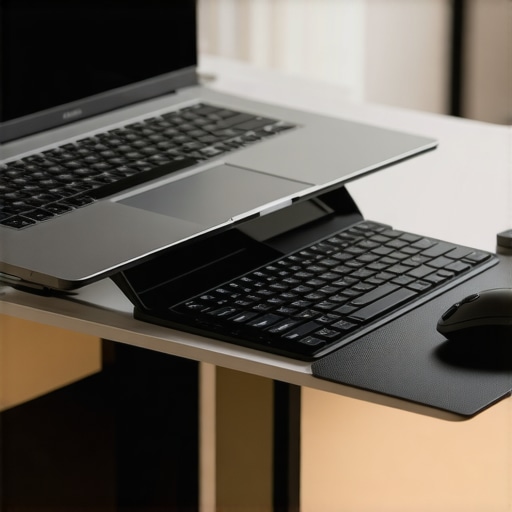 Looking ahead, I predict we are going to see a shift toward ‘bio-interactive’ workspaces. We’re already seeing apps that use your camera to monitor your spinal alignment, but soon, I expect smart clothing with haptic feedback to become the norm, gently vibrating when our thoracic spine begins to round. This real-time feedback is the only way to fight the deep ‘flow state’ where we forget our bodies exist.
How do I keep my spine happy when I’m too busy for a full routine?
The secret isn’t finding more time; it’s layering the work into your existing day. I treat my movement like a ‘micro-dose.’ I’ve integrated daily adjustments to alleviate back pain and improve posture into my morning coffee ritual. While the water boils, I do a 30-second desk fix for your tight pectoral muscles against the kitchen doorframe. Scientific research backs this ‘little and often’ approach. A 2021 study published in the Journal of Biomechanics explored the ‘creep’ of spinal ligaments during prolonged sitting, demonstrating that the biological tissues actually take significantly longer to recover their natural stiffness than the time spent in the slouched position. This means every five minutes of movement counts toward preventing permanent structural changes. If you want to enhance your mobility with expert tips for easier movement in 2025, you have to prioritize these small wins. My challenge for you today: before you check your first email tomorrow, perform the morning glute squeeze that protects your spine all day. It takes ten seconds, but it sets the neurological baseline for your pelvis before the workday even starts.
The Hardest Lessons I Learned While Reclaiming My Alignment
The biggest shift for me wasn’t just doing the exercises; it was realizing that posture is a conversation between your brain and your body, not just a physical position. First, I had to accept that I couldn’t stretch my way out of a problem caused by weakness. I spent years pulling on my neck only to realize I needed to strengthen my mid-back. Second, consistency beats intensity every single time. Five Wall Angels every afternoon did more for my chronic ache than a 90-minute yoga class once a week. Finally, I stopped waiting for the pain to start before I moved. Using the 30-second wall reset for hunchback posture as a preventive measure changed my energy levels entirely. I also discovered that posture correction secrets that transform back pain outcomes often come down to how you manage your transition times—like the moments between meetings or phone calls.
The Three Essentials for Your Personal Mobility Toolkit
I don’t believe you need a whole gym in your living room, but a few targeted tools make a world of difference. My first recommendation is a simple laptop riser. Following the 2-inch rule for your laptop stand to save your neck from strain is the most cost-effective health upgrade you can make. Next, I suggest keeping a lacrosse ball or a firm massage ball at your desk to release the tissue between your shoulder blades—this keeps the muscles receptive to the work you do during your Wall Angels. Lastly, I highly recommend checking out unlocking better posture through simple adjustments to relieve back pain for a deeper dive into how your environment shapes your health. These tools aren’t just gadgets; they are reminders that your body deserves a break from the screen-induced C-curve.
Your Future Self Will Thank You for This Choice
It is easy to feel overwhelmed by all the “shoulds” of health, but your spine is the literal foundation of your quality of life. You don’t have to be perfect; you just have to be persistent. When you start making daily adjustments to alleviate back pain and improve posture, you aren’t just fixing a slouch—you are increasing your lung capacity, clearing brain fog, and reducing the wear and tear on your joints. As you look for ways to enhance your mobility with expert tips for easier movement in 2025, remember that every Wall Angel you perform is a vote for a more active, pain-free future. You have the tools, you have the flat surface, and now you have the plan. #IMAGE_PLACEHOLDER_E# Have you ever felt that strange “pop” or release during a Wall Angel, or does your mid-back still feel like a solid block? Let me know your experience in the comments below!