

I’ll never forget the day I saw a photo of myself at a backyard BBQ. I wasn’t even old, but I looked like I was carrying the weight of the world on a pair of rounded, tired shoulders. My immediate reaction was to blame my ‘weak’ back. I spent weeks doing rows and pull-ups, yet the slump remained. It wasn’t until I visited a specialist that I realized I was fighting the wrong battle. My chest muscles were so tight they were literally winching my skeleton forward. If you’ve ever felt like your body is folding in on itself, you aren’t alone. Today, we’re going to stop blaming your back and start looking at the front of your body to finally get you standing tall again.
Stop Blaming Your Back for the Slump
It sounds counterintuitive, doesn’t it? If your shoulders are forward, you assume the back is the problem. But think of your torso like a tent. If the guy-wires in the front are pulled too tight, the poles in the back are going to tilt, no matter how much you reinforce them. This is exactly why your shoulders always roll forward while you type. Your pectoral major and minor become short and hyper-tonic, acting as a constant anchor that rotates your arms inward. According to research published in the Journal of Physical Therapy Science, a shortened pectoralis minor is a leading cause of scapular dyskinesis, which is just a fancy way of saying your shoulder blades aren’t moving where they should. This creates a cycle where your back muscles stay chronically overstretched and weak because they are constantly fighting a losing battle against the powerful muscles in your chest.
Can a simple stretch really fix years of bad habits?
I used to be the biggest skeptic about this. I thought if it didn’t involve heavy lifting or a major lifestyle overhaul, it wasn’t worth my time. My biggest mistake early on was thinking I could out-train a tight chest with more volume. I just kept tightening the cage by doing more ‘strengthening’ without any ‘releasing.’ The truth is, you need to release the tension before you can expect your posture to stick. I found that incorporating a 30-second desk fix for your tight pectoral muscles did more for my chronic neck ache than an hour of back extensions ever did. We aren’t looking for a miracle cure, but rather a strategic opening of the ‘front door’ of your torso so your spine can actually breathe. Have you ever felt that sharp, nagging burn between your shoulder blades that just won’t go away no matter how much you rub it? That’s your back muscles screaming because they are being constantly stretched out by your tight chest. It’s time to give them a break. By focusing on moves like the shoulder blade squeeze that fixes mid-back knots, we can start to balance the scales. But first, we have to address the tension in the front. If you keep pulling on a knotted string, it only gets tighter; you have to find the loose end first. Ready to finally stand up straight without feeling like you’re fighting your own skin?
A Three-Step Blueprint to Recalibrate Your Posture
First, we have to deal with the physical limitation of a tight chest. Think of your pectoral muscles like rusted door hinges; you can pull on the door all you want, but if the hinge won’t move, the door stays shut. I spent years trying to ‘strengthen’ my way out of this before I realized I was just pulling on a locked door. The most effective way to start is the wall-based move that opens your chest instantly. When you place your forearm against a doorframe and lean forward, you aren’t just stretching; you are signaling to your nervous system that it is safe to let those muscles elongate. When I first started this, I noticed my right side was significantly tighter than my left, likely from years of mouse usage. By holding that position and breathing into the tightness, I felt a release that no back massage had ever provided. 
Stop Flaring Your Ribs to Save Your Lower Back
Most people make the mistake of over-correcting by arching their lower back. This is what I call the ‘Peacock Trap.’ You think you are standing tall, but you’re actually just shearing your vertebrae. You need to learn how to breathe through your ribs to ease lower back tension. By pulling your front ribs down toward your pelvis and breathing into the back of your lungs, you create a stable pillar. It feels weird at first—I felt like I was slouching when I first tried this—but it’s actually the only way to get your spine into a neutral stack. I remember my first week doing this; I actually felt like I was leaning forward because I was so used to my back being arched. However, every time I caught my reflection in a window, I looked five pounds lighter and two inches taller because my ribcage was finally integrated with my pelvis rather than floating above it.
The Scapular Reset That Actually Sticks
Once the chest is open and the ribs are down, we finally address the shoulder blades. Instead of ‘pinching’ them together, which just creates new knots, you want to focus on a ‘down and back’ glide. This is the simple scapular reset for instant shoulder tension relief that transforms how you sit at a desk. You can even check your current status by learning how to test your thoracic mobility in under 60 seconds. If you can’t rotate your mid-back freely, no amount of ‘sitting up straight’ will help you long-term. You need to enhance your mobility with expert tips for easier movement to ensure these changes actually stay in your muscle memory. This isn’t about rigid discipline; it’s about creating a body that finds it easier to stay upright than to collapse. When your thoracic spine moves properly, your shoulders naturally find their home without you having to constantly remind them to ‘get back there.’
Stop Stretching Your Hamstrings to Save Your Back
Most people believe that if their back hurts, their hamstrings must be tight. They spend twenty minutes a day touching their toes, yet the pain persists or even intensifies. Here is the contrarian truth: in my experience, stretching your hamstrings can often make lower back pain worse, especially if your pelvis is already tilted forward. When your pelvis rotates anteriorly, it actually pulls your hamstrings into a state of ‘passive tension.’ They aren’t physically short; they are already being pulled like an overstretched rubber band. By pulling on them more, you are just destabilizing your pelvis further and irritating the attachment points. This is exactly why you should stop stretching your hamstrings for back relief and start focusing on your pelvic position instead.
The Psoas Trap and Why More Stretching Isn’t the Answer
The biggest ‘oops’ factor I see in the mobility world is the obsession with the hip flexors. We have been told that ‘sitting is the new smoking’ so much that we try to kill our psoas with aggressive lunges. However, why stretching your psoas might actually be making your back hurt more is because a weak psoas often presents as a ‘tight’ one. If the muscle is weak, it stays in a guarded, hyper-tonic state to protect the spine. Stretching a weak, guarded muscle only causes it to freak out and tighten further to prevent injury. Instead of mindless lunging, you need to enhance flexibility with top mobility strategies that prioritize stability and proper muscular engagement over raw range of motion. 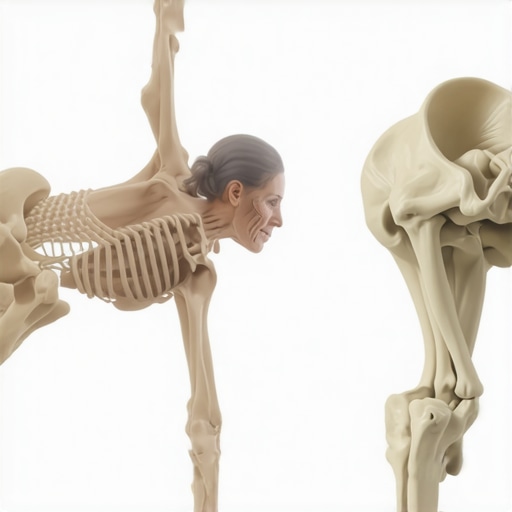
How Can You Tell if Your Pain is Neural Instead of Muscular?
This is the question that separates the beginners from those who truly understand human movement. Many people mistake ‘nerve tension’ for ‘muscle tightness.’ If you feel a zing, a tingle, or a sharp pull that doesn’t feel like a standard muscle stretch, you might be dealing with a sensitized nervous system. Dr. Stuart McGill, a world-renowned spine biomechanist, has argued that excessive flexibility in the lumbar spine can actually be a predictor of future back pain, rather than a preventative measure. If you are constantly trying to ‘stretch out’ a nerve, you’re just irritating the wire. This is a common error in the 90-90 hip stretch mistake that is hurting your lumbar spine. You think you’re hitting your glutes, but you might just be cranking on your sciatic nerve. Furthermore, stop relying on ‘self-adjustments’ to fix the feeling of stiffness. I know it feels good in the moment, but why cracking your own back is only a temporary fix is because you are likely hitting the segments above or below the actual restriction, creating hypermobility where you don’t want it. Similarly, the truth about posture braces and muscle atrophy is that they outsource the work your muscles should be doing. Real change comes from within, starting with how your breathing pattern keeps your back muscles guarded. Have you ever fallen into the trap of stretching a muscle that was actually screaming for stability? Let me know in the comments.Maintaining your results isn’t about doing more work; it’s about making your environment do the work for you. I spent years in a cycle of ‘fix and fail’ until I realized that my desk setup was a slow-motion car crash for my vertebrae. Now, I use a few ‘non-negotiable’ anchors in my daily life. For one, I stopped trusting my own willpower to sit up straight and started using the chair hack to keep your pelvis neutral while working. By placing a small, firm lumbar roll—or even a rolled-up towel—just above the beltline, you create a mechanical stop that prevents your lower back from rounding into that ‘C’ shape. This is crucial because, as Dr. Aaron Horschig of Squat University often emphasizes, stability must precede mobility. If you aren’t stable at your desk, your mobility work at the gym is just a temporary bandage on a festering wound.
Don’t Let Your Progress Rot on the Vine
Beyond the chair, I’m a huge advocate for physical tools that provide tactile feedback. I keep a lacrosse ball under my desk, not for my back, but for my feet. According to the ‘Joint-by-Joint’ approach popularized by Gray Cook and Mike Boyle, the body is a stack of alternating stable and mobile segments. If your feet are locked up, your brain will compensate by tightening your lower back to create a false sense of stability. I’ve found that a tennis ball or lacrosse ball release for your feet and back can actually lower the ‘threat level’ in your nervous system, allowing your spine to stay tall without effort. Another essential is the height of your screen. I followed the 2-inch rule for your laptop stand religiously, and it single-handedly eliminated my 3 PM tension headaches. 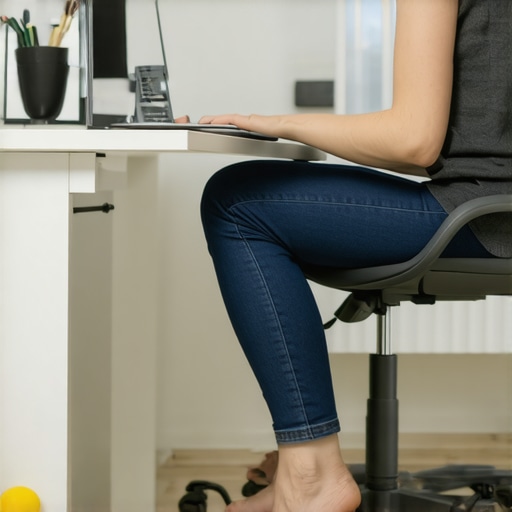
How do I keep my spine healthy for the long haul?
The secret is consistency over intensity. You don’t need a grueling hour-long routine; you need to adjust your routine with daily spinal alignments that take less than five minutes. I personally swear by the ‘Bracing Sequence’—a concept from Kelly Starrett’s Becoming a Supple Leopard. It involves setting your pelvis, squeezing your glutes, and then knitting your ribs down. If you do this every time you stand up from a chair, you’re training your nervous system to prefer a neutral spine. I’ve also found that sleep is a massive recovery variable. If you wake up stiff, try the side sleeper pillowing trick for optimal spine alignment. By placing a pillow between your knees, you prevent your top hip from falling forward and twisting your lumbar spine all night long. Looking ahead, I predict we are entering an era of ‘Passive Biofeedback.’ We are moving away from bulky braces and toward smart clothing and AI-driven posture sensors that provide gentle haptic pulses when we slump. This tech will bridge the gap between ‘knowing’ how to sit and actually doing it. For now, your best tool is your own awareness. Try this today: set a timer for every 30 minutes, and when it goes off, perform one simple scapular reset. You’ll be amazed at how different you feel by dinner time.
Three Hard Lessons My Spine Taught Me the Hard Way
After years of trial and error, I realized that posture isn’t a destination you reach and stay at; it’s a constant conversation between your brain and your environment. First, I learned that you cannot stretch your way out of a stressful life. I used to do my chest openers religiously, but my jaw was always clenched. It turns out there is a hidden link between your jaw pain and your neck slump that no amount of shoulder rolling will fix if you’re constantly under high stress. Second, I discovered that ‘sitting up straight’ is often just as damaging as slouching if you are forcing it. If you feel like you are fighting your own body, you are likely missing the deep stabilization required to hold that position. Finally, I realized that my feet were the secret architects of my back pain. Once I addressed my foundation through mobility, my spine finally felt like it had permission to relax without effort.
The Daily Arsenal I Use to Stay Pain-Free
If you want to move beyond the basics, you need tools that provide real-time feedback and effective relief. I never travel without a firm lacrosse ball in my carry-on. I use it for a tennis ball or lacrosse ball release for your feet and back whenever I feel that familiar tightness creeping in after a long flight. I also swear by a high-quality lumbar roll, though you have to be careful with placement; I’ve seen why your lumbar support might be making your pain worse if it’s forcing an unnatural curve rather than supporting your existing one. For deeper technical reading, I highly recommend Kelly Starrett’s Becoming a Supple Leopard. It completely changed how I view human torque and tension. Lastly, I suggest checking out the latest effective posture tips for 2025 to stay ahead of the curve as our screen-heavy habits continue to evolve.
Step Into a More Resilient Version of You
The journey from a slumped, tired frame to a tall, confident posture doesn’t happen in a single gym session. It happens in the 30-second intervals between emails, the way you stand in line for coffee, and the way you breathe while driving. You have the blueprint now—from opening the front of your chest to resetting your shoulder blades and avoiding the common hamstring stretching trap. By applying these posture correction secrets that transform back pain outcomes, you are giving your body the gift of longevity and freedom of movement. Don’t wait for the pain to become a crisis before you start listening to the signals your spine is sending every day. Start small, stay consistent, and watch how your perspective on the world changes when you’re finally looking at it at eye level.
Which part of your body feels the tightest after a long day at the desk—is it your chest, your lower back, or somewhere else? Let me know in the comments below!