

I remember one Tuesday morning clearly. I rolled over to hit snooze, and my neck made a sound like dry twigs snapping. I was stuck staring at my bedside lamp for a good ten minutes because turning my head was out of the question. I am a guy who prides myself on mastering my mobility, but there I was, humbled by a piece of fluff. It is a specialized kind of betrayal when the thing designed to help you rest is actually the culprit behind your stiff mid-back and agonizing morning routine.
Stop Letting Your Pillow Sabotage Your Spine
We spend a third of our lives in bed, yet we often give more thought to our gym shoes than where we rest our heads. If you are waking up needing a hot shower and ten minutes of spinal decompression just to stand up straight, your pillow choice is likely the primary suspect. Today, I am going to show you how to stop that morning stiffness tax and actually wake up feeling loose and ready to move. We will look at height, density, and how to finally enhance your mobility from the moment your eyes open.
Is a pillow really powerful enough to mess up your back?
It sounds like an exaggeration, right? But think about the mechanics. If your pillow is too high or too soft, it forces your neck into a tilt. This isn’t just about a crick—it is about nerve pressure. I made the classic mistake of choosing a pillow based on how it felt for the first thirty seconds in the store. I spent nearly two hundred dollars on a cloud-like monstrosity that basically swallowed my head. I did not realize that my plush pillow was actually causing forward head posture while I slept. Research from Harvard Health Publishing suggests that improper support can create a chain reaction of tension that travels from the base of your skull down to your lower back. When your neck is out of alignment, your body compensates by tightening the muscles in your torso to protect the spine. Have you ever replaced your pillow only to find your back pain got worse? Tell me if you’ve been there, because I know how frustrating it is to feel like you are doing everything right while your body works against you.
The Alignment Error You Are Probably Making Every Night
Most people think the job of a pillow is to be soft. It is not. The job of a pillow is to fill the gap between your ear and the mattress or to maintain the natural curve of your neck. When that gap isn’t filled correctly, your spine is forced into a lateral bend. This is often why you might feel like your shoulders roll forward as soon as you sit at your desk—you have already spent eight hours training them to stay in that hunched position. I used to struggle with daily adjustments that never seemed to stick. It wasn’t until I mastered the side sleeper pillowing trick that I realized I was fighting a losing battle every night. If your pillow is fighting your neck, no amount of daytime stretching can fully undo that damage.
Measure the gap before you buy
To get this right, you need to think like an engineer, not a decorator. Imagine your neck is a bridge. If the supports are too high, the bridge buckles; too low, and it sags. You want a level crossing. Your first step is to calculate the best pillow height by measuring the distance from the edge of your shoulder to the side of your head. If your pillow is thinner than this measurement, your head drops, stretching the upper side of your neck and compressing the lower side all night long. I learned this the hard way when I switched to a trendy ‘organic’ wool pillow that compressed to nothing by 3:00 AM. I would wake up feeling like I’d been in a wrestling match. My mobility mastery efforts were useless because I was spending eight hours in a state of ‘micro-trauma.’ Once I switched to a loft that actually matched my frame, the ‘snap-crackle-pop’ in my neck disappeared within three days.
Lock your pelvis in place with a knee pillow
If you sleep on your side, your top leg will naturally slide forward and down, dragging your hip with it. This creates a slow-motion twist in your lumbar spine. To stop this, you must use the side sleeper pillowing trick: place a firm pillow between your knees and ankles. It acts as a spacer, keeping your hips square and preventing that dull ache that often feels like sciatica flare-ups. Without this spacer, your top leg acts like a lever, prying your SI joint apart while you sleep.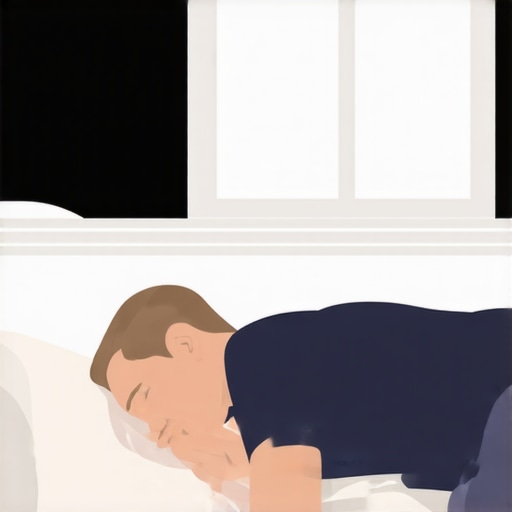
Stop the head tilt with the hand-under-pillow habit
We all do it—we slide a hand under the pillow to ‘boost’ the height. This is a massive red flag that your pillow has lost its structural integrity or was too thin to begin with. When you shove your arm under there, you are creating shoulder impingement and cutting off circulation. If you find yourself doing this, your old mattress or pillow is no longer doing its job. You are better off adding a folded towel underneath the pillow inside the case to provide a consistent, flat lift rather than using your arm as a temporary and painful shim.
Use the wall to calibrate your new setup
To see if your adjustments are working, try the 30-second wall reset before you go to bed and as soon as you wake up. If you can’t touch your head, shoulders, and glutes to the wall without strain after waking up, your pillow setup is still pushing you into a ‘hunch.’ I found that by refining these posture correction secrets, I didn’t just stop the pain—I actually felt more alert because my breathing wasn’t being restricted by a collapsed neck position.
The Big Stretching Lie We All Believe
Everyone tells you that if your neck feels like a rusted hinge, you need to stretch it out. In my experience, that is often the fastest way to stay in pain. We have been conditioned to think that tightness is the enemy, but often, your body is using that stiffness as a biological ‘parking brake.’ When your spine lacks stability, your brain sends a signal to the surrounding muscles to tighten up and protect the spinal cord. I see people constantly trying to enhance flexibility without ever addressing why the muscles are guarding in the first place. If you force a stretch on a muscle that is trying to protect an unstable joint, your body will just snap back twice as hard an hour later. This is exactly why stretching your hamstrings might be making your back pain worse—you are pulling on a rope that is already at its limit. Have you ever fallen into this trap of stretching for years with zero permanent relief? Let me know in the comments because I spent a decade doing exactly that.
Is it possible to have perfect mobility and still be in constant pain?
Absolutely. This is the nuance most ‘posture gurus’ miss. You can have a neck that moves like a gymnast, but if the small, deep stabilizer muscles aren’t firing, your larger ‘prime mover’ muscles have to do double duty. This leads to that deep, gnawing ache that feels like it’s inside the bone. A study published in the Journal of Orthopaedic & Sports Physical Therapy highlights that for chronic neck pain, motor control and stability training are often more effective than simple range-of-motion exercises. When you focus on daily adjustments to alleviate back pain, you aren’t just trying to ‘loosen up’; you are trying to recalibrate how your nervous system perceives threat. 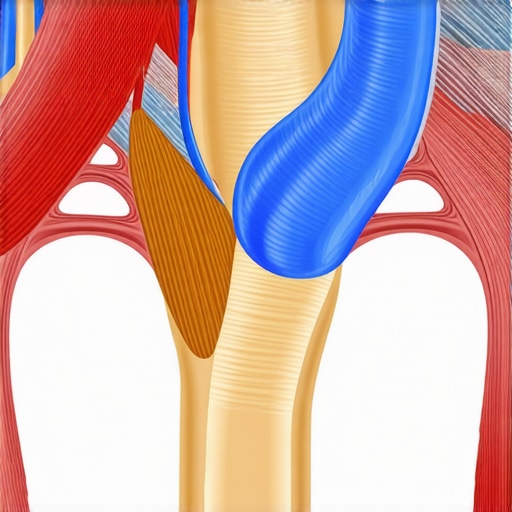
Why the sound of your spine isn’t always a good sign
We have to talk about the ‘self-cracker.’ You know who you are—you tilt your head to the side until you hear that satisfying pop. It feels great for thirty seconds, right? Here is the hidden danger: you are likely popping the joints that are already too loose (hypermobile) while the actual ‘stuck’ segments remain frozen. Over time, this creates a massive imbalance. This is why self-cracking your neck makes the stiffness come back faster every single time. You are essentially ‘over-stretching’ the ligaments, which can lead to long-term instability. True posture correction secrets involve targeting the specific segment that isn’t moving, rather than just shaking the whole tree. When you understand how an adjustment restores more than just range of motion, you realize it is about neurological input, not just ‘cracking’ bones. Stop chasing the temporary relief of a self-pop and start looking at the ‘silent’ joints that aren’t moving at all. That is where the real mobility mastery begins.
I have spent thousands on gadgets and ergonomic gizmos, but I have learned that the most effective tools are often the simplest ones used with consistency. I do not just buy gear; I buy time. For example, my laptop stand is not just a piece of aluminum; it is a tool to implement the 2-inch rule for your laptop stand to save my neck. If you are still looking down at a screen for eight hours a day, you are fighting a gravity-based war that you will eventually lose. To truly enhance your mobility, you need to stop creating new tension while you work. I also swear by a simple lumbar roll, but you have to be careful—most are far too thick for the average person. I actually discovered that why your lumbar support might be making your pain worse is usually because it pushes your lower back too far forward, creating an artificial arch that stresses your facet joints rather than supporting them.
How do I maintain these mobility gains over time?
The secret is what I call ‘micro-breaking.’ You do not need an hour of restorative yoga to stay healthy; you need thirty seconds of intentional movement every thirty minutes. I use the monitor height hack to keep my chin tucked naturally, and I set a silent haptic timer on my watch for a quick standing reset. Dr. Stuart McGill, a world-renowned spine biomechanics expert and author of Back Mechanic, emphasizes that ‘spine hygiene’—the specific way you brush your teeth, tie your shoes, and sit at your desk—matters far more for long-term disc health than your three-times-a-week gym session. If you adjust your routine to include these small, non-negotiable movements, you stop the accumulation of ‘micro-trauma’ that eventually leads to a major blowout.

The future of posture is active awareness
We are rapidly moving toward a world of wearable biofeedback. I predict that within the next few years, we will stop relying on rigid posture braces which actually cause muscle atrophy over time, and start using clothing with integrated haptic sensors that gently vibrate when our shoulders slump. This shift from ‘passive support’ to ‘active neurological awareness’ is how you truly master your mobility. If you are looking to upgrade your office setup, remember that the best way to transition from a sitting to a standing desk is to do it incrementally—standing for just ten minutes every hour—rather than trying to be a ‘standing warrior’ from day one and trashing your lower back in the process. I want you to try this right now: lift your monitor or laptop by just two inches using a stack of books and notice how much lighter your head feels by the end of the day.
The hard truths about why your neck still feels like stone
After years of experimenting with every ‘orthopedic’ gadget on the market, I realized that most of us are looking at sleep all wrong. Here are the three most important lightbulb moments I had during my own journey to master your mobility:
- Support is not the same as comfort. A pillow that feels like a cloud in the store often collapses under the weight of your head by 2:00 AM, leaving your neck unsupported for the rest of the night.
- You cannot out-stretch a bad sleeping position. If you spend eight hours in a cervical twist, no amount of the wall angel move in the morning will fully undo that structural stress.
- Your pillow has an expiration date. Most foam and fiber pillows lose their ‘loft’ or resilience after 18 to 24 months. If you can fold your pillow in half and it doesn’t spring back immediately, it is actively sabotaging your posture tips for 2025.
My go-to toolkit for a pain-free life
I am often asked what I personally use to maintain my spinal health. These are the resources that changed everything for me. First, Back Mechanic by Dr. Stuart McGill is the definitive guide for anyone struggling with chronic issues; it taught me how to move without triggering pain. Second, I always recommend a high-quality, adjustable loft pillow because it allows you to customize the height to your specific shoulder width. Third, for those who work at desks, I suggest a simple external keyboard so you can implement the best way to position your keyboard while keeping your monitor at eye level. Finally, if you are looking for posture correction secrets that actually stick, I swear by using a simple lumbar roll during long car rides to prevent that ‘driving slump’ that leads to mid-back burning.
Your spine deserves a fresh start
Changing your pillow or adjusting your monitor might seem like small, insignificant acts, but they are the foundational blocks of a life lived without limits. You don’t have to accept morning stiffness as a mandatory part of aging. By making these simple adjustments to relieve back pain, you are giving your nervous system the safety it needs to let go of tension. It’s time to stop fighting your own body and start supporting it. Every night is an opportunity to reset and every morning is a chance to move better than you did yesterday. Which sleep position do you usually wake up in, and do you notice more stiffness on one side than the other? Let me know in the comments below!