
I remember one Tuesday morning when I couldn’t even turn my head to check my blind spot while driving. It felt like a rusty hinge was stuck right at the base of my skull, clicking and grinding with every micro-movement. For months, I blamed my mattress, my phone, and even the way I sat at my desk. I spent a small fortune on ‘ergonomic’ gear, wondering why your pillow is actually pushing your head forward instead of helping you. But at a red light, I finally felt it. My teeth were clamped together like a vise. My jaw was on fire, and my neck was screaming in response. That was my lightbulb moment: I wasn’t just dealing with a ‘neck problem’—I was literally clenching my way into chronic pain. Today, we are going to stop chasing the symptoms and finally fix the connection between your jaw and that nagging upper neck pain. Have you ever felt like your neck stiffness just won’t budge no matter how much you stretch or rub it?
The Real Reason Your Morning Headache Won’t Quit
If you are anything like me, you probably wake up, rub the base of your skull, and wonder if you just slept ‘wrong’ for the thousandth time in a row. I used to think the hidden link between your jaw pain and your neck slump was some kind of medical myth. It isn’t. When your jaw muscles—specifically the masseters and temporalis—stay in a state of high alert, they send a constant, frantic signal to your upper neck muscles to stay ‘on guard.’ This creates a vicious cycle of tension that no amount of neck rubbing can fix because the source is two inches higher. It is a protective reflex gone rogue.
Can a tiny jaw joint actually mess up my entire spine?
It sounds like a bit of a stretch, doesn’t it? How can the joint that helps you chew a bagel be responsible for your chronic neck fatigue and those weird mid-day dizzy spells? It all comes down to what experts call the trigeminocervical complex. Essentially, your brain processes signals from your jaw and your upper neck in the same ‘sorting office.’ If the jaw is screaming in pain or tension, the neck feels the heat. According to research published in the Journal of Oral Rehabilitation, there is a documented neuroanatomical connection where trigeminal nerve input from the jaw directly influences the neural activity of the first three vertebrae of your spine.
How I Spent Years Chasing the Wrong Pain
My biggest mistake early on was obsessively stretching my neck while ignoring my face. I would spend twenty minutes a day pulling my head into different positions, only to feel the tension return within the hour. I even fell into the trap of thinking why self-cracking your neck makes the stiffness come back faster didn’t apply to me. I was wrong. I was also completely oblivious to how my mouth breathing habit is locking up your neck muscles and forcing my jaw into a perpetually stressed position. I was treating the smoke, not the fire. By looking at the jaw as the primary driver, we can finally give those tired neck muscles the permission they need to let go.To get that relief, you have to treat your jaw like a door hinge that has been painted shut. You can’t just force it open; you have to carefully dissolve the layers of paint first. I remember sitting in a high-stakes meeting three years ago, my jaw so tight I could barely speak without a lisp. Under the table, I began a simple intra-oral massage—literally sticking my thumb into my cheek to find the masseter. It was messy, and I probably looked insane to anyone glancing down, but the moment that muscle released, a wave of warmth flooded my upper neck. The ‘clogged’ feeling in my ears vanished instantly.
Release the Vice Grip on Your Masseters
The masseter is the strongest muscle in your body relative to its size. When it is stuck in a ‘clenched’ position, it pulls the skull forward, creating that heavy, lead-like feeling at the base of your head. To fix this, you need to perform a manual release. Place your pads of your fingers on the hinge of your jaw, just below your earlobes. Open your mouth slightly and move your fingers in slow, circular motions while applying deep pressure. If you feel a ‘trigger point’ that sends a dull ache toward your eye or ear, hold it for thirty seconds while breathing deeply. This is a vital part of how to relieve neck tension caused by high stress because it interrupts the neurological loop between the trigeminal nerve and the cervical spine. 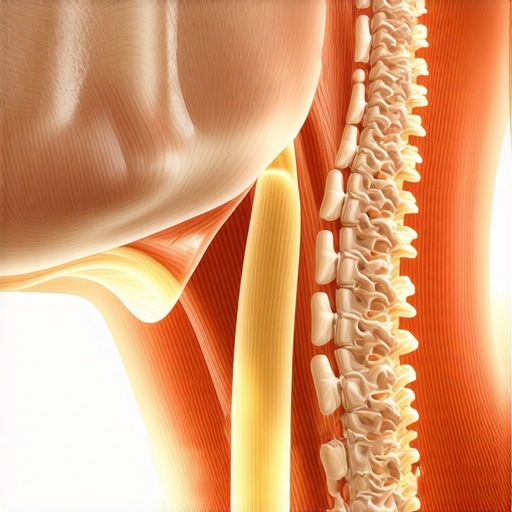
Park Your Tongue for a Stable Spine
Most people let their tongue sit on the floor of their mouth or press it against their bottom teeth. This actually collapses the airway and forces the neck muscles to work harder to keep your head upright. You want your tongue ‘parked’ on the roof of your mouth, just behind your front teeth (but not touching them). Think of your tongue as a kickstand for your skull. When the tongue is properly positioned, it provides internal support for the jaw and neck. I found that mastering this ‘mewing’ technique was far more effective than any expensive neck brace. It is one of those posture correction secrets that transform back pain outcomes because it stabilizes the entire head-neck-shoulder complex from the inside out.
Fix Your Breathing Before Your Neck Breaks
If you are breathing into your chest, you are using your ‘accessory’ neck muscles—the scalenes and SCM—to lift your ribcage thousands of times a day. This keeps your jaw in a state of constant tension. You must learn how your breathing pattern keeps your back muscles guarded to stop this cycle. Focus on expanding your lower ribs laterally as you inhale. This decompression of the upper chest allows the shoulders to drop, which naturally takes the strain off the jaw.
Reset Your Postural Foundation
Your jaw cannot relax if your shoulders are rolled forward like a caveman’s. I used to think I could just ‘think’ myself into better posture, but my muscles were physically too short to allow it. I started using the 30-second desk fix for your tight pectoral muscles to open up my chest. Once the chest is open, you can perform the simple scapular reset for instant shoulder tension relief, which moves the shoulder blades back into their proper ‘pockets.’ This structural change is the only way to give the jaw a stable base to sit on. If your shoulders are a mess, your jaw will always be the ‘anchor’ trying to hold everything together. To keep the progress going throughout the day, I recommend the wall-angel move that reverses a day of hunching over a phone, which retrains the upper back to support the weight of the head without relying on the jaw and upper neck muscles. You should also identify the one muscle you need to stretch to stop tension headaches, which is usually the suboccipital group right at the base of the skull, which relaxes once the jaw pressure is gone.
It is easy to think that if a muscle feels tight, the solution is to pull on it until it lets go. But after years of working through my own chronic pain, I realized that the body is far more clever—and more stubborn—than a simple rubber band. We often mistake ‘neurological guarding’ for actual muscle shortness. If your brain perceives a lack of stability in your spine, it will command your muscles to tighten up like a secondary splint. This is why you can spend hours on a foam roller and feel exactly the same the next morning.
Stop Stretching Your Hamstrings to Save Your Back
One of the most common pieces of advice for back pain is to ‘stretch your tight hamstrings.’ In my experience, this is often the exact opposite of what you should do. If your pelvis is tilted too far forward, your hamstrings are already being pulled taut like a bowstring. Stretching them further just irritates the sit-bones and destabilizes the lower back. This is exactly why you should stop stretching your hamstrings for back relief and start focusing on pelvic neutrality instead. When I stopped chasing hamstring flexibility and started working on core stability, my ‘tightness’ vanished without a single traditional stretch.
Why does my back still lock up even if I am flexible?
This is the question that haunts every yoga enthusiast with a nagging ache. The answer usually lies in the difference between passive flexibility and active stability. You might be able to contort into a pretzel, but if your deep stabilizers aren’t firing, your larger ‘mover’ muscles will seize up to protect your discs. This is a primary reason why your yoga practice might be hurting your sacroiliac joint. According to research by Dr. Stuart McGill, a leading expert in spine biomechanics, ‘proximal stiffness’ (core stability) is actually what allows for ‘distal mobility’ (free movement of the limbs). Without that stiff core, your jaw, neck, and hips will always feel locked.
The Hidden Danger of Your Ergonomic Chair
We are told to buy chairs with massive lumbar supports, but I found out the hard way that why your lumbar support might be making your pain worse is a very real phenomenon. If the support is too aggressive, it pushes your spine into an artificial arch that shuts down your abdominal muscles. You end up hanging on your spinal ligaments rather than using your muscles to sit. I eventually switched to a flatter support that forced my own muscles to do the work, and the mid-back burning I’d had for years disappeared. If you are struggling with this, try the deadbug variation for people with weak lower backs to wake up those dormant stabilizers before you sit down for the day.
Avoid the Trap of the 90-90 Stretch
Another ‘expert’ move that often goes wrong is the hip opener. While mobility is great, many people perform these moves by twisting their lower spine rather than moving from the hip socket. I see this constantly with the 90-90 hip stretch mistake that is hurting your lumbar spine. If you feel a pinch in your back while trying to ‘fix’ your hips, you are just trading one problem for another. You have to master your mobility by isolating the joint you actually intend to move. Have you ever fallen into the trap of stretching a ‘tight’ muscle only to have it feel even worse an hour later? Let me know in the comments—I have been there too, and it usually means your body is screaming for stability, not more length.
Maintaining a pain-free life isn’t about one giant effort; it is about the small, consistent habits that keep your system from reverting to its old, compressed state. Once I realized that my body was essentially a collection of pulleys and levers, I stopped looking for a magic pill and started looking for the right tools to keep those levers moving. If you have been following along, you know that the jaw, neck, and lower back are all part of one continuous chain. If you neglect one, the others will eventually pay the price.
Stop relying on sheer willpower to sit up straight
I spent years trying to ‘force’ myself into better posture, and it never lasted more than five minutes. The truth is, your muscles will always default to the path of least resistance. To change that path, you need specific tools that provide feedback. One of the most effective gadgets I’ve added to my routine isn’t a thousand-dollar chair, but a simple 12-inch firm foam roller. Knowing the proper way to use a foam roller on your upper back allows you to mobilize the thoracic spine, which acts as the ‘middle man’ between your neck and your lower back. When this area is mobile, your neck doesn’t have to work as hard to keep your head up. I also keep a tennis ball in my desk drawer. I’ve found that learning how to use a tennis ball to release tension in your feet and back is a game-changer during long calls. By rolling the arches of my feet, I am actually releasing the plantar fascia, which connects all the way up through the back of the legs to the base of the skull.

The gear I actually pack in my suitcase for back health
Travel used to be my biggest trigger for a flare-up. Now, I have a non-negotiable setup. I always carry a laptop stand to ensure I’m following the 2-inch rule for your laptop stand to save your neck from strain. This keeps my eye line level and prevents that ‘tech neck’ slump that causes the jaw to clench. If I’m working from a hotel or a café, I apply the monitor height hack for preventing c7-t1 nerve pressure even if it means propping my laptop up on a stack of books. These aren’t just ‘ergonomic suggestions’—they are mechanical requirements for a spine that isn’t under constant shear stress.
How do I maintain these results once the pain stops?
The biggest mistake people make is stopping their routine the moment they feel 80% better. Longevity in back health comes from integrating these moves into your lifestyle. Dr. Kelly Starrett, author of Becoming a Supple Leopard, notes that ‘the best position is your next position.’ This means you shouldn’t just find one ‘perfect’ way to sit; you should be constantly shifting and moving. I make it a point to adjust your routine with daily spinal alignments so that my body never gets too comfortable in one stagnant pose. I also rely on the morning routine to decompress your spine before coffee to reset my discs after eight hours of gravity pressing down on them.
Wearable sensors are the next frontier of spinal care
In the near future, I predict we will see a massive shift toward biofeedback wearables—thin sensors that stick to your skin and vibrate the moment your scapulae lose their stability or your jaw starts to tighten. We won’t have to ‘remember’ to sit well; our clothes will remind us. Until then, we have to be our own advocates. If you are sitting at a desk right now, I want you to try the 30-second wall reset for hunchback posture. It is the single most effective way to remind your nervous system where ‘home’ is. If you’ve felt that deep, nagging ache in your psoas from sitting too long, don’t ignore it—try the psoas release that finally stops your deep lower back ache and see how much lighter your entire spine feels within minutes.
Why Chasing the Pain Is a Losing Battle
The biggest ‘lightbulb moment’ of my recovery was realizing that the spot that screams is rarely the source of the fire. My jaw was the arsonist, and my neck was just the smoke. For years, I treated the symptoms while the cause stayed hidden in my clenching habits. I learned that the body doesn’t just get tight; it guards itself when it feels unstable. Once I stopped trying to force my muscles into submission and started providing them with stability, the guarding stopped.
I wish someone had told me years ago that ‘tightness’ is often just a signal of weakness elsewhere. Stretching a muscle that is already overstretched by poor posture is like pulling on a fraying rope. The real shift happened when I stopped looking at my body as a set of isolated parts and started seeing it as a pressurized system where a tight jaw directly impacts the stability of my lower back. I realized that daily adjustments to alleviate back pain and improve posture are about these neurological resets.
The Three Tools I Use to Stay Pain-Free Every Day
I don’t leave my house without a plan to manage my spinal health. If you want to move beyond the cycle of flare-ups, you need a toolkit that works with your biology, not against it. First, I never work without ensuring the 2-inch rule for your laptop stand to save your neck from strain is met; it is the simplest way to keep the jaw from jutting forward. Second, I use the proper way to use a foam roller on your upper back every evening to undo the compression of the day. Finally, I’ve mastered how to use a tennis ball to release tension in your feet and back while I’m sitting at my desk. These tools aren’t just gadgets; they are my defense against the return of chronic tension. #IMAGE_PLACEHOLDER_E#
Your Path to a Life Without Chronic Stiffness
You don’t have to live with a head that feels too heavy for your shoulders or a jaw that clicks with every word. By looking at the connection between your teeth, your tongue, and your tailbone, you are already ahead of 90% of people struggling with these issues. Applying these posture correction secrets that transform back pain outcomes will eventually make movement feel effortless again. Your body is designed to move without pain—you just have to give it the right environment to do so. Have you ever noticed your jaw clenching during a stressful workday? Let me know in the comments if you feel the tension move into your neck afterward.