

I remember one Tuesday morning specifically. I tried to back out of my driveway, and my neck just… seized. It wasn’t a sharp injury; it was a dull, heavy concrete-like stiffness that made checking for traffic impossible. I’d spent three weeks grinding through a massive project, and apparently, my upper traps had decided to hold onto every single email, deadline, and late-night caffeine hit. I realized right then that ‘toughing it out’ was actually turning my neck into a permanent knot. We are going to walk through how to break that cycle today without needing a month-long retreat or a career change.
Why your body picks your neck to store all that stress
It’s almost like a cruel joke, isn’t it? When life gets loud, your shoulders try to become earrings. This isn’t just you being ‘tense’; it’s a physiological response. I spent years thinking I just needed to ‘stretch more,’ but I was actually making it worse by pulling on muscles that were already over-lengthened and tired. I even used to crack my own neck constantly, thinking that ‘pop’ meant I was winning. Spoiler: I wasn’t. You’re likely fighting a battle against your own nervous system, which is trying to protect you by bracing for impact.
Is it actually possible to relax your neck while the stress is still happening?
This is the big one I get asked all the time. Most people think they have to quit their jobs or move to a desert island to find relief. But the truth is, your nervous system is just stuck in a loop. According to the American Psychological Association, chronic stress causes the muscles to stay in a state of constant guard, which eventually leads to those agonizing ‘stress headaches.’ You don’t necessarily need a vacation; you need to change how your body processes the pressure. Sometimes, even a small change to your desk setup can signal to your brain that it’s okay to let go of the ‘fight or flight’ grip.
The trap of mouth breathing when you’re overwhelmed
One huge mistake I made early on was ignoring my breath. When I’m stressed, I tend to hold my breath or take shallow gulps through my mouth. It sounds minor, but mouth breathing actually locks up the accessory muscles in your neck. My neck was working double-time just to help me breathe! Once I fixed that, the baseline tension dropped significantly. Have you noticed yourself clenching your jaw or holding your breath when you’re deep in a task? It’s the first sign your neck is about to pay the price. In the next section, we’ll dive into the specific movements that actually tell those muscles to stand down.
Stop the cycle before you reach for the pills
I remember sitting in a high-stakes board meeting three years ago. I felt that familiar tightness creeping up toward my ears. In a desperate attempt at ‘relief,’ I yanked my head to the side to stretch. Big mistake. Instead of a release, I felt a sharp zing that left me unable to look left for two days. I was treating the symptom, not the source. The real fix started lower down, in my ribcage. Think of your neck like a flag on a pole. If the pole (your spine) is leaning and the base (your core) is unstable, the flag is going to flap and fray no matter how many times you iron it. You have to stabilize the base first before those upper muscles will ever feel safe enough to let go.
Expand your ribs to drop your shoulders
When you’re under the gun, your breathing moves north into your collarbones. This forces the small muscles in your neck to lift your entire ribcage 20,000 times a day. It’s like using a tiny screwdriver to pry open a vault; it’s going to snap eventually. How your breathing pattern keeps your back muscles guarded is the first thing you need to address. Instead of breathing up, focus on breathing out laterally into your lower ribs. The thoracic move that makes deep breathing feel natural is the quickest way to tell your brain the ’emergency’ is over. When your ribs move properly, your shoulders don’t have to carry the load of your breath.
The wall move that clears a day of slouching
Next, you need to physically open the front of your body to release the back. I used to think ‘good posture’ meant military-style stiffness, but that just added more tension. Instead, try the simple scapular reset for instant shoulder tension relief. Instead of pulling your shoulders ‘down and back’—which usually just creates new tension—imagine tucking your shoulder blades into your back pockets. One of my favorite ’emergency’ moves is the wall angel move that reverses a day of hunching over a phone. I do this every afternoon at 3:00 PM when the 2:00 PM slump starts to solidify into a headache. It feels awkward at first—your arms might even tingle—but it resets the neuro-muscular map of your upper body.
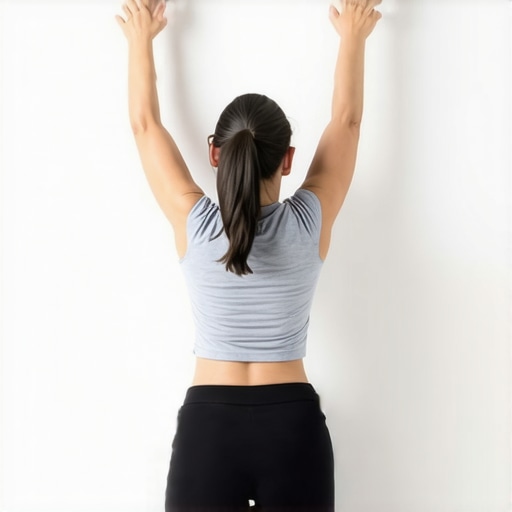
Why your core is the secret anchor for your neck
Finally, remember that the deep core connection that stops your spine from shear stress is actually what keeps your neck from overworking. If your mid-section is ‘off’ or disconnected, your neck muscles try to act as stabilizers for your entire torso. They weren’t built for that job. By engaging your lower abs and finding a neutral pelvis, you take the ‘security guard’ duty away from your neck. I noticed that on days I focused on my core engagement while typing, I didn’t leave my desk feeling like I needed a massage. It’s about creating a solid foundation so the top floor of your body—the neck—can finally stop bracing for impact.
I see it every single day in the clinic: a patient walks in, frustrated because they’ve been diligently stretching their hamstrings for six months, yet their lower back pain hasn’t budged. They’re doing ‘everything right,’ according to the typical fitness advice, but they’re missing a massive piece of the puzzle. The hard truth is that many of us are trying to solve a stability problem with a flexibility solution. When your brain senses that your spine is vulnerable or unsupported, it sends a signal to the surrounding muscles—like your hamstrings or glutes—to tighten up as a protective ‘splint.’ If you keep trying to stretch that tightness away, you’re essentially fighting your own security system.
Stop tugging on your hamstrings
Everyone says you need loose hamstrings to have a healthy back, but in my experience, the opposite is often true. If your hamstrings feel like steel cables, it’s rarely because the muscle itself is physically short. Instead, your nervous system is using them to anchor your pelvis because your deep core isn’t doing its job. You should actually stop stretching your hamstrings for back relief if they never seem to ‘stay’ loose. By aggressively stretching them, you might be removing the only thing keeping your pelvis from tilting into a position that puts even more stress on your lumbar discs. It’s a classic ‘oops’ factor where the remedy actually fuels the fire.
The hip flexor trap you need to avoid
The same logic applies to the psoas. We’ve been told that sitting all day makes our hip flexors short and tight, so we spend twenty minutes a day in a deep lunge. However, stretching your psoas might actually be making your back hurt more if you aren’t stabilizing your spine first. Dr. Stuart McGill, a world-renowned expert in spine biomechanics, has often pointed out that most back pain sufferers actually need more stability, not more range of motion. If you crank on your hip flexors without a neutral spine, you’re just pulling your lower vertebrae forward, creating a ‘shearing’ force that the discs hate. Have you ever fallen into this trap? Let me know in the comments if stretching has ever backfired for you.
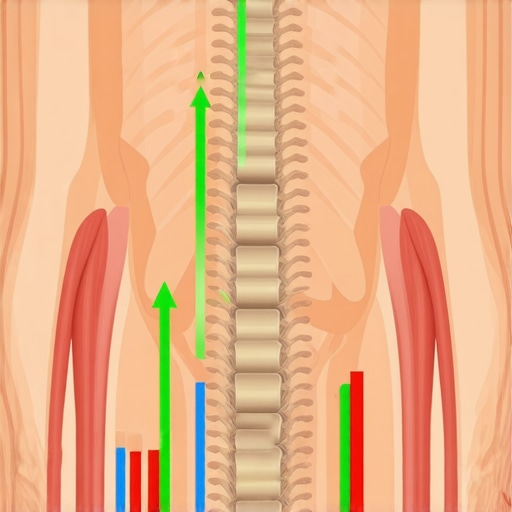
Why do adjustments sometimes feel like they wear off by lunchtime?
This is a sophisticated question I get from patients who are deep into their recovery journey. They feel amazing after a session, but by the time they finish their first meeting, the tightness is back. The reason is usually ‘motor mapping.’ While how an adjustment restores more than just range of motion is fascinating—it’s essentially a hard reset for your nerves—it doesn’t automatically rewrite your bad habits. If you return to a slumped posture, you’re feeding the old ‘pain map’ back into your brain. To make it stick, you have to adjust your routine with daily spinal alignments and micro-movements that reinforce the new, healthy position. You can master your mobility only when you stop treating the body like a series of isolated parts and start treating it like a connected system that values safety over everything else.
The gear that actually lives on my desk
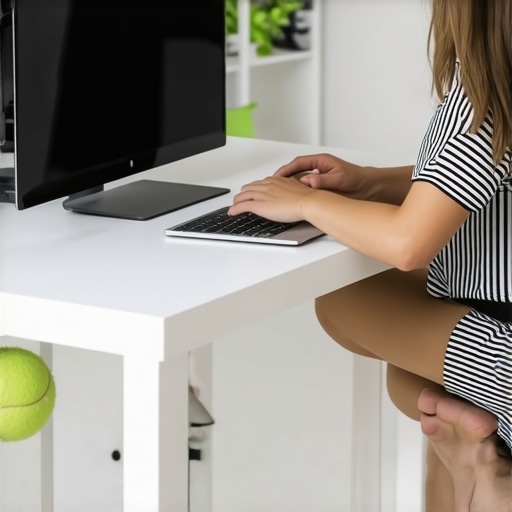
After years of trial and error, I’ve realized that the best tools aren’t the most expensive ones. I used to think a $1,200 chair would solve my problems, but it didn’t. What actually worked was a simple, sturdy laptop riser. If you are looking down at your screen, you are essentially hanging a bowling ball off your neck for eight hours. I live by the 2-inch rule for your laptop stand to save your neck from strain. It’s a non-negotiable for me now. If my monitor isn’t at eye level, my C7-T1 junction starts to scream by lunchtime. But you have to be careful; is your laptop stand actually making your neck tension worse by being too high? It’s a delicate balance. I also keep a tennis ball under my desk at all times. Knowing how to use a tennis ball to release tension in your feet and back is like having a private massage therapist who works for free. Rolling out the plantar fascia on my feet actually relaxes the entire posterior chain, including my lower back.
How do I maintain my mobility when I’m too busy to exercise?
This is where most people fall off the wagon. They think maintenance requires a 60-minute gym session. It doesn’t. As mobility expert Dr. Kelly Starrett often notes in his ‘Ready State’ methodology, the goal is to perform 10 to 15 minutes of ‘maintenance’ every single day to offset the ‘debt’ of sitting. I treat my body like a high-performance car; you don’t wait for the engine to smoke before you check the oil. I’ve found that I can master your mobility by simply integrating micro-movements into my workflow. Every time I finish a phone call, I do a quick pelvic reset. I use the chair hack to keep your pelvis neutral while working, which usually just involves a small rolled-up towel at the base of my spine. It’s about building a lifestyle where you adjust your routine daily spinal alignments for lasting relief rather than waiting for a crisis to strike.
Why high-tech gadgets won’t save a lazy core
Looking toward 2025, I see a huge trend in wearable biofeedback—devices that vibrate when you slouch. While these can be helpful, they are just ‘reminders.’ They don’t build the actual strength required to stay upright. The real long-term result comes from the deep core connection that stops your spine from shear stress. You can’t outsource your stability to a gadget. I predict we will see a shift back to ‘ancestral’ movements—more floor sitting and varied resting positions—to combat the stagnation of modern office life. If you want to stay ahead of the curve, stop looking for the next ‘magic’ pillow and start focusing on how your breath supports your spine. Try this right now: Place one hand on your lower ribs and take a breath that pushes your hand outward, not your shoulders upward. That tiny shift is the foundation of everything we’ve discussed. It’s the simplest way to unlocking better posture simple adjustments to relieve back pain that you can do anywhere, even in a crowded elevator.
The Hard Truth About My Year-Long Fight for Stability
I spent years thinking I could out-stretch a bad habit. The biggest lightbulb moment I ever had was realizing my body wasn’t actually ‘tight’; it was scared. When I stopped fighting my nervous system and started showing it safety through stability, that cement-like tension finally began to melt. I learned the hard way that more intensity isn’t the answer. I finally understood why cracking your own back is only a temporary fix—it’s just a noisy distraction from the real issue of spinal instability. My breakthrough came when I stopped looking for a ‘release’ and started building a foundation that allowed my muscles to stop acting like a full-time security detail.
The Low-Tech Tools That Actually Saved My Spine
You don’t need a high-tech gadget or a thousand-dollar chair to fix your frame. My essential toolkit is remarkably simple and lives right under my desk. I rely on a tennis ball for my feet, a firm rolled-up towel for daily adjustments to alleviate back pain and improve posture, and a timer that reminds me to breathe. I also frequently revisit mobility mastery simple exercises to relieve chronic back pain because they prioritize long-term function over short-term relief. These tools work because they address the root cause of how we hold ourselves throughout the day, rather than just masking the ache for an hour.
Reclaiming the Movement You Were Born With
Healing isn’t always a straight line, but it is absolutely achievable if you stay consistent with the small things. As you begin to enhance your mobility expert tips for easier movement in 2025 will become a natural part of your daily flow. You can finally stop bracing for impact and start living with a body that feels light and capable again. If you’re looking for the best place to begin, I highly recommend adopting the morning routine to decompress your spine before coffee to set a positive, fluid tone for your entire day. You deserve to move without fear. Which part of your body feels the most ‘locked up’ when you’re under pressure—is it your neck, your jaw, or your lower back? Let me know in the comments below!