
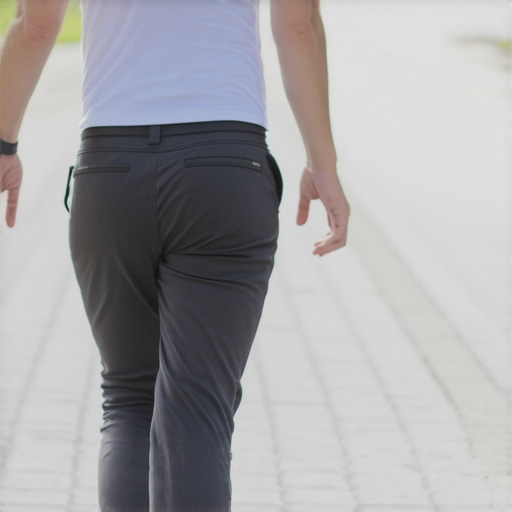
I remember the exact moment it clicked. I was three miles into my favorite loop around the reservoir, the sun was setting, and my lower back started that familiar, dull throb. It wasn’t a sharp “oops I pulled something” feeling. It was a slow-burn ache that made me want to sit on the nearest curb and stay there forever. For months, I blamed my “flat feet” or the fact that I spent all day in a chair. I even bought those obscenely expensive orthotics that promised the world. But the pain didn’t care about my new shoes. It wasn’t until I stopped obsessing over my gear and started looking at how I actually moved that the truth came out.
Your Evening Stroll Shouldn’t End with a Heating Pad
If you are like me, you probably think walking is the ultimate “safe” exercise. We are told to get our steps in to save our hearts, but nobody mentions what happens when those steps start eating away at your lumbar spine. I spent years making one massive mistake: I thought the solution to my back ache was more flexibility. I would spend twenty minutes every morning touching my toes, not realizing that why stretching your hamstrings might be making your back pain worse is a real phenomenon if the underlying issue is nerve tension or pelvic instability. I was literally pulling on my nervous system, then wondering why it screamed at me after a mile of walking. We’re going to dig into why your mechanics are the real culprit today, specifically how your stride length and pelvic tilt are secretly conspiring to keep you on the couch. Have you ever felt that specific “locking” sensation in your hips after a walk? Let me know in the comments—I’m curious if yours hits on the left or the right side first.
Is my body just not built for long distances anymore?
This is the fear that keeps us from the trailhead. We worry that our “glitchy” back is just a permanent part of our identity now. But here is a reality check: a study published by the Journal of Biomechanics suggests that walking gait is not a fixed trait; even small, conscious adjustments to stride frequency can reduce joint loads by up to 15%. Your body isn’t broken; it’s likely just “over-striding.”
Why your pelvis is secretly working against you
When we get tired, our form goes out the window. Most people don’t walk; they “fall” forward and catch themselves with their heels. This creates a jarring force that travels straight up to the L5-S1 disc. I used to do this thing where I would let one hip drop slightly with every step. I didn’t even know how to stop your pelvis from hiking every time you walk until I realized my core was basically asleep at the wheel. When that pelvis tilts or hikes, your lower back muscles have to work quadruple-time just to keep you upright. It’s no wonder you feel like you’ve been hit by a truck by the time you reach your front door. Learning the simple tweak to your walking stride that saves your hips was the first step in my journey back to pain-free hikes, and it involves a lot less “stretching” and a lot more “aligning.” Sometimes the fix is as simple as looking at the foot arch connection to your chronic lower back spasms and realizing your foundation is crumbling before you even take your first step.
Stop reaching and start pushing
I used to think that to walk faster, I needed to take bigger steps. I’d reach my lead foot out as far as it would go, digging my heel into the pavement like a tent stake. Every time I did that, a shockwave traveled from the concrete, through my heel, and straight into my L5-S1 disc. This is what we call over-striding, and it’s the fastest way to keep a chiropractor in business. Instead of reaching forward, you need to focus on pushing off with your back foot. Think of your legs like the pistons of an engine; the power comes from the rear, not the reach. When you shorten your stride and keep your feet under your center of gravity, you eliminate that shearing force on your lower back. If you’ve spent years sitting at a desk, you might find that why your sitting habits are causing your hamstrings to tighten has left your stride naturally restricted, making you want to ‘cheat’ by over-reaching with your heels.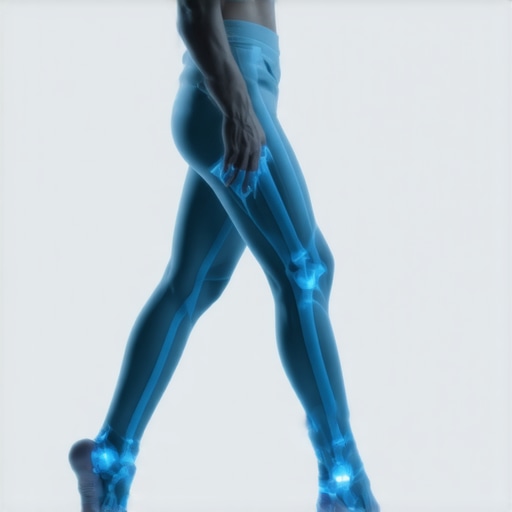
The simple glute trick that stabilizes your spine
Last summer, I attempted a coastal trail hike that was supposed to be easy. By the second mile, my lower back was screaming. I realized I was ‘duck walking’—my pelvis was tilted forward, and my butt was effectively turned off. I stopped right there on the trail and did a few repetitions of the morning glute squeeze that protects your spine all day. It felt ridiculous standing there squeezing my glutes in hiking gear, but the result was instant. By engaging the glutes, I forced my pelvis back into a neutral position. If your glutes are ‘asleep,’ your lower back muscles have to take over the job of stabilizing your entire torso. You can’t expect your lumbar spine to do the job of the largest muscle group in your body without paying for it in pain.
Level your pelvic bowl to stop the ache
Imagine your pelvis is a bowl full of water. If you tilt too far forward (anterior tilt), the water spills out the front; too far back (posterior tilt), and it spills out the back. Most of us walk with the water spilling out the front, which puts a massive arch in the lower back and pinches the facet joints. To fix this, you need to learn why your pelvis tilts forward and how to reset it fast. When you walk, try to keep that ‘bowl’ level. This doesn’t mean sucking in your gut—which is actually counterproductive—but rather finding a mid-point where your spine feels long. It helps to understand how your breathing pattern keeps your back muscles guarded because if you are breathing high in your chest, you’ll never be able to relax your pelvis into the right position. Try breathing ‘wide’ into your lower ribs to create internal pressure that supports your spine from the inside out.
Stop trying to sit perfectly still
I spent a small fortune on a chair that looked like it belonged in a NASA cockpit, thinking that if I could just find the ‘perfect’ 90-degree angle, my back pain would vanish. It didn’t. In fact, it got worse. The biggest lie we are told about ergonomics is that there is a single, static position that will save us. Research published in The Spine Journal suggests that postural variability—frequently changing your position—is far more effective at reducing spinal load than maintaining one ‘ideal’ posture for hours. When you stay frozen in what you think is a perfect alignment, you are actually starving your spinal discs of the nutrient-rich fluids they get through movement. I realized that why your expensive desk chair might be giving you false sciatica usually comes down to this lack of micro-movements. You are effectively ‘casting’ your spine in a mold, which leads to stiffness and muscle guarding.
The hidden trap of stretching ‘tight’ nerves
We have been conditioned to believe that ‘tight’ equals ‘needs stretching.’ This is a dangerous oversimplification. If you feel a tugging in the back of your leg and your immediate instinct is to do a deep forward fold, you might be falling into the most common trap in mobility. Sometimes, that tightness isn’t your muscle at all—it’s your sciatic nerve being over-tensioned. When you stretch a sensitized nerve, the body responds by tightening the muscles even more to protect it. I see so many people wondering why stretching your hamstrings might be making your back pain worse, and the answer is usually that they are literally yanking on their nervous system. Before you reach for your toes tomorrow morning, try the morning toe touch test: what it says about your disc health to see if you are dealing with a mechanical block or true muscular tightness. If you feel a ‘zing’ or an electric pull, stop stretching immediately. You are likely making the inflammation worse.
Can I ever fully recover if my discs are already showing wear and tear?
This is the question I get most often from readers who have seen their own MRI results. It is easy to feel like your spine is a ticking time bomb once you see terms like ‘degeneration’ or ‘bulge.’ However, the nuance most people miss is that structural changes don’t always equal pain. Advanced practitioners focus on ‘functional’ capacity rather than just ‘structural’ perfection. By using posture correction secrets that transform back pain outcomes, you can offload those sensitive areas enough to let the inflammation subside. Even if your discs aren’t ‘pristine,’ a spine that moves well is a spine that feels well. Don’t let a piece of paper dictate your activity level. Have you ever fallen into the trap of ‘perfect’ posture only to feel stiffer than before? Let me know in the comments—I’m curious how many of you have tried those rigid posture braces and muscle atrophy traps that promise a quick fix but leave your core weaker than when you started.The biggest trap in recovery is the ‘finish line’ fallacy. I used to think that once the sharp pain stopped, I was ‘cured.’ I’d go back to my old ways of slouching on the sofa and wonder why the dull ache returned within 72 hours. The truth is, your spine is a living, breathing mechanical system that requires regular ‘greasing’ rather than a one-time fix. One tool I never travel without now is a compact, adjustable laptop stand. Applying the 2-inch rule for your laptop stand to save your neck from strain changed the game for my work trips. If the top of your screen isn’t at eye level, your neck muscles are basically holding up a twelve-pound bowling ball at an angle for eight hours. No amount of stretching can outrun that kind of mechanical disadvantage. I also swear by the 30-second wall reset for hunchback posture whenever I feel my shoulders creeping toward my ears. It’s my go-to diagnostic tool; if I can’t comfortably touch the back of my head to the wall without arching my lower back, I know I’ve spent too long in a ‘closed’ position.
The gear I actually pack in my laptop bag
It’s not just about the big adjustments; it’s the micro-tools that keep you aligned when life gets busy. For me, that meant ditching those generic, mushy foam pillows and switching to a portable lumbar support that actually mimics the natural curve of the spine. When I’m stuck on a plane or in a rental car, I prioritize adjust your routine: daily spinal alignments for lasting relief by ensuring my seat is set to support my mid-back, preventing that ‘C-shape’ slump that kills the lumbar discs. Dr. Stuart McGill, a world-renowned expert in spine mechanics and author of ‘Back Mechanic,’ emphasizes that ‘stiffness’ in the right places—like the core—is actually what allows the spine to remain resilient under load. This isn’t about having a six-pack; it’s about having a functional ‘corset’ of muscle that prevents the micro-movements that lead to inflammation. 
How do I keep this momentum going for the long haul?
Long-term maintenance isn’t about doing a grueling 60-minute workout every day; it’s about integrating the morning routine to decompress your spine before coffee into your existing habits. In the next few years, I predict we will see a massive shift toward biofeedback wearables—think of them like ‘posture tutors’ that vibrate to alert you when your pelvis tilts out of neutral. We’re moving away from guessing and toward real-time data on how our bodies move. You might notice why you feel taller and lighter after a professional adjustment, and the goal of these tools is to preserve that decompression for days, not just hours. For those looking to enhance your mobility: expert tips for easier movement in 2025, remember that your spine is a high-performance vehicle: you wouldn’t wait for the engine to smoke before you changed the oil. My challenge to you: tonight, try one minute of floor-based breathing to let your spinal discs rehydrate. Your back will feel the difference the moment your feet hit the floor tomorrow morning.
Why Chasing Perfect Alignment Actually Failed Me
I spent years trying to force my body into a rigid, military-style stance, only to realize that stillness is the enemy of a happy spine. One major lightbulb moment was discovering that my ‘tight’ hamstrings were actually a protective nerve response, not a muscle issue. If I had known earlier why stretching your hamstrings might be making your back pain worse, I would have saved myself years of frustration and unnecessary strain. I also learned that the best posture correction secrets that transform back pain outcomes aren’t about sitting perfectly straight; they are about moving often and varying your load. Finally, I realized that my breath was the secret remote control for my core stability; without deep ribcage expansion, every other adjustment was just a temporary band-aid on a deeper mechanical problem.
The Low-Tech Survival Kit for Spinal Longevity
I don’t believe in magic pills or expensive gadgets, but I do believe in the right mechanics. My daily routine is incomplete without a few specific tools and resources that keep me on the trails. For anyone looking to unlock better back health with effective posture tips for 2025, I highly recommend ‘Back Mechanic’ by Dr. Stuart McGill. It is the most comprehensive guide to understanding your individual pain triggers. I also rely on a simple, firm lumbar roll for long car rides and a nightly bedtime routine that stops sciatica flare-ups to allow my nervous system to decompress after a long day of standing. These aren’t just ‘tips’; they are the foundation of how I stayed out of the operating room.
Reclaiming the Movement You Were Made For
You don’t have to live in fear of your own movement or treat your spine like it’s made of glass. Your body is incredibly resilient when you stop fighting against its natural design and start working with its mechanics. By focusing on top mobility strategies for active living and choosing to master your mobility, you can get back to the hiking, running, and playing that you love. Remember that consistency in these small tweaks beats a weekend of intense stretching every single time. Your spine was built to move, so give it the alignment it needs to do its job. Which of these gait changes are you going to try on your next walk—the shorter stride or the ‘level bowl’ pelvis? Let me know in the comments!