
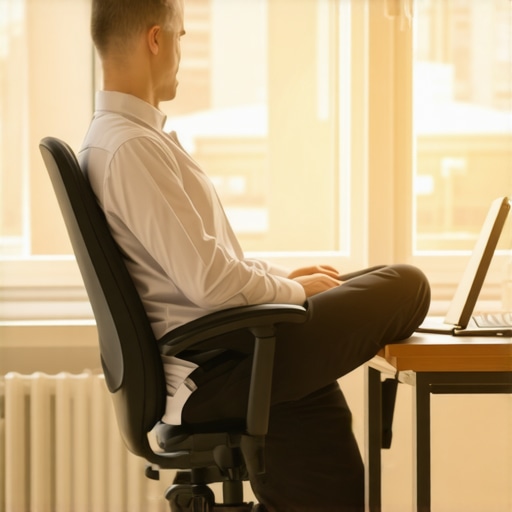
It was exactly 2:14 PM last Tuesday when I realized I was losing the battle against my office chair. I was staring at a half-finished report, but my brain was completely fried. Worse than the brain fog, though, was that familiar, gnawing ache deep in my right hip. It felt like a hot coal was buried under my glutes, radiating up into my lower back. I did what I usually do—I stood up, tried to shake it out, and even gave my back a quick twist. But the relief lasted about ten seconds. I used to think this was just ‘part of getting older’ or a sign that I needed a more expensive chair. I was wrong. For years, I made the classic mistake of thinking the pain was in my spine, so I spent way too much time learning why cracking your own back is only a temporary fix. The real culprit was my hips being locked in a seated position for hours on end, essentially turning off my core and strangling my mobility. Today, I’m going to share the exact seated hip stretch that saved my afternoons. No standing required, and no awkward gym clothes needed. Have you ever felt that deep, dull throb in your hip after a long morning of emails? It’s a game-changer when you finally find the ‘off’ switch for that pain.
Your Desk Chair Is Shaking Hands with Your Hip Pain
The truth is that our bodies weren’t designed to hold a 90-degree angle for eight hours a day. When you sit, your hip flexors are in a constantly shortened state. According to a report from the Mayo Clinic, sitting for long periods without movement doesn’t just make you stiff; it can actually lead to ‘adaptive shortening’ of the muscles, which pulls your pelvis out of alignment and creates a domino effect of pain. This is often why your sitting habits are causing your hamstrings to tighten, even if you aren’t doing any heavy lifting. I spent a long time focusing on the wrong muscles. I would stretch my hamstrings until I was blue in the face, only to find my back hurting more the next day. It wasn’t until I understood the connection between my seated posture and my pelvic tilt that things started to click.
Can a 30-second chair move really beat chronic tightness?
It sounds too good to be true, doesn’t it? We’ve been told that we need hour-long yoga sessions or expensive physical therapy to fix ‘sitting disease.’ But the beauty of a targeted seated stretch is that it hits the psoas and piriformis directly without requiring you to leave your workstation. When you hit that sweet spot, you’ll feel an immediate release of pressure in your lumbar spine. This is especially helpful if you’ve noticed the quick hip flexor release for people who sit 8 hours a day can prevent that ‘old man’ shuffle when you finally stand up to walk to your car. Even your breath plays a role here; you’d be surprised at how your breathing pattern keeps your back muscles guarded, making any stretch less effective if you’re shallow-breathing through the tension. By the time we finish this, you’ll have a tool you can use every single day to stay fluid and focused.
Find Your Sit-Bones Before You Start the Move
First, scoot your glutes to the very edge of your chair. If you stay tucked back into the lumbar support, you will never get the leverage you need to actually reach the deeper muscles. Think of your pelvis like a bowl of water; most of us sit with the bowl tipped backward, spilling water onto our back pockets. This is a primary reason how to tell if your pelvis is tilted forward or backward, and getting it level is step zero. Once you are on the edge, cross your right ankle over your left knee. If your knee is sticking straight up toward your chin, do not panic—that is just a sign of how much you need this. Ensure your grounded foot is flat on the floor, directly under your knee. If your foot is tucked under the chair or sticking out too far, you will lose the stability required to isolate the piriformis.
Hinge Your Hips Instead of Rounding Your Shoulders
The biggest mistake I see is trying to bring your chest to your knee by collapsing your ribcage. When you do this, you are not stretching your hip; you are just straining your spinal ligaments and increasing pressure on your discs. You have to move like a hinged door, not a wet noodle. Sit up as tall as possible, as if a string is pulling the crown of your head toward the ceiling. From that tall position, lean forward just an inch or two from the hip joints. You should feel an intense, deep pull in the outer glute of the crossed leg. This is essentially the same benefit as more complex moves, but without making the 90-90 hip stretch mistake that is hurting your lumbar spine. 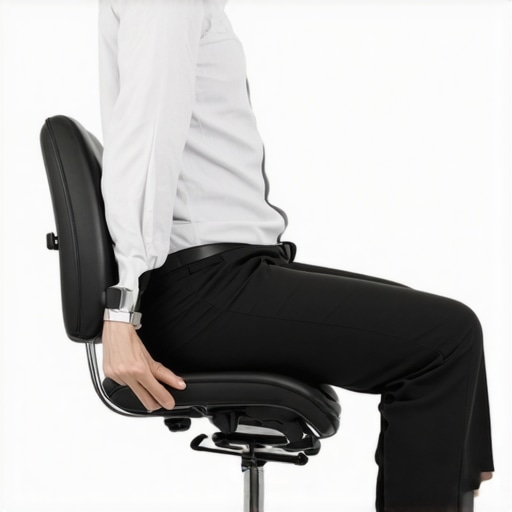
Ditch the Habit of Crossing Your Knees
While you are doing this, pay attention to how your body wants to compensate. Most of us have a favorite side to lean on, which is why you should stop crossing your legs immediately during normal work hours. I remember one specific Tuesday—ironically, the day after I bought a high-end ergonomic chair—where I tried to force this stretch while still rounded over my keyboard. I felt a sharp zip in my lower back because I was bypassing the hip joint and asking my lumbar spine to do the work. It was not until I shifted to the edge of my seat and leveled my pelvis that the stuck feeling in my hip finally let go. It was a messy realization that even the best tools cannot fix poor mechanics. The relief only came when I focused on the simple pelvic tilt that makes sitting for hours painless.
Use Your Breath to Bypass Your Guarding Reflex
Your nervous system is designed to protect you. If it senses a threat—like a deep stretch in a tight muscle—it will actually tighten up more to prevent a tear. To convince your brain that you are safe, you have to use your diaphragm. Instead of short, shallow breaths into your upper chest, focus on how to breathe through your ribs to ease lower back tension. Every time you exhale, imagine the tension in your hip melting just a little bit more. I once spent a whole afternoon feeling like my right leg was shorter than my left, only to realize I was holding my breath every time I felt a twinge. Five minutes of coordinated breathing and this seated pivot, and I felt like I had actually grown an inch. This targeted pressure release allows the hip to move through its full range without dragging the lower back into the fight.Most of us were raised with the ‘stand up straight’ command ringing in our ears, but here is a secret: rigid posture is a trap. When you force your spine into a military-style straight line, you’re actually creating a state of perpetual muscular fatigue. I see people all the time trying to ‘fix’ themselves with gadgets, but they don’t realize the truth about posture braces and muscle atrophy—you’re essentially teaching your muscles to stop working altogether. Real, functional mobility isn’t about a static position; it’s about your body’s ability to move through its range without restriction. This is exactly how an adjustment restores more than just range of motion; it resets the nervous system’s ‘stiffness’ threshold. 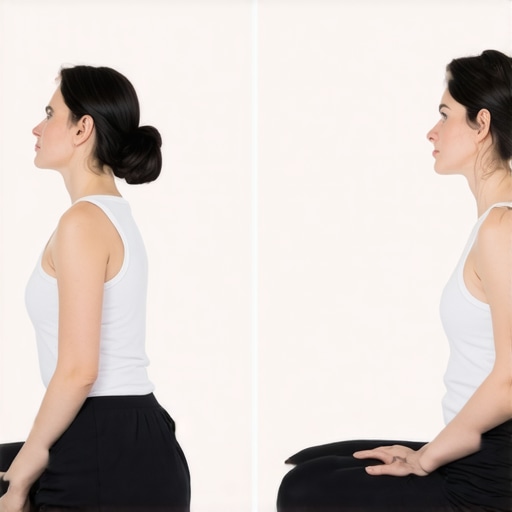
The Core Engagement Trap You Might Be Falling Into
The ‘Oops’ factor often comes from how we interpret the phrase ‘engage the core.’ Most people respond by sucking their belly buttons toward their spine. But why you should stop sucking in your stomach to look thinner is because it creates dysfunctional intra-abdominal pressure that actually pushes against your lumbar discs. A study published in the British Journal of Sports Medicine (BJSM) has highlighted that there is very little correlation between ‘poor’ static posture and the actual presence of pain. Instead, the real culprit is often ‘postural persistence’—the act of staying in any one position, even a ‘good’ one, for too long. When you stay static, you’re missing out on the posture correction secrets that transform back pain outcomes, which always prioritize movement over stillness.
Why does my back still ache when I’m sitting ‘correctly’?
You’ve got the ergonomic chair, the monitor is at the right height, and yet, the dull throb remains. The nuance most people miss is that your body cares more about blood flow and tissue hydration than it does about a mathematical 90-degree angle. If you’re ‘sitting correctly’ but your muscles are braced in anticipation of pain, you’re still starving your tissues of oxygen. You have to learn how to be ‘active’ while seated. This involves micro-movements and understanding master your mobility: top strategies for moving without pain. Have you ever fallen into this trap of trying to be too perfect with your desk setup only to feel worse? Let me know in the comments.
Ditch the High-Priced Gear for Simple Stacks
I’ve spent thousands on ‘ergonomic’ solutions that promised to end my misery, but most of them just gathered dust in the corner of my office. Now, my daily toolkit is surprisingly low-tech and focused on small, repeatable wins. For example, I refuse to work on a laptop without a dedicated stand anymore. It’s not just about eye level; it’s about preventing that subtle cervical slump that compresses your diaphragm. I personally follow the 2-inch rule for your laptop stand to save your neck from strain because even a slight deviation in screen height sends my upper traps into a protective spasm by 3:00 PM. I use a simple aluminum riser that fits in my bag, and the difference in my neck tension at the end of the day is night and day compared to when I’m hunching over a flat desk surface. 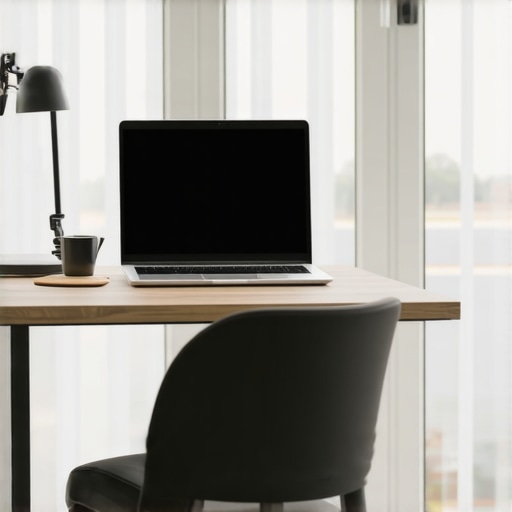
Save Your Hips with the One-Foot-Up Rule
If you’ve made the switch to a standing desk, you might have noticed a new kind of fatigue in your lower back. The mistake I made for months was standing perfectly still with my knees locked. I’ve found that the one thing your standing desk is missing for hip health is a simple footrest or even a yoga block. By placing one foot up on a 4-inch elevation, you allow your psoas to relax and prevent your pelvis from tilting into a painful arch. This micro-adjustment keeps the blood flowing and stops the ‘static load’ from crushing your lumbar discs. It’s about being active while you work, not just trading one static position for another. This is a core part of how I enhance your mobility with expert tips for easier movement in 2025.
How do I maintain these mobility gains over time?
The secret to long-term results isn’t a 60-minute gym session once a week; it’s what Dr. Stuart McGill, a world-renowned spine biomechanics expert at the University of Waterloo, calls ‘spinal hygiene.’ Just as you brush your teeth to prevent decay, you must ‘brush’ your spine through movement. For me, this means a non-negotiable morning routine to decompress your spine before coffee. If you skip the maintenance, the stiffness eventually becomes your new baseline. I’ve realized that daily adjustments to alleviate back pain and improve posture only stick if you give the nervous system a consistent reason to stay loose. Consistency beats intensity every single time when it comes to the health of your connective tissues.
Why Smart Fabrics Will Replace Your Ergonomic Consultant
Looking ahead, I predict a major shift toward wearable biofeedback. We are moving away from bulky chairs and toward ‘smart’ apparel that uses haptic vibrations to nudge you when your pelvis starts to tilt or your shoulders roll forward. Instead of trying to remember to sit up, our clothes will act as a secondary nervous system, guiding us back to neutral. Until that tech is mainstream, you have to be your own sensor. Start using mobility mastery: simple exercises to relieve chronic back pain as your internal checklist. I challenge you to try the 2-inch laptop lift tomorrow morning before you even open your first email—use a stack of books if you have to. You’ll be shocked at how much ‘brain power’ you regain when your neck isn’t screaming for help.
The Hard Truth About My Three-Year Battle with Desk Fatigue
Looking back at my journey, I realized that I was looking for a silver bullet when I really needed a lifestyle shift. I spent years thinking that more equipment was the answer, but the real breakthrough came from these small realizations: First, the chair can only support what you’re willing to align; even the best lumbar support fails if you’re constantly slumping. Second, pain is a messenger, not an enemy—it’s your body’s way of asking for movement. I also learned that you can’t out-stretch a bad habit, which is why I stopped searching for ‘quick fixes’ and started focusing on effective posture tips for 2025 that actually stick. Finally, don’t ignore the ‘quiet’ areas; my back stopped hurting only when I started paying attention to the tension in my jaw and the way my feet hit the floor.
My Personal Blueprint for a Pain-Free Workday
If you’re ready to overhaul your routine, these are the tools I never go a day without. First, my aluminum laptop stand is non-negotiable for keeping my eyes level. Second, I highly recommend keeping a firm yoga block under your desk; it’s perfect for the ‘one-foot-up’ trick we discussed. Third, I’ve found that I need to adjust your routine with daily spinal alignments to keep the momentum going throughout the week. I also keep a tennis ball nearby for some quick glute release while I’m on long calls. These aren’t just gadgets; they are physical reminders to stay mobile. You might even realize that the couch position that is quietly ruining your lumbar curve during your evening Netflix sessions is undoing all your hard work at the desk, so stay mindful everywhere.
Take Your First Pain-Free Step Tomorrow Morning
You don’t have to change everything at once. Pick one thing—maybe it’s the 2-minute seated hip stretch or the 30-second wall reset for hunchback posture—and do it twice tomorrow. Your body is incredibly resilient, and it wants to find balance. When you provide the right stimulus through movement and consistent posture awareness, the chronic aches start to fade into the background. You deserve to finish your workday with enough energy and mobility to actually enjoy your evening. Have you ever tried a seated stretch only to feel it more in your back than your hips? Let me know in the comments below!