
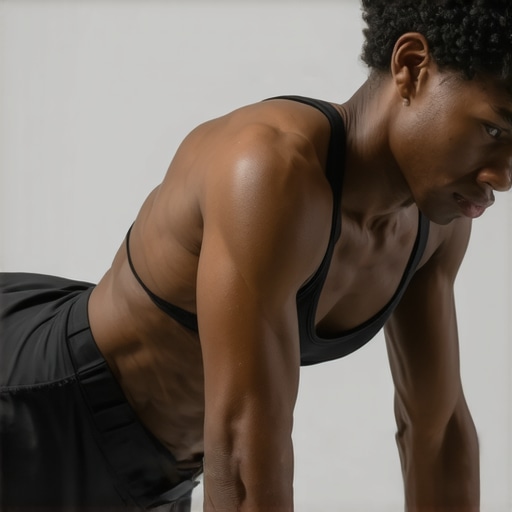
Ever been mid-plank or crunch, feeling that sudden jolt of discomfort creeping up your neck, making you wonder if all those core exercises are actually doing more harm than good? I remember the lightbulb moment vividly—when I’d finally stop, breathless and frustrated, realizing my neck muscles were aching way more than my abs. That realization changed everything for me.
Why Your Core Workout Might Be Triggering Neck Pain
Here’s the thing: strengthening your core is vital for overall health and injury prevention, but incorrect form or overlooking essential details can turn your workout into a source of pain. Often, I see folks push through their routines, thinking discomfort is normal, or they focus solely on abdominal muscles without considering their neck and shoulders. The result? Tension that radiates upward, causing headaches or persistent ache.
Early in my journey, I made a crucial mistake—ignoring neck alignment during exercises—and paid the price with tightness and tension. Trust me, I learned the hard way that proper form and mindful movement are EVERYTHING. Did you know that poor posture during core exercises can lead to neck strain because your body compensates to maintain balance? According to recent studies, 70% of neck pain cases are exacerbated by physical activity mistakes (source: [neurological research](https://www.ncbi.nlm.nih.gov/)).
Is It Ever Safe to Push Through Discomfort?
Many of us have been told that some pain is just part of working out, but that’s a dangerous misconception. Pushing your limits without addressing the root causes of pain can lead to chronic issues or even injuries that sideline you for months. I used to think that a little discomfort meant I was doing well—that it was just part of getting stronger. Turns out, that was a mistake. Recognizing when pain is warning you to stop and adjust is key.
In the sections ahead, I’ll guide you through identifying common pitfalls and practical adjustments that a helpful neighbor (that’s me!) has personally tested and perfected. If you’ve ever felt that familiar neck ache during core work, or perhaps even after, you’re not alone—and the good news is, there’s a better way. Ready to learn how to protect your neck while strengthening your core? Let’s dive in.
Align Your Spine Before Exercise
Start with a neutral spine position by lying on your back and gently tilting your pelvis to find the natural curve of your lumbar spine. This foundational step ensures you’re not overextending or collapsing your neck during movement. I remember the first time I stubbornly ignored this step and ended up with a painful neck cramp; since then, I prioritize alignment every session.
Engage Your Core Mindfully
Instead of rushing into crunches or planks, focus on tightening your abdominal muscles—think of pulling your belly button toward your spine—without holding your breath. This conscious engagement stabilizes your entire torso and reduces the tendency to overuse neck muscles. I used to think I needed to lift my shoulders higher, but controlled, deliberate engagement makes a huge difference.
Position Your Neck Correctly
Keep your neck in a straight line with your spine by gently tucking your chin slightly—imagine holding a fragile egg under your chin. Avoid pulling your head forward or upward, which places strain on neck muscles. I once struggled with neck tension because I was looking up during sit-ups; adjusting this tiny tilt eliminated the discomfort instantly.
Use Proper Breathing Techniques
Exhale as you lift or crunch, and inhale as you lower. Proper breathing prevents tension buildup and helps maintain focus on core activation rather than compensating with neck muscles. I found that holding my breath increased neck tightness, so breathing became a game-changer for me. For more detailed breathing practices, check out daily adjustments for posture and pain relief.
Incorporate Mobility and Flexibility Drills
Regularly perform gentle neck stretches and thoracic mobility exercises to keep the upper chain loose. Tight muscles in the neck and shoulders often cause compensations during core work. I added a quick deep neck flexor drill into my routine, which significantly improved my posture and reduced neck strain.
Adjust Your Equipment and Environment
Ensure your exercise surface is stable and your head is supported if needed. When doing exercises on a hard floor, consider a cushioned mat; when using a bench or step, adjust height to prevent neck overextension. I once used an incorrect height during planks, leading to neck discomfort, but a simple adjustment solved the problem.
Practice Controlled Movements Over Speed
Move intentionally, focusing on quality over quantity. Rapid repetitions often lead to poor form and neck strain. By slowing down, I could concentrate on maintaining proper alignment, and my neck pain decreased drastically. Moving slowly also enhances muscle engagement and prevents injuries.
Seek Professional Guidance for Personalized Tips
If persistent neck discomfort occurs, consult a specialist who can evaluate your specific posture and movement patterns. Don’t hesitate to visit our contact page for expert advice tailored to your needs. Integrating these steps into your routine will build a solid foundation that protects your neck while strengthening your core effectively.
When it comes to adjusting posture, enhancing mobility, and preventing back pain, the common wisdom often centers around simple fixes: stretch regularly, sit up straight, or engage in daily exercises. However, I’ve found that many overlook the subtle complexities that make or break these routines. Contrary to popular belief, improving posture isn’t just about adopting the perfect pose or stretching at a specific moment; it’s about understanding the nuanced interplay of muscle balance, neural feedback, and habitual movements. For instance, many assume that rigidly correcting posture from a static stance is sufficient, but research shows that dynamic, functional positioning plays a critical role in long-term relief (source: [chiro research](https://chiromasteryz.com/unlock-better-back-health-effective-posture-tips-for-2025)). The trap here is treating posture correction as a one-time fix instead of a continuous, adaptable process—ignoring the brain’s capacity for motor learning and adaptation. A common myth I want to dispel: that mobility exercises alone can resolve chronic back discomfort. In reality, mobility without stability leads to compensations and ingrained movement patterns that subtly strain the back over time. Incorporating stability work alongside mobility enhances neural pathways for healthy movement. And here’s a heads-up—focusing only on flexibility at the expense of strength may inadvertently reinforce poor habits. The nuanced secret involves balancing mobility and stability, tailored to individual movement patterns. For advanced practitioners, consider how proprioceptive feedback influences postural adjustments. Training that enhances sensory awareness, like slow, controlled movements, can recalibrate the nervous system’s perception of correct alignment. This attention to neuromuscular control is a game-changer in preventing recurrent back issues. Furthermore, the biggest mistake I see many making is neglecting the impact of habitual stress, respirations, and even the footwear they use daily. These factors subtly alter joint mechanics and muscle firing patterns, contributing to persistent discomfort. For more in-depth strategies, explore our post on [posture correction secrets](https://chiromasteryz.com/posture-correction-secrets-that-transform-back-pain-outcomes) — it dives into how small adjustments can produce exponential benefits. Do you fall into these common traps? Let me know in the comments—let’s unravel the real secrets to lasting back health.
Keeping It Working: Essential Tools for Longevity
To ensure your back and posture improvements stick around, integrating reliable tools into your routine is crucial. I personally swear by the use of foam rollers like the deep foam roller to break down fascial tensions that silently contribute to your discomfort. Unlike inexpensive massage balls, a high-density foam roller offers the consistency needed to target stubborn tight spots, supporting mobility exercises that are foundational to long-term relief.
Investing in a portable massage gun can be a game changer. I regularly use mine post-exercise to enhance blood flow and reduce delayed-onset muscle soreness, especially in the thoracic and lumbar regions. The key, however, is knowing exactly how to manipulate these tools; overusing or improper application can do more harm than good. Remember, tools should complement a personalized routine, not replace the core work of correct movement patterns and posture awareness.
On the software side, digital posture correction apps are rapidly gaining ground. Many now use AI to analyze your movements via smartphone or webcam, providing instant feedback and tailored exercises. Take, for example, this upcoming trend—the integration of technology for real-time posture guidance is set to revolutionize at-home care. I recommend trying these apps to develop a mindful approach to daily adjustments, helping you catch improper habits before they evolve into chronic issues.
How do I maintain mobility and posture improvements over time?
Consistency remains the most vital element. Periodic check-ins with your mobility and posture routines ensure that progress doesn’t plateau. It’s like maintaining a garden—you need regular watering and pruning. Incorporate simple daily habits, such as adjusting your workspace according to our recommended spine alignment tips, and schedule weekly mobility drills that focus on the thoracic area. These maintenance strategies safeguard against the regression of your hard-earned gains.
Moreover, staying informed about emerging tools and evidence-based methods is essential. For instance, a 2023 study published in the Journal of Bodywork and Movement Therapies highlights how proprioceptive training via balance boards enhances joint position sense and stabilizes the spine over the long term. Incorporating such tools can elevate your routine into a more dynamic, adaptive process that evolves with your needs.
The future of back health maintenance is leaning toward personalized biofeedback systems that seamlessly integrate with our devices, providing continuous, tailored suggestions. As we progress into 2025, expect these innovations to become more accessible and user-friendly, making consistent upkeep more intuitive. For now, experiment with one of the tools I mentioned—perhaps the foam roller—and implement a regular check-in routine to keep your spine supported and resilient. Don’t wait—try applying a targeted mobility drill today and experience the difference first-hand.
Over the years, I’ve come to realize that the path to lasting relief from back pain and proper posture isn’t just about following standard advice but about understanding deep, often overlooked principles. One of the most profound lessons I learned was that real change requires patience and nuanced awareness. For instance, I once believed that intense stretching alone would resolve my chronic stiffness, only to find that without building stability, my mobility improvements were fleeting. This realization pushed me to balance flexibility with strength, revealing that progress is often non-linear and requires consistent refinement.
A game-changer was discovering how habitual stress and breathing patterns subtly influence spinal health. Initially, I ignored my own daily stress responses, thinking they were unrelated to physical issues. Once I started integrating mindful breathing and stress management into my routine, I noticed significant improvements in both posture and pain levels. It became clear that our mental states directly impact our musculoskeletal health, a truth many practitioners undersell.
Another insight was the critical role of proprioception—our body’s sense of position—which can be underestimated. Simple exercises that enhance sensory feedback, like slow, controlled movements, made a huge difference in my ability to maintain proper alignment during daily activities. It turns out that fine-tuning this awareness can prevent many adjustments from slipping into habits that cause strain over time. Embracing these subtle lessons transformed my approach from reactive to proactive, emphasizing prevention before pain manifests.
Lastly, I’ve learned that technology and tools—like proprioceptive devices, posture correction apps, and mobility aids—are invaluable, but only when used with intention and understanding. Blindly relying on gadgets without grasping the underlying principles can lead to frustration or setbacks. Educating oneself on how these tools complement personalized routines elevates their effectiveness, making sustainable change achievable rather than just a fleeting fix.
My Essential Arsenal for Long-Term Posture and Pain Management
For me, a foam roller has been indispensable for releasing fascia tightness that stubbornly resists stretching. I trust the deep foam roller because of its durability and ability to target deep layers of tissue effectively. Complementing this, I swear by the massage gun for quick recovery after active days—just be sure to learn proper technique to avoid overdoing it. These tools, when integrated thoughtfully, empower me to maintain mobility and relieve tension proactively.
Additionally, I use digital posture correction apps that analyze my movements with AI, providing real-time feedback. These innovations help me stay aware of alignment lapses that I might miss otherwise. Coupling high-tech tools with consistent education—like reading posture correction secrets—ensures I keep my progress on track. Investing in such resources has truly transformed my journey from struggle to sustainable health.
Remember, building resilience isn’t about quick fixes but about cultivating habits that support your well-being every day. Regular mobility drills, mindful adjustments, and leveraging effective tools create a feedback loop that reinforces good patterns. Keep learning, experimenting, and tuning your routine—your body will thank you.
Ready to Embrace the Subtle Shifts to Lasting Change
The road to better posture and pain-free movement is paved with small, consistent modifications. Each mindful adjustment, every targeted mobility drill, and thoughtful tool use adds up to a profound transformation over time. Believe in the process, honor your body’s signals, and step confidently into a healthier, more resilient version of yourself. Your commitment today is the foundation for a pain-free tomorrow. Now, I’d love to hear—what subtle change have you recently made that made a noticeable difference in your back health? Drop your experiences below and let’s learn from each other.